Fully Welded vs Gasketed Wide Gap Plate Heat Exchangers: Which Handles Tough Media Better?
Fully welded PHE stands out as the best choice for tough media. Tough media includes fluids that are viscous, fibrous, solid-laden, or chemically aggressive. Industrial processes often demand reliability and low maintenance when handling these challenging fluids. Selecting the right heat exchanger can reduce downtime and operating costs. SHPHE’s Wide Gap Welded Plate Heat Exchanger offers advanced technology for these applications.

Key Takeaways
Fully welded plate heat exchangers excel in handling tough media, such as viscous or corrosive fluids, due to their robust design and lack of gaskets.
Choosing the right heat exchanger can significantly reduce maintenance needs and operational costs, making fully welded options a smart long-term investment.
Regular maintenance is crucial; fully welded designs require less frequent servicing, often only every 5–6 years, compared to gasketed models that need more regular checks.
Wide gap designs in fully welded heat exchangers minimize fouling and blockages, enhancing efficiency and reducing downtime in industrial processes.
Selecting materials that match your specific application is vital; stainless steel, titanium, and special alloys offer unique benefits for different industrial needs.
Understanding Tough Media
Characteristics of Tough Media
Tough media often challenge heat exchangers because of their unique physical and chemical properties. These fluids can be thick, sticky, or contain solid particles. Some may react with metals or withstand extreme temperatures. Engineers must consider these factors when designing equipment for tough media.
The table below shows key properties that define tough media in heat exchanger applications:
Property | Description |
|---|---|
Temperature Resistance | Withstands high temperatures without losing strength or shape. |
Density/Weight | Important for lightweight applications and fuel efficiency. |
Corrosion Resistance | Resists damage from harsh chemicals and environmental conditions. |
Strength | Handles mechanical forces, especially in high-pressure systems. |
Cost and Availability | Ensures materials are functional and affordable for industrial use. |
These properties affect how fluids move through a heat exchanger. For example, fluids with high viscosity may clog narrow channels. Corrosive liquids can damage metal surfaces. Solids and fibers may settle or block passages. Selecting the right heat exchanger design helps prevent these issues and keeps operations running smoothly.
Tip: Wide gap plate heat exchangers, like SHPHE’s WGPHE, are built to handle tough media by offering robust materials and wide channels that reduce blockages.
Common Industrial Examples
Many industries work with tough media every day. These fluids can be found in processes that require careful handling and specialized equipment.
Wastewater treatment plants manage fluids with suspended solids and fibrous materials.
Chemical processing facilities deal with aggressive liquids and slurries.
Oil and gas operations handle viscous hydrocarbons and abrasive mixtures.
Mining companies process slurries containing minerals and coarse particles.
Food manufacturing plants move thick pastes and fibrous ingredients.
Agriculture uses heat exchangers for nutrient-rich slurries and organic waste.
Each industry faces unique challenges. The right heat exchanger design ensures reliability and reduces maintenance needs. Wide gap welded plate heat exchangers are often chosen for these demanding applications.
Wide Gap Plate Heat Exchanger Designs
Fully Welded PHE Structure
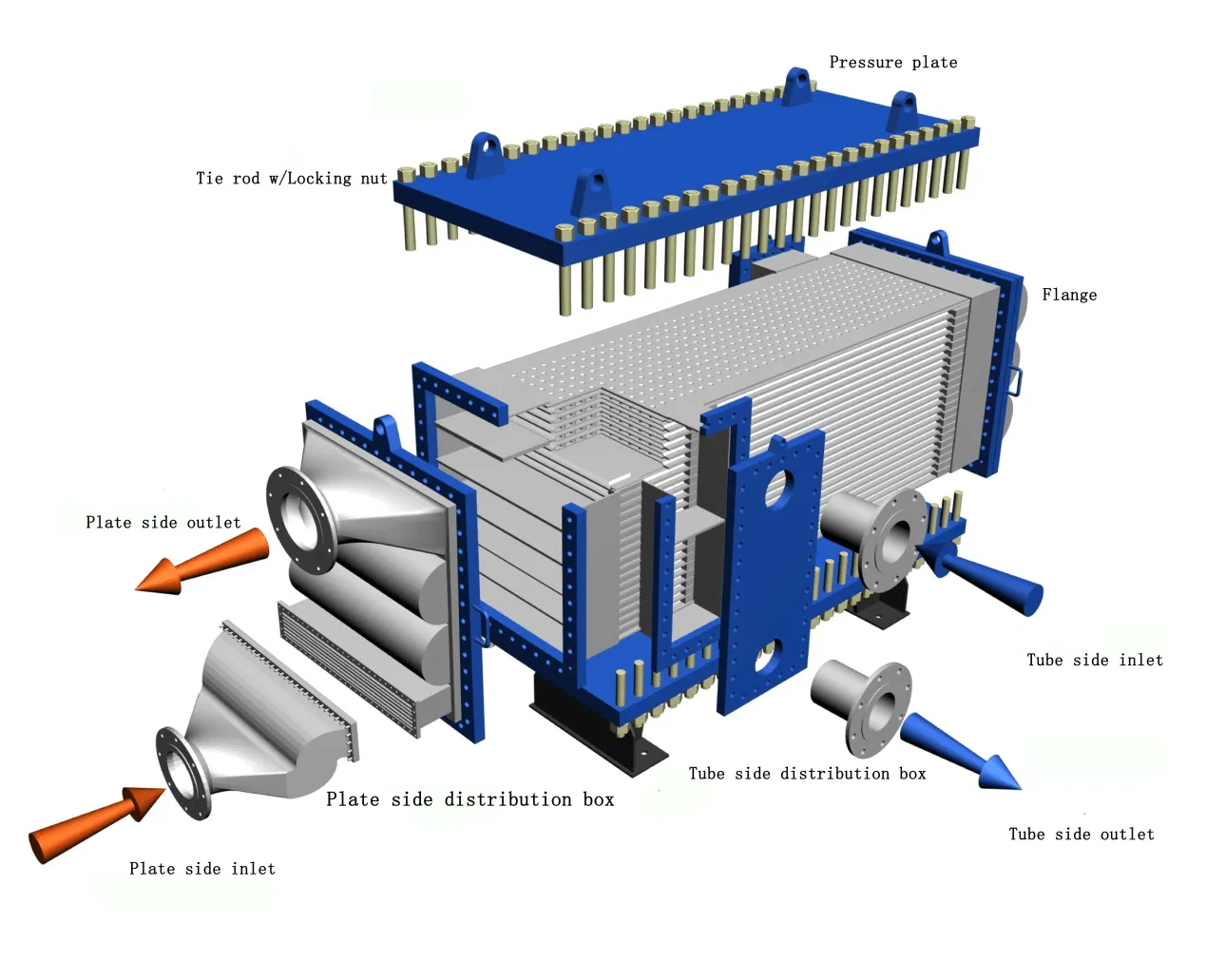
A fully welded PHE uses a design where all plates are joined together by welding. This method removes the need for gaskets between the plates. The welded joints create a strong, sealed unit that can handle tough conditions. Many industries choose this type of heat exchanger for fluids that are hot, corrosive, or contain solids.
The structure of a fully welded PHE offers several advantages. The welded plates prevent leaks, even when working with high pressures or temperatures. The use of stainless steel or special alloys gives the unit excellent resistance to corrosion. This design also provides strong mechanical strength, which means the heat exchanger can last for many years with minimal risk of failure.
Note: The SHPHE Wide Gap Welded Plate Heat Exchanger uses advanced welding and premium materials to ensure safety and reliability in demanding environments.
Here is a table showing how the design features of a fully welded PHE improve its performance:
Feature | Benefit |
|---|---|
Fully welded design | No risk of external leakage, better safety |
High pressure capability | Works well at higher pressures and temperatures |
Corrosion resistance | Handles aggressive chemicals |
Mechanical strength | Offers long-term reliability |
Gasketed PHE Structure
A gasketed plate heat exchanger uses gaskets to seal the plates together. These gaskets allow for easier maintenance because the unit can be opened and cleaned or repaired. Gasketed designs are flexible and can be adapted for different fluids or process changes.
However, gaskets can wear out over time, especially when exposed to high temperatures or harsh chemicals. This can increase the risk of leaks. Gasketed PHEs usually have a lower initial cost, but they may need more frequent maintenance.
The table below compares the main structural differences between the two designs:
Feature | Gasketed Plate Heat Exchanger | Welded Plate Heat Exchanger |
|---|---|---|
Construction Method | Plates sealed with gaskets | Plates welded together |
Maintenance | Easier, gaskets replaceable | Permanent, not easily disassembled |
Suitability for Conditions | Flexible, but gaskets can degrade | Ideal for high temp, pressure, corrosive fluids |
Cost | Lower initial cost | Higher initial cost |
Risk of Leaks | Possible due to gasket failure | No risk of gasket failure |
Choosing between these two designs depends on the type of media, operating conditions, and maintenance needs. A fully welded PHE is often the best choice for tough media and harsh environments.
Fouling and Solids Handling
Performance of Fully Welded PHE
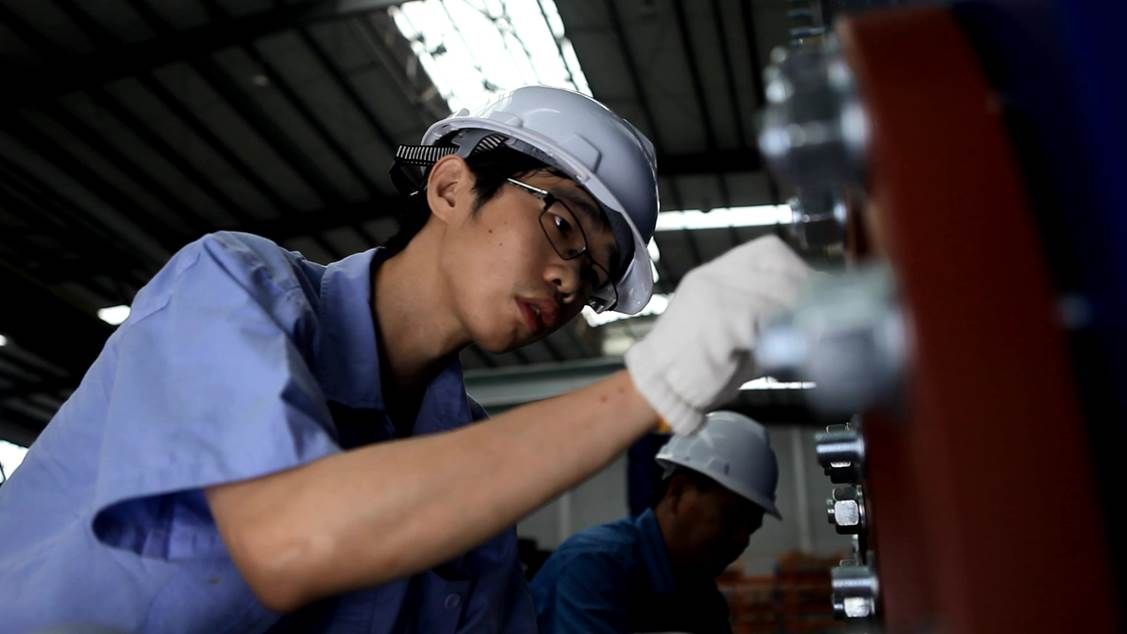
A fully welded PHE is built to handle tough media that often cause fouling in other heat exchangers. The welded construction creates a sealed unit that prevents leaks and keeps the system strong under pressure. SHPHE’s Wide Gap Welded Plate Heat Exchanger uses wide channels between plates. These channels allow thick, fibrous, and solid-laden fluids to pass through without getting stuck. The wide gap design reduces the chance of blockages and helps keep the heat exchanger running smoothly.
The anti-settling features in SHPHE’s WGPHE play a key role in performance. The wide gaps between plates lower the risk of fouling when working with fluids that contain solids. This design helps maintain good heat transfer and keeps the system running longer without stopping for cleaning. Studies show that wide gap welded plate heat exchangers can improve efficiency by up to 25% in processes that handle slurries and other challenging fluids. This improvement means less downtime and better production rates for industries that rely on continuous operation.
Note: Most fully welded PHEs, like SHPHE’s WGPHE, only need service every 5–6 years or when the pressure difference reaches 7–10 psi. This long interval between maintenance checks helps reduce costs and keeps the process running.
Performance of Gasketed PHE
Gasketed plate heat exchangers also offer some resistance to fouling, especially when designed with wider gaps. These units use gaskets to seal the plates, which makes them easier to open and clean. Gasketed PHEs show less fouling than traditional heat exchangers, which helps lower downtime and maintenance costs.
Gasketed PHEs are easier to take apart for manual cleaning.
They work well with fluids that are not too thick or full of solids.
The gaskets can wear out faster when exposed to harsh chemicals or high temperatures.
However, when handling very viscous, fibrous, or solid-laden fluids, gasketed PHEs may need more frequent cleaning. The gaskets themselves can become weak or damaged if the process fluid is aggressive. This can lead to leaks or the need for more regular maintenance.
Tip: For processes with extreme fouling or high solid content, a fully welded PHE with wide channels and anti-settling features often provides better long-term performance and reliability.
Chemical and Thermal Resistance
Fully Welded PHE in Aggressive Environments
A fully welded PHE stands out in environments where fluids are highly corrosive or temperatures reach extreme levels. The welded design creates a sealed unit that does not rely on gaskets. This structure prevents leaks and ensures maximum safety when handling hazardous or aggressive fluids.
Manufacturers use advanced materials to enhance chemical and thermal resistance. These materials help the heat exchanger withstand harsh chemicals and high temperatures. Here are some common materials used in fully welded plate heat exchangers:
Stainless steel (304, 316L) resists corrosion and handles most industrial fluids.
Titanium offers excellent resistance to seawater and strong acids.
Hastelloy and nickel alloys perform well in highly corrosive environments.
SMO 254 provides complete corrosion resistance for demanding applications.
Each material brings unique benefits. For example, titanium is ideal for marine and chemical industries. Hastelloy works best with acids and aggressive chemicals. The fully welded PHE design eliminates the risk of external leakage, which protects workers and the environment.
Note: SHPHE’s Wide Gap Welded Plate Heat Exchanger uses premium materials and robotic seam welding to ensure durability and safety in extreme conditions.
Gasketed PHE Limitations
Gasketed plate heat exchangers offer flexibility and easy maintenance. However, they face several challenges when exposed to aggressive chemicals or frequent temperature changes. Gaskets can degrade, leading to leaks or reduced performance. The choice of materials becomes critical, but even the best gaskets may not withstand harsh environments for long.
The table below shows typical limitations of gasketed plate heat exchangers:
Limitation | Description |
|---|---|
Thermal Fatigue | Cyclic stress from frequent temperature changes can lead to deformation and gasket blowout. |
Corrosion and Plate Damage | Corrosion can occur due to inappropriate material selection, leading to pitting and cracking. |
Material Selection | Choosing the right materials (e.g., 316L, Titanium, SMO, C276) is crucial for preventing damage. |
Gasketed PHEs may require frequent inspection and replacement of gaskets. They are not always suitable for processes with aggressive chemicals or high temperatures. Fully welded PHEs provide a more reliable solution for these demanding applications.
Maintenance and Reliability
Cleaning and Service Intervals
Maintenance is a key factor when choosing a plate heat exchanger for tough media. Fully welded wide gap plate heat exchangers, such as the SHPHE WGPHE, are designed for easy cleaning and long service intervals. The smooth internal paths allow for automated Clean-in-Place (CIP) systems. This means operators can flush the unit with cleaning chemicals or water without taking it apart. Automated cleaning reduces downtime and keeps the system running efficiently.
Different cleaning methods are used for fully welded plate heat exchangers. The table below shows how effective each method is:
Cleaning Method | Effectiveness (%) | Notes |
|---|---|---|
Hydroblasting | ~85 | Labor-intensive, may not reach all fouling areas. |
Chemical cleaning | 30-85 | Varies based on procedure, can be done in-situ. |
Thermal cleaning | Up to 100 | Highly effective for organic fouling, requires high temperature oven. |
Ultrasonic cleaning | Near 100 | Effective for both organic and inorganic fouling, low water consumption, tailored chemistry. |

SHPHE’s WGPHE supports both chemical and high-pressure cleaning. The wide channels and anti-settling design help prevent blockages, so cleaning is needed less often. Many users report service intervals of five years or more, even with challenging fluids.
Gasketed plate heat exchangers require more frequent manual cleaning. Operators must open the unit to remove fouling, especially when handling sticky or solid-laden fluids. This process takes more time and increases the risk of leaks if gaskets are not resealed properly.
Tip: Automated CIP and smooth internal surfaces in fully welded designs save time and reduce maintenance costs.
Gasket Life and Replacement
Gasketed plate heat exchangers rely on gaskets to seal the plates. These gaskets wear out over time, especially when exposed to high temperatures, pressure changes, or aggressive chemicals. Regular inspection is important to prevent leaks.
Gaskets usually need replacement every 3 to 5 years under normal conditions.
Replacement intervals depend on:
Operating temperature
Pressure changes
Type of fluid processed
Cleaning frequency and method
System criticality
Gaskets should be replaced at the first sign of visible wear or leaks.
In demanding environments, annual inspections and targeted replacements may be needed.
Fully welded plate heat exchangers, like the SHPHE WGPHE, do not use gaskets. This eliminates the need for gasket replacement and reduces the risk of unplanned downtime. The robust welded design ensures long-term reliability, even in harsh industrial settings.
Cost and Operational Factors
Initial Investment
Choosing a plate heat exchanger involves looking at the upfront costs. Gasketed plate heat exchangers usually have a lower initial investment. Fully welded wide gap plate heat exchangers require a medium initial investment because of their advanced design and materials. The table below shows a simple comparison:
Cost Item | Wide Gap Plate Heat Exchanger | Gasketed Plate Heat Exchanger |
|---|---|---|
Initial Investment | Medium | Lower |
Installation costs also play a role. Fully welded models often cost more to install. This is due to their manufacturing complexity and the use of premium materials. However, these costs can lead to savings later, especially in tough media applications.
Installation costs for fully welded plate heat exchangers are higher than gasketed models.
Welded designs help reduce maintenance and operational costs over time, especially where fouling and cleaning are frequent.
Tip: Investing more upfront in a fully welded design can pay off in industries where reliability and reduced downtime matter most.
Long-Term Value
Long-term value depends on maintenance, operational costs, and energy efficiency. Gasketed plate heat exchangers need routine maintenance every 2–5 years. Each cycle costs between $800 and $1600. Emergency repairs can cost $1000–$3000. Fully welded plate heat exchangers require maintenance less often. When needed, routine maintenance costs range from $5000 to $15000, and emergency repairs may cost $10000–$25000. The table below highlights these differences:
Type of Heat Exchanger | Maintenance Frequency | Routine Maintenance Cost | Emergency Repair Cost |
|---|---|---|---|
Gasketed | Every 2–5 years | $800–$1600 per cycle | $1000–$3000 |
Welded | Lower frequency | $5000–$15000 (if needed) | $10000–$25000 |
Over a 10-year period, fully welded plate heat exchangers often deliver lower total cost of ownership. They need less maintenance, offer higher energy efficiency, and last longer. Plate heat exchangers can reduce lifetime service costs by up to 30%. Superior heat transfer means lower energy use, with potential savings of 15–25% over ten years.
Note: Fully welded wide gap plate heat exchangers, like SHPHE’s WGPHE, provide strong long-term value for demanding applications. Their durability and efficiency help industries save money and avoid frequent downtime.
Choosing the Right PHE for Tough Media
Key Selection Criteria
Selecting the right plate heat exchanger for tough media requires careful consideration of several important factors. Each process has unique demands, so it is essential to match the equipment to the application. The table below highlights the main criteria to keep in mind:
Criteria | Description |
|---|---|
Operating Temperature | The material should maintain structural integrity and thermal efficiency across the required range. |
Pressure Conditions | Plates must endure operating pressures without warping or failing, ensuring a long service life. |
Heat Transfer Efficiency | Higher thermal conductivity materials enhance energy efficiency, reducing operational costs. |
A fully welded PHE often meets these criteria for challenging environments. Its robust construction allows it to handle high temperatures and pressures while maintaining excellent heat transfer performance. This makes it a strong choice for industries that process viscous, fibrous, or aggressive fluids.
Tip: Always review the specific requirements of your process, including the type of media, expected temperature swings, and pressure levels.
Application-Based Recommendations
Different applications call for different types of plate heat exchangers. Here are some general recommendations for tough media:
Fusion-bonded plate heat exchangers work well in compact spaces and can handle aggressive media, such as ammonia. They are efficient and require little maintenance.
Welded plate exchangers are extremely durable and suitable for high temperatures and corrosive materials. They are often used for hazardous liquids, process chemicals, and oil cooling.
For extreme or continuous-duty operations, a fully welded PHE like the SHPHE Wide Gap Welded Plate Heat Exchanger is recommended. Its wide channels and anti-settling features make it ideal for handling slurries, fibers, and solid-laden fluids with minimal maintenance.
Choosing the right heat exchanger ensures reliable operation and long-term value. Matching the equipment to your process needs helps prevent downtime and reduces overall costs.
A fully welded PHE, such as SHPHE’s WGPHE, gives strong performance for tough media because of its robust build and advanced features. When choosing a heat exchanger, review your process needs and think about long-term reliability. Experts recommend matching material types to your industry, as shown below:
Material Type | Key Features | Applications |
|---|---|---|
Stainless Steel | Durable, easy to clean, corrosion resistant | General industry, varying pressures and temperatures |
Titanium | Lightweight, resists aggressive fluids | Chemical, marine, offshore |
Nickel Alloys | Handles harsh environments | Chemical, petrochemical, oil refining |
SMO 254 | Resists pitting and stress corrosion | Offshore, chemical, desalination |
Special Alloys | High temperature and corrosion resistance | Extreme industrial settings |
The choice of plate thickness is crucial. Thicker plates help prevent failures from erosion and corrosion, especially in harsh or chemically aggressive environments.
For best results, consult with manufacturers or experts to find a solution tailored to your needs.
FAQ
What is a wide gap plate heat exchanger?
A wide gap plate heat exchanger uses plates with larger spaces between them. This design allows thick, solid-filled, or fibrous fluids to flow easily. It helps prevent clogging and reduces the need for frequent cleaning.
How does a fully welded PHE handle tough media?
A fully welded PHE uses welded plates instead of gaskets. This creates a strong, sealed unit. It resists leaks and damage from high pressure, temperature, or aggressive chemicals. The wide channels help solids and fibers pass through without blocking.
When should I choose a gasketed PHE?
Choose a gasketed PHE for clean fluids, moderate temperatures, and when frequent disassembly is needed. Gasketed designs are easier to open for cleaning or repairs. They work best in less demanding applications.
What maintenance does the SHPHE WGPHE require?
The SHPHE WGPHE supports automated Clean-in-Place (CIP) and high-pressure cleaning. Most users only need to service it every 5–6 years, even with tough media. This reduces downtime and maintenance costs.