Frozen vegetable sorter proven to reduce food recalls
A frozen vegetable sorter helps food processors remove contaminants and defects before products reach the market. This technology safeguards public health and maintains high product standards. Companies that implement a frozen vegetable sorter see measurable improvements in food safety and a significant reduction in costly recalls.
Frozen vegetable sorter technology and process
Detection and removal of contaminants
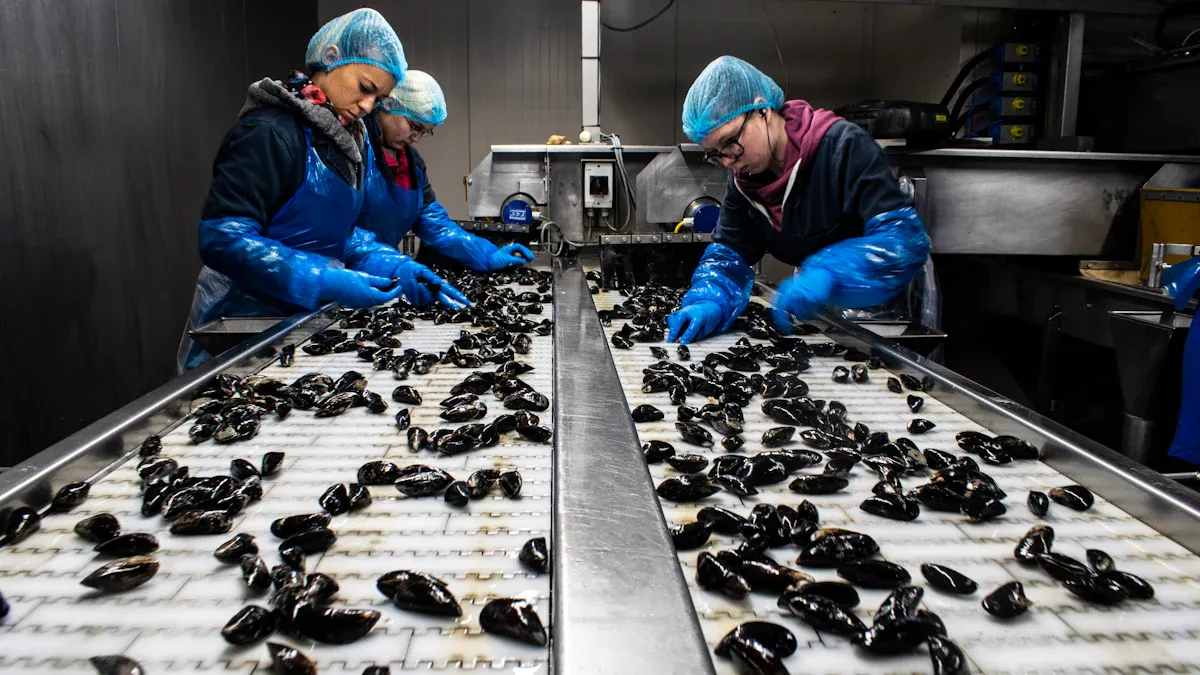
A frozen vegetable sorter uses advanced detection technologies to identify and remove foreign materials from the production line. Optical and laser sorters analyze surface characteristics such as color, shape, and moisture. Hyperspectral imaging, including SWIR and VNIR, distinguishes contaminants with up to 99% accuracy. Metal detectors and x-ray machines further enhance safety by identifying metals, stones, and plastics based on density. These systems inspect products entirely in-air, using top and bottom sensors to ensure thorough analysis.
Note: SWIR hyperspectral imaging achieves the highest accuracy for detecting foreign materials in fresh-cut vegetables.
The main technological components of a frozen vegetable sorter include:
| Component | Description |
|---|---|
| Vegetable Sorting Machines | Sort vegetables efficiently for quality and safety. |
| VERYX Digital Sorters | Inspect products in-air and allow quick adjustments for different products. |
| Air Cleaner | Removes airborne contaminants during processing. |
| Metal Detectors & X-ray Machines | Identify unwanted materials based on density. |
| Rotary Sizing Systems | Grade vegetables by size and quality. |
Automated sorting for quality assurance
Automated sorting delivers consistent product quality and reduces human error. The TOMRA 5B sorter, for example, detects and removes defects and foreign objects with high precision. Operators can customize sorting programs for different vegetables, ensuring uniform quality across batches. Automated systems minimize waste, reduce labor requirements, and lower contamination risks.
- High accuracy in removing contaminants and defects
- Reduced waste of water and energy
- Fewer personnel needed at quality control points
A comparison of inspection methods highlights the benefits:
| Inspection Method | Error Rate (%) | Accuracy (%) |
|---|---|---|
| Manual Inspection | 5–15 | 85 |
| Automated Sorting | N/A | 97–99 |
A frozen vegetable sorter ensures high yields, less waste, and enhanced food safety, making it a vital tool for modern food processors.
Frozen vegetable sorter impact on food recalls and processor benefits
Preventing contaminated products from entering the supply chain
A frozen vegetable sorter acts as a critical control point in food processing facilities. It intercepts contaminants and defects before products move further along the supply chain. Processors rely on advanced detection systems to identify foreign materials such as wood, plastic, stones, and glass. These systems also remove color defects and extraneous vegetable matter. By eliminating these hazards, processors reduce the risk of food recalls and protect consumer health.
The technology supports rapid response during potential crises. Processors can quickly identify affected batches, minimizing the scope of recalls and maintaining public trust. Enhanced traceability features, such as barcodes and IoT sensors, provide real-time monitoring and accountability throughout the supply chain. This transparency builds consumer confidence and supports ethical sourcing initiatives.
Tip: Automated sorters enable processors to respond swiftly to contamination events, reducing the impact on both business operations and public safety.
Enhanced product quality and regulatory compliance
Processors achieve higher product quality and meet strict regulatory standards with a frozen vegetable sorter. Machine vision systems and artificial intelligence deliver faster and more accurate sorting. These advancements ensure uniformity and reduce waste, even on high-volume production lines.
The following table outlines key processes that help processors comply with food safety regulations:
| Process Type | Description |
|---|---|
| Sorting | Removal of blemished, defective, and damaged products using both manual and electronic vision sorters. |
| Washing | Mandatory wash step with validation studies to ensure effectiveness in reducing pathogens like Listeria. |
| Sanitization | Consistent and validated sanitizer levels in wash water to prevent contamination during the washing process. |
Processors observe several benefits after installing a frozen vegetable sorter:
- Sorting machines ensure compliance with food safety regulations, improving product uniformity and reducing waste.
- Enhanced operational efficiency on high-volume production lines results in higher quality standards.
- Technological advancements in food sorting machines, including machine vision systems and artificial intelligence, have significantly enhanced sorting capabilities.
- These improvements lead to faster and more accurate sorting, which directly contributes to better product quality and enhanced food safety.
A variety of frozen vegetables benefit from this technology:
| Vegetable Type | Benefits Observed |
|---|---|
| Frozen French Fries | Removal of foreign materials like wood, plastic, and glass, enhancing product quality. |
| Frozen Carrots | Elimination of color defects and foreign materials such as stones and insects. |
| Frozen Peas | Removal of color defects and extraneous vegetable matter without adjustments to the sorter. |
| Frozen Corn | Effective removal of color defects and foreign materials, ensuring high-quality produce. |
| Frozen Cranberries | Detection and removal of color defects and foreign materials without damaging the fruit. |
| Frozen Raspberries | High efficiency in removing defects and foreign materials while preserving the fragile produce. |
| Frozen Blueberries | Removal of defects and foreign materials without compromising the quality of the berries. |
Cost savings and return on investment
A frozen vegetable sorter delivers measurable cost savings and a strong return on investment. Processors experience reduced downtime due to longer-lasting LED lights and efficient design. Maintenance costs decrease because of the durability and reliability of modern sorters. Improved sorting accuracy and speed increase overall production efficiency, allowing processors to handle more product with fewer resources.
| Benefit | Description |
|---|---|
| Reduced Downtime | The Blizzard sorter has a longer LED light life expectancy (50,000 hours) compared to traditional lights (9,000 hours), leading to less downtime for replacements. |
| Lower Maintenance Costs | The sorter’s design and technology contribute to lower overall maintenance costs due to its efficiency and durability. |
| Improved Efficiency | Enhanced sorting accuracy and speed result in better removal of non-standard products, increasing overall production efficiency. |
Processors report that a frozen vegetable sorter can pay for itself within two to three years. They also note a significant reduction in customer complaints and improved product quality. Automation reduces labor costs by up to 30%, while advanced imaging and AI technologies further enhance accuracy and speed. These factors combine to protect long-term business interests and support sustainable growth.
A frozen vegetable sorter offers food processors a strategic advantage. They achieve higher product quality and stronger compliance. Market growth and evolving consumer preferences support long-term success. Investing in this technology protects business interests and aligns with industry trends. Food safety and recall reduction remain top priorities.
FAQ
How does a frozen vegetable sorter detect foreign materials?
A frozen vegetable sorter uses advanced sensors and imaging systems. These technologies identify and remove foreign objects like plastic, metal, or stones from vegetable batches.
What types of vegetables benefit most from sorting technology?
Processors use sorters for peas, carrots, corn, and berries. Each type gains improved quality and safety through precise removal of defects and contaminants.
Is a frozen vegetable sorter difficult to maintain?
Routine maintenance involves cleaning sensors and checking system calibration. Most modern sorters feature user-friendly interfaces and automated diagnostics for efficient upkeep.
See Also
Essential Capsule Checkweighers To Explore For 2025
Three Must-Have Industrial Checkweighers For Food Facilities
The Importance Of Capsule Sorters In Defect Elimination