How Frozen Strawberry X-ray Machines Support Food Safety Compliance
Frozen strawberry x-ray machine technology helps producers achieve food safety compliance by detecting contaminants that traditional methods often miss. X-ray inspection allows for non-destructive evaluation of food, revealing internal defects and impurities not visible on the surface. High-contrast imaging increases safety by identifying issues like bruises or foreign objects in frozen fruit. Advanced machines, such as those from Raymantech, support strict quality standards and give consumers greater confidence in the products they buy.
Advanced optical sorters and x-ray systems play a vital role in modern food safety programs, helping producers meet regulatory requirements and build consumer trust.
Frozen Strawberry X-ray Machine Process
Food X-ray Inspection Technology
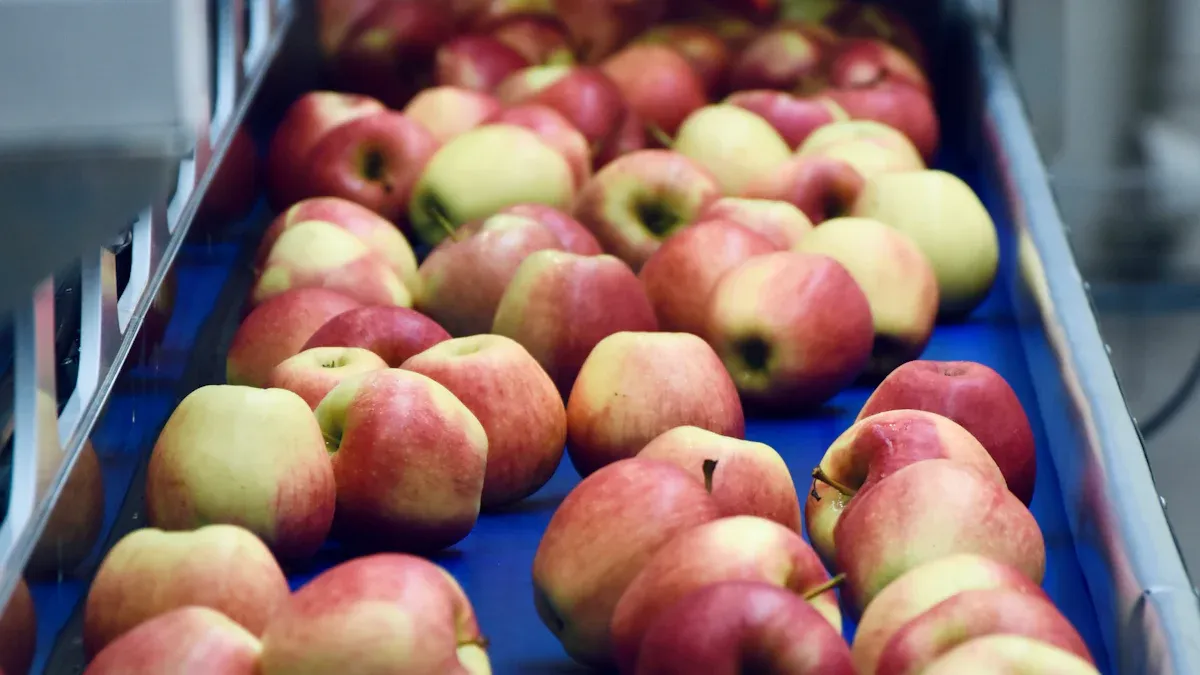
Food x-ray inspection technology plays a key role in modern food safety. The frozen strawberry x-ray machine uses advanced imaging to scan each berry as it moves along the production line. This process does not damage the food. Instead, it creates a detailed image that shows what is inside the fruit. The machine can spot hidden problems that are not visible from the outside.
The frozen strawberry x-ray machine uses dual energy technology. This system measures two different sets of x-ray energies as they pass through the strawberries. By comparing these energies, the machine can tell the difference between organic and inorganic materials. For example, it can separate natural items like paper or insects from inorganic items such as metal or glass. This technology is more advanced than older single energy systems, which mostly detected metals and a few other materials. Dual energy technology is especially good at finding low-density contaminants like glass, stone, rubber, and bone.
Food x-ray inspection is fast and accurate. It works well even when the strawberries are frozen. The machine checks every piece, making sure that only safe and high-quality fruit moves forward in the process. This helps producers meet strict food safety standards and protect consumers.
Detecting Contaminants in Frozen Strawberries
The main goal of food x-ray inspection is to find contaminants in frozen strawberries. These contaminants can come from many sources. Some are natural, while others are the result of processing or packaging.
Common contaminants detected by a frozen strawberry x-ray machine include:
Stones and dirt that come from the field during harvesting
Metal pieces from machinery used in processing
Glass fragments from packaging or equipment
High-density plastics that may enter during handling
Food x-ray inspection technology can detect both naturally occurring and mechanical contaminants, helping to ensure the safety of every batch.
The table below shows some of the most common contaminants found in frozen strawberries and their sources:
Contaminant Type | Description |
|---|---|
Glass | Fragments from packaging or processing equipment |
Metal | Pieces from machinery or processing equipment |
High-density plastics | Non-biodegradable materials that may contaminate |
Stones | Naturally occurring contaminants from harvesting |
Dirt | Soil and other natural debris |
Food x-ray inspection also helps producers maintain food safety by identifying even small pieces of these contaminants. The frozen strawberry x-ray machine scans each berry quickly, making sure that dangerous materials do not reach the consumer. This process supports both safety and quality in the final product.
Food x-ray inspection is an important step in the frozen strawberry production process. It helps producers meet food safety requirements and deliver products that consumers can trust.
Food Safety Compliance and Regulations

Meeting HACCP and Global Standards
Food safety compliance is essential for frozen strawberry producers. X-ray machines help producers meet food safety standards by identifying contaminants in each batch. This process supports compliance with HACCP, which stands for Hazard Analysis and Critical Control Points. HACCP is a global system that focuses on preventing hazards in food production. X-ray inspection ensures that contaminated products are removed before reaching consumers.
International standards require strict control measures. Producers must maintain cold chain integrity and automate handling to prevent contamination. Hygiene is a key focus. Freezing does not kill bacteria, so preventive hygiene is necessary. Producers must keep equipment clean and monitor water quality. Workers follow strict sanitation protocols to reduce risks from pathogens like Norovirus and Hepatitis A.
The table below highlights important food safety regulations and hygiene measures for frozen strawberries:
Product Type | Primary GMP Focus | Key Hygiene Measures |
|---|---|---|
Frozen Strawberries | Cold chain integrity | Automated handling and freezer sanitation |
Producers also follow standards that prohibit synthetic pesticides and fertilizers. They use compost and natural pest control methods. Regular audits and third-party certifications, such as USDA Organic, help maintain compliance.
X-ray scanning detects non-metal, high-density foreign objects like glass or stone.
Each batch undergoes multi-stage metal detection and x-ray scanning to ensure no foreign materials are present.
Audit Documentation and Traceability
Audit documentation and traceability are important for food safety compliance. X-ray machines log data on rejected products. This information helps producers understand errors and their causes. By identifying sources of contaminated products, producers can prevent future issues and reduce waste.
The table below shows how x-ray inspection supports audit documentation:
Benefit | Explanation |
|---|---|
Data Logging | X-ray machines record rejected products and reasons for rejection |
Error Prevention | Producers use data to prevent similar errors in future batches |
Waste Reduction | Addressing errors reduces waste and improves efficiency |
Increased Productivity | Enhanced processes lead to higher productivity and easier audits |
Traceability allows producers to track each batch of food. This process ensures that only safe products reach consumers. Compliance with food safety regulations builds trust and supports market access.
Benefits for Producers and Consumers
Quality Assurance and Brand Trust
Quality assurance is a top priority for frozen strawberry producers. X-ray inspection helps brands meet strict food safety standards by finding hidden contaminants. This process builds trust with buyers and consumers. The table below shows how x-ray screening improves product quality and safety:
Feature | Benefit |
|---|---|
Metal Detection & X-Ray Screening | Mandatory for foodservice and industrial buyers |
Eliminates contamination risks | Ensures product safety and quality compliance |
When producers use advanced inspection systems, they show a strong commitment to food safety. This commitment increases confidence in the brand. Customers know they are getting safe and high-quality food.
Market Access and Consumer Confidence
Food safety is important for reaching new markets. Many countries require proof that frozen strawberries are free from foreign materials. X-ray inspection helps producers meet these rules. It also reduces waste and improves product quality. Producers who use effective inspection systems can:
Meet global food safety regulations
Improve access to international markets
Reduce waste and increase product quality
Consumers want to know their food is safe. When producers use advanced technology, they build consumer confidence and support long-term business growth.
Raymantech AI Multi Beam Belt Optical Sorter
Raymantech offers the AI Multi Beam Belt Optical Sorter as a powerful tool for quality and safety. This machine uses multi-view imaging and AI to detect even the smallest defects in frozen strawberries. It works well in tough environments, including wet or frozen conditions. The sorter can handle high speeds and sort multiple grades in one pass.
Key benefits include:
Nearly 360-degree visibility for detecting micro-defects
Ultra-high definition cameras for spotting tiny impurities
Quick-release belt for easy cleaning and less downtime
Raymantech’s optical sorter complements x-ray inspection by adding another layer of quality control. Producers who use both systems can deliver food that meets the highest safety and quality standards.
Safety and Operational Considerations
X-ray Safety for Food and Operators
Safety is a top priority in every food processing facility. Producers must protect both workers and consumers during the inspection process. Modern machines use shielding and safety interlocks to keep operators safe from radiation. These systems only allow the machine to operate when all doors are closed and locked. Warning lights and emergency stop buttons add extra layers of safety.
Food safety is also important. The x-ray process does not make food radioactive. The energy used is low and passes through the product quickly. After inspection, the food remains safe to eat. Regular maintenance and calibration of the equipment help ensure that safety standards are always met.
Tip: Train all staff on proper machine use and emergency procedures to maintain a safe work environment.
Technical Challenges and Limitations
Operating advanced inspection systems can present some challenges. Machines must work in cold, wet, or dusty environments. Frozen strawberries may stick together, making it harder to inspect each piece. Producers need to keep belts and sensors clean to avoid errors.
A table below shows common operational considerations:
Challenge | Solution |
|---|---|
Frozen product clumping | Use vibration or air jets |
Dust and moisture | Regular cleaning and maintenance |
High-speed production |
Food producers must monitor equipment performance and respond quickly to any issues. Routine checks help prevent downtime and keep the inspection process reliable. By focusing on safety and operational efficiency, producers can deliver high-quality products to consumers.
Frozen strawberry x-ray machines play a vital role in food safety compliance. These systems help producers meet FDA standards and extend shelf life. The table below shows key regulatory aspects:
Aspect | Details |
|---|---|
Regulatory Body | U.S. Food and Drug Administration (FDA) |
Purpose of Irradiation | Improve food safety and extend shelf life of foods, including frozen strawberries |
Effect on Strawberries | Irradiated strawberries can remain unspoiled for up to three weeks compared to three to five days for untreated berries |
Safety of Packaging | Packaging materials are irradiated alongside food, ensuring they do not introduce new pathogens |
Raymantech's advanced solutions offer enhanced contaminant detection and compliance. Producers benefit from improved quality and consumer trust.
Ionizing radiation eliminates spoilage microorganisms.
Market acceptance of irradiated foods is growing.
Raymantech systems detect both metallic and non-metallic hazards.
Consider Raymantech for reliable compliance and quality assurance.
FAQ
What is an x-ray inspection system and how does it help with food safety?
An x-ray inspection system uses x-ray technologies to scan frozen strawberries for foreign objects. This system finds foreign material that could harm consumers. It helps producers keep product integrity and meet safety standards. The x-ray inspection system supports food safety compliance.
How does an x-ray inspection system detect foreign objects in frozen strawberries?
The x-ray inspection system scans each strawberry for foreign objects like glass, metal, or stones. It uses advanced inspection capabilities to find even small pieces. The x-ray inspection system works quickly and does not damage the fruit. This process protects product integrity.
Why is product integrity important in the x-ray inspection system process?
Product integrity means the food is safe and free from foreign objects. The x-ray inspection system checks every batch to ensure integrity. This helps prevent recalls and builds trust with consumers. The x-ray inspection system is key for quality control.
Can an x-ray inspection system reduce recalls in the frozen strawberry industry?
Yes. The x-ray inspection system finds foreign objects before products reach stores. This reduces the risk of recalls. Producers use the x-ray inspection system to keep food safe and protect their reputation. The system improves integrity in the supply chain.
What makes the x-ray inspection system different from other inspection methods?
The x-ray inspection system can find both metal and non-metal foreign objects. Other methods may miss some hazards. The x-ray inspection system uses advanced x-ray technologies for better detection. It offers strong inspection capabilities and supports food safety compliance.