Frozen chicken inspection helps you avoid food mistakes
Many families rely on frozen chicken for quick, healthy meals. Frozen chicken inspection helps people prevent foodborne illness. Simple checks before cooking protect everyone at the table. Safe handling reduces risk in every kitchen. Consistent attention to quality supports healthy eating habits and confidence in meal preparation.
Frozen chicken inspection: Why it matters
Risks of skipping inspection
Neglecting frozen chicken inspection exposes families to significant health risks. Salmonella Enteritidis remains a major concern in frozen chicken, with outbreaks linked to raw, breaded products. In 2015, public health officials investigated several illness outbreaks associated with these items. Many consumers fail to recognize whether a product is raw or fully cooked, which increases the risk of improper preparation. Studies show that 22% of participants did not realize their chicken was raw, and 38% did not use a food thermometer to confirm a safe internal temperature of 165°F. These mistakes can lead to foodborne illness.
Common errors in home kitchens include rinsing frozen chicken, which spreads bacteria, and not cooking chicken thoroughly. Marinating frozen chicken can affect both texture and safety. Skipping inspection steps allows these mistakes to go unnoticed, increasing the chance of contamination.
Benefits for kitchen safety
Frozen chicken inspection supports a safer kitchen environment. The USDA inspects all chickens sold in stores, ensuring they are free from visible disease. However, consumers must also play a role by checking each product before use. Proper inspection helps identify damaged packaging, freezer burn, or expired products. Following expert recommendations, such as storing chicken at 40°F or below and thawing in the refrigerator or microwave, further reduces risk.
Educational campaigns emphasize the importance of treating frozen chicken like raw poultry and following package instructions. These efforts help consumers adopt safer handling practices, leading to fewer foodborne illnesses and greater confidence in meal preparation.
Frozen chicken inspection: Step-by-step guide
Check appearance and color
Visual inspection forms the foundation of frozen chicken inspection. He should look for the following signs when evaluating the chicken:
- Raw chicken should have a light pink color. Gray or green flesh or yellow fat signals spoilage.
- Fresh chicken appears pink and fleshy. A dull, grayish cast suggests the chicken has gone bad.
- A slimy or sticky texture means the chicken is no longer safe to eat.
Discoloration in chicken meat does not always indicate spoilage or bacterial growth. Microbial growth relates more closely to odor quality than to color changes. Certain bacteria can cause both off-odors and discoloration, but the connection between color changes and microbial growth remains weak. He should always combine visual checks with other inspection steps.
Smell test
The smell test provides a reliable method for detecting unsafe frozen chicken, especially after thawing. He should trust his nose:
- A bad smell is a clear indicator of spoilage.
- If the chicken smells at all, it should be discarded.
- Spoiled chicken develops a slimy or sticky texture and emits a bad or "off" smell.
- A very sour and pungent scent signals spoilage.
- Fresh chicken should have little to no scent.
The smell test works best for thawed chicken, as freezing can mask spoilage signs. Good chicken typically has little to no smell, while spoiled chicken emits a sour or rotten egg odor. He should inspect both color and odor after thawing.
Examine packaging
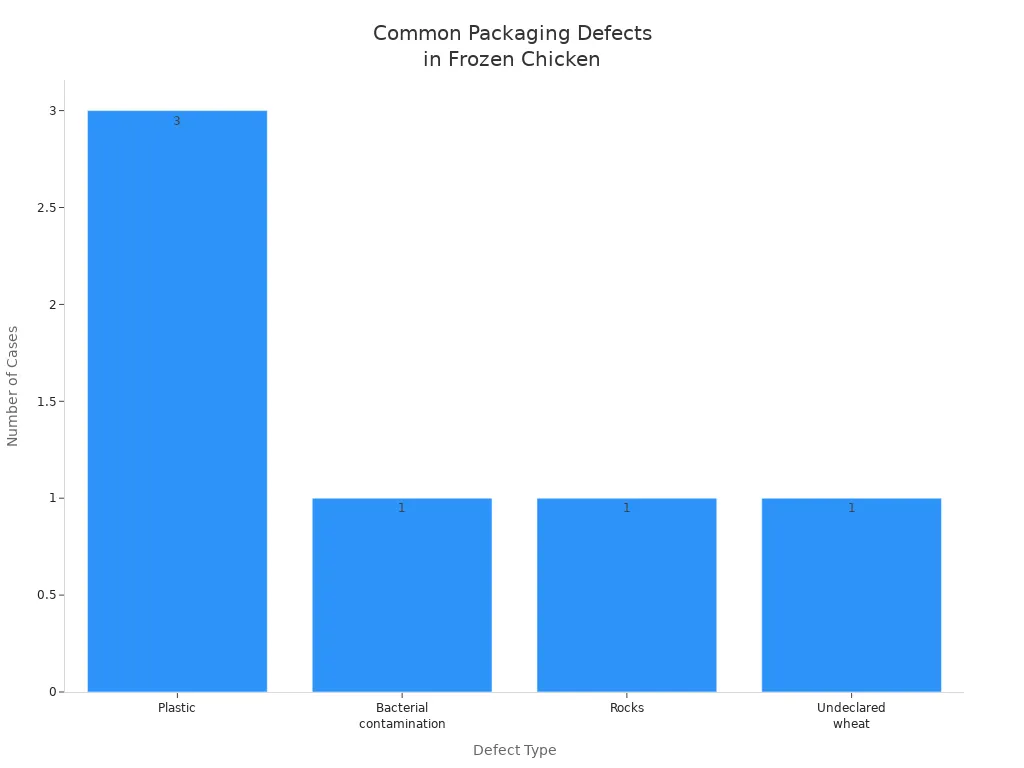
Packaging defects often link to contamination in frozen chicken. He should check for the following issues:
| Brand | Defect Type | Contaminant |
|---|---|---|
| Ajinomoto Foods | Plastic | Foreign material |
| Serenade Foods | Bacterial contamination | Salmonella |
| Conagra Brands | Rocks | Foreign material |
| Conagra Brands | Plastic | Foreign material |
| Perdue Foods | Undeclared wheat | Packaging defect |
| Conagra Brands | Plastic | Foreign material |
It’s also best to avoid anything with damaged packaging, such as tears or punctures to the vacuum seal (even if it’s just a small slash).
He should always select packages that are fully sealed and free from visible damage.
Spot freezer burn
Freezer burn affects the quality of frozen chicken but does not make it unsafe to eat. He should look for these signs:
- Grainy texture and a dry, tough appearance.
- Pale beige or grayish beige discoloration, especially around the edges.
- White areas that resemble fat or a honeycomb-like structure.
- Ice crystals and shriveled meat.
- Darkened bones and leathery spots.
Freezer burn leads to dehydration and oxidation, which can result in unpleasant flavors and a less appealing texture. While the nutritional value remains mostly intact, the overall quality of the chicken diminishes. He should trim away affected areas to improve taste and texture. If the freezer burn is extensive or the chicken has an off smell, discarding the product is recommended.
Check expiration date
He should always check the expiration or "best by" date before using frozen chicken. Outdated chicken increases the risk of spoilage and foodborne illness. Proper frozen chicken inspection includes verifying that the product remains within its safe consumption period.
Food safety guidelines for frozen chicken
Safe storage tips
Proper storage plays a critical role in maintaining the safety and quality of frozen chicken. He should always use moisture vapor-proof containers or high-quality freezer bags to prevent moisture loss. This step helps avoid freezer burn, which can negatively impact both flavor and texture. Wrapping each piece individually and removing excess air before sealing preserves freshness. Placing chicken in the deepest part of the freezer ensures a consistent temperature.
A freezer set at 0°F (-18°C) or below keeps chicken safe for extended periods. Rapid freezing at this temperature minimizes cell wall damage by forming small ice crystals, which helps maintain meat quality. Overloading the freezer can slow the freezing process, so he should avoid packing it too tightly.
The following table summarizes best practices for storing frozen chicken:
| Best Practice | Description |
|---|---|
| Invest in Good Freezer Supplies | Use high-quality freezer bags, freezer paper, and vacuum sealers for effective storage. |
| FIFO (First In, First Out) | Use the oldest meat first to ensure freshness. |
| Labeling System | Clearly label items to avoid confusion and ensure proper usage. |
| Freezer Inventory | Maintain a list of items in the freezer to prevent forgetting about them. |
| Defrosting Your Freezer Regularly | Regularly defrost if not frost-free to maintain efficiency and prevent ice buildup. |
| Power Outages and Frozen Food | A full freezer stays cold for about 48 hours; use dry ice if power is out for an extended time. |
| Discard Thawed Food | If food has been above 40°F for more than two hours, it should be discarded. |
He should always follow these steps to reduce the risk of spoilage and foodborne illness. Consistent frozen chicken inspection, combined with proper storage, supports a safer kitchen environment.
Thawing methods
Safe thawing methods protect against bacterial growth and preserve the quality of chicken. The USDA recommends three main approaches:
| Thawing Method | Description |
|---|---|
| Refrigerator Method | Thawing in the refrigerator is the safest method, allowing for slow and even defrosting. It may take 1-2 days depending on the cut. |
| Cold Water Method | This method is quicker; submerge the chicken in cold water, changing the water every 30 minutes. It takes about 2-3 hours for a 3-4 lb chicken. |
| Microwave Method | The fastest method, but requires immediate cooking after thawing. Best for small parts, not whole chickens. Use defrost setting and check regularly. |
Improper thawing can cause bacteria such as Salmonella and Campylobacter to grow in food that can cause severe gastrointestinal issues.
Rapid thawing in unsafe conditions can result in uneven cooking, soggy textures, or off-flavors.
Raw chicken should never reach above 40 degrees Fahrenheit unless it's in the process of cooking to 165 degrees Fahrenheit.
He should never thaw chicken at room temperature or in warm water. These unsafe practices allow bacteria to multiply quickly, increasing the risk of foodborne illness. After thawing, he should cook the chicken immediately, especially if using the microwave or cold water methods.
Cooking temperatures
Cooking chicken to the correct internal temperature eliminates harmful bacteria and ensures food safety. The USDA states that chicken must reach an internal temperature of 165°F (74°C) to be considered safe. Alternatively, holding chicken at 157°F (69.4°C) for 31 seconds also achieves safety.
- The USDA states that the safe internal temperature for chicken is 165°F (74°C).
- An alternative safe cooking temperature is 157°F (69.4°C), if held for 31 seconds.
Cooking temperatures significantly influence bacterial survival. Higher temperatures lead to greater bacterial reduction. The average surface temperature of chicken fillets reached at least 85°C within one minute of cooking, which effectively reduces bacterial counts. Cooking times must be adequate to ensure food safety, as some bacteria show increased heat resistance at certain temperatures.
He should always use a food thermometer to check the thickest part of the chicken. This step confirms that the chicken has reached the recommended temperature throughout. Proper cooking, combined with safe storage and thawing, completes the process of frozen chicken inspection and helps prevent foodborne illness.
Regular frozen chicken inspection supports safer meals and reduces foodborne illness rates.
- Performance standards lower contamination, decreasing Salmonella and Campylobacter illnesses by up to 33%.
- Simple checks, such as verifying a 165°F internal temperature and avoiding overcrowding, prevent common kitchen mistakes.
Consistent habits protect every household.
FAQ
How long can someone store frozen chicken safely?
He can store frozen chicken safely for up to one year if kept at 0°F or below. Quality may decline after several months, but safety remains intact.
Can someone refreeze thawed chicken?
He can refreeze chicken only if it was thawed in the refrigerator and has not reached above 40°F. Refreezing may affect texture but not safety.
What should someone do if chicken smells odd after thawing?
He should discard chicken with any sour, rotten, or unusual odor. An off smell signals spoilage and possible bacterial growth.
See Also
Essential Checkweighers Every Food Processing Facility Must Have
Selecting the Ideal A1 A2 Milk Testing Kit for Dairy
Key Indicators of High-Quality Bovine Gelatin Powder to Recognize
Important Capsule Checkweighers to Evaluate for Purchase in 2025
Simple Maintenance Practices to Avoid Dumbwaiter Elevator Failures