How Gelatin Ingredients Boost Nutrition and Wellness
You can boost your health by adding food gelatin ingredients to your meals. Studies show that gelatin helps reduce joint pain, improve skin, and support hair growth.
| Study | Benefit |
|---|---|
| 80 people with osteoarthritis | Less joint pain and stiffness |
| 97 athletes | Less joint pain during activity |
| Women with fish collagen | More skin collagen |
| 24 people with alopecia | More hair growth and thickness |
Key Takeaways
- Adding food gelatin to your meals can reduce joint pain and improve skin health. Regular consumption may lead to noticeable benefits in mobility and appearance.
- Gelatin is a rich source of protein and essential amino acids. Incorporating it into your diet can help support muscle repair and overall wellness.
- Using gelatin can enhance gut health by strengthening the stomach lining. This can lead to better digestion and comfort for those with digestive issues.
What Are Food Gelatin Ingredients?
Definition and Natural Sources
You may wonder what food gelatin ingredients are. Gelatin comes from collagen, a protein found in animal tissues. You can find gelatin in many foods, especially desserts and snacks. Most gelatin comes from animal sources. The main types include porcine, bovine, and fish gelatin. Each type has unique features and uses.
| Type of Gelatin | Source | Characteristics |
|---|---|---|
| Porcine Gelatin | Pig skins or bones | Most commercially used, not halal in Islamic countries |
| Bovine Gelatin | Bovine hides or bones | Kosher and halal, not vegan-friendly |
| Fish Gelatin | Fish parts (skin, bones, scales, fins) | Acceptable for all religions, lower disease risk compared to bovine and porcine |
You can choose the type that fits your dietary needs. Fish gelatin works well for people who avoid pork or beef.
How Food Gelatin Ingredients Are Made
You may see gelatin in powder or sheet form, but the process starts with animal by-products. Manufacturers follow several steps to make food gelatin ingredients:
- Raw Material Selection: Producers pick collagen-rich animal parts, such as hides or skins.
- Pre-Treatment: They clean the materials and remove impurities using acid or alkali.
- Gelatin Extraction: Hot water washes extract collagen, turning it into gelatin.
- Purification and Filtration: The solution goes through filters and treatments to remove unwanted particles.
- Concentration and Drying: The gelatin solution is concentrated and dried into sheets or flakes.
- Milling and Blending: The dried gelatin is ground into powder and blended for consistency.
You can see that food gelatin ingredients come from a careful process. This ensures you get a safe and high-quality product.
Nutritional Profile of Food Gelatin Ingredients
Protein and Amino Acid Content
You get a strong source of protein when you use food gelatin ingredients. Protein helps your body build and repair tissues. It also supports your muscles and bones. A typical serving of gelatin gives you a high amount of protein.
| Nutrient | Amount per Serving |
|---|---|
| Protein | 24 grams |
You also get important amino acids from gelatin. Amino acids are the building blocks of protein. Your body needs them for growth and health. Gelatin contains several essential amino acids. These include glycine, proline, and hydroxyproline. The total amount of essential amino acids in gelatin-only gel is 0.84 grams per 100 grams.
- Glycine supports your joints and skin.
- Proline helps your body make collagen.
- Hydroxyproline keeps your skin firm.
Key Micronutrients
You will not find many vitamins or minerals in food gelatin ingredients. Gelatin mostly provides protein and amino acids. Still, it can help you meet your daily protein needs. Some types of gelatin may have small amounts of calcium, phosphorus, and magnesium. These minerals support your bones and teeth.
Tip: You can pair gelatin with other foods rich in vitamins and minerals for a balanced diet.
Gelatin is a simple way to add more protein and amino acids to your meals. You can use it in snacks, desserts, or drinks to boost your nutrition.
Health Benefits of Food Gelatin Ingredients
Joint and Bone Support
You can support your joints and bones by adding food gelatin ingredients to your diet. Gelatin contains amino acids that help your body build and repair tissues. Many people use gelatin supplements to help with joint pain and stiffness.
Gelatin, unlike native collagen, lacks the triple helix structure but is composed of peptides with various molecular weights, which gives it excellent physical properties. While no specific biological function for joint health has been described, its widespread use in food supplements suggests potential benefits.
Researchers from UC Davis and the Australian Institute of Sport found that eating gelatin with exercise can help your body build ligaments, tendons, and bones.
A study from UC Davis and the Australian Institute of Sport found that consuming a gelatin supplement, combined with intensive exercise, can enhance the building of ligaments, tendons, and bones. The research indicated that the gelatin supplement increased blood levels of amino acids linked to collagen synthesis, suggesting a beneficial role in injury prevention and tissue repair.
You may notice less joint pain and better movement when you use food gelatin ingredients regularly.
Gut and Digestive Health
Your gut health can improve with food gelatin ingredients. Gelatin helps protect the lining of your stomach and intestines. It can make the mucus barrier in your gut stronger, which helps keep harmful substances out.
The study discusses the role of gelatin tannate as a mucosal barrier protector, emphasizing its potential in managing intestinal diseases by enhancing mucus barrier activity and restoring gut barrier function.
If you have digestive problems, adding gelatin to your meals may help your gut work better and feel more comfortable.
Skin, Hair, and Nail Health
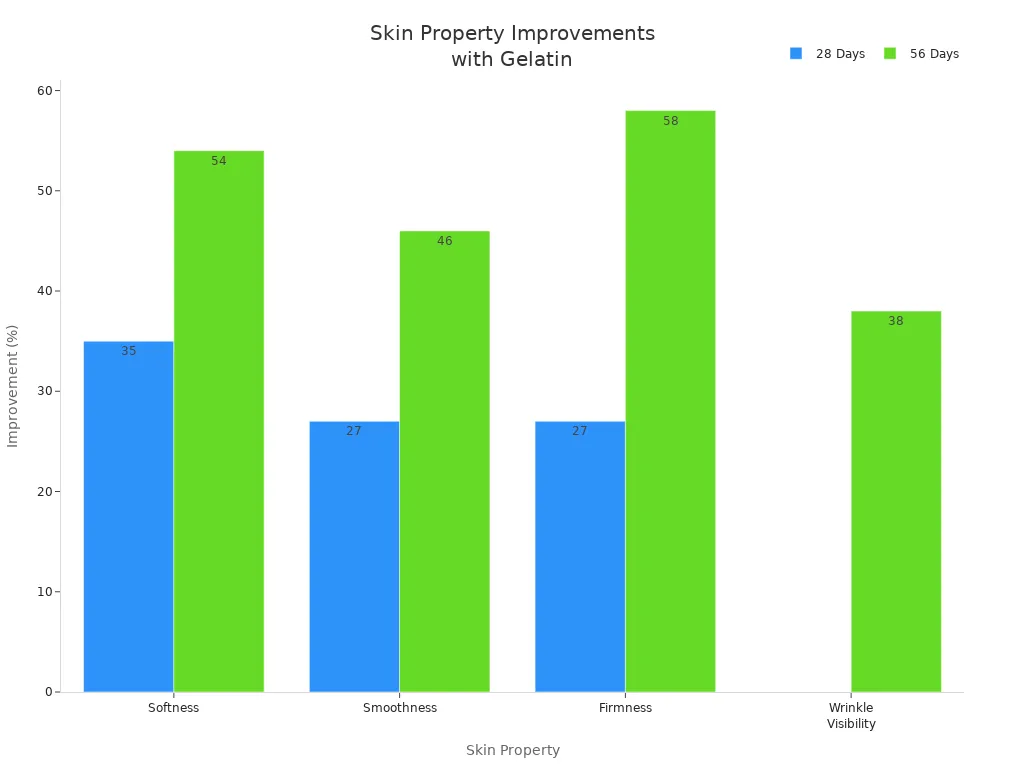
You can boost your skin, hair, and nail health with food gelatin ingredients. Gelatin gives your body the building blocks it needs to make collagen. Collagen keeps your skin firm and smooth. Studies show that eating gelatin can make your skin softer, smoother, and less wrinkled.
| Skin Property | Improvement After 28 Days | Improvement After 56 Days |
|---|---|---|
| Softness | 35% | 54% |
| Smoothness | 27% | 46% |
| Firmness | 27% | 58% |
| Wrinkle Visibility | N/A | 38% |
You can also see benefits for your hair and nails:
- A pilot study showed that marine collagen supplements helped people with hair loss.
- Taking 2.5 grams of collagen peptides daily for 24 weeks led to a 12% increase in nail growth and a 42% drop in broken nails.
- Marine collagen supplements increased hair density and thickness after 60 days.
You may notice stronger nails and thicker hair when you use food gelatin ingredients often.
Weight Management and Satiety
Food gelatin ingredients can help you feel full and manage your weight. Studies show that gelatin can reduce fat buildup and help control hunger. In one study, rats given gelatin microneedles had less body fat. Another study found that eating a 20-gram gelatin meal raised GLP-1 hormone levels, which helps you feel full, especially if you are overweight. People who ate gelatin at breakfast ate less at lunch than those who ate other proteins.
You can compare how gelatin works with other proteins:
| Protein Type | Appetite Suppression | Energy Intake | Study Conclusion |
|---|---|---|---|
| Gelatin | Greater | Lower | Stronger hunger suppression compared to other proteins |
| Casein | Moderate | Higher | Less effective in appetite suppression than gelatin |
| Whey | Moderate | Higher | Less effective in appetite suppression than gelatin |
You may find it easier to control your appetite and eat fewer calories when you include food gelatin ingredients in your meals.
Sleep and Mental Wellness
You can support better sleep and mental wellness with food gelatin ingredients. Gelatin contains glycine, an amino acid that helps calm your brain and improve sleep quality. Studies show that taking 3 grams of glycine can help you sleep better and feel less anxious.
| Study | Findings |
|---|---|
| Study 1 | 3 grams of glycine improved sleep quality |
| Study 2 | Glycine's role in sleep enhancement |
| Study 3 | Glycine as an inhibitory neurotransmitter reducing anxiety |
- Many people say gelatin helps them sleep better.
- Gelatin is often chosen over sleep medications and melatonin because it has fewer side effects.
You may find that adding food gelatin ingredients to your diet helps you relax, sleep well, and feel calmer during the day.
How to Use Food Gelatin Ingredients in Your Diet
Everyday Food Sources and Simple Recipes
You can find food gelatin ingredients in many popular foods. These foods make it easy to add gelatin to your meals without much effort. Some common choices include:
- Marshmallows
- Gummies
- Chocolate mousse
- No-bake cheesecakes
- Fruit jello
- Salmon mousse
- Gelatin jam
- Key lime pie
- Fruit mold
- Smoothies
Try adding a scoop of gelatin powder to your morning smoothie or mix it into yogurt. You can also make homemade gummies or fruit jello for a fun snack. These recipes help you enjoy the benefits of gelatin while keeping your meals tasty.
Gelatin Supplements and Usage Tips
If you want a simple way to boost your intake, you can use gelatin supplements. The National Institutes of Health suggests that up to 10 grams of gelatin supplements per day is safe for most people. You can take this amount for up to six months. Always check the label for serving size and directions. Mix gelatin powder into warm drinks or sprinkle it over oatmeal for an easy start.
Tip: Start with a small amount and increase slowly. This helps your body adjust and makes it easier to find the right amount for you.
Practical Ways to Add Gelatin Daily
You can add food gelatin ingredients to your diet in many ways. Stir gelatin into soups or stews to thicken them. Use it in homemade desserts or add it to sauces for extra texture. You can even blend it into coffee or tea. These small changes help you get more protein and support your wellness goals.
Common Questions and Misconceptions About Food Gelatin Ingredients
Safety and Suitability for Different Diets
You may wonder if gelatin is safe for everyone. Most people can eat gelatin in foods without problems, but some side effects can happen.
- You might feel bloated, have an upset stomach, or burp after eating gelatin.
- Allergic reactions are possible, though not common.
- The FDA says gelatin in foods is safe, but high doses in supplements may have unknown risks.
- Too much protein from gelatin could cause bone or kidney problems, or even raise your risk for heart disease.
- Safety for children, pregnant, or breastfeeding women is not well known.
Some groups should avoid certain types of gelatin. For example, Muslims and Jews do not eat gelatin from pigs. Hindus avoid gelatin from cows. Vegans and vegetarians skip all animal-based gelatin.
Note: Gelatin is gluten-free and often used in low-fat or low-calorie foods.
Animal-Based vs. Plant-Based Gelatin
You can choose between animal-based and plant-based gelatin. Animal-based gelatin comes from animal tissues, while plant-based options use seaweed or fruit. The texture changes too. Animal gelatin feels soft and bouncy. Plant-based types can be firm or creamy. Plant-based gelatin works well for vegan and vegetarian diets.
| Nutritional Aspect | Gelatin | Pea Protein |
|---|---|---|
| Protein | 85-90g/100g | 80-90g/100g |
| Essential Amino Acids | Lacks some | Nearly complete |
| Notable Amino Acids | Low tryptophan | High lysine |
| Joint Health | Supports joints | Supports muscles |
| Digestive Health | Gut health | Aids digestion |
Allergies and Dietary Restrictions
You should know that gelatin allergies can happen, especially in children. About 8% of children may react, often with urticaria (hives). If you have food allergies, check labels carefully. Some desserts with gelatin also contain high sugar, which can reduce health benefits.
Tip: Always read ingredient lists if you have allergies or follow a special diet.
You can improve your wellness by adding food gelatin ingredients to your meals. Experts recommend them for skin, bone, and sleep support.
| Health Benefit | Summary |
|---|---|
| Skin Aging | Reduces wrinkles and boosts elasticity |
| Blood Sugar | Improves insulin sensitivity |
| Bone Strength | Helps calcium absorption |
| Sleep Quality | Enhances sleep and brain function |
| Weight Loss | Increases satiety and supports weight loss |
- The global market for gelatin is growing fast.
- Marine gelatin is becoming popular for sustainability.
- You can find gelatin in many foods and supplements.
FAQ
Can you use gelatin if you have dietary restrictions?
You can find plant-based gelatin alternatives if you follow a vegan or vegetarian diet. Always check labels for animal sources or allergens.
How much gelatin should you eat daily?
You can safely eat up to 10 grams of gelatin per day. Start with a small amount and see how your body feels.
Does gelatin have a taste or smell?
Gelatin usually has no taste or smell. You can add it to foods and drinks without changing their flavor.
See Also
Why Bovine Gelatin Powder Is An Effective Health Booster
The Process and Ingredients Behind Edible Gelatin Production
10 Creative Methods to Incorporate Bovine Gelatin in Cooking
Key Indicators of High-Quality Bovine Gelatin Powder
Comparing Bovine Gelatin Powder With Fish and Pork Varieties