Your five gallon water dispenser buying guide
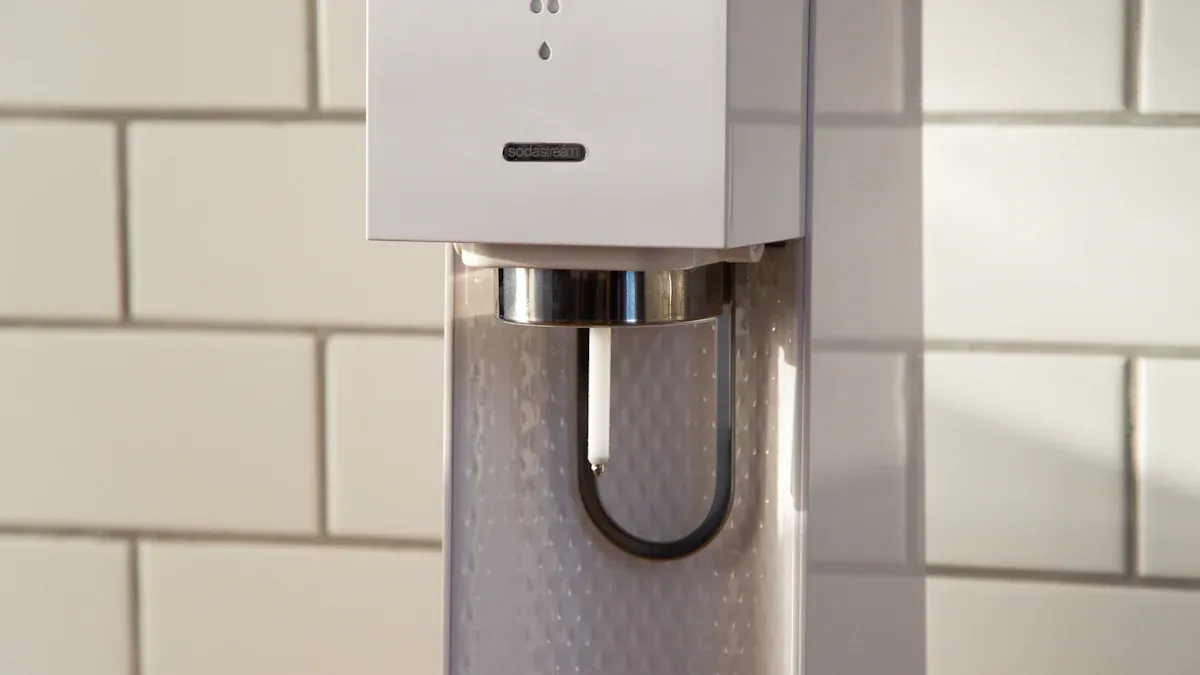
You are joining many others seeking convenient, purified water. Approximately 45% of households and workplaces use a water dispenser. Your choice of a five gallon water dispenser involves key decisions on dispenser type, temperature options, and maintenance.
Note: The water dispenser market is expanding rapidly. This growth reflects a rising demand for accessible, high-quality drinking water solutions at home and in the office.
| Attribute | Details |
|---|---|
| Market size value in 2023 | USD 3.26 billion |
| Revenue forecast in 2030 | USD 5.35 billion |
| Growth rate (Revenue) | CAGR of 8.6% from 2024 to 2030 |
Key Takeaways
- Choose your water dispenser type based on your needs. Top-loading models are cheap and simple. Bottom-loading models hide the bottle and are easy to use. Countertop models save space.
- Think about the water temperature you want. You can get hot, cold, or room temperature water. Hot water is good for drinks. Cold water is refreshing. Room temperature water is simple.
- Clean your dispenser often for good water. Clean it every time you change the bottle. Clean it at least every six weeks. This keeps your water safe and tasting good.
Key Factors for Your Five Gallon Water Dispenser
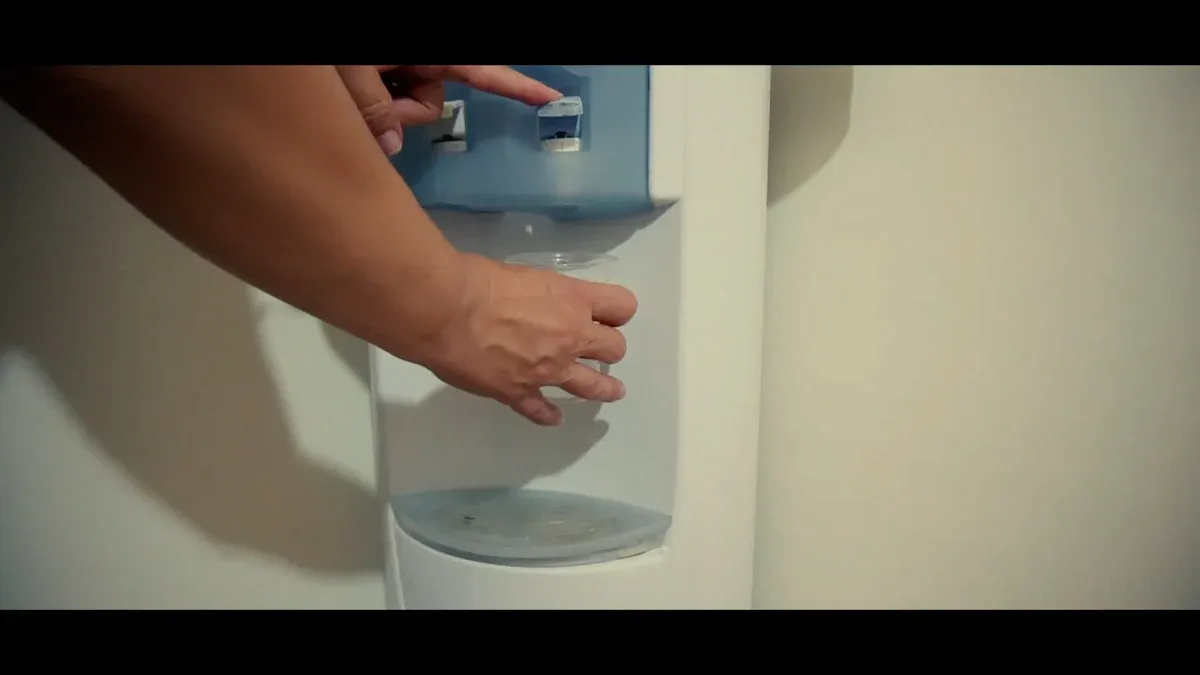
Choosing the right dispenser type is the most important step. Your decision will affect daily convenience, where you can place the unit, and your budget. You should evaluate three main styles: top-loading, bottom-loading, and countertop models.
Top-Loading Dispensers
Top-loading dispensers are a classic and popular choice. You place the water jug directly on top of the unit. This design makes it easy to see how much water is left. These models are often the most budget-friendly option.
You will find several key benefits with a top-loading dispenser:
- Cost-Effective: They are generally less expensive to purchase than other types.
- Simple to Use: These units do not require any complex installation or plumbing. You just plug them in.
- Portable: You can easily move them to different rooms or locations for events.
- Visible Water Level: The top-load design lets you see the water status at a glance, so you know when to get a new bottle.
Many models also offer customization. You can choose from dual hot/cold, cold/room temp, or even tri-temp options to get the water you prefer.
Bottom-Loading Dispensers
Bottom-loading dispensers offer a modern and convenient alternative. You place the water jug inside a cabinet at the base of the unit. This design eliminates the need to lift a heavy 40-pound water bottle.
This is a great choice if you want to avoid physical strain or potential water spills. The simple setup involves sliding the bottle into the base and connecting a small pump.
These models are often described as fashionable and space-efficient. The hidden bottle gives the dispenser a sleek, clean look that fits well in kitchens and offices. A typical bottom-loading five gallon water dispenser has the following dimensions:
| Characteristic | Value |
|---|---|
| Depth | 14.29 inches |
| Width | 13.35 inches |
| Height | 41.81 inches |
| Weight | 30.86 lbs |
When you select a bottom-loading five gallon water dispenser, look for important safety certifications. An ENERGY STAR certification means the unit is energy-efficient, while an NSF certification ensures it meets public health standards. For households with children, a child safety lock on the hot water faucet is an essential feature to prevent accidental burns.
Countertop Dispensers
Countertop dispensers are the perfect solution for smaller spaces. These compact units sit directly on your kitchen counter, in a breakroom, or on a sturdy table. They are ideal for apartments, dorm rooms, and home offices.
You might find a countertop model is right for you if you are a:
- Student or resident in a small apartment.
- Professional working from home.
- Small office with up to 30 staff members.
- Family needing instant hot water for cooking or baby formula.
These dispensers provide hydration on demand without needing a large, freestanding unit. Some countertop models offer the same capacity as their freestanding counterparts. This means you get the same great performance in a smaller package. They are a plug-and-play solution for anyone wanting clean hot or cold water without installation hassles.
Essential Features and Practical Considerations
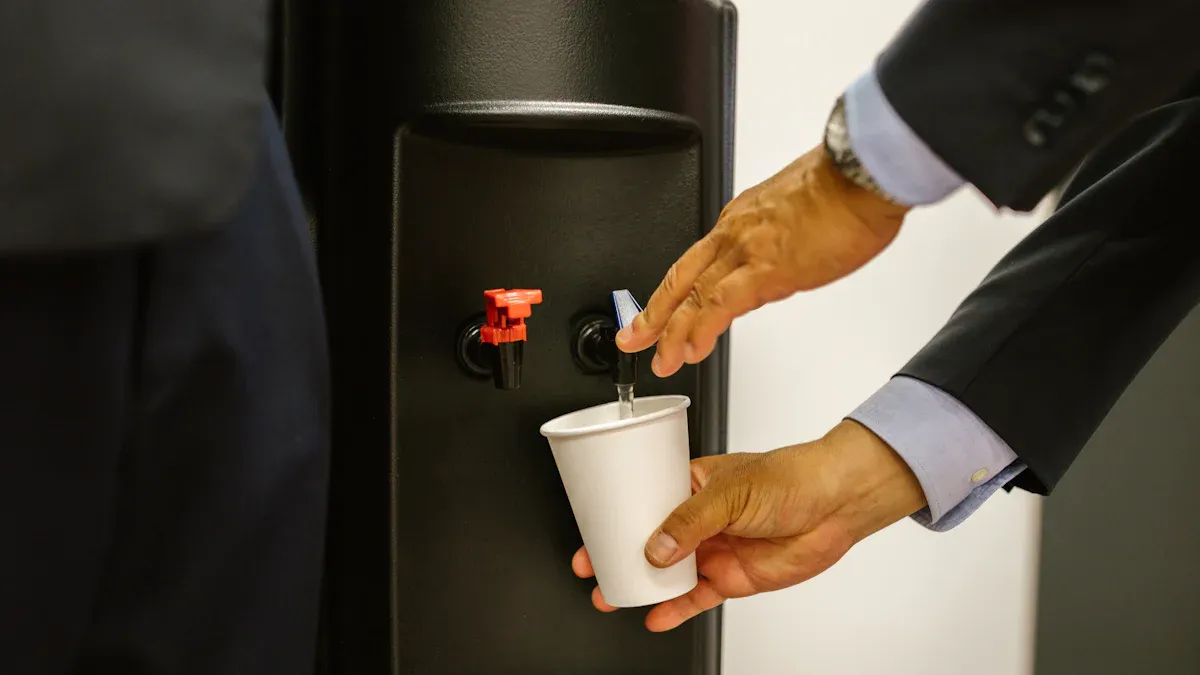
After you decide on a dispenser type, you need to look at the features that affect your daily use. Temperature settings, purification technology, and long-term maintenance are all important. These details will help you find a dispenser that truly fits your lifestyle.
Selecting Your Temperature Options
Most dispensers offer more than just room-temperature water. You can choose the combination that works best for you.
-
Hot Water: This feature is perfect for making instant tea, coffee, oatmeal, or soups. You will find that most dispensers heat water to nearly 190°F. Some models from brands like Culligan offer a range from 165°F to 194°F, while others like Elkay may top out around 185°F. This provides water hot enough for most kitchen needs without waiting for a kettle.
-
Cold Water: A chilled glass of water is always refreshing. The ideal temperature for cold water is around 50°F. However, you should know that the actual temperature can sometimes be warmer.
- Dispensed water can sometimes be between 62°F and 65°F.
- This happens because of the dispenser's design.
- Small water reservoirs or long water lines can cause the water to warm up slightly before it reaches your glass.
-
Room Temperature: This is a simple, no-frills option for those who prefer water that is not too cold. It dispenses water directly from the jug without any heating or cooling.
Evaluating Filtration and Self-Cleaning
Water quality is a top priority. Many modern dispensers include features to keep your water pure and the unit clean.
Some dispensers come with built-in filtration systems. These are especially useful if you are refilling jugs with tap water. A quality multi-stage filter, like the 5-stage systems found in some countertop models, can significantly improve water taste and safety. These filters use materials like granulated activated carbon to remove organic contaminants and ion exchange resin to capture inorganic compounds.
Self-cleaning technology helps prevent bacteria and biofilm from building up inside the dispenser's tanks. You will typically find two types:
UV-C Light vs. Ozone: UV-C light uses powerful radiation to kill germs, similar to sanitation methods used in hospitals. Ozone cleaning creates ozonated water that rapidly sanitizes the system. While both are effective, some analyses suggest ozonation is more practical for its ability to permeate the entire tank.
These automated cycles keep the internal reservoir clean without chemicals. However, they do not clean the parts you touch. You will still need to manually clean the spigots, drip tray, and bottle probe.
Considering Maintenance and Energy Use
A five gallon water dispenser is a long-term appliance. You should consider its upkeep and running costs.
Regular cleaning is essential for healthy, great-tasting water. You should clean your dispenser every time you change the bottle, or at least every six weeks. Here is a simple cleaning routine:
- Unplug the unit from the wall.
- Remove the empty water jug.
- Take out the water guard (the part the bottle sits on) and wash it with mild soap and warm water. Rinse and dry it completely.
- Prepare a cleaning solution with 2 tablespoons of baking soda and 1 cup of water. Pour it into the reservoir.
- Drain the solution through the spigots. Then, rinse the reservoir several times by flushing it with fresh tap water.
- For a deeper sanitization, you can use a solution of ½ teaspoon of bleach per gallon of water. Pour it in, wait no more than five minutes, and drain it through the cold spigot only. Rinse thoroughly with fresh water afterward.
- Finally, use a vacuum with a brush attachment to clean dust and lint from the condenser coils on the back of the unit. This helps it run efficiently.
Energy consumption is another key factor. The features you choose directly impact your electricity bill. A model with both hot and cold functions uses significantly more energy than one that only cools the water.
| Dispenser Type | Daily Energy Consumption (kWh) |
|---|---|
| Cold Water Only | 0.3 - 1.2 |
| Hot & Cold Water | 2.8 |
While a standard bottled water dispenser has an estimated annual electricity cost of around $31.26, adding the hot water feature can nearly triple that cost. If you do not plan to use hot water often, you can save money by choosing a cold-only model or one with a power-saving switch for the heater.
You are now ready to make a confident purchase. The right five gallon water dispenser matches your lifestyle and budget. Use this final checklist to guide your decision.
Your Quick Checklist:
- Dispenser Type: Top-load, bottom-load, or countertop?
- Temperatures: Hot, cold, or room temp?
- Features: Do you need filtration or self-cleaning?
FAQ
How often should you clean your water dispenser?
You should clean your dispenser every time you change the water bottle. A cleaning every six weeks is also a good rule to follow for fresh, safe water.
How long does a water dispenser last?
A well-maintained water dispenser can last for many years. You can expect most quality models to have a lifespan of five to ten years with proper care.
Can you use any five-gallon jug with your dispenser?
Most dispensers fit standard five-gallon jugs. However, you should check the manufacturer's guide. Some brands may require specific bottle types for a proper fit and function.