Fish Collagen Tripeptide TCP and Other Collagen Supplements Key Differences Explained
Fish collagen tripeptide TCP stands out for its unique absorption and health benefits.
- The collagen peptides market expects to exceed USD 22,622 million by 2027, growing at 5.42% CAGR.
| Parameter | Test Group Results | Placebo Group Results | Significance |
|---|---|---|---|
| Skin Hydration | Significant Increase | No significant change | p < 0.05 |
| Skin Elasticity | Significant Increase | No significant change | p < 0.05 |
| Skin Density | Significant Increase | No significant change | p < 0.05 |
Collagen Types and Sources

Fish Collagen Tripeptide TCP
Fish collagen tripeptide TCP originates from marine sources and contains type I collagen. This supplement features a low molecular weight, which allows for rapid absorption and high bioavailability. Many users prefer fish collagen tripeptide TCP for skin health and anti-aging benefits. Marine collagen, including fish collagen tripeptide TCP, may face purity concerns due to possible contamination with heavy metals from ocean pollution. Environmental impacts also arise from fishing practices and processing methods, which can affect marine ecosystems.
Note: Marine collagens, such as fish collagen tripeptide TCP, absorb up to 1.5 times more efficiently than bovine or porcine collagen.
Bovine Collagen Supplements
Bovine collagen comes from cattle and supplies both type I and III collagen. These supplements support skin, bone, and muscle health. Hydrolyzed bovine collagen offers rapid absorption and versatility for athletes and individuals seeking joint or skin support. Safety concerns exist with bovine collagen, including potential side effects like heartburn, bloating, and allergic reactions. Rare but serious skin reactions may occur, so individuals with a history of allergies should avoid these supplements.
- Potential side effects: heartburn, bloating, gas, constipation, diarrhea
- Allergic reactions: rash, itching, nausea, vomiting, headache, joint pain, facial swelling, trouble swallowing, shortness of breath
Porcine Collagen Supplements
Porcine collagen derives from pigs and closely matches the amino acid profile of human collagen. This similarity enhances absorption and reduces immune response risks. Porcine collagen supports skin and joint health, making it suitable for those seeking improved bioavailability. Compared to fish collagen tripeptide TCP, porcine collagen absorbs efficiently but does not reach the same level of bioavailability.
Other Marine Collagen Sources
Marine collagen also comes from sources like jellyfish and shellfish. These supplements offer high absorption due to their small particle size. However, marine collagen faces environmental challenges, including overfishing and habitat destruction. Processing methods contribute to carbon emissions and water pollution, impacting marine ecosystem health.
| Supplement Type | Molecular Structure | Typical Benefits | Ideal Users |
|---|---|---|---|
| Hydrolysed Collagen | Broken into peptides | Rapid absorption, versatile | Athletes, joint/skin support |
| Native Collagen | Intact triple-helix | Immune-mediated joint support | Individuals with joint goals |
| Gelatin | Partially hydrolysed | Culinary uses, gut support | Cooking enthusiasts |
| Type II Collagen | Found in chicken source | Cartilage and joint health | Joint health focused adults |
Structure and Composition
Tripeptide Structure in Fish Collagen TCP
Fish collagen tripeptide TCP features a unique molecular structure. Each tripeptide consists of three amino acids linked together. This compact form gives the supplement a molecular weight below 500 Daltons. The small size allows tripeptides to pass through the intestinal wall without further breakdown. They enter the bloodstream as intact functional units. Research shows that tripeptides reach peak plasma concentration within one to two hours after ingestion. This rapid absorption means the body can use the peptides quickly for tissue repair and collagen synthesis.
Note: Tripeptides can activate collagen production pathways more efficiently than larger collagen molecules. They bind to specific receptors on fibroblasts and trigger the MAPK/ERK signaling pathway, which accelerates collagen and hyaluronic acid synthesis.
| Evidence Type | Description |
|---|---|
| Direct absorption | Tripeptides pass through the intestinal wall as intact units. |
| Rapid availability | Tripeptides appear in the bloodstream within 30 minutes to 2 hours. |
| Higher bioavailability | More of the consumed product reaches tissues in a usable form. |
| Targeted signaling | Tripeptides trigger collagen production in specific tissues. |
Amino Acid Profile Comparison
Collagen supplements differ in their amino acid composition. Fish collagen tripeptide TCP contains high levels of glycine, proline, and hydroxyproline. These amino acids support skin elasticity and hydration. Bovine and porcine collagens also provide these amino acids but in different ratios. Marine sources often have higher hydroxyproline content, which enhances skin and joint benefits. The tripeptide form allows for more efficient delivery of these amino acids to target tissues. This efficiency supports faster improvements in skin density and elasticity compared to traditional collagen supplements.
Bioavailability and Absorption
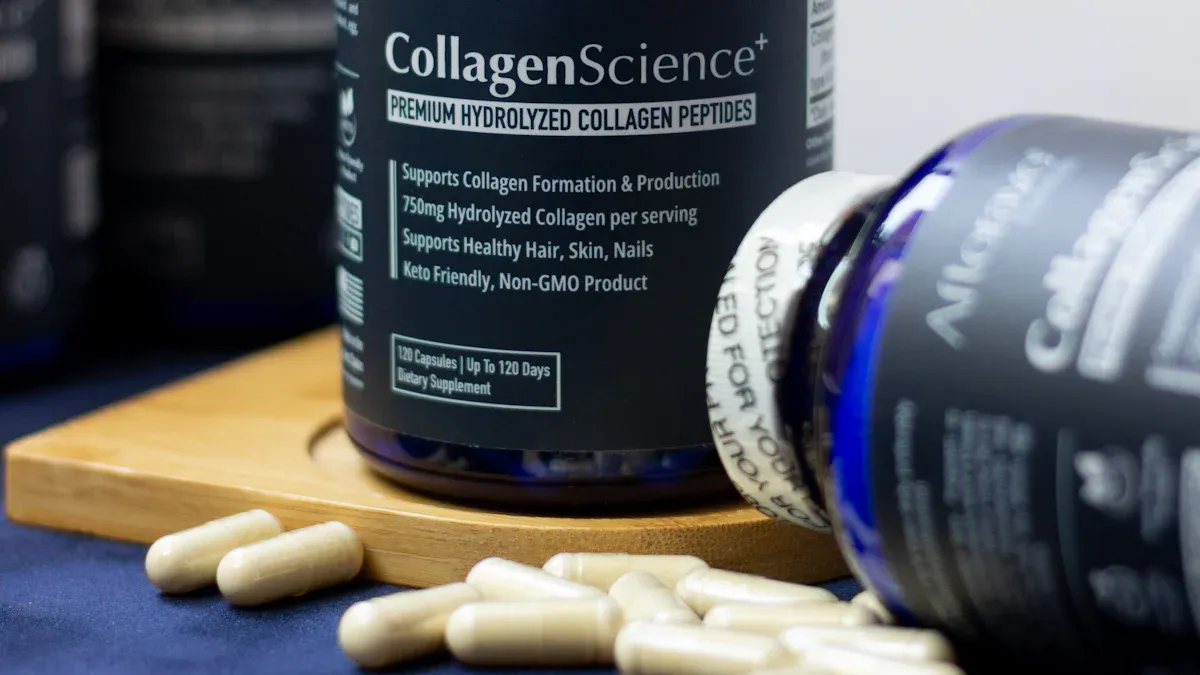
Fish Collagen Tripeptide TCP Absorption
Fish collagen tripeptide TCP demonstrates exceptional absorption due to its unique molecular structure. The tripeptide form contains three amino acids linked together, resulting in a molecular weight below 500 Daltons. This small size allows the peptides to pass through the intestinal wall rapidly and enter the bloodstream as intact units. The body does not require extensive enzymatic breakdown, which accelerates the absorption process.
Oral collagen hydrolysates, including tripeptides, undergo breakdown by gastric and pancreatic enzymes. The digestive system transports di- and tri-peptides across the intestinal border. Enterocytes, specialized cells in the gut, facilitate this process. Factors such as processing conditions, molecular weight, and gut health influence the efficiency of digestion and absorption. Research shows that tripeptides reach peak plasma concentration within one to two hours after ingestion. This rapid availability supports tissue repair and collagen synthesis in the skin, joints, and other connective tissues.
Tip: Consuming vitamin C and copper alongside collagen supplements can enhance bioavailability and maximize benefits.
Comparing Absorption Rates of Collagen Types
Different types of collagen supplements display varying bioavailability and absorption rates. Hydrolyzed collagen, which includes fish collagen tripeptide TCP, is easier for the body to absorb due to its smaller particle size. The hydrolysis process breaks collagen into smaller peptides, making them more accessible for transport across the intestinal wall.
Several factors influence the bioavailability of collagen supplements:
- The type of collagen and its molecular size
- Age, as absorption efficiency decreases over time
- Stress levels, which may impact absorption rates
- Micronutrient status, especially vitamin C, iron, and copper
- The presence of paired micronutrients that enhance absorption
The absorption process involves several steps:
- Hydrolysis of collagen into smaller peptides
- Breakdown in the digestive tract
- Circulation of amino acids throughout the body
- Stimulation of cellular collagen production
- Potential regeneration of connective tissues
Marine-derived collagens, such as fish collagen tripeptide TCP, typically absorb up to 1.5 times more efficiently than bovine or porcine collagen. This higher absorption rate results in more pronounced benefits for skin hydration, elasticity, and joint support. Individuals seeking rapid and effective results often choose marine collagen supplements for their superior bioavailability.
Effectiveness and Health Benefits
Skin Health and Anti-Aging with Fish Collagen TCP
Fish collagen tripeptide TCP delivers notable improvements in skin hydration and elasticity. Clinical trials show that participants experienced increased skin hydration after four and eight weeks of supplementation. These effects persisted for two weeks after stopping the supplement. In vitro studies reveal that TCP reduces the percentage of senescent cells, which contribute to visible aging. The mechanism involves hydroxyproline-rich peptides stimulating skin fibroblast growth and boosting hyaluronic acid production. This process enhances skin density and moisture retention.
| Evidence Type | Findings | Details |
|---|---|---|
| Clinical Trial | Increased skin hydration | Hydration improved after 4 and 8 weeks; effects lasted post-discontinuation. |
| In Vitro Study | Reduced senescent cells | TCP lowered senescent cell percentage compared to control (p < 0.05). |
| Mechanism | Enhanced collagen synthesis | Di and tripeptides stimulate fibroblast growth and hyaluronic acid production. |
Tip: Regular intake of TCP supports filaggrin production, which increases amino acid content in the skin and improves moisture retention.
Joint and Bone Support Benefits
Collagen supplements play a vital role in joint and bone health. Fish collagen tripeptide TCP contains peptides that stimulate cartilage regeneration and support bone density. Athletes and older adults benefit from improved joint flexibility and reduced discomfort. The supplement’s rapid absorption ensures that peptides reach connective tissues quickly. Bovine and porcine collagen also provide joint support, but marine-derived TCP offers higher bioavailability, leading to faster results.
- Enhanced cartilage regeneration
- Improved bone density
- Reduced joint discomfort
Additional Health Benefits
Collagen supplementation extends beyond skin and joint health. Fish collagen tripeptide TCP supports gut integrity by strengthening the intestinal lining. The supplement may promote hair and nail growth due to its rich amino acid profile. Some studies suggest that TCP improves wound healing and boosts immune function. Individuals seeking comprehensive wellness often choose marine collagen for its broad spectrum of benefits.
| Mechanism | Description |
|---|---|
| Hydroxyproline-rich peptides | Stimulate fibroblast growth, enhancing hydration and elasticity. |
| Filaggrin production | Restores hyaluronic acid synthase, increases amino acid content for moisture retention. |
Note: Collagen supplements work best when combined with a balanced diet and regular exercise.
Choosing the Right Collagen Supplement
When to Choose Fish Collagen Tripeptide TCP
Fish collagen tripeptide TCP offers rapid absorption and high bioavailability. Individuals who prioritize skin hydration, elasticity, and anti-aging benefits often select this supplement. The tripeptide structure allows for efficient delivery of amino acids, which supports visible improvements in skin texture and density. People with sensitivities to bovine or porcine sources may also prefer marine-derived collagen. Those seeking a supplement with minimal risk of immune response or allergies can benefit from this option. Athletes and older adults who want fast-acting support for joint flexibility and connective tissue repair may find this supplement especially effective.
Tip: For optimal results, combine marine collagen with vitamin C and copper to enhance absorption and collagen synthesis.
When Other Collagen Types Are Preferable
Bovine and porcine collagen supplements provide unique advantages for certain users. Bovine collagen contains both type I and III collagen, which supports not only skin but also bone and muscle health. Individuals focused on joint recovery, muscle repair, or bone density may choose bovine collagen for its broader amino acid profile. Porcine collagen closely matches human collagen, which can improve absorption and reduce the risk of immune reactions. People who avoid fish products for dietary, ethical, or allergy reasons may prefer bovine or porcine options. Some supplements also combine multiple collagen types (I–V) to offer comprehensive support for skin, joints, cartilage, and connective tissues.
Note: Always consider dietary restrictions, religious practices, and personal health goals when selecting a collagen source.
Identifying Quality Collagen Products
Selecting a high-quality collagen supplement requires careful evaluation of manufacturing standards, ingredient purity, and third-party testing. Products manufactured in cGMP-certified facilities ensure adherence to regulatory quality standards. Pharmaceutical-grade collagen offers superior purity and safety. Consumers should look for supplements that are non-GMO, gluten-free, and dairy-free to minimize the risk of adverse reactions. Avoiding fillers, binders, and potentially inflammatory ingredients like corn or soy further enhances product safety.
A Certificate of Analysis (COA) provides transparency about the product’s composition and verifies the absence of contaminants. Third-party testing organizations such as USP, NSF International, and GMP certification validate product claims and ensure responsible sourcing. Brands that prioritize purity and sustainability often display these certifications on their packaging.
| Certification | Description |
|---|---|
| AGA | Ensures cattle are grass-fed, raised outdoors, and free from hormones and antibiotics. |
| GMP | Confirms adherence to regulatory quality standards in manufacturing. |
| FSSC 22000 | Indicates high operational and product safety compliance. |
Checklist for Choosing Quality Collagen Supplements:
- Look for third-party testing and a Certificate of Analysis.
- Choose pharmaceutical-grade, non-GMO, gluten-free, and dairy-free products.
- Select supplements free from fillers, binders, corn, or soy.
- Verify responsible sourcing and clear labeling of collagen types.
- Partner with reputable brands that use qualified contract development and manufacturing organizations.
- Ensure the manufacturer holds GMP certification.
- Seek additional certifications such as NSF Certified for Sport® for added assurance.
Tip: Supplements that combine multiple collagen types (I–V) can provide broader support for skin, joints, and connective tissues.
Fish collagen tripeptide TCP absorbs faster and supports skin health more efficiently than other types. Users should select collagen based on their health goals. The table below outlines key benefits:
| Type of Collagen | Benefits |
|---|---|
| Type I | Skin, tendons, ligaments, bones |
| Type II | Joint health, joint pain relief |
| Type III | Muscle recovery, skin health |
| Type IV | Skin health |
| Type V | Hair and skin health |
Nutritionists recommend consulting a healthcare professional, reading ingredient labels, and following dosage guidelines for safe and effective results.
FAQ
What makes fish collagen tripeptide TCP different from other collagen supplements?
Fish collagen tripeptide TCP contains smaller peptides. These peptides absorb faster and deliver higher bioavailability compared to bovine or porcine collagen.
Can people with allergies use fish collagen tripeptide TCP?
Individuals with fish allergies should avoid fish collagen tripeptide TCP. They can choose bovine or porcine collagen supplements for safer alternatives.
How can someone identify a high-quality collagen supplement?
Look for third-party testing, pharmaceutical-grade ingredients, and clear labeling. Quality products display certifications such as GMP or NSF on their packaging.
See Also
Comparing Bovine Gelatin Powder With Fish And Pork Varieties
The Health Benefits of Bovine Gelatin Powder Explained
Key Indicators of High-Quality Bovine Gelatin Powder
The Production Process and Composition of Edible Gelatin
Creative Methods to Incorporate Bovine Gelatin Powder Into Dishes