Everything You Need to Know About Fish Collagen Peptide
Fish collagen peptide comes from the skin and scales of fish. This ingredient stands out for its high purity and excellent absorption. It supports skin, joint, and bone health. The global market reached $1.1 billion in 2024 and may grow to $1.8 billion by 2033, as shown below:
| Year | Market Size (USD Billion) | CAGR (%) |
|---|---|---|
| 2024 | 1.1 | N/A |
| 2033 | 1.8 | 5.9 |
Fish Collagen Peptide: Source and Preparation
Origin and Extraction Process
Manufacturers obtain fish collagen peptide from various fish processing by-products. These sources include:
- Skins
- Scales
- Bones
- Swim bladders
The extraction process plays a crucial role in determining the purity and quality of the final product. Several methods exist, each with unique advantages and drawbacks:
| Extraction Method | Advantages | Disadvantages |
|---|---|---|
| Acid-soluble collagen extraction (ASC) | High yield, simple and versatile | Use of hazardous chemicals, high time requirement |
| Enzyme-soluble collagen extraction (ESC) | Eco-friendly, reduces toxic solvents | High cost of enzymes for industrial applications |
| Ultrasound extraction | Environmentally friendly, maximum yield | High use costs for large-scale applications |
| Deep eutectic solvent extraction | Environmentally friendly, good yield | Optimization challenges with conditions and parameters |
| Supercritical fluid extraction | Environmentally friendly, maximum yield | High use costs for large-scale applications |
Acid-soluble collagen extraction remains a popular choice. This method uses acidic solutions, such as acetic acid, to break down collagen cross-links while preserving the protein’s structure. The process yields high-quality collagen peptides with molecular weights ranging from 0.3 to 8 kDa.
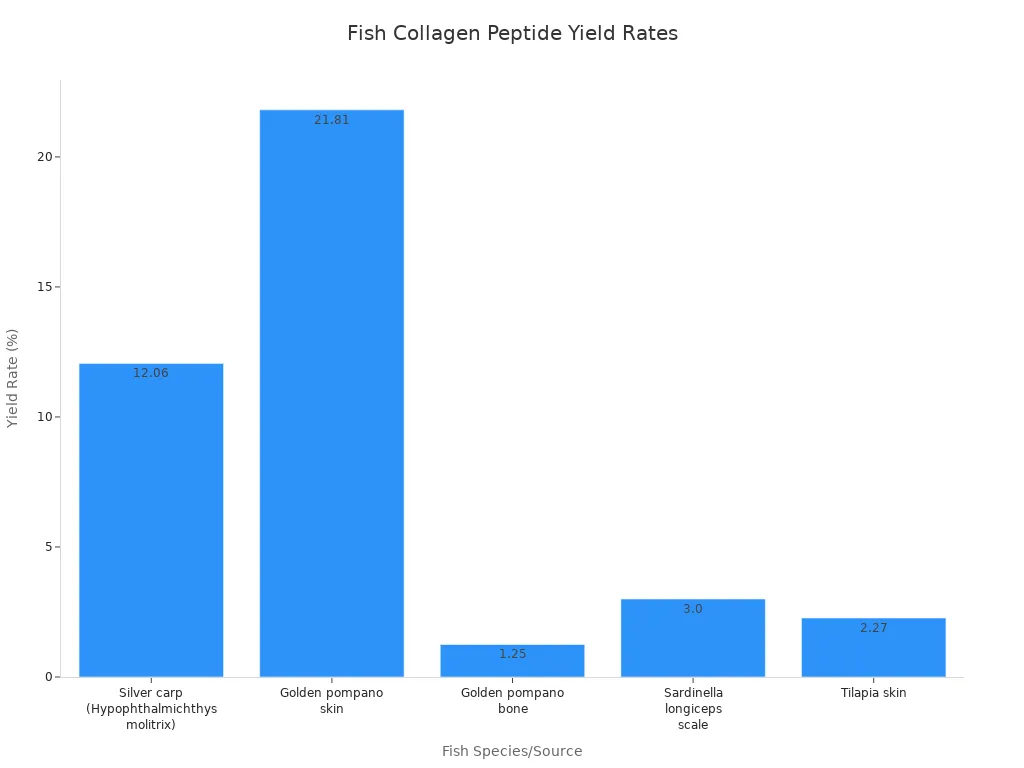
Yield rates vary by fish species and tissue type. For example, golden pompano skin provides a higher yield than tilapia skin or eel skin.
Molecular Structure and Type I Collagen
Fish collagen peptide primarily consists of type I collagen. This type features a triple-helix structure, which supports its strength and flexibility. Compared to bovine collagen, fish-derived collagen has a lower molecular weight and higher electrophoretic mobility. These properties enhance its absorption and bioavailability in the human body.
| Characteristic | Fish Collagen | Bovine Collagen |
|---|---|---|
| Amino Acid Composition | Different sequences | Varies by species |
| Thermal Properties | Distinctive features | Varies by species |
| Molecular Weight | Lower | Higher |
| Electrophoretic Mobility | Higher | Lower |
| Denaturation Temperature | Different | Varies by species |
Fish Collagen Peptide: Characteristics and Benefits

Nutritional Value and Amino Acid Profile
Fish collagen peptide offers a unique amino acid profile that distinguishes it from other protein supplements. The peptide contains a high proportion of glycine, proline, and hydroxyproline, which are essential for collagen synthesis and tissue repair. The glycine content reaches approximately 39%, while hydroxyproline makes up about 5%. Compared to bovine or porcine collagen, fish collagen peptide has a lower hydroxyproline content, which contributes to its distinct properties.
- Glycine supports the structure of connective tissues.
- Proline and hydroxyproline play key roles in skin and joint health.
- The peptide lacks some essential amino acids, making it an incomplete protein.
The table below summarizes the concentrations of key amino acids relative to lysine:
| Amino Acid | Concentration (to lysine ratio) |
|---|---|
| Glycine | 0.76 to 0.98% |
| Proline | 0.836 to 1.06% |
| Hydroxyproline | 0.122 to 0.34% |
When compared to other protein powders, fish collagen peptide stands out for its easy digestion and absorption, as well as its lower caloric content:
| Feature | Fish Collagen Peptides | Other Protein Powders (e.g., Whey) |
|---|---|---|
| Amino Acid Profile | Incomplete protein, lacks some essential amino acids | Complete protein, ideal for muscle recovery |
| Absorption | Easily digested and absorbed | Varies, some take longer to digest |
| Caloric Content | Fewer calories, fewer grams of protein per serving | Generally higher in protein per serving |
| Health Benefits | Supports skin and joint health | Versatile, aids in muscle building and recovery |
Note: Fish collagen peptide provides targeted benefits for skin, joints, and connective tissues, but it does not replace complete proteins in the diet.
Purity and Bioavailability
Commercially available fish collagen peptide products typically achieve a purity level close to 100%. This high purity ensures that consumers receive a concentrated source of collagen with minimal contaminants or additives.
Bioavailability refers to how efficiently the body absorbs and utilizes nutrients. Fish collagen peptide demonstrates superior bioavailability due to its low molecular weight and small peptide size. Marine collagen, derived from fish, absorbs approximately 1.5 times better than bovine collagen. This enhanced absorption allows the body to utilize the peptides more effectively, resulting in faster and more noticeable benefits.
Several factors influence the bioavailability of fish collagen peptide:
| Factor | Description |
|---|---|
| Food Processing | Processing methods can alter nutrient bioavailability. |
| Food Composition | Other foods consumed at the same time may impact absorption. |
| Genetic Differences | Individual genetics affect how nutrients are absorbed. |
| Gastrointestinal Variations | Digestive system differences influence absorption rates. |
| Characteristics of Hydrolysate | Manufacturing process, raw material origin, and degree of hydrolysis all play a role. |
Tip: For optimal results, individuals should consume fish collagen peptide on an empty stomach or with vitamin C-rich foods to support collagen synthesis.
Health Effects and Practical Uses
Fish collagen peptide supports a wide range of health benefits, as demonstrated by clinical studies and practical applications.
- Oral supplementation enhances skin hydration and elasticity. Studies show significant improvements in skin moisture and elasticity, with fish collagen recognized as the optimal source for these effects.
- The peptide stimulates collagen and hyaluronic acid synthesis, which helps maintain youthful skin appearance.
- Research indicates a chondroprotective effect, reducing cartilage degradation and improving joint health. Supplementation, especially when combined with exercise, enhances joint function and reduces pain.
- Collagen peptides increase bone mineral density and improve bone markers, suggesting benefits for bone strength and reduced bone loss, particularly in postmenopausal women.
- The peptide promotes wound healing and tissue regeneration by enhancing fibroblast migration, angiogenesis, and new tissue formation.
- Glycine in fish collagen peptide may help stabilize blood sugar levels, which is important for metabolic health.
- Supplementation supports hair and nail growth, with studies showing increased hair regrowth and improved dermal cell proliferation.
- The peptide may reduce inflammation, fight bacteria, and support gut health by maintaining the intestinal barrier and modulating immune responses.
| Health Goal | Recommended Dosage |
|---|---|
| General Benefits | 2.5 - 10 grams per day |
| Skin Improvement | 2.5 grams per day |
| Joint and Bone Support | 5 - 10 grams per day |
| Muscle Strengthening and Recovery | Up to 20 grams per day |
Fish collagen peptide finds practical uses in food, cosmetics, and pharmaceuticals. It aids in dermal healing, supports cartilage, and contributes to the maintenance of healthy hair and nails. The market for fish collagen peptide continues to grow, driven by consumer demand for natural and functional dietary ingredients.
Caution: Individuals with fish allergies should avoid fish collagen peptide. Some products may contain heavy metals or interact with medications, so users should consult healthcare professionals before starting supplementation.
| Key Takeaway | Summary |
|---|---|
| Product-Specific Outcomes | Verisol® demonstrates strong skin benefits; marine collagen shows promise in smaller trials. |
| Bioavailability | Hydrolyzed marine and bovine peptides offer similar absorption rates. |
| Health Benefits | Oral collagen improves skin hydration, elasticity, and appearance. |
| Practical Uses | Hydrolyzed films and innovative formats enhance absorption and convenience. |
- The market continues to expand as consumers seek natural ingredients and performance-focused products. Innovations in extraction and delivery methods, along with sustainable sourcing, drive growth in beauty, biomedical, and wellness sectors.
FAQ
What is the best way to take fish collagen peptide?
Most experts recommend mixing fish collagen peptide powder with water or juice. Individuals can also add it to smoothies or yogurt for easy consumption.
Can fish collagen peptide cause side effects?
Fish collagen peptide rarely causes side effects. Some individuals may experience mild digestive discomfort. People with fish allergies should avoid this supplement.
How long does it take to see results from fish collagen peptide?
Results usually appear within four to eight weeks. Skin hydration and joint comfort improve first. Consistent daily intake supports optimal benefits.
See Also
Comparing Bovine Gelatin Powder With Fish And Pork Varieties
Key Indicators Of High-Quality Bovine Gelatin Powder To Recognize
Reasons Bovine Gelatin Powder Is An Effective Health Booster
The Process Of Producing Edible Gelatin And Its Ingredients
10 Creative Methods To Incorporate Bovine Gelatin Powder In Cooking