An Essential List of Sewage Treatment Plant Equipment
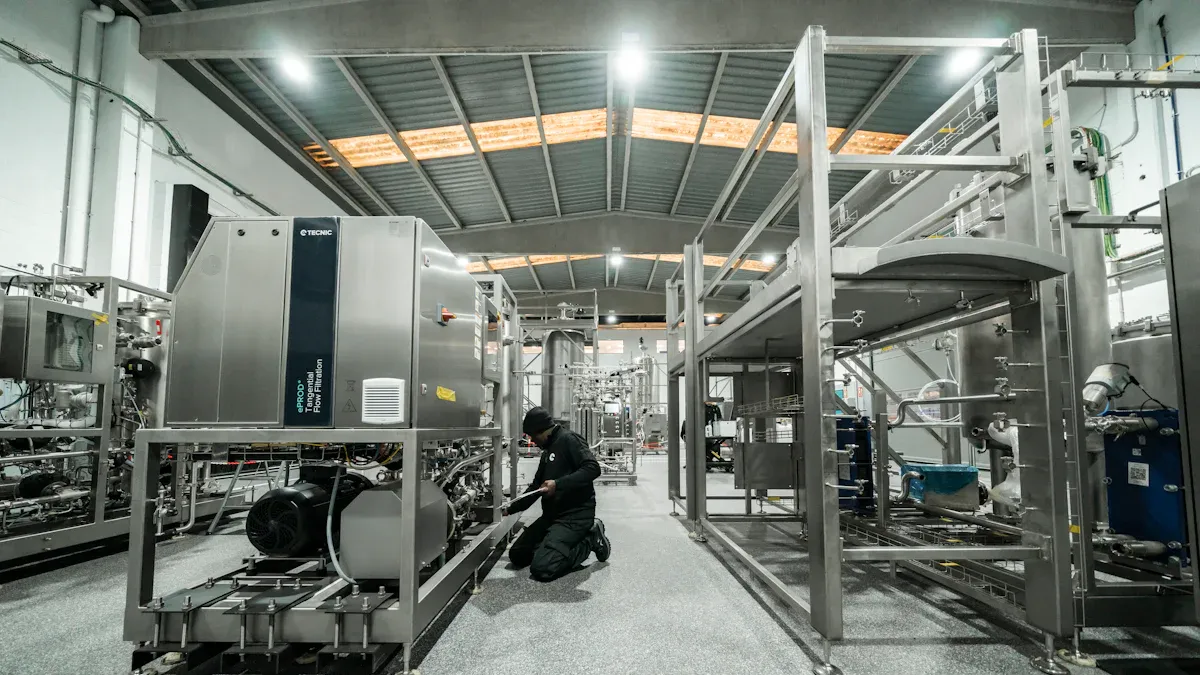
A sewage treatment plant uses a system of machines to purify wastewater. Key components include bar screens, clarifiers, and aeration tanks. Pumps move water and blowers supply air. This effluent treatment plant/sewage treatment equipment effectively removes contaminants.
- Standard secondary treatment must remove at least 85% of specific pollutants.
Sensors and valves monitor the operation.
Key Takeaways
- Sewage treatment plants use different machines to clean wastewater in stages.
- Bar screens and grit chambers remove large trash and sand first.
- Aeration tanks use tiny living things to eat pollution, and clarifiers help clean water settle.
Preliminary and Primary Effluent Treatment Plant/Sewage Treatment Equipment
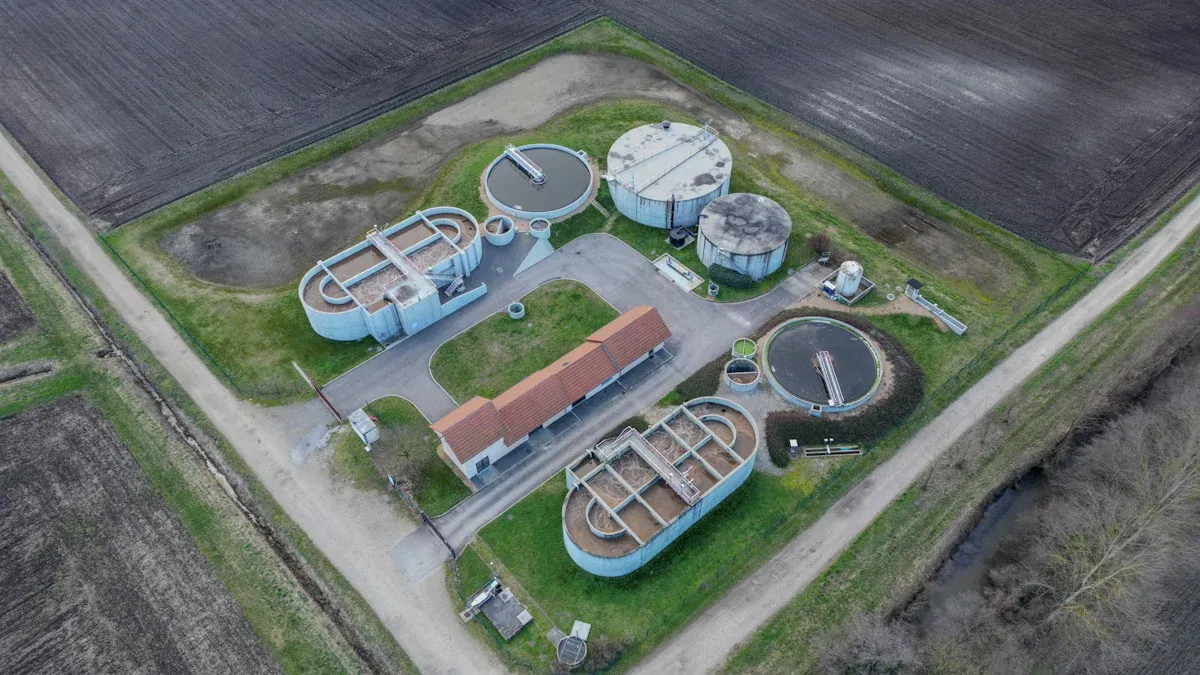
The journey of wastewater purification begins with the preliminary and primary stages. This initial phase focuses on removing large physical objects and allowing heavy solids to settle. The goal is to prepare the water for more advanced biological treatment. Effective preliminary treatment protects downstream machinery from damage and blockages. This makes the entire system more efficient.
Bar Screens
Bar screens are the plant's first line of defense. They are like giant combs that catch large items carried in the wastewater. These items include rags, sticks, plastics, and other trash. Removing this debris prevents damage to pumps and other sensitive effluent treatment plant/sewage treatment equipment.
There are several types of bar screens. Their design depends on the plant's size and level of automation.
| Type of Bar Screen | Cleaning Mechanism | Opening Size (Typical) | Purpose/Characteristics |
|---|---|---|---|
| Manual Bar Screens | Human intervention | 15 to 50 mm | Simple design, used in smaller facilities. |
| Mechanical Bar Screens | Automated (motor-driven) | 15 to 50 mm | Reduces manual labor, used in larger plants. |
| Coarse Screens | Manual or mechanical | Larger than 6 mm | Removes large objects like sticks and rags. |
| Fine Screens | Manual or mechanical | Smaller than coarse screens | Captures smaller particles after coarse screening. |
Alert: Bar screens face several operational challenges. Regular maintenance is crucial to prevent system failure.
Common problems include:
- Clogging: Debris like branches, plastic bags, and fibrous wipes can get stuck and block the flow of water.
- Mechanical Wear: Continuous operation causes parts like motors and chains to wear out over time.
- Corrosion: The wastewater environment is harsh and can rust even stainless steel components.
- Ragging: Fibrous materials can wrap around the screen's moving parts, causing them to jam.
Grit Chambers
After passing through the bar screens, wastewater enters a grit chamber. This is a special tank designed to slow down the water flow. The slower speed allows heavier, inorganic particles to settle to the bottom. These particles, known as grit, include sand, gravel, eggshells, and coffee grounds. Removing grit is important because it can cause significant wear on pumps and other mechanical equipment.
Grit removal systems are designed to capture very specific particle sizes.
- They typically handle a particle size range of 50 to 500 microns.
- An ideal design often targets a finer range of 75 to 150 microns to maximize efficiency.
Note: For perspective, a human hair is about 70 microns wide. So, grit chambers are designed to remove particles as small as a grain of fine sand.
Pumps and Flow Control
Pumps are the heart of a treatment plant. They move wastewater from one stage to the next. Flow control devices, like valves and flumes, measure and manage the volume of water moving through the system. This ensures each treatment process operates correctly. The selection of this effluent treatment plant/sewage treatment equipment is vital for plant performance.
Two common types of pumps are used in wastewater treatment:
| Feature | Centrifugal Pumps | Positive Displacement Pumps |
|---|---|---|
| Fluid Handling | Best for low-viscosity fluids (thin liquids like water). | Ideal for high-viscosity fluids (thick sludges). |
| Flow Rate | Flow rate changes with pressure. | Maintains a constant flow rate, even as pressure changes. |
| Solids Handling | Can handle some solids with a special impeller. | Excellent for liquids with a high concentration of solids. |
| Typical Use | Moving large volumes of water. | Dosing chemicals or pumping thick sludge. |
To measure flow, plants often use special channels called flumes. A Parshall flume is a common choice. It works by narrowing the channel and creating a drop, which speeds up the water. By measuring the water's depth at a specific point, operators can calculate the flow rate accurately.
Primary Clarifiers (Sedimentation Tanks)
Primary clarifiers are large, circular or rectangular tanks. Here, the wastewater is held for a period, allowing gravity to do its work. During this quiet phase, heavy organic solids sink to the bottom, forming a layer called primary sludge. Lighter materials like grease and oil float to the surface, where they are skimmed off.
This process significantly cleans the water before it moves to secondary treatment.
- Hydraulic Retention Time: Water typically stays in a primary clarifier for 2 to 4 hours. This gives solids enough time to settle.
- Removal Efficiency: A well-functioning primary clarifier can remove up to 70% of total suspended solids (TSS) and about 45% of the biochemical oxygen demand (BOD). BOD is a measure of how much oxygen is needed to break down organic waste in the water.
The settled sludge is collected from the bottom of the tank for further processing. The partially cleaned water, now called primary effluent, flows out from the top of the tank and on to the next stage. This step is a critical part of the effluent treatment plant/sewage treatment equipment lineup.
Secondary and Tertiary Treatment Equipment
After primary treatment removes large solids, the wastewater enters the secondary and tertiary stages. These phases use sophisticated biological and chemical processes to remove dissolved organic matter, nutrients, and pathogens. The goal is to produce clean, safe effluent that can be returned to the environment.
Aeration Tanks
Aeration tanks are the heart of the biological treatment process. These large basins are where microorganisms, collectively known as activated sludge, get to work. Air is pumped into the tanks to provide the oxygen these helpful microbes need to live and thrive. They consume the organic pollutants in the wastewater as food.
Several key biological processes happen inside an aeration tank:
- Organic Matter Digestion: Aerobic microorganisms consume organic material. They clump together in a process called flocculation, which traps smaller particles. This creates a liquid free of suspended solids.
- Nitrification-Denitrification: This two-step process removes nitrogen. First, in an oxygen-rich environment, bacteria convert ammonia into nitrate (nitrification). Then, in an anoxic (low-oxygen) zone, other bacteria convert the nitrate into harmless nitrogen gas (denitrification), which escapes into the atmosphere.
- Phosphorus Uptake: Special bacteria called Polyphosphate Accumulating Organisms (PAOs) absorb large amounts of phosphates from the water. These bacteria, full of phosphorus, are later removed in the secondary clarifier.
Blowers and Aerators
Blowers and aerators are the lungs of the treatment plant. Blowers are powerful fans that generate large volumes of air. This air is pushed through a network of pipes to aerators located at the bottom of the aeration tanks. The aerators release the air into the water as bubbles. This process, called aeration, supplies the dissolved oxygen that microorganisms need for respiration and growth.
The type of aerator used has a major impact on energy efficiency. Fine bubble diffusers are generally preferred over coarse bubble diffusers.
| Diffuser Type | Standard Oxygen Transfer Efficiency (SOTE) |
|---|---|
| Fine Bubble Diffuser | 20% - 35% |
| Coarse Bubble Diffuser | 10% - 20% |
Fine bubble diffusers create much smaller bubbles. These tiny bubbles have a larger combined surface area and rise more slowly through the water. This increases the contact time between air and water, allowing more oxygen to dissolve. As a result, fine bubble systems can achieve the same level of oxygenation using about half the air required by coarse bubble systems, saving significant energy.
Secondary Clarifiers
After leaving the aeration tank, the mixture of treated water and activated sludge flows into a secondary clarifier. Like primary clarifiers, these are large tanks designed for settling. The water slows down, allowing the biological flocs (the clumps of microorganisms) to settle to the bottom. This forms a layer of activated sludge. The clear, treated water flows out from the top of the tank.
A crucial component is the sludge scraper mechanism.
- It uses a large, rotating arm to collect the settled solids at the bottom of the tank.
- The scraper blade gently pushes the sludge toward a central pit or hopper.
- From the pit, a portion of the sludge is returned to the aeration tank to maintain the population of microorganisms. The excess sludge is sent to the sludge management system.
Alert: Secondary clarifiers can experience serious operational issues. Sludge bulking and rising sludge are common problems that can disrupt the entire treatment process.
- Sludge Bulking: This happens when the sludge does not settle properly. It is often caused by the overgrowth of certain filamentous bacteria. The sludge blanket becomes light and fluffy, and solids can wash out with the clean effluent.
- Rising Sludge: This occurs when settled sludge floats back to the surface. It is usually caused by denitrification happening within the clarifier. Bacteria produce nitrogen gas bubbles that get trapped in the sludge, causing it to rise.
Disinfection Systems (Chlorination, UV, Ozonation)
Even after secondary treatment, the water may still contain harmful pathogens like bacteria and viruses. The disinfection stage is the final safety barrier. It neutralizes these microorganisms before the water is discharged. The three main methods are chlorination, ultraviolet (UV) light, and ozonation.
- Chlorination: Chlorine is a powerful chemical disinfectant. It is added to the water in a contact tank, where it kills pathogens. A specific contact time is required to ensure effectiveness. For example, maintaining a chlorine residual of 0.5 mg/L might require a 30-minute contact time, depending on water temperature and pH.
- UV Disinfection: This method uses ultraviolet light to inactivate microorganisms. Water flows through a chamber with UV lamps. The UV rays penetrate the cells of pathogens and damage their DNA, preventing them from reproducing. UV disinfection is very fast, typically requiring a contact time of only 20 to 30 seconds.
- Ozonation: Ozone is a highly reactive gas that destroys pathogens quickly. It is bubbled through the water in a contact chamber. Ozonation is very effective but can be more expensive to operate.
Tertiary Filters (Sand and Membrane Filters)
For plants needing to produce very high-quality effluent, a tertiary treatment stage is added. This stage acts as a final polishing step, removing any remaining suspended solids, nutrients, and micropollutants. The most common tertiary effluent treatment plant/sewage treatment equipment includes sand filters and membrane filters.
Rapid Sand Filters (RSF) work by passing water through a bed of fine sand and gravel. The sand traps tiny particles that were not removed in the clarifiers.
Membrane Filters, such as those in a Membrane Bioreactor (MBR), use advanced technology. An MBR combines biological treatment with microfiltration or ultrafiltration membranes. These membranes have microscopic pores that block nearly all suspended solids, bacteria, and even viruses.
| Technology | Microplastic Removal Efficiency |
|---|---|
| MBR | 79.01% |
| RSF | 75.49% |
Both technologies are effective, but MBRs offer superior removal of a wider range of pollutants, including nutrients, micropollutants, and pathogens, due to the extremely fine filtration.
Note: All filters require regular cleaning to prevent clogging. This process is called backwashing. Air scour combined with a water backwash is considered the most effective method. It uses violent agitation from air bubbles to scrub the filter media clean, ensuring the filter operates efficiently.
Sludge Management Equipment
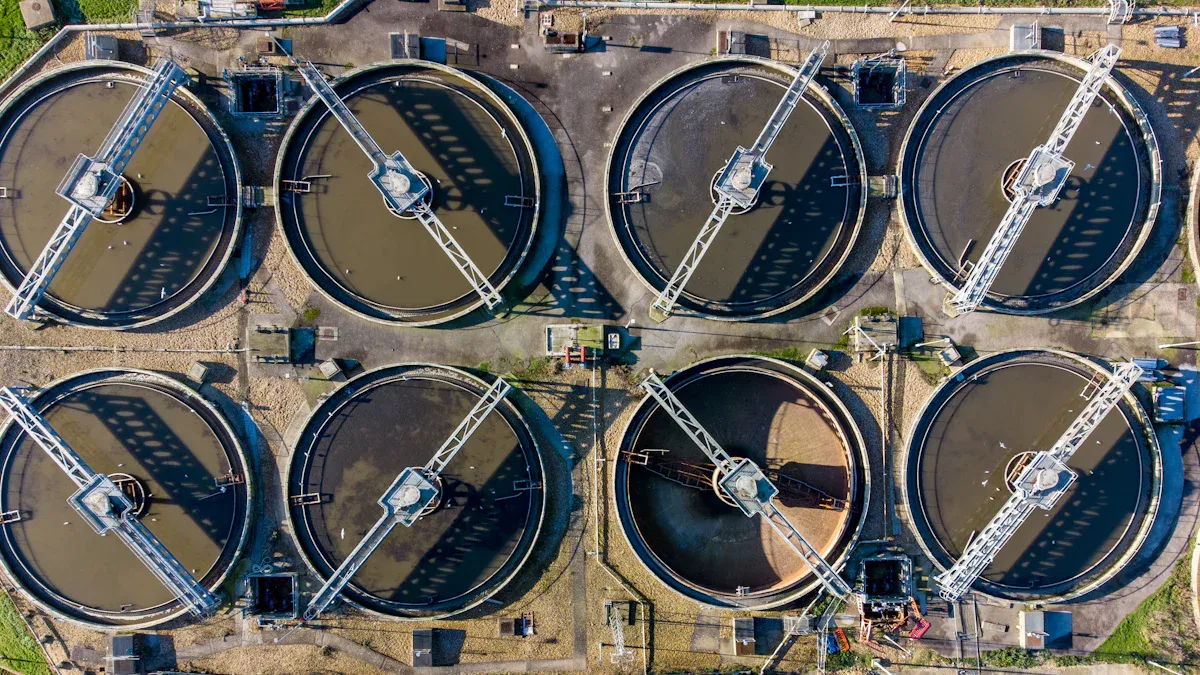
Wastewater treatment creates a byproduct called sludge. This sludge is mostly water with concentrated solids. Sludge management equipment processes this material, reducing its volume and making it safer for disposal or reuse. This final stage is essential for a plant's overall efficiency.
Sludge Thickeners
Sludge thickeners are the first step in sludge management. Their main job is to remove water from the sludge. This process significantly reduces the sludge's total volume, often cutting it by more than half. Thickening a sludge from 1% solids to 5% solids can result in an 80% volume reduction. The thickened sludge still behaves like a liquid, making it easy to pump.
- Gravity Thickeners work like sedimentation tanks. They allow solids to settle, increasing the solids concentration to 10% or more.
- Dissolved Air Flotation (DAF) Thickeners use tiny air bubbles. The bubbles attach to solids and float them to the surface for collection.
Anaerobic Digesters
Anaerobic digesters are large, sealed tanks that act like a stomach. They use microorganisms in an oxygen-free environment to break down organic matter in the sludge. This process stabilizes the sludge and produces valuable biogas, a renewable energy source. Temperature control is critical for the microbes to work effectively.
Key Operating Temperatures Most digesters operate in the mesophilic range, which is around 35°C (95-99°F). Keeping the temperature stable is vital, as a sudden drop can stop the digestion process.
Dewatering Equipment (Belt Press and Centrifuges)
Dewatering is the final step to remove as much water as possible. This turns the liquid sludge into a solid, soil-like material called cake. Chemical conditioners like polymers are often added to help solids separate from the water. Two common types of dewatering equipment are belt presses and centrifuges.
| Dewatering Method | Typical Final Cake Solids |
|---|---|
| Belt Filter Press | 18% to 25% |
| Centrifuge | 25% to 35% |
A centrifuge spins the sludge at high speeds, separating water from solids through centrifugal force. A belt filter press squeezes the sludge between two porous belts. Centrifuges typically produce a drier final cake.
The combination of mechanical, biological, and chemical effluent treatment plant/sewage treatment equipment ensures wastewater is treated effectively. Each stage is essential for environmental protection, as untreated sewage can poison seas. Proper selection and maintenance are key for a plant’s efficiency and compliance with regulations like the Clean Water Act.
FAQ
What is the main goal of a sewage treatment plant?
A sewage treatment plant's main goal is to clean wastewater. It removes harmful pollutants. This process makes the water safe to release back into rivers, lakes, or oceans.
What happens to the sludge collected at the plant?
Sludge is thickened, digested, and dewatered. This treatment reduces its volume and kills germs. The final material can be used as fertilizer or sent to a landfill.