Why Choose an ePTFE Membrane Over a PTFE Finish in 2025
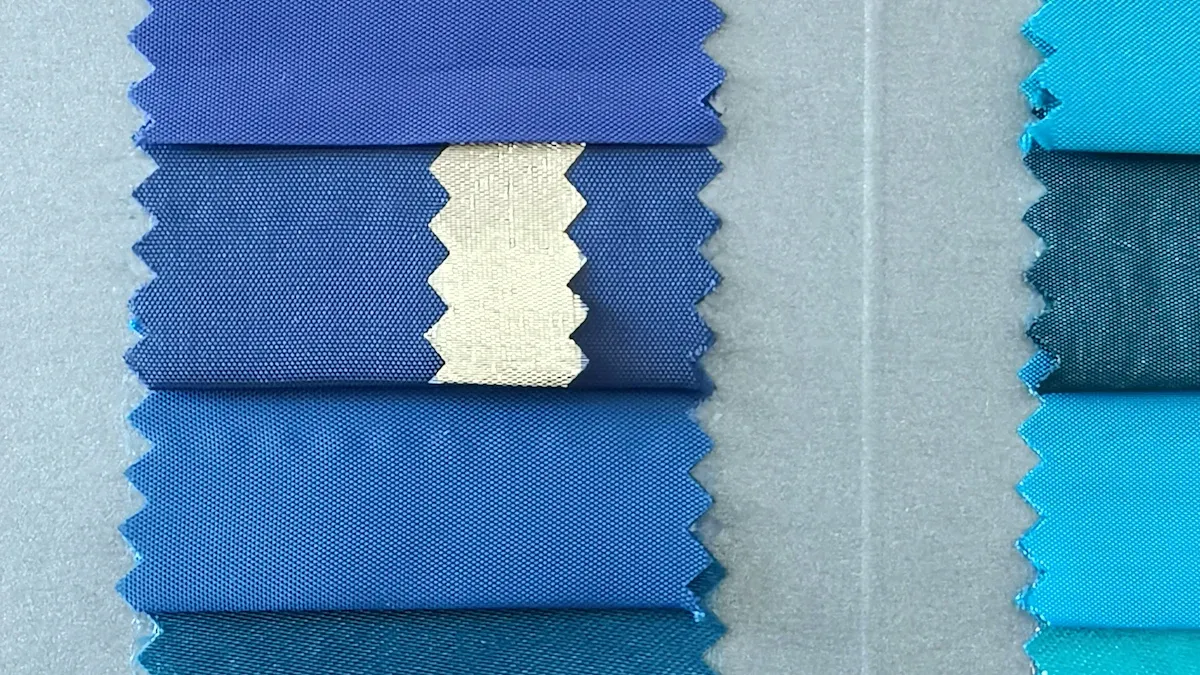
Your industrial dust collection system demands peak performance. You achieve superior results by choosing an ePTFE membrane over a PTFE finish. The membrane provides true surface filtration, delivering 99.99%+ efficiency. A finish only aids dust release. Upgrading to a Ptfe Membrane Filter Bag prepares your facility for stricter emissions standards.
Industry Insight: The global industrial air filtration market is projected to reach nearly USD 7 billion in 2025, driving the demand for higher-efficiency solutions to meet modern challenges.
Key Takeaways
- An ePTFE membrane is a filter that stops dust on its surface. It catches very tiny particles and cleans easily.
- A PTFE finish is a coating that helps dust fall off the filter. It does not stop tiny particles from going through the filter.
- ePTFE membranes save money over time. They make filters last longer and use less energy, even if they cost more at first.
What Is the Difference in How They Work?
To choose the right filter media, you must first understand the fundamental difference in how each technology operates. An ePTFE membrane and a PTFE finish perform entirely different jobs. One is a barrier for filtration, while the other is a coating for cleaning.
ePTFE Membrane: A True Surface Barrier
You can picture an ePTFE membrane as a microscopic, high-performance shield laminated to the surface of your filter bag's fabric. This membrane becomes the primary filtering surface. It contains millions of tiny, uniform pores that are smaller than most dust particles.
The membrane stops dust particles directly on the surface before they can penetrate and embed into the filter media. This process is called "surface filtration." Because the dust never clogs the fabric's fibers, your Ptfe Membrane Filter Bag maintains stable performance and cleans down more effectively. These membranes are engineered to capture incredibly fine particulate, even particles as small as 0.01 µm. For most common industrial applications, the pore size is optimized for maximum airflow and efficiency.
| Application | Optimal Pore Size |
|---|---|
| Industrial Dust Removal | 5–10 µm |
This surface-level capture is the key to the membrane's near-perfect efficiency and long operational life.
PTFE Finish: A Slick Fiber Coating
You should not confuse a PTFE finish with a membrane. A finish is not a separate layer. Instead, it is a treatment that coats the individual fibers of the filter media itself. Think of it as adding a non-stick coating to a pan. The pan's structure is unchanged, but its surface becomes slick.
The primary job of a PTFE finish is to aid in dust cake release during your system's cleaning cycle. It works by lowering the surface energy of the filter fibers. This low surface energy creates an anti-adhesive effect, reducing the ability of sticky or agglomerating dusts to cling to the fabric. When your baghouse initiates a pulse-jet cleaning cycle, the collected dust cake releases more easily from the slick fibers.
Key Distinction: A membrane is the filter. A finish only helps clean the filter. The finish does not improve the intrinsic filtration efficiency of the base fabric.
Manufacturers apply this finish using advanced methods to ensure a durable bond with the fibers, such as:
- Coating a PTFE nanofiber layer onto the filter surface using electrospinning.
- Applying a PTFE coating directly onto a metal web filter.
While this helps maintain airflow by preventing premature blinding, it does not stop sub-micron particles from passing through the fabric itself.
Performance Showdown: Efficiency and Dust Release
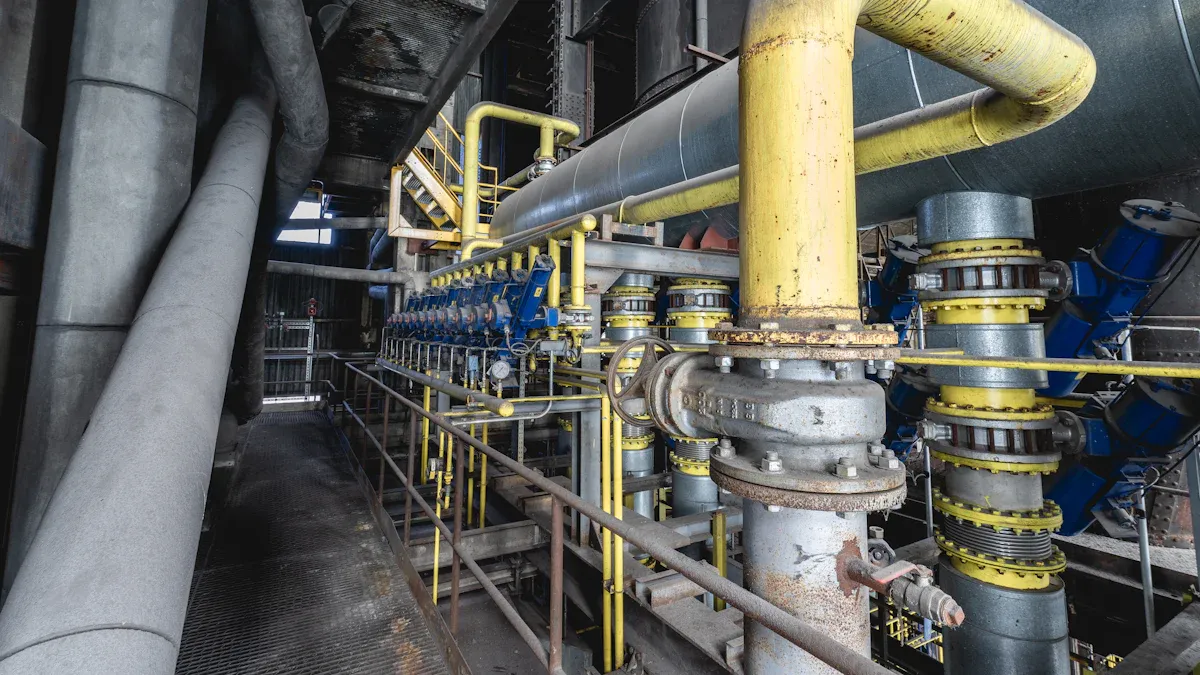
You must evaluate filter media on two critical metrics: filtration efficiency and dust release. Efficiency determines what you capture, while dust release determines how well your system operates over time. An ePTFE membrane excels at both. A PTFE finish only addresses one, making it a less complete solution for your operational needs in 2025.
Why ePTFE Captures Sub-Micron Dust
Your ePTFE membrane filter bag provides exceptional filtration efficiency because it operates on the principle of surface filtration. It stops dust before it has a chance to enter and clog the filter fabric. This is especially critical for capturing sub-micron particulate matter (PM2.5 and smaller), which poses significant health risks and is targeted by strict environmental regulations.
You gain this superior performance because the membrane's design physically blocks these tiny particles. Here is how your ePTFE membrane achieves this:
- Microporous Shield: The membrane contains millions of pores far smaller than sub-micron dust particles. This structure acts as an impenetrable barrier, trapping nearly all particulate on the surface.
- Non-Stick Surface: The smooth, low-friction surface of ePTFE reduces particle adhesion. Dust cannot easily stick to or embed itself within the media.
- Effortless Cleaning: This non-stick quality ensures the collected dust cake releases cleanly and completely during pulsing cycles, restoring airflow and maintaining low pressure drop.
Pro Tip 💡: Surface filtration is the only reliable method to achieve the 99.99%+ efficiency required to meet many modern emissions standards. Depth-filtering media, even with a finish, cannot guarantee this level of sub-micron particle capture.
How PTFE Finish Only Helps Cleaning
You should view a PTFE finish as a cleaning aid, not a filtration enhancer. Its sole function is to make the filter bag's fibers slicker. This treatment lowers the surface energy of the fabric, which helps sticky or hygroscopic dusts release more easily during a cleaning cycle. This can improve operational stability compared to a completely untreated bag.
However, a finish does not stop dust from penetrating the filter media in the first place. Sub-micron particles can still work their way deep into the fabric, leading to a gradual and irreversible increase in pressure drop, a phenomenon known as blinding.
While a finish helps, studies confirm that a true membrane offers the best overall performance. Research comparing different filter types shows that needle-punched membrane (NPM) media consistently results in the lowest residual pressure drop after cleaning. This indicates the most effective dust cake release and superior cleaning performance, even surpassing what a simple finish can achieve.
For a clear comparison, consider their primary roles:
| Feature | ePTFE Membrane | PTFE Finish |
|---|---|---|
| Filtration Mechanism | Surface Filtration | Depth Filtration |
| Efficiency | 99.99%+ on sub-micron dust | No improvement to base fabric |
| Primary Function | To filter particles | To release collected dust |
Ultimately, the finish is a helpful but limited enhancement. The membrane is an engineered filtration solution.
Long-Term Value: Lifespan and Operational Costs
You must look beyond the initial purchase price to understand the true value of your filter media. An ePTFE membrane delivers significant long-term savings through extended bag life and lower energy consumption. These benefits directly reduce your operational expenditures over time.
Resisting Blinding for Longer Bag Life
Your filter bags last longer when they resist blinding. Blinding occurs when fine dust particles embed deep within the filter fabric, causing an irreversible rise in pressure drop. A Ptfe Membrane Filter Bag prevents this. Its surface filtration mechanism stops dust before it can penetrate the media, ensuring a complete clean with every pulse. This superior cleaning extends the operational life of your filters, reducing replacement frequency and associated labor costs. Industries that benefit from this durability include:
- Cement, Lime & Aggregates
- Steel & Foundries
- Chemical Processing
- Power Generation
Lowering Energy Costs with Stable Pressure Drop
You can achieve substantial energy savings with a stable, lower pressure drop. Because a membrane cleans down so effectively, your system’s fan does not have to work as hard to pull air through the filters. By using a Variable Frequency Drive (VFD) to reduce fan speed, you can cut energy costs dramatically. The Fan Laws show a powerful relationship between speed and power:
- A 5% decrease in fan speed results in a 14% energy savings.
- A 10% decrease in fan speed results in a 27% energy savings.
Real-World Savings: One large facility projected over $77,000 in annual energy savings by retrofitting its 35 dust collectors with high-efficiency media. This change reduced pressure loss and allowed them to lower fan speeds, delivering a payback in under four months.
Understanding the Ptfe Membrane Filter Bag Advantage
You gain a significant competitive edge by understanding the full value proposition of an ePTFE membrane. The benefits extend far beyond simple filtration, impacting your budget and your ability to comply with environmental laws.
Initial Cost vs. Long-Term ROI
You may notice that membrane filter bags have a higher upfront cost than bags with a simple finish. You should view this as a strategic investment, not just an expense. The long-term return on investment (ROI) quickly outweighs the initial price. Your savings accumulate from several key areas:
- Reduced Replacement Costs: Longer bag life means you buy new filters less often.
- Lower Energy Bills: Stable, low pressure drop reduces fan energy consumption.
- Decreased Downtime: Fewer bag changeouts lead to more operational uptime.
When you calculate the total cost of ownership, the membrane bag proves to be the more economical choice for your facility over its operational lifespan.
Meeting Stricter Emission Regulations
You must prepare your facility for increasingly stringent environmental standards. Regulatory bodies are tightening limits on particulate matter. For example, the EPA recently lowered the national standard for PM2.5 to 9 micrograms per cubic meter (μg/m³). A Ptfe Membrane Filter Bag is your best tool for guaranteed compliance.
Compliance Confidence: The surface filtration of an ePTFE membrane reliably captures the sub-micron particles targeted by regulations like NESHAP and MACT. Facilities in demanding industries, from secondary lead to cement production, use these filters to stay well below emission limits. Advanced designs even incorporate seam taping to prevent particulate leaks through stitch holes, ensuring maximum capture and worker safety.
When Is a PTFE Finish Still the Right Choice?
While an ePTFE membrane is the superior choice for most applications, you will find specific situations where a PTFE finish is the more practical solution. You must consider these exceptions when your primary challenge is not filtration efficiency but extreme physical wear on the filter media.
The Abrasive Dust Exception
You should opt for a PTFE finish when dealing with highly abrasive dust. The delicate, paper-thin ePTFE membrane can be scratched, worn down, or damaged by sharp, aggressive particles. This physical damage compromises its filtration integrity. A PTFE finish, which is bonded directly to the filter fibers, offers greater durability in these harsh conditions.
Your operation may handle abrasive materials if it involves processes like blasting, crushing, or grinding. Common abrasive dusts include:
- Sand and foundry sand
- Stone and ceramic dust
- Cullet (crushed glass), which contains high percentages of abrasive silica
In these cases, the robust nature of a finish provides a longer service life than a membrane could withstand.
Why Durability Can Outweigh Efficiency
You must accept a trade-off when choosing a finish for abrasive environments. You will not achieve the 99.99%+ sub-micron capture rate of an ePTFE membrane. However, the PTFE finish still provides significant benefits by enhancing dust release and protecting the filter media from chemical or moisture damage.
Strategic Choice: For abrasive applications, you prioritize extending the filter bag's service life over achieving the absolute highest collection efficiency. This choice prevents frequent, costly changeouts caused by mechanical damage to the filter media.
By selecting a durable PTFE finish, you make a calculated decision to sacrifice some efficiency for operational longevity and reduced maintenance costs in uniquely challenging industrial settings.
For peak performance in 2025, the ePTFE membrane is the definitive standard. It provides superior filtration, longer bag life, and lower operational costs for nearly all applications. You should only consider a PTFE finish for extreme abrasion. Upgrading to an advanced Ptfe Membrane Filter Bag is your clearest path to a cleaner operation.
FAQ
Is an ePTFE membrane more expensive?
Yes, your initial cost is higher. You achieve a superior return on investment through lower energy bills and fewer filter replacements over the bag's extended operational life.
Can I upgrade my current dust collector to use membrane bags?
Yes, you can typically retrofit most existing baghouses. Your Ptfe Membrane Filter Bag is designed as a drop-in replacement for standard filters, simplifying your system upgrade.
What if my dust is sticky or oily?
An ePTFE membrane is your ideal choice. Its non-stick surface ensures excellent dust cake release, preventing blinding and maintaining stable airflow even with challenging, agglomerating dusts.