Advances in the Curing Mechanisms of Epoxidized Hydroxyl Terminated Polybutadiene
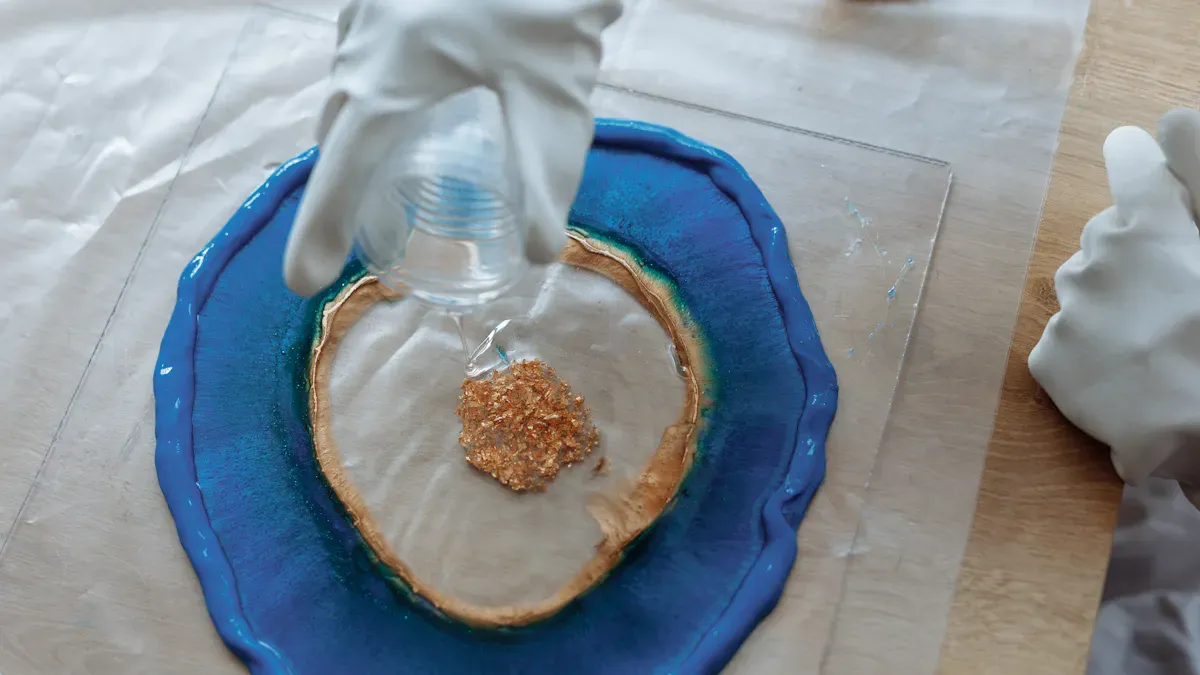
Epoxidized HTPB CAS No.129288-65-9 Epoxidized Hydroxyl Terminated Polybutadien shows remarkable improvements from recent curing advances.
- The activation energy drops, making curing easier.
- The glass transition temperature rises by 5 °C, which boosts thermal stability.
- Tensile strength increases by 12%, giving the material better durability.
Key Takeaways
- Recent curing advances make Epoxidized HTPB easier to process, improving its mechanical strength and thermal stability.
- Optimizing curing parameters like temperature and catalyst concentration enhances the material's performance in demanding applications.
- Innovative curing agents and catalysts lead to faster curing times and stronger bonds, making Epoxidized HTPB suitable for aerospace and electronics.
Epoxidized HTPB CAS No.129288-65-9 Epoxidized Hydroxyl Terminated Polybutadien: Curing Mechanisms and Their Importance
Unique Features of Epoxidized HTPB
Epoxidized HTPB CAS No.129288-65-9 Epoxidized Hydroxyl Terminated Polybutadien stands out because of its special chemical structure. The material contains epoxy groups and hydroxyl ends. These features allow it to react with different curing agents. The epoxy groups make the polymer more polar, which improves its ability to bond with other materials. The hydroxyl groups help the curing process and increase flexibility. Scientists use this material in advanced fields because it can handle tough environments.
The main curing mechanisms include:
- Primary amine addition
- Secondary amine addition
- Etherification
These reactions change the structure of Epoxidized HTPB CAS No.129288-65-9 Epoxidized Hydroxyl Terminated Polybutadien. The epoxy groups react with isocyanates, forming oxazolidinones. This process boosts mechanical strength and thermal stability.
Role of Curing in Performance Enhancement
Curing plays a key role in making the material stronger and more stable. When the curing process happens, the polymer chains link together. This makes the material tougher and less likely to break. The curing reactions also reduce unsaturation, which helps the material resist heat and chemicals.
The table below shows how curing improves performance:
| Performance Characteristic | Description |
|---|---|
| Mechanical Properties | EHTPB/H12MDI curing products show better mechanical properties than HTPB/H12MDI products. |
| Adhesion | Epoxidation increases polarity, which improves adhesion to polar substrates and raises shear strength up to three times. |
| Chemical Resistance | Structural changes from epoxidation boost chemical and moisture resistance. |
| Thermal Stability | Lower unsaturation leads to better thermal durability, making the material fit for advanced uses. |
Tip: Curing not only strengthens the material but also makes it more reliable for demanding applications like aerospace and military.
Fundamental Curing Mechanisms of Epoxidized HTPB
Chemical Reactions in the Curing Process
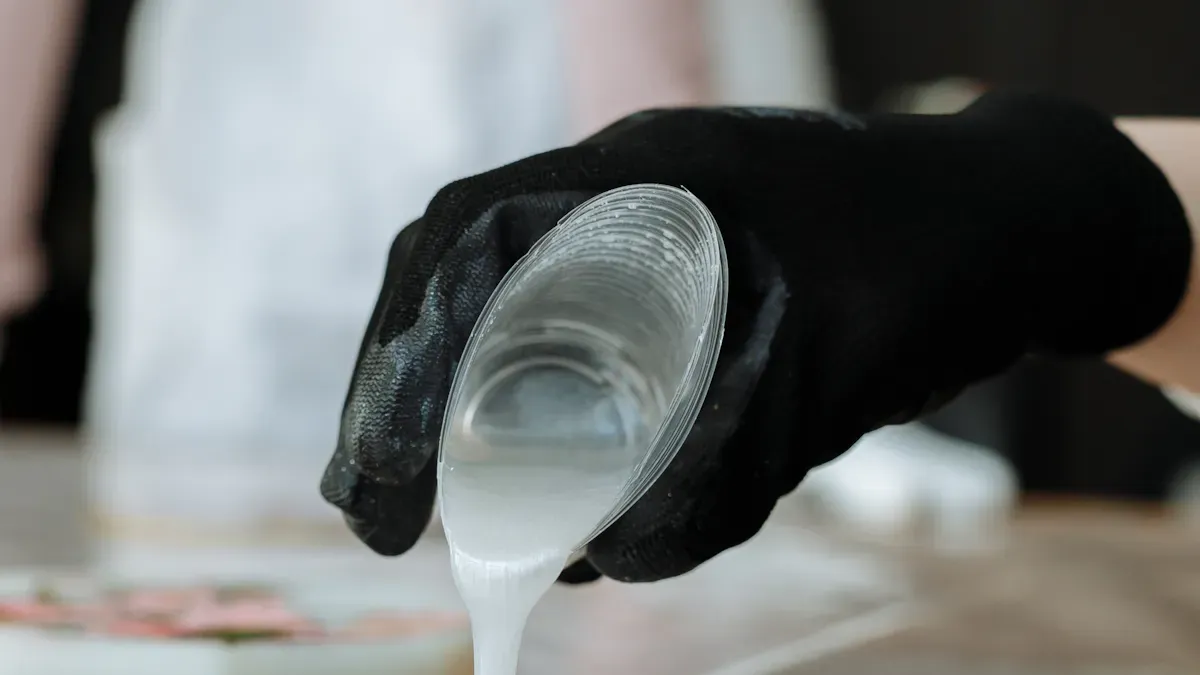
Epoxidized HTPB CAS No.129288-65-9 Epoxidized Hydroxyl Terminated Polybutadien undergoes several important chemical reactions during curing. Scientists observe that the epoxy groups react with isocyanates, which leads to the formation of oxazolidinones. This network structure strengthens the material and improves its properties. Researchers use differential scanning calorimetry (DSC) and other methods to track these changes. The glass transition temperature rises, showing that the material becomes more stable.
| Evidence Type | Description |
|---|---|
| Curing Reaction Kinetics | The curing reaction forms a network structure, indicating the formation of oxazolidinones. |
| Mechanical Properties | Oxazolidinone presence improves polyurethane elastomers, raising glass transition temperature. |
| Testing Methods | DSC and other tests confirm changes in mechanical and thermal properties. |
Note: The formation of oxazolidinones is a key step that boosts both strength and stability.
Factors Influencing Curing Efficiency
Many factors affect how efficiently the curing process works. Temperature plays a major role. Higher temperatures speed up the reaction and reduce curing time. Heating rates also matter. Faster heating shortens reaction time and increases transition temperatures, which changes how the polymer chains arrange themselves. Catalysts help the process by making reactions happen faster and more completely.
| Factor | Influence on Curing Efficiency |
|---|---|
| Temperature | Higher temperatures reduce curing time by accelerating reaction rates. |
| Heating Rates | Increased heating rates shorten reaction time and raise transition temperatures. |
| Catalysts | Catalysts are crucial for enhancing the curing process, as shown by experimental data. |
Tip: Adjusting temperature, heating rate, and catalyst type can help scientists achieve the best curing results.
Recent Advances in Curing Methods for Epoxidized HTPB
Innovative Curing Agents and Catalysts
Researchers have developed new curing agents and catalysts that improve the performance of Epoxidized HTPB CAS No.129288-65-9 Epoxidized Hydroxyl Terminated Polybutadien. These innovations help the material cure faster and become stronger.
- Maleic anhydride acts as a crosslinking agent for epoxidized natural rubber. It creates effective crosslinks without needing extra catalysts. This method simplifies the curing process.
- Terephthalic acid serves as a crosslinker and improves degradation in natural soil. It performs better than sulfur-vulcanized rubber, making the material more environmentally friendly.
- Dodecanedioic acid, combined with 1,2-dimethylimidazole, accelerates the curing process. The catalyst forms stronger carbon–oxygen bonds, which enhance mechanical properties.
- The catalyst T-12 lowers the activation energy of the curing reaction. It speeds up the reaction between isocyanate and hydroxy groups. This results in faster curing and higher crosslink density.
Scientists select these agents and catalysts to achieve better mechanical strength, faster curing, and improved environmental performance.
Process Parameter Optimization
Optimizing process parameters helps scientists control the curing speed and the quality of Epoxidized HTPB CAS No.129288-65-9 Epoxidized Hydroxyl Terminated Polybutadien. They adjust temperature, heating rate, and catalyst concentration to get the best results.
- Higher temperatures reduce curing time. The reaction happens faster, and the material becomes stronger.
- Faster heating rates shorten the reaction time. They also raise the glass transition temperature, which improves thermal stability.
- The amount of catalyst affects the reaction rate. More catalyst means quicker curing, but too much can reduce crosslink density. Scientists balance catalyst levels to get the right molecular weight and strength.
Careful control of these parameters ensures the material cures properly and meets performance standards.
Advanced Analytical and Monitoring Techniques
Scientists use advanced techniques to study the curing process. These methods help them understand how the material changes during curing and how to improve it.
| Technique | Application | Limitations |
|---|---|---|
| 1H NMR Relaxometry | Used for in-situ characterization of polymerization and curing reactions. | Specific accuracies not detailed; relies on T1 investigations which may vary with conditions. |
| Diffusion NMR | Measures self-diffusion coefficients in polymers and soft-matter materials. | Requires echo damping to be greater than T2 interactions; may not account for microscopic motion. |
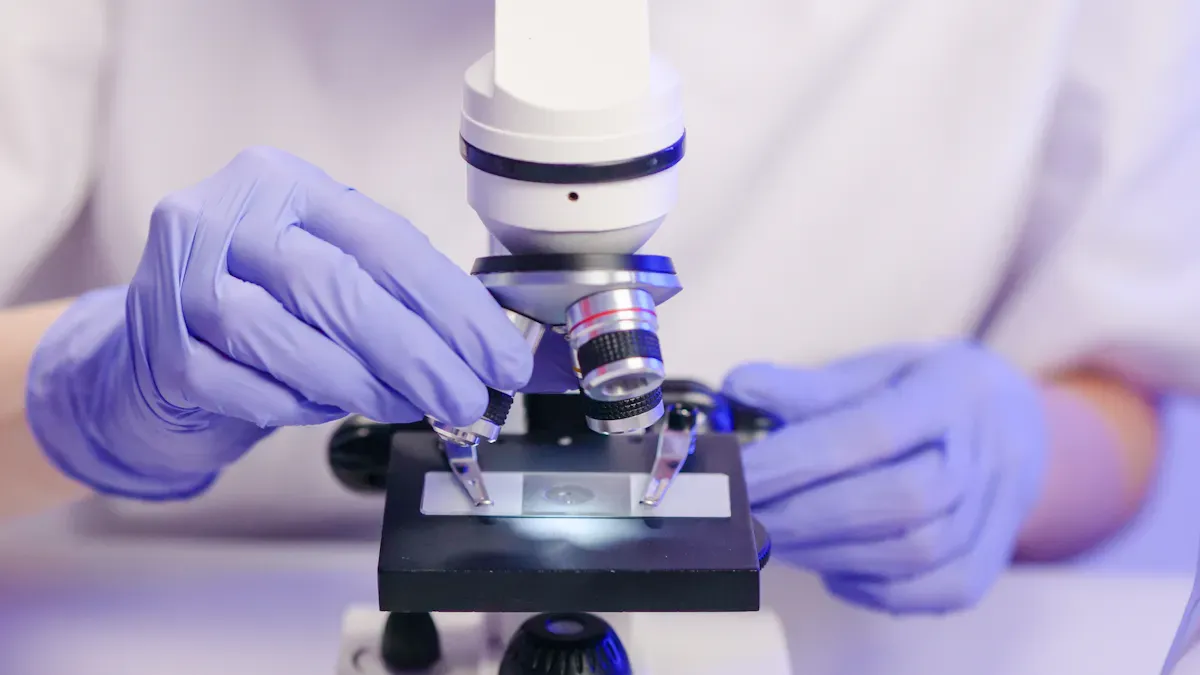
Scientists use 1H NMR relaxometry to watch the curing process as it happens. This technique helps them see how the polymer chains link together. Diffusion NMR measures how molecules move inside the material. It gives information about the structure and quality of the cured product.
These tools help researchers monitor curing in real time and make adjustments to improve material properties.
Impact of Curing Advances on Material Properties
Improvements in Mechanical Strength and Flexibility
Scientists have observed that new curing methods make Epoxidized HTPB materials stronger and more flexible. The polymer chains form tighter networks, which help the material resist breaking and stretching. These networks allow the material to bend without cracking. Researchers measure tensile strength and elongation at break to see how the material performs. The results show that the cured polymer can handle heavy loads and repeated movement. This improvement helps the material last longer in demanding environments.
Many industries use these stronger and more flexible materials. For example, aerospace engineers need polymers that can withstand high stress. The improved mechanical properties make Epoxidized HTPB CAS No.129288-65-9 Epoxidized Hydroxyl Terminated Polybutadien a good choice for these applications.
Enhanced Thermal and Chemical Stability
Curing advances also improve the material’s ability to resist heat and chemicals. Scientists test the material by exposing it to high temperatures and harsh chemicals. The results show that the cured polymer stays stable and does not break down easily.
Chemical resistance tests indicated that EHTPB-PUs exhibited slightly higher mass loss than HTPB-PU under acidic and basic conditions. However, the degradation of the 10% EHTPB-PU sample was lower than that of the 5% EHTPB-PU sample, suggesting that while initial epoxide incorporation may increase susceptibility to chemical attack, further incorporation enhances crosslinking density, thereby improving chemical stability.
The material’s thermal stability depends on how much epoxidized HTPB is used. Scientists found that the initial decomposition temperature of advanced epoxidized HTPB formulations was 307 °C. The temperature at the maximum weight loss rate appeared at three stages: about 240 °C, 360–370 °C, and 440 °C. These results show that higher EHTPB content can reduce thermal stability, but the introduction of polar functionality through epoxidation improves compatibility with polar additives.
- The initial decomposition temperature of advanced epoxidized HTPB formulations was found to be 307 °C.
- The addition of EHTPB-based polyurethane prepolymer resulted in a reduction of thermal stability with increased EHTPB content.
- The temperature at the maximum weight loss rate (Tmax) was observed at three stages: approximately 240 °C, 360–370 °C, and 440 °C, indicating a decrease in thermal stability with higher EHTPB content.
- The T5% of the modified epoxy resin was lower than that of the neat epoxy resin, suggesting reduced thermal stability.
- Chemical resistance was enhanced due to the introduction of polar functionality through epoxidation, improving compatibility with polar additives.
These findings help scientists choose the right curing process for each application. They balance the amount of epoxidized HTPB to get the best mix of thermal and chemical stability.
Comparative Data and Case Studies
Researchers compare the properties of cured Epoxidized HTPB with older versions and other materials. They use tables and charts to show the differences. The data shows that the new curing methods give the material better mechanical strength, flexibility, and stability.
| Property | Older HTPB Formulation | Advanced Epoxidized HTPB |
|---|---|---|
| Tensile Strength | Lower | Higher |
| Elongation at Break | Moderate | Improved |
| Initial Decomposition Temp | 290 °C | 307 °C |
| Chemical Resistance | Limited | Enhanced |
Case studies highlight how these improvements help in real-world situations. In aerospace, engineers use the material for seals and adhesives. The material lasts longer and performs better under stress. In electronics, the improved stability protects sensitive components from heat and chemicals.
Tip: Engineers and scientists can use these comparative results to select the best material for their projects.
Practical Applications of Epoxidized HTPB CAS No.129288-65-9 Epoxidized Hydroxyl Terminated Polybutadien
Aerospace and Propellant Applications
Aerospace engineers use Epoxidized HTPB CAS No.129288-65-9 Epoxidized Hydroxyl Terminated Polybutadien in solid rocket propellants. The material forms strong, flexible binders that hold fuel particles together. These binders help rockets withstand high pressure and temperature during launch. The improved curing methods give the material better strength and stability. This means rockets can perform more reliably and safely. Many space agencies and defense companies choose this material for its durability and performance.
Coatings, Adhesives, and Sealants
Manufacturers rely on this polymer for advanced coatings, adhesives, and sealants. The material’s strong bonding and chemical resistance protect surfaces from damage. Companies like Evonik have expanded their production facilities in Germany and Asia to meet the growing demand for these products. Their investments show a commitment to reliable supply and better performance. The table below highlights recent industry trends:
| Evidence Type | Description |
|---|---|
| Corporate Expansion | Evonik is expanding its HTPB production facilities in Germany and Asia to meet rising global demand for advanced polymers. |
| Strategic Response | Investments reflect a commitment to reliable supply and enhanced performance in coatings, adhesives, and sealants. |
| Future Plans | Construction is underway for further scaling HTPB output, indicating ongoing adaptation to market needs. |
These actions show how important this material has become in protecting and joining surfaces in many industries.
Electronics Encapsulation and Other Emerging Uses
Electronics makers use this polymer to protect sensitive parts from moisture and heat. The cured material forms a tough barrier around circuits and chips. This helps devices last longer and work better. Researchers also explore new uses in medical devices and energy storage. The material’s flexibility and strength open doors for many future applications.
Recent research shows that cure accelerators like 593 improve curing efficiency and mechanical properties. The table below highlights key findings:
| Key Finding | Description |
|---|---|
| Curing Mechanism | High temperatures complete carboxyl–epoxy reactions but may cause thermal stress. |
| Cure Accelerator | 593 enhances ring-opening reactions and mechanical strength. |
| Material Properties | Optimized formulations improve binder performance. |
Epoxidized HTPB now offers better thermal stability and mechanical strength for propellants and adhesives. Scientists continue to explore new curing systems and application fields. They also address challenges such as uneven curing and environmental effects by developing advanced photoinitiators and hybrid systems.
- The EHTPB-IPDI system shows higher reactivity during curing.
- Selective epoxidation improves adhesion and chemical resistance.
- New photoinitiators and hybrid systems help solve curing challenges.
Future research will focus on optimizing curing systems and expanding uses in advanced industries.
FAQ
What makes epoxidized HTPB different from regular HTPB?
Epoxidized HTPB contains epoxy groups. These groups increase polarity and improve bonding. The material shows better mechanical strength and chemical resistance.
How do scientists monitor the curing process?
Researchers use advanced tools like 1H NMR relaxometry. This technique tracks polymer chain changes during curing. It helps improve material quality.
Where do industries use epoxidized HTPB?
Aerospace, electronics, and coatings industries use epoxidized HTPB. The material protects surfaces, binds propellants, and shields electronic parts from heat and moisture.