Instant Hot Water Dispenser A 2026 Buyer's Guide to Pros and Cons
An electric hot water dispenser offers you excellent convenience and a modern kitchen design. Its popularity is growing, with the market projected to expand significantly through 2026.
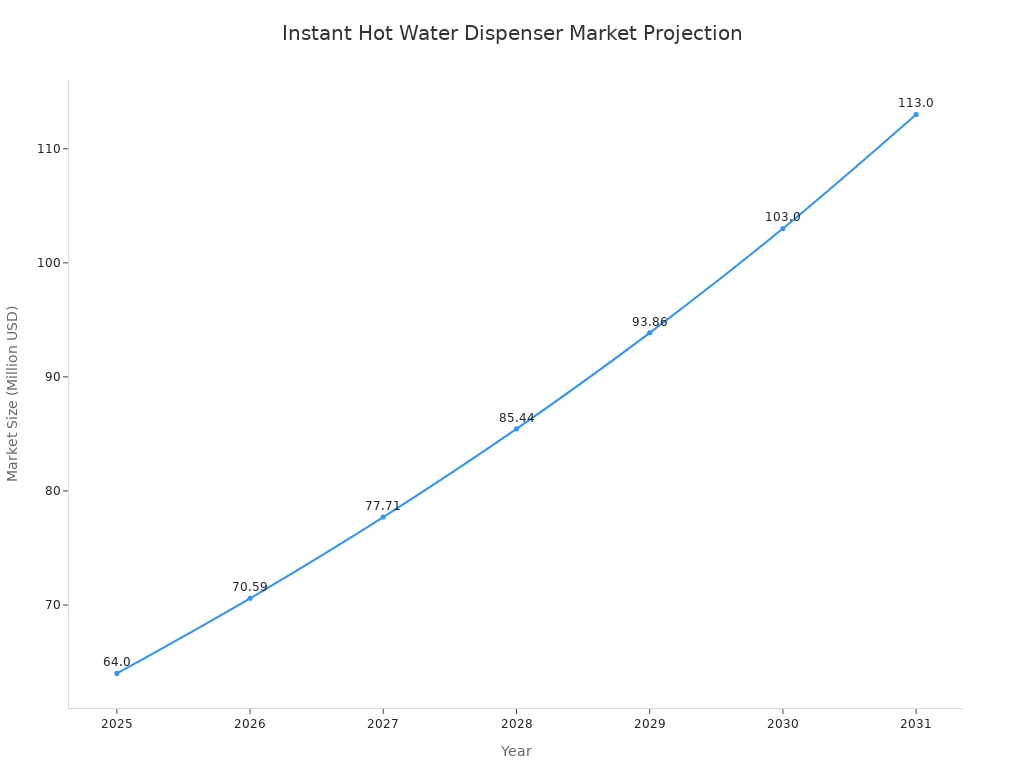
Note: You should weigh the high initial cost and potential upkeep against these daily benefits before making a final decision.
Key Takeaways
- Instant hot water dispensers offer quick hot water, save counter space, and use energy efficiently.
- These dispensers cost more upfront and need professional installation.
- You must clean the dispenser regularly, especially if you have hard water.
The Pros: Key Benefits of an Instant Dispenser
An instant hot water dispenser offers several compelling advantages. You gain convenience, save space, and improve efficiency. Let's explore the key benefits you can expect from this modern kitchen upgrade.
On-Demand Convenience
Imagine having near-boiling water ready the moment you need it. An instant dispenser eliminates the wait for a kettle to boil or for tap water to heat up. You can make tea, coffee, or hot chocolate in seconds. It also speeds up many cooking tasks.
- Instantly prepare oatmeal or instant noodles.
- Quickly blanch vegetables to lock in nutrients.
- Easily loosen stubborn jar lids.
- Warm baby bottles and food safely.
- Effortlessly clean greasy pots and pans.
This on-demand access transforms your daily kitchen routine. You save valuable minutes with every use, adding up to significant time savings over the week.
Space-Saving Design
A major benefit is the clean, uncluttered look it brings to your kitchen. Unlike a bulky kettle that occupies permanent counter space, an under-sink electric hot water dispenser keeps the main components hidden. You only see a small, stylish faucet next to your main one. This design frees up 100% of the counter space a kettle would use.
The heating tanks are compact and designed to fit easily in the cabinet under your sink. Most models have a small footprint, leaving you plenty of room for cleaning supplies and other items.
| Component | Height | Width | Depth |
|---|---|---|---|
| Waterstone Hot Tank | 11-1/4” | 6-3/4” | 8-1/4” |
Even popular systems with small faucets are designed for minimal impact. For example, the InSinkErator HOT250 system combines a small faucet with a compact 2/3-gallon tank, similar in capacity to the Moen Instant Hot Tank. This integrated approach ensures you get maximum function without sacrificing valuable kitchen real estate.
Energy and Water Efficiency
You might think that keeping water hot 24/7 uses a lot of power, but these systems are surprisingly efficient. A modern dispenser is well-insulated. It only uses energy periodically to maintain the set temperature.
An InSinkErator InstaHot unit, for instance, uses about the same amount of energy as a single 25W lightbulb left on. Studies show that tankless water heaters can be up to 34% more energy-efficient than traditional storage tank heaters for households with lower water usage. You also save water. You no longer need to run the tap for seconds or minutes waiting for it to get hot, conserving a precious resource with every use.
Long-Term Durability
When you invest in a quality appliance, you want it to last. A well-maintained instant hot water dispenser has a typical lifespan of 5 to 15 years. With good water quality and proper care, your unit can easily reach the upper end of that range.
This durability comes from the high-quality materials used in their construction. Manufacturers prioritize materials that ensure purity and longevity.
- 304 Stainless Steel Liners: This material is excellent at resisting rust and corrosion, even at high temperatures. It provides great structural integrity for long-term, reliable use.
- Premium Food-Grade Materials: Many units use BPA-free plastics and other certified materials. This prevents pollutants from entering your filtered water.
- Specialty Liners: Some models feature ceramic glaze or ceramic-coated liners. These surfaces prevent mineral buildup and can improve thermal efficiency, making them easier to maintain and more energy-conscious.
These robust construction choices mean your dispenser is built to handle frequent, daily use for many years.
The Cons: Potential Drawbacks to Consider
While instant hot water dispensers offer great benefits, you should also understand their potential downsides. These systems come with challenges related to cost, installation, and upkeep. A clear view of these drawbacks will help you make a balanced decision.
Higher Upfront Cost
The most significant barrier for many people is the initial price. An electric hot water dispenser is a considerable investment compared to a simple kettle. The unit itself can cost several hundred dollars. High-end models from brands like Billi or Zip can even cost thousands.
You can see the price difference clearly when you compare it to other options.
| Product | Typical Upfront Cost (USD) |
|---|---|
| Standard Electric Kettle | $30 - $50 |
| Instant Hot Water Dispenser | $100 - $300+ |
| High-End Commercial System | $1,800 - $5,000+ |
This table shows that even a basic dispenser costs much more than a quality kettle. You are paying a premium for the convenience and integrated design.
Installation Complexity
You cannot just plug in an instant hot water dispenser and start using it. The installation process is more involved and often requires professional help. This adds to your total cost.
You must consider two main areas for installation:
- Plumbing: Your home’s plumbing needs to have enough water pressure to support the unit. A plumber may need to assess your system to ensure it will work correctly.
- Electrical: The dispenser’s heating tank requires its own power source. You will likely need a dedicated electrical outlet under your sink. An electrician should check if your home’s wiring can safely handle the load.
Hiring a professional is the safest route. This ensures everything is connected properly and avoids leaks or electrical issues.
Professional Installation Costs You can expect to pay a plumber between $368 and $520 for labor. This cost covers the setup, connection, and cleanup but does not include the unit itself or any major plumbing or electrical modifications.
Maintenance for Hard Water
If you live in an area with hard water, your dispenser will require regular maintenance. Hard water contains high levels of minerals like calcium and magnesium. These minerals create a chalky buildup called limescale inside the heating tank and water lines.
Limescale forces the unit to work harder to heat water. This reduces its energy efficiency and can eventually cause the heating element to fail. To prevent this, you must descale the system regularly. For areas with very hard water, you may need to do this every month.
You can follow these general steps to descale your unit:
- Turn off the power to the dispenser and let the water cool down completely.
- Mix a descaling solution. You can use a 1:1 mixture of white vinegar and water or a commercial descaling product.
- Fill the tank with your cleaning solution.
- Let the solution sit for about 15 to 30 minutes.
- Run the water through the faucet to clean the internal lines.
- Drain the tank and rinse it 2 to 3 times with clean water until you no longer smell vinegar.
You also need to replace the water filter every 6 to 12 months. This schedule depends on your water quality and how much you use the dispenser. Following these maintenance steps is key to keeping your unit running efficiently for years.
Performance Limitations
Instant hot water dispensers have two main performance limits: water temperature and tank capacity.
First, the water is very hot but usually not at a full, rolling boil. Most dispensers heat water to between 160°F and 210°F (71°C to 99°C). This is perfect for tea, coffee, and most cooking tasks. However, some coffee brewing methods or tea purists might prefer water at a true 212°F (100°C) boil.
Second, the under-sink tank has a limited capacity. Most residential models, like those from InSinkErator, have a 2/3-gallon tank. This is enough to provide up to 60 cups of hot water per hour. This is plenty for making drinks or filling a small pot. However, if you need to fill a large stockpot for pasta, you might empty the tank. The unit will then need a few minutes to heat a new supply of water.
Is an Electric Hot Water Dispenser Right for You?
Deciding on an electric hot water dispenser depends on your lifestyle and priorities. You should evaluate your daily needs against the appliance's features. This will help you determine if it is a smart investment for your home.
An Instant Dispenser Is Ideal If...
You will likely love this appliance if you value modern convenience and efficiency in your kitchen. It is a great fit for busy households that need time-saving solutions. An instant dispenser is perfect for you if you:
- Want to make hot drinks or meals in seconds.
- Appreciate a clean, modern kitchen with minimal counter clutter.
- Prefer energy-efficient appliances over traditional kettles.
- Enjoy using smart home technology and advanced features.
- Seek a seamless and integrated look for your kitchen design.
This appliance is designed for people who want to streamline their daily routines and embrace modern, efficient living.
You Might Want to Reconsider If...
This appliance may not be the best choice if you prefer simple, low-maintenance devices. You should be prepared for potential troubleshooting. Some users report issues that require attention.
Common problems include slow water flow from a clogged line, leaks from loose connections, or the unit not heating due to a faulty thermostat. These issues often require you to perform maintenance or call a professional.
If the thought of descaling a tank, troubleshooting water flow, or managing potential repairs seems like a hassle, a traditional kettle might be a better option for you.
2026 Buyer's Guide: Pros vs. Cons at a Glance
To help you decide, let's simplify the main points. This guide breaks down the pros and cons and presents common scenarios. You can see where your own needs fit in.
Side-by-Side Comparison Table
This table gives you a quick overview of the key arguments for and against an instant hot water dispenser.
| Pros: The Advantages 👍 | Cons: The Disadvantages 👎 |
|---|---|
| Instant access to hot water | Higher initial purchase price |
| Frees up counter space | Installation can be complex |
| Energy and water efficient | Requires regular maintenance |
| Durable and long-lasting | Water is not at a full boil |
| Modern, integrated look | Limited tank capacity for big tasks |
Key Decision-Making Scenarios
Your lifestyle is the best guide for this decision. See if you recognize yourself in any of these situations.
- ☕ The Busy Professional: You need coffee and tea fast in the morning. The dispenser's
Large Capacityof 60 cups per hour andEnergy-Efficient Designmake it a perfect time-saver for your hectic schedule. - 🏡 The Design-Conscious Homeowner: You want a clean, minimalist kitchen. The
Space-saving Designof an under-sink model keeps your counters clear and modern. - 👨👩👧 The Safety-Minded Parent: You worry about kids near a hot kettle. You will appreciate the built-in
Safety Features, like spring-back handles that prevent accidental hot water flow. - 🍵 The Tea and Coffee Enthusiast: You are particular about your beverages. You can find models with
Adjustable Temperature Settingsto get the perfect heat for your drink. - 💧 The Health-Focused Individual: You prioritize pure water. Many dispensers have
Compatibility with Filtration Systems, giving you clean, filtered hot water on demand.
An electric hot water dispenser offers significant convenience for the right home. As you look toward 2026, you can expect advancements like smart maintenance alerts and touchless controls.
You must weigh the high initial cost and upkeep against these daily benefits. This evaluation will help you confidently decide if it is the correct upgrade for your kitchen.
FAQ
Does an instant hot water dispenser provide boiling water?
Most units heat water between 160°F and 210°F. This is very hot but just shy of a full 212°F boil. It is perfect for most drinks.
How often do you need to replace the filter?
You should replace the filter every 6 to 12 months. Your replacement schedule depends on your local water quality and how frequently you use the dispenser. 💧
What is the lifespan of an instant hot water dispenser?
A quality dispenser can last 5 to 15 years. Proper maintenance helps you reach the upper end of this range and ensures long-term performance.