Dysprosium Oxide Supply Chain A 2025 Stability Analysis

The Dysprosium Oxide supply chain is projected to remain 'moderately unstable' through 2025. Persistent dependence on a primary supplier, which controls over 75% of global production, sustains risks of price volatility and supply constraints for key industries. Diversification efforts, while underway, will not provide significant relief by the 2025 timeframe.
Key Takeaways
- The supply of Dysprosium Oxide will stay unstable until 2025. One country controls most of it. This causes prices to change a lot and makes it hard for companies to get enough.
- Companies are trying to find new ways to get Dysprosium Oxide. They are looking for new mines. They are also trying to recycle old products and use less of the material.
- North America needs to make its own Dysprosium Oxide. This will help its factories. It will also make the country safer.
Analyzing the Primary Supply Chain Vulnerabilities
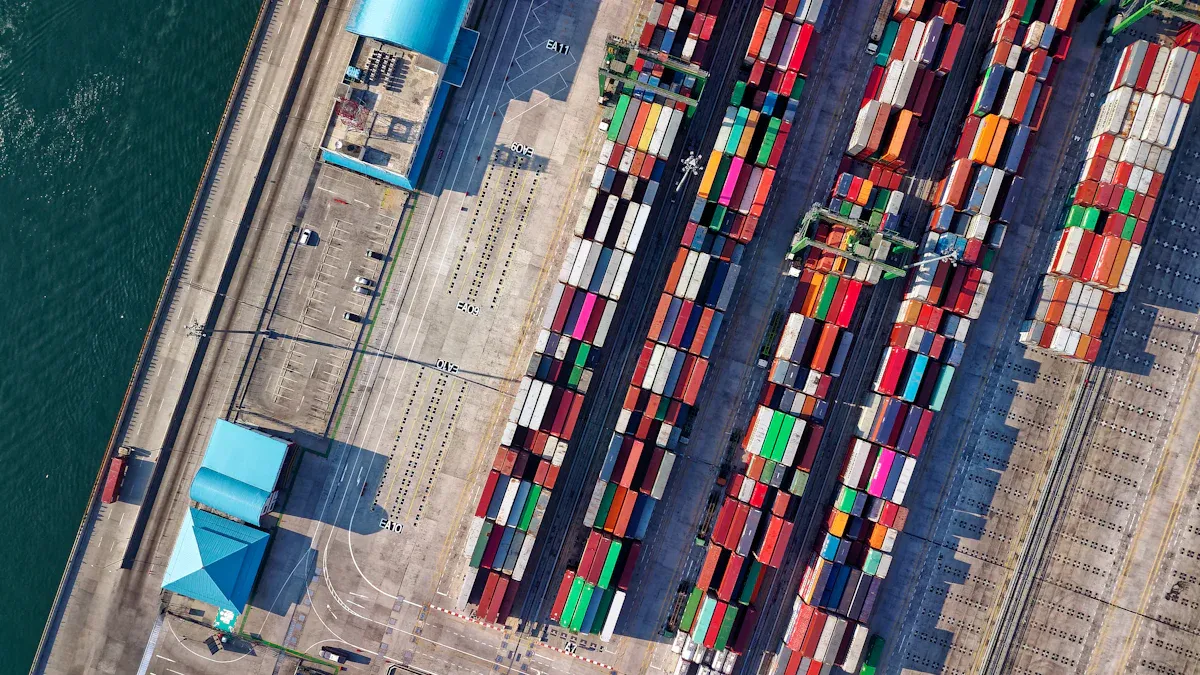
Two primary factors create significant vulnerabilities in the Dysprosium Oxide supply chain. The first is one nation's overwhelming market share. The second is the use of that market power as a tool in international policy.
China's Market Dominance
China's control over the rare earth element (REE) market did not happen overnight. It is the result of a long-term industrial strategy. This strategy focused on developing a domestic value chain while controlling global supply. A historical review shows a clear pattern of policy decisions.
- 2007–2008: China placed export duties on rare earths. These duties started at 10% and rose to 25% for heavy REE products. The goal was to make exporting less attractive.
- 2009: Export policies caused a sharp drop in REE exports. Foreign companies began moving their operations to China to secure a stable supply.
- 2010: The government cut its annual REE export quota by about 40%. This action caused a global price spike and included an unofficial halt of shipments to Japan.
- 2011: Prices for rare earths increased dramatically. The supply crisis pushed countries like the US and Australia to restart their own production efforts.
- 2012: China created the Association of China Rare Earth Industry. It also defended its export limits as necessary for environmental protection.
- 2014: The World Trade Organization (WTO) ruled against China’s export policies, but the nation's market dominance was already firmly established.
This history demonstrates a consistent strategy to manage global supply, influencing prices and availability for critical materials.
Geopolitical Levers and Trade Policies
Market dominance provides significant geopolitical leverage. China has shown a willingness to use its control over critical minerals during trade disputes. Its near-monopoly on heavy rare earths, essential for products like permanent magnets, serves as a powerful bargaining chip. This creates the potential for supply "weaponization" if geopolitical tensions rise. For example, past export restrictions on rare earth magnets pushed India to seek alternative ore supplies directly from groups in Myanmar.
The events of 2025 highlight how quickly trade policies can impact the market.
Analysts note that non-tariff measures, such as export licensing and controls on production technology, are often more effective than simple tariffs in managing global supply chains.
A series of escalating trade actions throughout the year created significant uncertainty for industries reliant on Chinese rare earths.
- April 2025: Beijing responded to new U.S. tariffs. It tightened export controls on seven key rare earths and related magnet materials. China's Ministry of Commerce (MOFCOM) and General Administration of Customs (GAC) added dysprosium, their oxides, and related materials to the nation's export control list.
- October 2025: China announced a second, wider set of restrictions. These rules covered not just raw minerals but also specialized production technology for permanent magnets. Washington threatened a 100% tariff on Chinese imports in response.
- November 2025: Following high-level talks, officials reached a temporary agreement. A U.S. Fact Sheet confirmed China would suspend the new export controls for one year. It would also issue general licenses for exports of rare earths, including Dysprosium Oxide, for U.S. end users.
Despite this temporary truce, the export licensing system for rare earths remains in effect. This situation leaves the supply chain vulnerable to future policy shifts and maintains a high-risk environment for global manufacturers.
Impact on Key Industries Through 2025

The instability in the dysprosium supply chain directly affects several high-growth global industries. Price volatility and the potential for supply disruptions create significant operational risks for companies that depend on this critical material. The events of 2025 serve as a clear warning for what lies ahead.
Price and Availability Forecasts
Price and availability forecasts for Dysprosium Oxide remain volatile heading into the second half of the decade. The market demonstrated extreme sensitivity to policy changes in early 2025.
Following China's April 2025 export control announcement, European prices for the material surged, nearly tripling within a single month. This event highlighted the market's dependence on a single source and the immediate financial impact of supply restrictions.
Analysts expect this upward price pressure to continue. Sustained demand from key sectors is a primary driver. The global market for high-performance magnets, a key application, is projected to grow by approximately 5% annually in 2025. This growth is fueled by several major industries:
- Automotive Industry: The electric vehicle (EV) sector is a massive consumer. Dysprosium is essential for high-performance NdFeB magnets used in EV motors.
- Energy Sector: Renewable energy technologies, particularly direct-drive wind turbines, rely on these same powerful magnets to generate electricity efficiently.
- Electronics Industry: Advanced consumer electronics, data storage devices like hard disks, and specialized lasers all require dysprosium for its unique magnetic and optical properties.
- Healthcare Industry: Medical imaging equipment and other diagnostic technologies use dysprosium compounds, linking supply stability to advancements in healthcare.
With limited alternative production ready to meet this growing demand, the market faces a structural deficit. Long-term forecasts from Argus Media project a firm upward price trajectory, with a base case suggesting prices could reach approximately $1,100/kg by 2034. The market requires serious supply-side improvements to find a new equilibrium.
Corporate Risk Mitigation Strategies
In response to this high-risk environment, corporations are actively deploying strategies to protect their operations. These measures aim to reduce reliance on a single supply channel and build resilience against future shocks. Companies are moving beyond simple procurement tactics and adopting a multi-faceted approach.
- Diversifying the Supply Base: The most critical long-term strategy is encouraging new production outside of China. Companies are supporting emerging mining projects in Australia and the United States. Some firms also engage in strategic stockpiling, building reserves to weather short-term supply disruptions, though this is a costly and temporary solution.
- Investing in a Circular Economy: Recycling is becoming a vital component of supply security. Companies are investing in closed-loop systems to recover dysprosium from end-of-life products like EV motors and consumer electronics. This approach supplements virgin material supply and reduces the environmental footprint of mining.
- Driving Innovation and Substitution: Research and development efforts are focused on two goals. The first is material efficiency, which aims to design magnets that require less dysprosium per unit without sacrificing performance. The second is finding alternative materials. While substitutes like neodymium and praseodymium exist, they do not yet match the high-temperature performance that dysprosium provides, making it irreplaceable in the most demanding applications for now.
These mitigation strategies are essential for navigating the unstable supply landscape through 2025 and beyond.
Global Diversification and the Dysprosium Oxide Outlook
Global industries are pursuing a two-pronged strategy to counter supply chain instability. They are supporting new primary production projects. They are also investing heavily in recycling and material innovation. These efforts aim to build long-term resilience.
Assessing New Production in the US and Australia
Western nations are working to re-establish a non-Chinese rare earth supply chain. Companies in the United States and Australia are leading this charge. However, these new mining and processing operations face significant hurdles. These challenges prevent them from offering immediate relief to the market. Key producers must overcome issues ranging from project financing to regulatory compliance.
Strategic Challenges for Emerging Producers
| Company/Producer | Primary Mining Location | Strategic Challenges |
|---|---|---|
| Lynas Rare Earths Ltd | Western Australia/Malaysia | Sourcing scale, Regulatory compliance, Processing cost |
| MP Materials Corp | USA (California) | Resource grade, Supply chain ramp-up, Environmental regulation |
| Rare Element Resources Ltd | USA (Wyoming) | Project financing, Permitting, Technology scale-up |
These obstacles mean that while diversification is promising, it remains a long-term solution.
The Role of Recycling and Innovation
Recycling and innovation offer a more immediate path to supply security. A circular economy for rare earths is gaining momentum. Feasibility studies in the UK confirm that recycling magnets for high-purity Dysprosium Oxide can be profitable. Currently, only about 1% of rare earth magnets come from recycled sources. This leaves massive room for growth.
At the same time, researchers are developing technologies to reduce dysprosium in magnets. One key innovation is electrophoretic deposition (EPD). This technique allows manufacturers to apply dysprosium only to the specific parts of a magnet that require high-temperature stability. This approach significantly reduces the total amount of the critical material needed, easing demand pressure.
What This Means for North American Markets
The unstable global supply chain presents both significant risks and opportunities for North America. The region's response will determine its economic security in critical high-tech industries for years to come.
Reliance on Imports
North American industries remain highly dependent on foreign suppliers for critical materials. This reliance creates a direct vulnerability to the price shocks and supply disruptions seen in 2025. Manufacturers of EVs, wind turbines, and advanced electronics face unpredictable costs and potential production halts. This situation exposes a critical gap in the continent's industrial base. The lack of a domestic supply chain for materials like Dysprosium Oxide means that geopolitical tensions in other parts of the world can immediately impact North American manufacturing and national security interests.
The Push for Domestic Production
Governments and private companies are now aggressively working to close this supply gap. This push involves significant financial investment and strategic planning to build a mine-to-magnet supply chain on home soil.
Key Government Support Initiatives 🏛️
- United States: The Department of Energy (DOE) has committed over $900 million across several programs to support rare earth processing and recycling. The U.S. Export-Import Bank also issued a $200 million Letter of Interest to support a domestic magnet producer.
- Canada: The Canadian Critical Minerals Strategy allocates $1.5 billion to fund projects that advance domestic manufacturing, processing, and recycling.
Corporations are also making tangible progress. Energy Fuels is piloting the production of 99.9% purity dysprosium oxide at its Utah facility. USA Rare Earth has also produced high-purity samples from its Round Top project in Texas. However, these projects require time to scale.
| Project Name | Location | Estimated Commercial Production |
|---|---|---|
| Round Top heavy-rare-earth deposit | Texas, USA | Late 2028 |
| Hydromet demonstration facility | Colorado, USA | Early 2026 (launch) |
These efforts signal a clear long-term commitment to reshoring this critical industry.
The Dysprosium Oxide (Dy₂O₃) supply chain will face continued instability through 2025. Analysts project a significant long-term global deficit, with forecasts showing a shortfall exceeding 2,800 tonnes by 2035. While diversification projects are promising, they offer no near-term relief.
Stakeholders must prepare for sustained price fluctuations and potential supply bottlenecks as the market slowly shifts.
FAQ
What is Dysprosium Oxide used for?
Dysprosium Oxide is a key material. It makes powerful magnets for electric vehicles and wind turbines. Industries also use it in nuclear reactors and hard disks for data storage.
Why is the supply chain unstable?
One nation controls most of the world's supply. This dominance creates price risks. Geopolitical issues can easily disrupt the flow of this critical material to global markets.
Are there alternatives to Dysprosium Oxide?
Innovation helps reduce the need for dysprosium. No perfect substitute exists yet. Other materials cannot match its performance in high-heat applications like powerful electric motors.
See Also
Exploring Molybdenum High-Temperature Furnaces: Insights and Innovations for 2025
Assessing Molybdenum Plugs' Role in Seamless Steel Pipe Manufacturing by 2025
Analyzing Plate Pack Benefits and Economic Viability for the Year 2025
Investigating Operational Principles and Structural Design of Molybdenum High-Temperature Furnaces
A Comparative Study of Shell and Plate Heat Exchanger Efficiency in 2025