Domestic sewage treatment plant prices are not always what you think
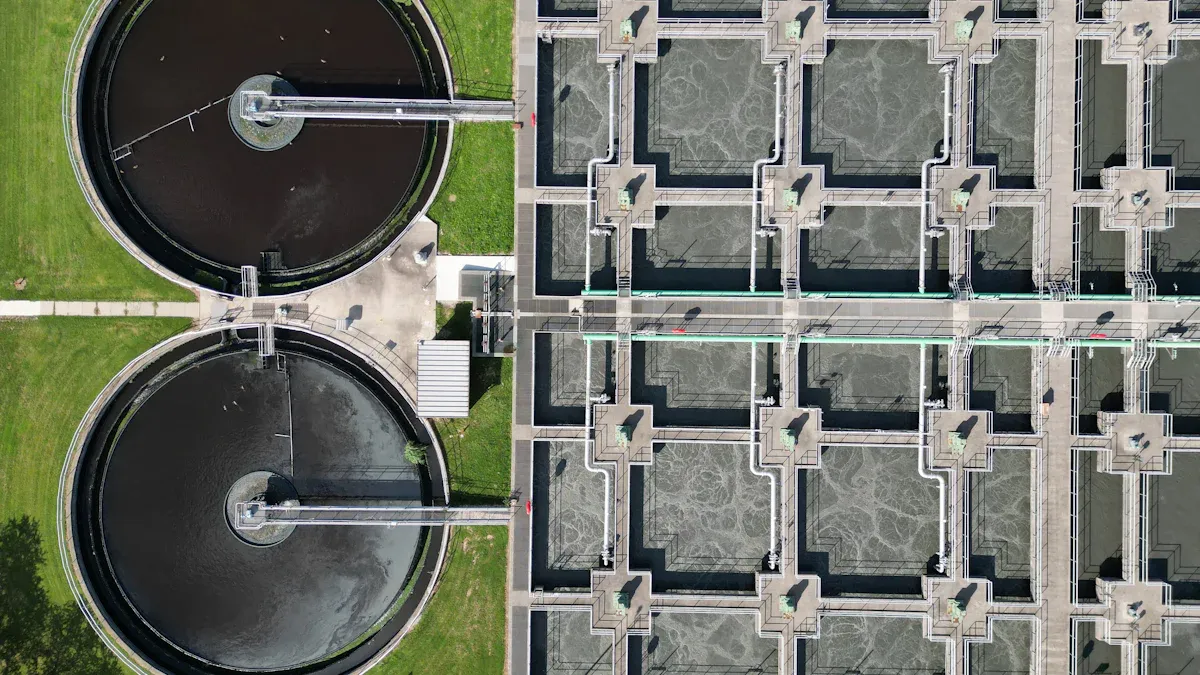
You might feel surprised when you see domestic sewage treatment plant prices. These costs often reach higher levels than other home projects.
- Septic system installation ranges from $3,615 to $12,408.
- Maintenance costs stay lower than public sewer systems.
- New trends show a focus on energy efficiency and smart technology.
Key Takeaways
- Domestic sewage treatment plant prices vary widely. Expect costs from $300 for basic units to over $20,000 for advanced systems.
- Always ask for a detailed breakdown of costs before purchasing. This helps you avoid unexpected expenses and plan your budget effectively.
- Consider both installation and maintenance costs when budgeting. Some systems may have higher upfront costs but save money over time with lower maintenance needs.
Why Domestic Sewage Treatment Plant Prices Aren't What You Think
Common Misconceptions About Pricing
Many homeowners believe domestic sewage treatment plant prices only reflect the cost of the unit itself. You might expect a simple price tag, but the reality is more complex. Some people think all systems cost the same, no matter the brand or size. Others assume installation is quick and cheap. These ideas can lead to surprises when you start your project.
Tip: Always ask for a full breakdown of costs before making a decision. This helps you avoid unexpected expenses.
Hidden Costs and Factors Affecting Price
You need to look beyond the sticker price. Several hidden costs can change the total amount you pay. Here are some factors that often go unnoticed:
- Land acquisition for the system
- Design and engineering fees
- Construction and equipment installation
- Energy consumption during operation
- Chemical usage for treatment
- Labor for regular maintenance and repairs
- Biosolids management and disposal
Technology choices also play a big role. Advanced systems may use more energy or require special chemicals. Stricter environmental regulations can force you to spend more on chemicals and advanced treatments. These rules often change from one area to another, so local requirements matter.
Domestic sewage treatment plant prices can rise quickly when you add these costs together. You should always consider both capital and operational expenses. This approach helps you plan your budget and avoid surprises.
Domestic Sewage Treatment Plant Prices by Brand
Leading Brands Overview
You can find many brands in the domestic sewage treatment plant market. Each brand offers different features and benefits. Some brands focus on reliability, while others provide affordable solutions for basic needs. You should look at what each brand does best before you choose.
| Brand Name | Key Feature | Review Score | Pricing |
|---|---|---|---|
| Qingdao Linzhen Environment Project Co., Ltd. | Proven reliability and full compliance with international standards | 5.0 | N/A |
| Hebei Jsun Industrial Technology Co., Ltd. | Unmatched affordability for basic needs | N/A | $300/unit |
| Qingdao Yihua Environmental Protection Co., Ltd. | Modular expansion with upgradable MBBR media | N/A | N/A |
| Zhucheng Ruiyao Intelligent Equipment Co., Ltd. | Fully mobile container design for rapid deployment | N/A | N/A |
| Shandong Grenorth Environment Protection Technology Co., Ltd. | Ideal for mid-sized communities needing reliable operation | N/A | N/A |
Note: You should compare brands based on your needs, not just price. Some brands offer special features that may save you money in the long run.
Typical Price Ranges for Each Brand
Domestic sewage treatment plant prices can change depending on the brand and the system type. You may see small units for basic needs or large systems for bigger homes. Here is a table showing typical price ranges for different products:
| Product Description | Price Range (USD) |
|---|---|
| Container 50m3 Per Day Mbbr System | $2,610 - $5,810 |
| Wastewater Treatment Equipment Domestic Biogas Septic Tank | $12,956 - $13,672 |
| Industrial Wastewater Domestic Sewage Plants | $2,950 - $5,580 |
| Integrated Sewage Treatment Equipment | $3,980 |
| Domestic Wastewater Package Sewage Treatment Plant | $9,800 |
| Domestic Sewage Treatment Plant 50m³ Per Hour | $2,400 - $2,500 |
| Daily Processing Capacity of 500L/Hour | $3,000 |
| Automatic Operation of Domestic Sewage Treatment Plant | $8,700 - $20,000 |
| Automatic Solid Liquid Separator | $1,000 - $3,000 |
| Industrial Wastewater Sewage Treatment Equipment | $18,500 - $19,800 |
| Sewage Treatment Plant 100m3/d MBR System | $7,800 - $8,000 |
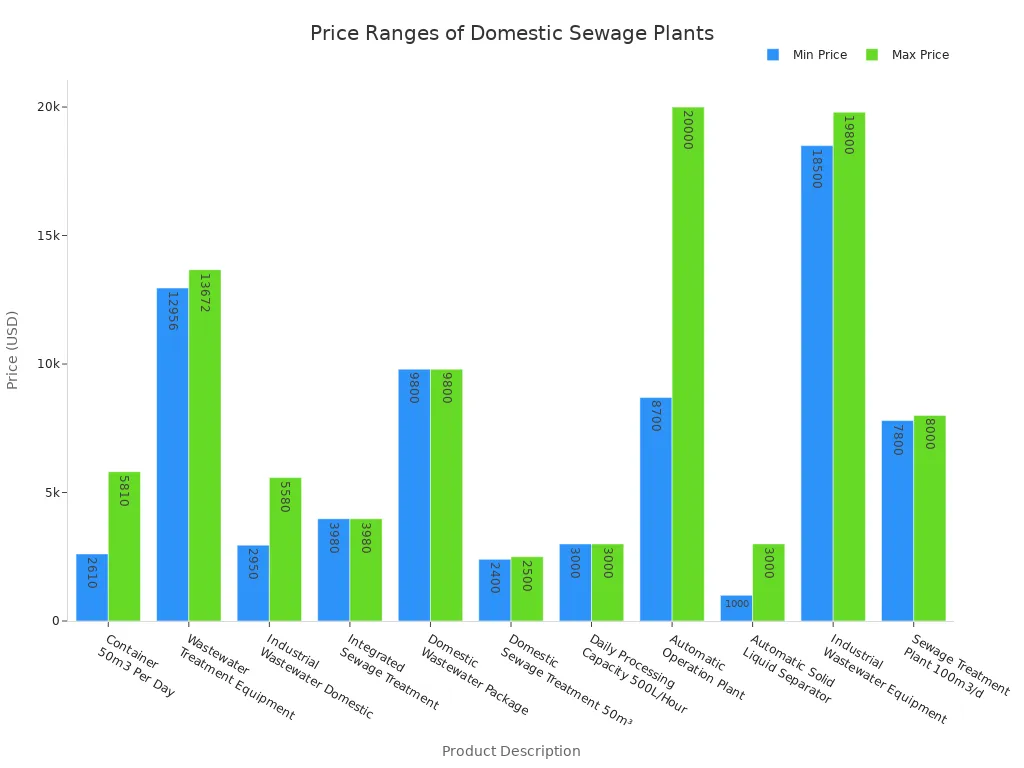
You can see that domestic sewage treatment plant prices range from $300 for basic units to over $20,000 for advanced systems. The price depends on the size, technology, and level of automation.
What You Get for the Price
When you pay for a domestic sewage treatment plant, you get more than just the equipment. Many brands include important features and services in the price. You should check what is included before you buy.
| Feature/Benefit | Description |
|---|---|
| Certifications | IMO 227(64) & MED certified |
| Automation | Fully automated for unattended operation |
| Maintenance | Minimal maintenance & spare parts required |
| Flexibility | Compatible with gravity and vacuum systems, operates in both sea and freshwater |
| Design | Compact and modular, suitable for various installations |
| Effluent Quality | Proven clean and safe effluent suitable for discharge overboard |
You may also find these benefits in some systems:
- Certified to NSF Standard 40
- Includes Bio-Kinetic system certified to NSF Standard 46
- Hydro-Kinetic system certified to NSF Standards 40 & 245
- Singulair R3 system exceeds NSF/ANSI Standards 40, 245, and 350
- Designed for domestic wastewater flows of 500 to 1,500 gallons per day
Tip: Some brands offer warranties and after-sales support. For example, Clearstream Wastewater Systems gives you a two-year limited warranty. Local installers will inspect your system for free during the warranty period. You can get repairs or replacement parts if needed.
You should always check what is included in the price. Some brands offer better support, longer warranties, or easier maintenance. These extras can make a big difference in the total value you get.
Factors That Influence Domestic Sewage Treatment Plant Prices
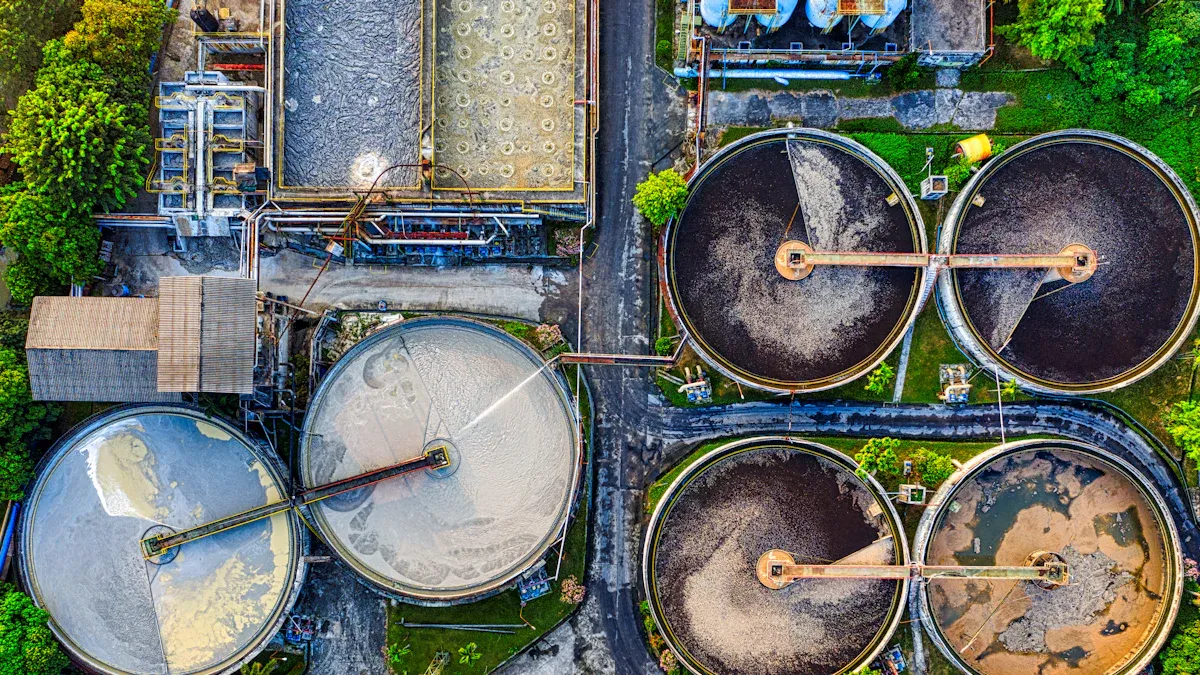
Technology and Capacity
You will notice that technology plays a big role in how much you pay for a sewage treatment plant. Different treatment processes change the total cost over the life of the system. Some plants use compact designs with chemical pre-treatment. These systems often save money because they work more efficiently and need less space. Chemical pre-treatment also lowers the amount of organic material that needs treatment. This means you can expand the plant’s capacity without spending as much.
Plant capacity also affects the price. When you choose a larger system, the capital cost goes up. Smaller plants often cost more per unit because the basic infrastructure does not scale down well. This can make it hard for small communities or homes to afford advanced treatment. If you need a higher level of treatment, the price will rise, especially for smaller systems.
Tip: Always match the plant’s technology and size to your household’s needs. This helps you avoid paying for features you do not need.
Installation and Maintenance Costs
You should plan for more than just the price of the equipment. Installation costs can be high. In the United Kingdom, the average cost to install a domestic sewage treatment plant ranges from £9,000 to £11,000. The final amount depends on the size of the tank, how easy it is to reach your property, and what kind of drainage you need.
Maintenance costs also vary by system type. Some systems need regular checks and filter changes. Others use smart technology to lower downtime and reduce the need for repairs. Here is a table to help you compare:
| System Type | Maintenance Requirement | Cost Implication |
|---|---|---|
| Standard Systems | Quarterly inspections, annual filter/media replacement | Regular costs incurred |
| Smart Systems | Remote monitoring alerts, reduced downtime by up to 40% | Potentially lower costs due to efficiency |
You may pay more upfront for a smart system, but you can save money over time because it needs fewer repairs and less manual work.
Local Regulations and Certification
Local rules and certifications can change the price of your sewage treatment plant. Some areas require advanced systems to meet strict discharge standards. You might need to buy a certified system or pay for extra features to pass inspections. These requirements can add to the total cost.
Government incentives can help lower your costs. Some programs offer subsidies for green infrastructure. These funds make it easier to afford advanced technology and meet environmental standards. You can also help the environment by choosing a higher-priced system. These plants save water, protect rivers and lakes, and even help refill groundwater supplies.
Note: Always check your local rules before you buy. You may qualify for financial help or need a special type of system to meet local laws.
How to Get Accurate Domestic Sewage Treatment Plant Prices

Questions to Ask Suppliers
You want to make sure you get the best value for your money. Start by asking suppliers clear questions. Ask about the total cost, including installation and maintenance. Request details about what is included in the price. Find out if the system meets local regulations. Ask about warranties and after-sales support. You should also check how long the supplier has been in business. Reliable suppliers often have good reviews and strong reputations.
Tip: Write down your questions before you contact suppliers. This helps you remember what matters most to you.
Tips for Comparing Quotes
You need to compare quotes from different suppliers carefully. Look beyond the lowest price. Consider these important strategies:
- Check cost-effectiveness. Think about your budget and future expenses, not just the first payment.
- Make sure the system follows local environmental rules. This helps you avoid problems later.
- Look for suppliers who offer strong maintenance and support. Good service can prevent breakdowns.
- Research the manufacturer’s reputation. Read client testimonials and look at past projects.
You can use a simple table to organize your findings:
| Supplier Name | Price | Compliance | Support | Reputation |
|---|---|---|---|---|
| Supplier A | $8,000 | Yes | Good | Excellent |
| Supplier B | $7,500 | No | Fair | Average |
| Supplier C | $9,200 | Yes | Excellent | Good |
You will find that domestic sewage treatment plant prices can vary for many reasons. Careful comparison helps you choose the right system for your home.
You see that domestic sewage treatment plant prices depend on more than just the brand. Many factors shape the final cost. Watch out for common pitfalls:
- Unexpected maintenance costs
- Complex systems that confuse owners
- Noise from blowers near homes
- Poor service from some manufacturers
FAQ
How often should you service your domestic sewage treatment plant?
You should schedule maintenance every 6 to 12 months. Regular checks help your system run smoothly and prevent costly repairs.
What happens if you ignore maintenance?
Ignoring maintenance can cause blockages, bad odors, or system failure. You may face expensive repairs or fines from local authorities.
Can you install a sewage treatment plant yourself?
| Task | Recommended? |
|---|---|
| DIY Install | ❌ |
| Professional | ✅ |
You should hire a certified installer. This ensures safety and compliance with local rules.
See Also
Essential Insights on Pressure Plates to Cut Costs
Key Information on Aminoguanidine Bicarbonate Pricing Trends
Comprehensive Overview of Semi-welded Heat Exchangers for 2025
Benefits of Selecting a Self-Priming Water Pump Today
Innovations in Heat Exchanger Manufacturing Boost Industrial Efficiency