Breaking Down Printing Methods DTF vs Screen Printing vs DTG
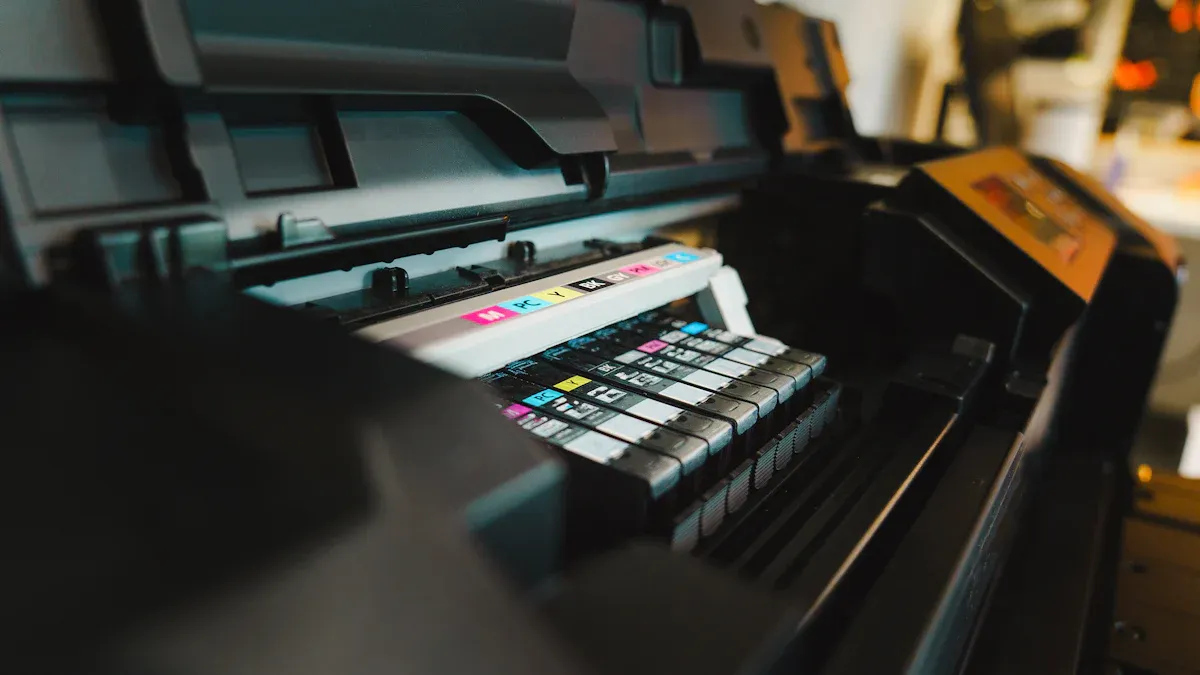
The best printing method depends on specific project factors. Order quantity, design complexity, and fabric choice determine the optimal solution.
Screen Printing: Use this for large bulk orders with simple designs. DTG Printing: Choose this for detailed, full-color designs on small batches of cotton. Direct to Film DTF: This method offers versatile, vibrant prints on various fabrics.
Key Takeaways
- Choose screen printing for many shirts with simple designs. It is good for big orders.
- Use DTG printing for one shirt with a detailed picture. It works best on cotton.
- Pick DTF printing for colorful designs on different types of fabric. It is good for small to medium orders.
Quick Comparison: DTF vs. Screen Printing vs. DTG
Choosing the right printing method requires a clear understanding of each one's strengths and weaknesses. This quick comparison breaks down the key differences to help guide your decision.
Best For
Each method excels in specific scenarios. Project goals often point to the ideal printing technique.
- Screen Printing: This method is the industry standard for high-volume orders with simple, bold graphics. It is perfect for team uniforms, event merchandise, and large-scale promotional apparel.
- DTG Printing: DTG shines when printing highly detailed, photorealistic images on 100% cotton garments. It is the top choice for print-on-demand businesses and one-of-a-kind custom gifts.
- DTF Printing: DTF offers incredible versatility. It produces vibrant, full-color designs on a wide array of fabrics, making it suitable for small businesses, custom apparel lines, and complex logos on non-cotton materials.
Order Size
Order quantity is a critical factor that directly impacts cost and production time. The ideal volume varies significantly between methods. Screen printing is most efficient for large production runs, printing hundreds of items per hour after setup. In contrast, both DTG and direct to film dtf are better suited for smaller batches.
| Printing Method | Ideal Order Quantity |
|---|---|
| DTF Printing | <100 orders (small to medium-sized production) |
| DTG Printing | <100 orders (small batch orders) |
| Screen Printing | >200 orders (large production runs) |
Design Complexity
The intricacy of your design will heavily influence your choice.
- Screen Printing works best with simple designs that use a limited number of solid colors. Each color requires a separate screen, making photographic prints or designs with gradients complex and costly.
- DTG and DTF both handle complex, full-color designs with ease. They can reproduce millions of colors, intricate details, gradients, and photorealistic images without any additional setup fees per color. This makes them superior for artistic or highly detailed graphics.
Durability
A printed garment should withstand washing and wear. Durability is a key measure of quality.
Note: Proper garment care, such as washing inside out in cold water and tumble drying on low, extends the life of any print.
Screen-printed designs are exceptionally durable. The ink penetrates the fabric and cures to form a resilient layer that lasts for years. DTF prints are also very durable, offering excellent stretchability and resistance to cracking and peeling. DTG prints are slightly less durable, as the ink sits on top of the fabric and can fade with repeated washing, especially on darker garments.
Fabric Compatibility
The type of fabric you choose is a major deciding factor. Not all methods work on all materials.
- Screen Printing: This is a versatile option that works on cotton, polyester, blends, and more.
- DTG Printing: This method is most effective on 100% cotton fabrics. The water-based inks bond best with natural fibers. Performance on polyester or blends is often poor.
- DTF Printing: This is the most versatile of the three. It adheres to cotton, polyester, nylon, leather, and various blends, making it an excellent all-around choice for diverse apparel needs.
Cost-Effectiveness
Cost is often the bottom line. Each method has a different cost structure.
- Screen Printing has high initial setup costs but becomes the most cost-effective method for large orders (over 200 units). The price per shirt decreases significantly as the quantity increases.
- DTG Printing has no setup costs, making it affordable for single items or very small batches. However, the cost per item remains relatively high, making it expensive for larger quantities.
- DTF Printing offers a middle ground. It is more cost-effective than DTG for small to medium runs (15-100 units) and avoids the high setup fees of screen printing, providing a scalable solution for growing brands.
What is Direct to Film DTF Printing?
Direct to film dtf printing is a modern apparel customization technique. The process involves printing a design onto a special transfer film. An adhesive powder is then applied to the ink and cured. Finally, a heat press transfers the design from the film onto the garment. This method creates a durable, full-color graphic that sits on top of the fabric.
When to Choose DTF
Businesses should choose direct to film dtf for its remarkable versatility and vibrant results. It is an excellent choice for several specific situations.
- Diverse Fabric Types: DTF works on cotton, polyester, nylon, leather, and blends. It offers significant advantages for dark-colored polyester or blended fabrics. The process allows for printing on these materials without compromising color vibrancy, ensuring designs remain vivid.
- Complex, Full-Color Designs: This method perfectly reproduces intricate details, gradients, and photographic images with unlimited colors.
- Small to Medium Orders: It is highly cost-effective for runs between 15 and 100 units, bridging the gap between DTG and screen printing.
DTF provides a flexible solution for brands needing high-quality, detailed prints across a wide variety of apparel without the high setup costs of screen printing.
When to Avoid DTF
While versatile, direct to film dtf is not always the optimal choice. Certain project requirements may favor other methods. For extremely large bulk orders (over 200 identical items), screen printing remains more cost-effective due to its lower per-unit cost at high volumes. For single, one-off prints on 100% cotton garments, DTG printing can offer a slightly softer feel, as the ink soaks more into the fabric fibers.
What is Screen Printing?
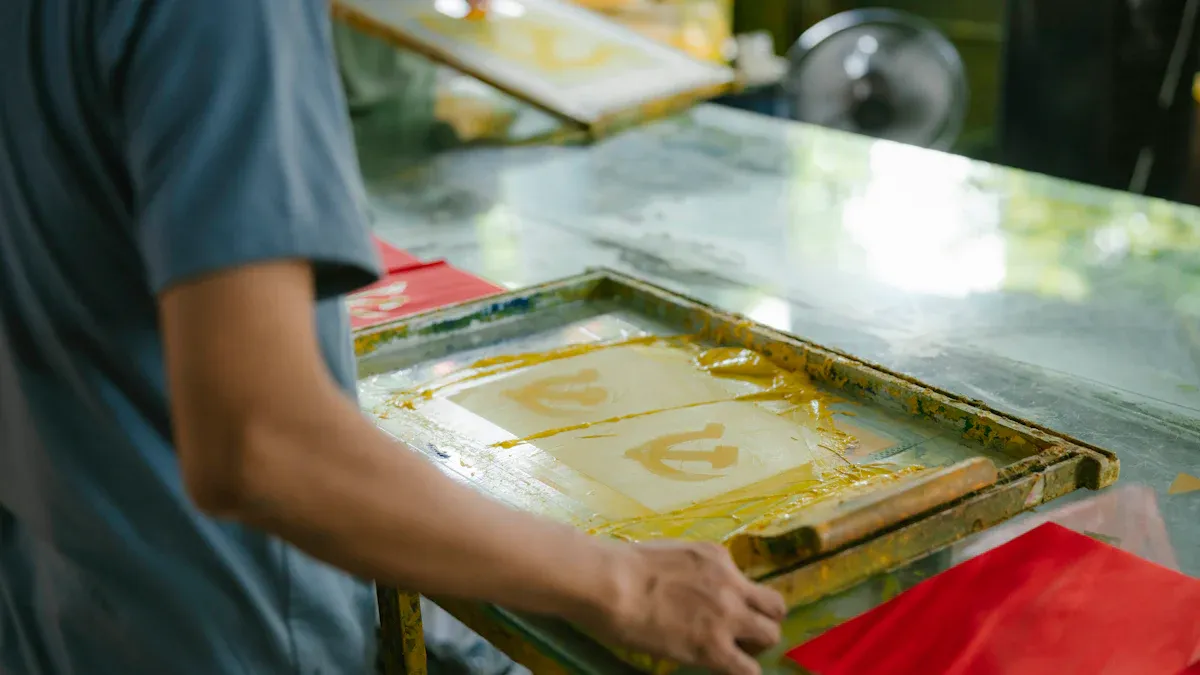
Screen printing is a classic and highly reliable printing technique. The process uses a woven mesh screen to support an ink-blocking stencil. This stencil forms the open areas of the design. A squeegee pushes ink through the mesh and onto the garment, transferring the image. Each color in a design requires its own separate screen, a key factor influencing its cost and complexity. This method creates a thick, durable layer of ink that sits on top of the fabric.
When to Choose Screen Printing
Businesses select screen printing for its unmatched efficiency and cost-effectiveness on large-scale projects. The high initial setup cost becomes negligible when spread across hundreds or thousands of units, making it the industry standard for bulk orders. It is the ideal choice for creating merchandise with bold, simple graphics. Common applications include:
- T-shirts and sweatshirts
- Hats and bags
- Posters and signs
- Stickers and packaging
This method produces vibrant, long-lasting prints, especially with designs that use a limited number of solid colors.
When to Avoid Screen Printing
Screen printing is not suitable for every project. Its significant setup costs make it impractical and expensive for small orders or single-item prints. A business needing only a few shirts would find the price per item prohibitively high.
Additionally, this method struggles with highly detailed or photorealistic designs. Reproducing complex color gradients and intricate images is difficult and costly, as each color and shade requires a unique screen. For such complex artwork, digital methods like DTG or DTF are superior alternatives.
What is DTG (Direct-to-Garment) Printing?
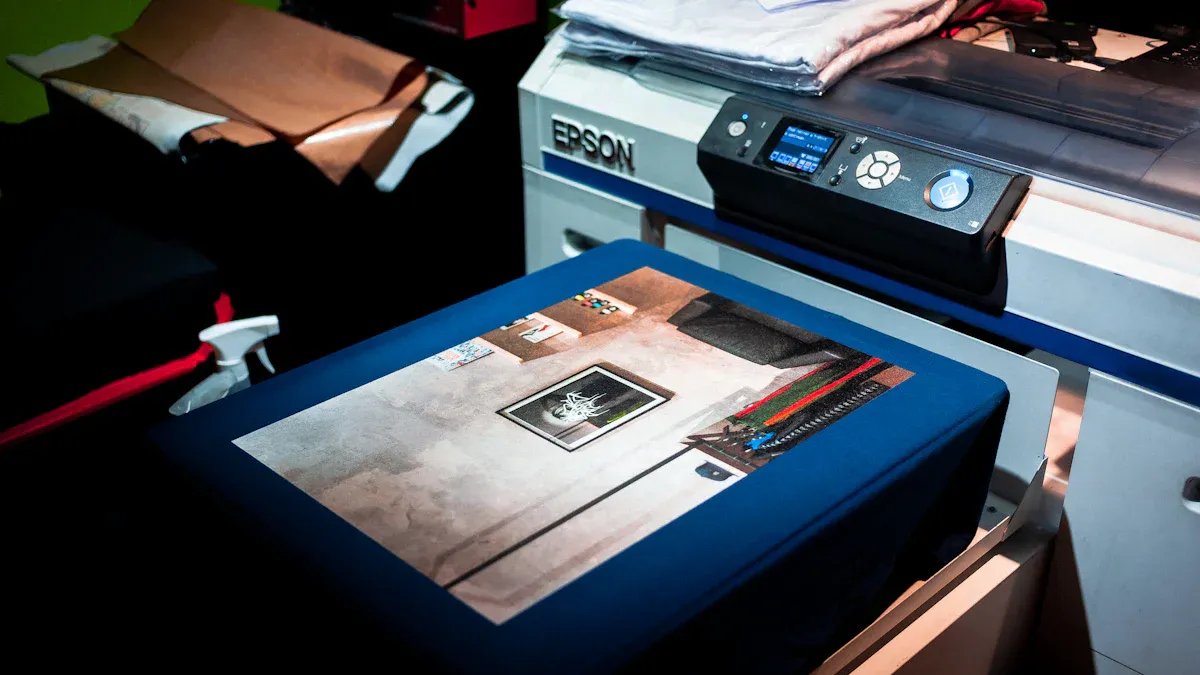
Direct-to-Garment (DTG) printing operates much like a standard inkjet printer, but for apparel. This technique applies specialized water-based inks directly onto the fabric. For darker garments, a pre-treatment solution is necessary. This liquid base acts as a foundation, ensuring the white ink layer is vibrant and preventing colors from bleeding. The process allows for stunningly detailed and colorful graphics that soak into the cotton fibers, creating a soft finish.
When to Choose DTG
DTG is the premier choice for projects demanding photorealistic quality and intricate detail. It excels at reproducing complex, full-color artwork on 100% cotton garments. This method is perfect for print-on-demand services, personalized gifts, and small-batch apparel lines where artistic expression is key. The technology's precision makes this possible.
- Advanced inkjet technology achieves vibrant color reproduction.
- A resolution of up to 1200 x 1200 dpi produces exceptionally crisp images.
- A tiny 3 pL minimum ink drop size allows for fine details and smooth gradients.
The minimal setup makes DTG ideal for single items and small orders, offering a quick turnaround for custom requests.
When to Avoid DTG
Businesses should avoid DTG for large-volume orders, as the per-item cost remains high compared to screen printing. Its primary limitation, however, is fabric compatibility. The water-based inks are designed for natural fibers and perform poorly on most synthetic materials.
Polyester's looser weave prevents the ink from fully saturating the fabric. During the heat-curing stage, dye from the polyester can also bleed into the print, a problem known as dye migration. This can cause a white design on a red shirt to turn pink.
This makes DTG unsuitable for performance wear or polyester-blend apparel. For such materials, DTF printing is a far superior alternative.
Making Your Final Decision: A Scenario-Based Guide
Theory provides a foundation, but real-world scenarios make the choice clear. This guide breaks down common projects to illustrate which printing method is the best fit for specific needs.
For a Company Event (200 Shirts, 2-Color Logo)
A company planning a large event needs 200 shirts with a simple two-color logo. The primary goals are brand consistency, durability, and cost control at a high volume.
🏆 The Winner: Screen Printing
Screen printing is the undisputed champion for this task. The high initial setup costs for creating the two screens (one for each color) are distributed across the large order. This process dramatically lowers the price per shirt, making it the most economical option for bulk production.
- Cost-Effectiveness: It offers the lowest per-unit cost for orders exceeding 200 pieces.
- Durability: The thick ink layer creates a tough, long-lasting print that can withstand repeated washing, perfect for promotional apparel.
- Vibrancy: Screen printing produces exceptionally bold and vibrant colors that make a simple logo pop.
For large-scale events, team uniforms, or merchandise runs, screen printing delivers professional quality at an unbeatable price.
For a New Brand (15 Shirts, Full-Color Graphic)
A new apparel brand wants to launch with a small batch of 15 t-shirts. The design is a complex, full-color graphic intended to showcase the brand's artistic style. The brand needs a high-quality print without a large upfront investment.
🏆 The Winner: DTF Printing
DTF printing emerges as the strategic choice for this scenario. It handles full-color, intricate designs flawlessly with no setup fees per color. This makes it more affordable than DTG for small-to-medium batches. The direct to film dtf method also offers superior fabric versatility, allowing the brand to test its design on cotton, polyester, or blends.
This cost breakdown illustrates the financial advantage for a 15-shirt order:
| Quantity | DTG Cost per Shirt | DTF Cost per Shirt |
|---|---|---|
| 15 shirts | $7.00 - $10.00 | $4.00 - $6.00 |
DTF provides a scalable solution. It empowers a new brand to produce vibrant, detailed, and durable apparel in small quantities, preserving capital while testing the market.
For a Personalized Gift (1 Shirt, Family Photo)
Someone wants to create a single, unique t-shirt featuring a high-resolution family photograph as a gift. The garment is 100% cotton, and the goal is to capture the image with maximum detail and color accuracy.
🏆 The Winner: DTG Printing
DTG is perfectly engineered for this exact purpose. A significant advantage of DTG is its flexibility, allowing for the printing of a single custom shirt without any setup costs. This makes it ideal for individual orders.
DTG printing excels at capturing the most minute details in a design. It delivers sharp, photo-quality images with smooth gradients, ensuring every face and subtle background element in the family photo is beautifully captured. The water-based inks absorb directly into the cotton fibers. This process results in a soft, breathable finish that feels like part of the shirt itself, rather than a thick layer on top. For a one-of-a-kind, detailed print on cotton, DTG is the superior method.
Choosing the right printing method depends entirely on project needs; no single technique is universally "best." Each method serves a specific purpose.
- Screen printing is the most cost-effective choice for bulk orders with simple designs.
- DTG excels at one-off, highly detailed prints on 100% cotton.
- DTF provides unmatched versatility for vibrant designs on many fabrics.
FAQ
Which printing method is the most durable?
Screen printing and DTF printing both offer exceptional durability and wash resistance. DTG prints are slightly less durable and may fade over time with repeated washing.
Can I print a photo on a polyester shirt?
Yes. DTF printing is the ideal method for this task. It produces vibrant, detailed photographic images on polyester and other synthetic fabrics where DTG printing is not effective.
See Also
Automatic UV Coaters: Indispensable for Modern High-Speed Printing Operations
Versatile Nozzle Solutions: A Guide for Gardening, Bioprinting, and Lubrication
Future of Carton Production: Trending Folder Gluer Innovations for 2025
Advanced Filtration: Leading Precoating Materials Revolutionizing Systems by 2025
WT20 Thoriated Tungsten Electrodes: Enhancing TIG Welding Performance Significantly