Desktop Water Dispenser Guide for Office and Home
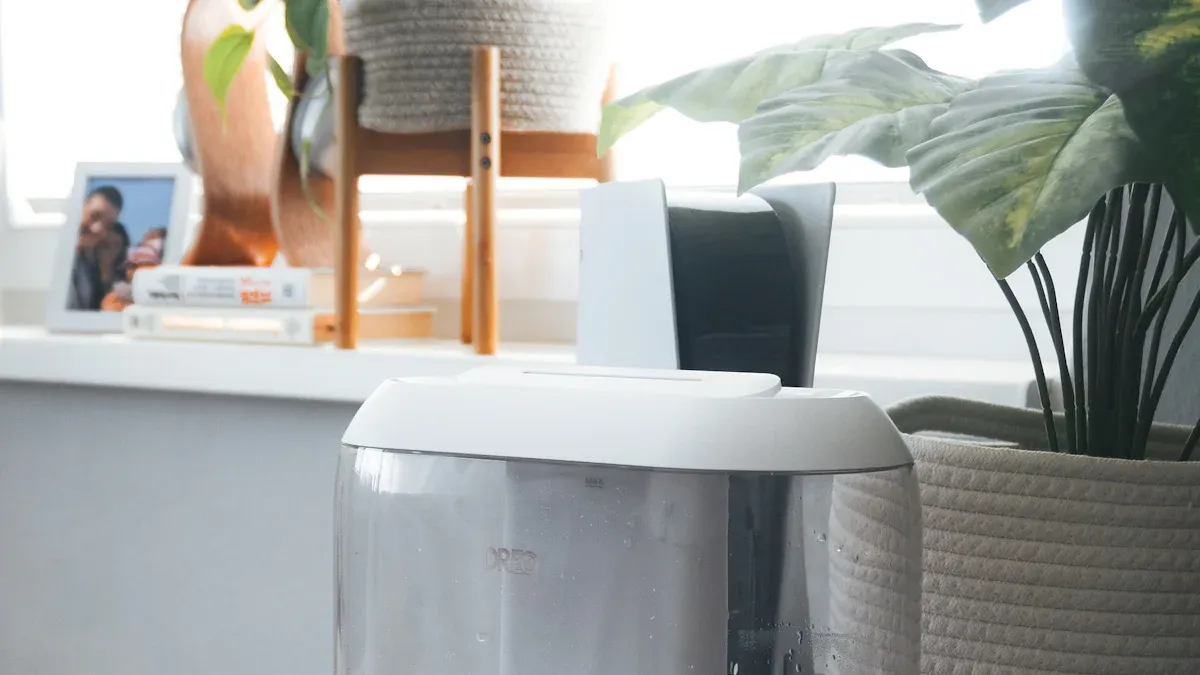
Enjoy instant access to perfectly chilled or piping hot water right from your countertop. A desktop water dispenser saves space while upgrading convenience in any home or office setting.
This convenience is driving significant market growth. The U.S. market for smart models is projected to grow 9.2% annually, with adoption rising in home offices and corporate spaces.
Choosing the right one depends on your water source and daily usage.
Key Takeaways
- Choose between bottled or bottleless dispensers. Bottled dispensers are cheaper at first. Bottleless dispensers save money over time and reduce plastic waste.
- Match the dispenser's size and features to your needs. A small unit works for home. A strong, high-capacity unit is better for an office.
- Clean your dispenser often. Change filters on time. This keeps your water fresh and the machine working well.
Key Factors for Your Desktop Water Dispenser
Choosing the perfect desktop water dispenser involves more than just looks. You need to consider how it fits into your daily life. Key factors like water source, capacity, and safety features will guide you to the right model for your home or office.
Water Source: Bottled vs. Bottleless
Your first big decision is choosing between a bottled or bottleless dispenser. Each type has unique benefits.
- Bottled Dispensers: These models use large, pre-filled water jugs (typically 3 or 5 gallons). You simply place the jug on top of or inside the unit. They are easy to set up anywhere with an electrical outlet.
- Bottleless Dispensers (Point-of-Use): These units connect directly to your building's water line. They filter tap water on-demand, providing a limitless supply.
A bottled dispenser involves a lower upfront cost. However, the recurring expense of water jugs and delivery fees adds up. Bottleless models have a higher initial investment for installation but offer unlimited water for a fixed monthly price, saving you money long-term.
| Feature | Bottled Water Dispenser | Bottleless Water Dispenser |
|---|---|---|
| Upfront Cost | Lower initial investment | Higher initial investment |
| Recurring Cost | Higher (jugs, delivery fees) | Lower (fixed price, filter changes) |
| Logistics | Requires storage for jugs | No storage needed |
| Labor | Manual lifting of heavy jugs | No manual labor required |
Beyond cost, consider the environmental impact. The production and transport of single-use plastic jugs create a large carbon footprint. An estimated 70% of these PET plastic bottles are not recycled in the US, polluting our ecosystems. Bottleless models reduce this plastic waste significantly.
Capacity and Usage Needs
Think about how many people will use the dispenser daily.
- For a Home or Home Office: A smaller countertop model that holds a 3-gallon jug or a compact bottleless unit is usually sufficient.
- For a Small to Medium Office: A higher-capacity model is better. A bottleless dispenser is often ideal here, as it eliminates the need to order, store, and change heavy water jugs.
Matching the capacity to your needs ensures you always have enough water without taking up unnecessary space.
Temperature Options and Controls
Modern dispensers offer more than just room-temperature water. Most provide instant hot and cold water.
- Cold Water: Typically chilled between 42.8°F and 50°F.
- Hot Water: Usually heated to between 190.4°F and 203°F.
Some models feature fixed temperatures, while others offer adjustable controls. Dispensers with adjustable settings give you precise control for different uses.
With adjustable controls, you can set the perfect temperature for various beverages. You can brew delicate green tea at 170°F or make a pour-over coffee at 205°F. This versatility eliminates waiting for a kettle to boil and prevents wasted energy.
Filtration System Types
If you choose a bottleless model, the filtration system is its most important feature. Most dispensers use carbon filters to improve the taste and quality of tap water. Activated carbon is excellent at trapping a wide range of impurities.
A good carbon filter can remove or reduce:
- Chlorine and Chloramine, which affect taste and smell.
- Heavy metals like lead and mercury.
- Volatile Organic Compounds (VOCs) from industrial sources.
- Pesticides and Herbicides from agricultural runoff.
- PFAS (Per- and Polyfluoroalkyl Substances).
- Microplastics.
Noise Level and Energy Use
A noisy appliance can be a distraction, especially in a quiet office or home. Look for dispensers with a low noise rating.
A quiet-rated desktop water dispenser operates below 50 decibels (dB). The quietest models run at around 35-40 dB, which is as quiet as a soft whisper or a gentle breeze. For energy efficiency, check for an ENERGY STAR certification, which means the model meets strict energy-saving guidelines set by the U.S. Environmental Protection Agency.
Child Safety and Ease of Cleaning
Safety is a top priority, especially in a home with children. Hot water taps can pose a burn risk. Most dispensers include a child-safety lock to prevent accidents. A common mechanism is a push-lever spigot that requires a two-step action to dispense hot water.
Also, consider how easy the unit is to clean. Look for features like a removable drip tray that you can quickly wash to prevent spills and buildup.
Choosing the Right Type for Your Space
Matching a dispenser to your environment ensures it meets your daily hydration needs without causing clutter. Your home office has different demands than a busy workplace.
For the Home Kitchen or Home Office
In a personal space like a home kitchen or office, you need a compact and efficient unit. A desktop water dispenser designed for home use saves valuable counter space while offering convenience. Look for models that are lightweight and easy to clean.
Key features for a home unit include:
- Versatile Temperature Outputs: Hot, cold, and room-temperature water options let you make tea or a cold drink instantly.
- Energy Efficiency: An energy-saving model helps reduce your electricity bills.
- Compact Design: A smaller footprint is essential for fitting on a crowded countertop.
For example, the Avalon A8 is a bottleless countertop model perfect for home use. It offers a built-in filtration system and a child safety lock, making it a great all-in-one solution.
For the Small to Medium Office
An office with 20 to 30 employees requires a durable, high-capacity dispenser. You need a unit that can handle constant use. Look for commercial-grade models built with premium materials like 304-grade stainless steel, which resists dents and corrosion.
For this setting, ensure the dispenser has a cooling and heating capacity of at least 5 liters per hour. Also, check for safety certifications like a UL or ETL listing to confirm its electrical safety. A robust framework and professional-grade components minimize downtime and maintenance costs, ensuring your team always has access to clean water.
Installation and Setup
Getting your new water dispenser ready is a straightforward process. The steps depend on whether you chose a bottled or bottleless model.
Setting Up a Bottled Dispenser
You can set up a bottled dispenser in just a few minutes. First, find a level spot near an electrical outlet. Before loading the water, you need to prime the system to prevent airlocks.
To prime your dispenser, pour about one gallon of water into the reservoir. Hold down both spigots until the water stops flowing. This clears the lines.
Next, you will load the water jug. A 5-gallon jug weighs about 40 pounds, so lift carefully.
- Wipe the neck of the new bottle and remove its seal.
- Lift the bottle using your knees, not your back.
- Place the bottle, cap-end down, onto the dispenser.
- Push down gently to puncture the cap and let the reservoir fill.
- Dispense a cup of water from each tap to ensure a steady flow.
Installing a Bottleless (Point-of-Use) Model
A bottleless dispenser connects directly to your plumbing, which requires a more involved installation. This setup provides a limitless water supply and is best handled by a professional. An installer will run a small water line from your cold-water pipe to the dispenser.
Hiring a professional ensures the connection is secure and leak-free. The cost includes materials, labor, and supplies.
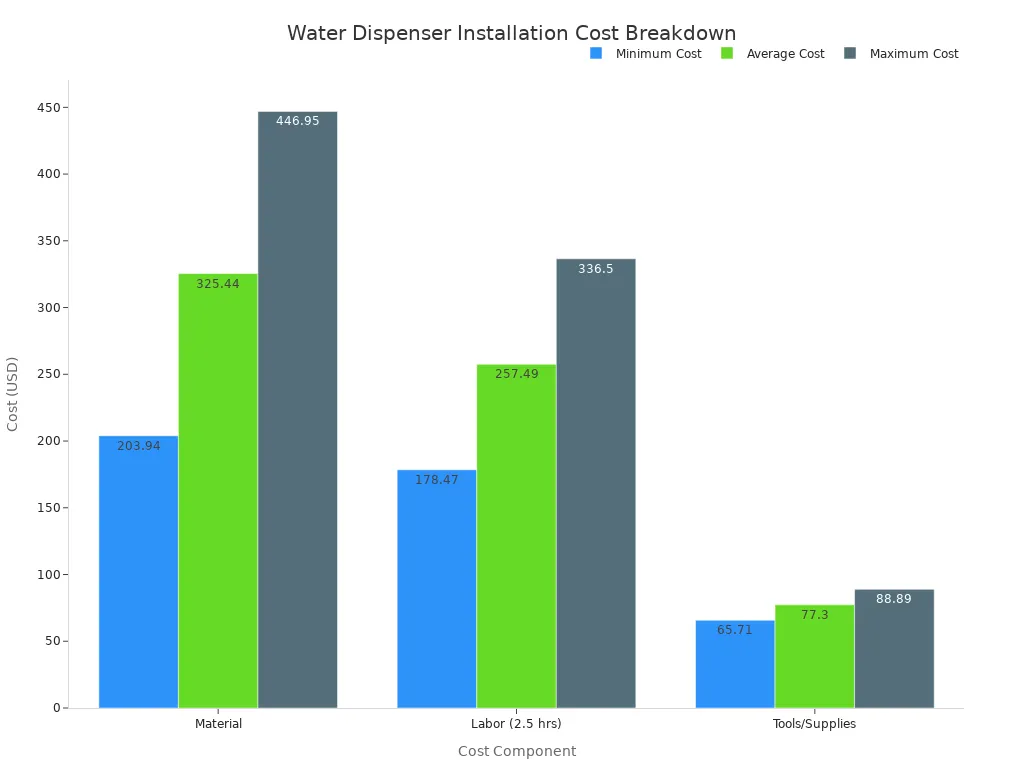
Here is a look at the average costs:
| Item | Average Cost |
|---|---|
| Material | $325.44 |
| Labor (2.5 hrs) | $257.49 |
| Tools/Supplies | $77.30 |
| Total Average | $660.23 |
You should consult with a local plumber to get an accurate estimate for your specific home or office.
Maintenance and Long-Term Care
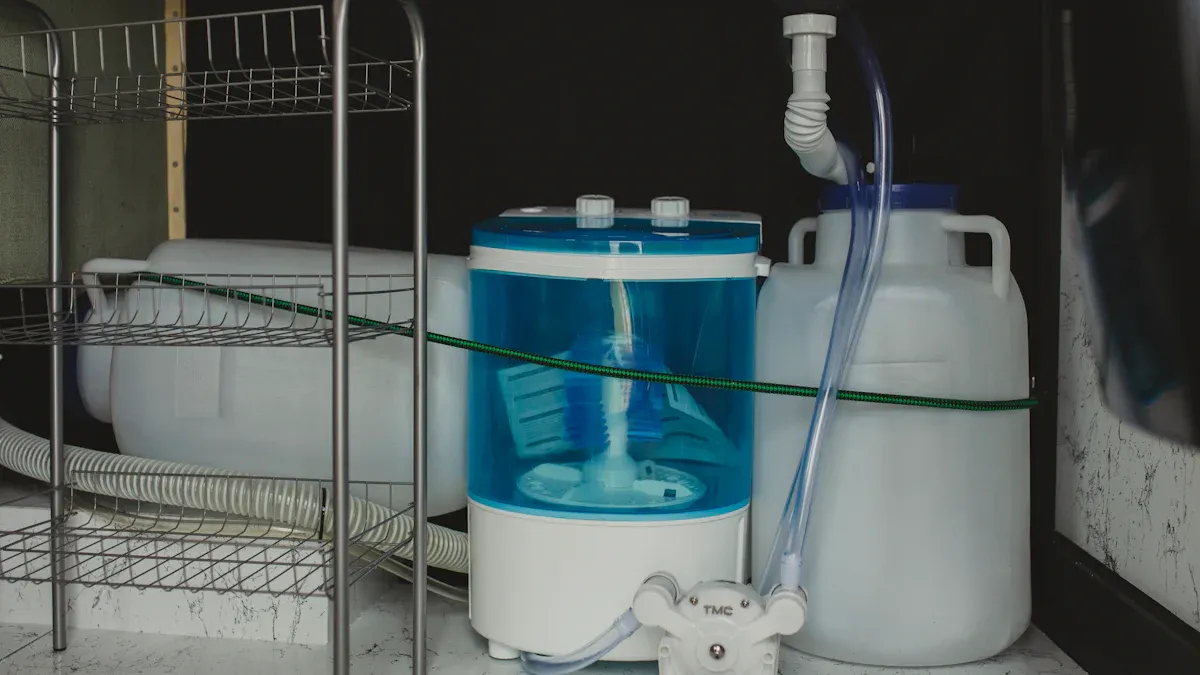
Proper maintenance keeps your dispenser running well for years. It also ensures your water stays fresh and clean. A simple routine will protect your investment and your health.
Your Simple Cleaning Routine
You should clean your dispenser regularly to prevent bacteria and mineral buildup. A consistent schedule is the key to fresh-tasting water. Office units with heavy use need more frequent cleaning than home models.
| Component | Recommended Cleaning Frequency |
|---|---|
| Reservoir & Water Paths | Every 2-4 weeks (home use) |
| Taps/Nozzles | Weekly wipe-down |
| Office Units (Heavy Use) | Every 7-10 days |
If you live in an area with hard water, you will also need to descale the unit. Hard water leaves mineral deposits called scale. Descaling removes this buildup.
- Fill the reservoir with water and add a descaling solution.
- Let the solution sit for the recommended time.
- Drain the dispenser completely and flush it with fresh water before using it again.
When to Replace Filters
A bottleless dispenser's filter is essential for water quality. You must replace it on schedule to keep removing contaminants effectively.
Most carbon filters in countertop systems last between 6 to 12 months. Always check your manufacturer's guidelines for the exact replacement interval.
Reverse osmosis (RO) systems have a different indicator. You can check the Total Dissolved Solids (TDS) with a handheld meter.
💧 Pro Tip: Check your RO water's TDS level weekly. If the reading goes above 40 parts per million (ppm), it is time to replace the membrane. This simple test ensures your water remains pure.
You can find the perfect desktop water dispenser by focusing on three key choices. First, decide on your water source—bottled or bottleless. Then, match the capacity to your space. Finally, select essential features like temperature controls and safety locks. This approach ensures you choose a reliable unit for years of convenient hydration. 💧
FAQ
How often should I clean my desktop water dispenser?
You should clean your home unit every 2-4 weeks. Office dispensers with heavy use need cleaning every 7-10 days. This routine prevents bacteria and keeps water fresh.
Can I use tap water in a bottled dispenser?
No, you should not use tap water in a bottled dispenser. These models do not have filters. Using unfiltered water can cause mineral buildup and damage the machine.
Are desktop water dispensers noisy?
Most modern dispensers are very quiet. You can find models that operate below 50 decibels. The quietest units run as softly as a whisper in a library.