Decentralized or Centralized Wastewater Treatment: Making the Right Choice
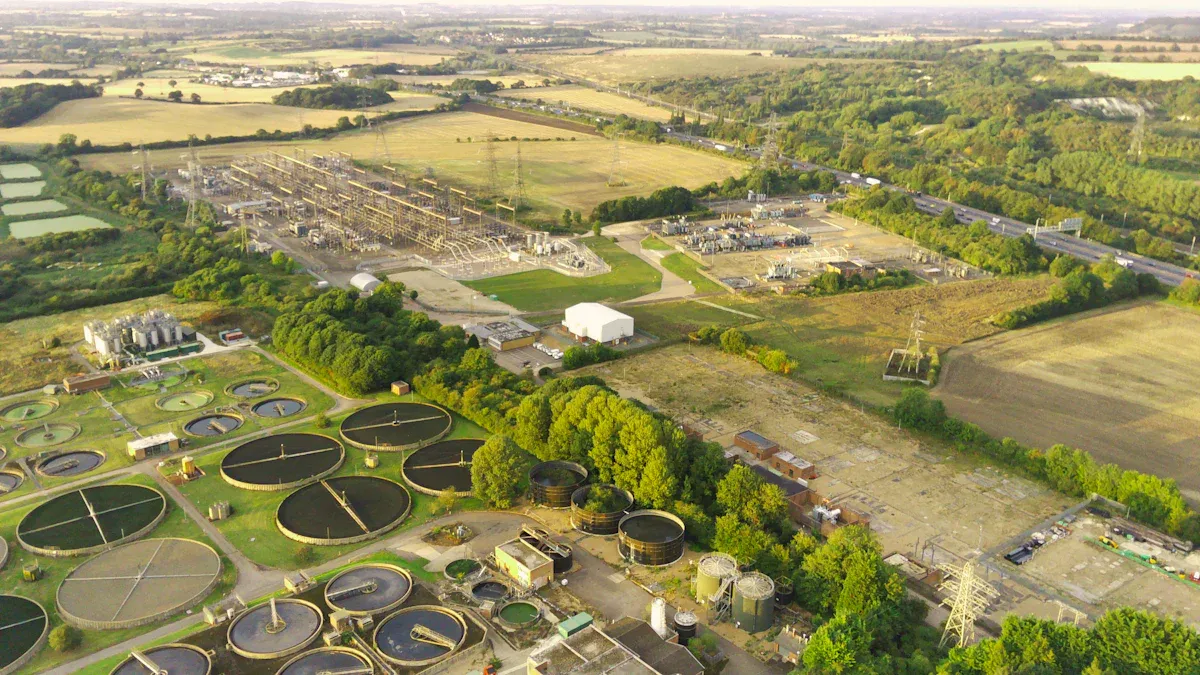
You face many factors when you choose a wastewater solution. Your location, budget, and local rules shape your options. In rural areas, you may find a decentralised wastewater treatment system fits best, while cities often need large, centralized plants. Each system affects costs, environment, and compliance in different ways.
Key Takeaways
- Decentralized systems treat wastewater close to its source, making them ideal for rural areas and small communities. They offer flexibility and lower costs as communities grow.
- Centralized systems handle large volumes of wastewater efficiently in urban areas. They provide professional oversight and meet strict regulatory standards, ensuring public health and safety.
- When choosing a system, consider your location, budget, community size, and future growth. Assess local regulations to find the best wastewater treatment solution for your needs.
Decentralised Wastewater Treatment System
What Is a Decentralised System
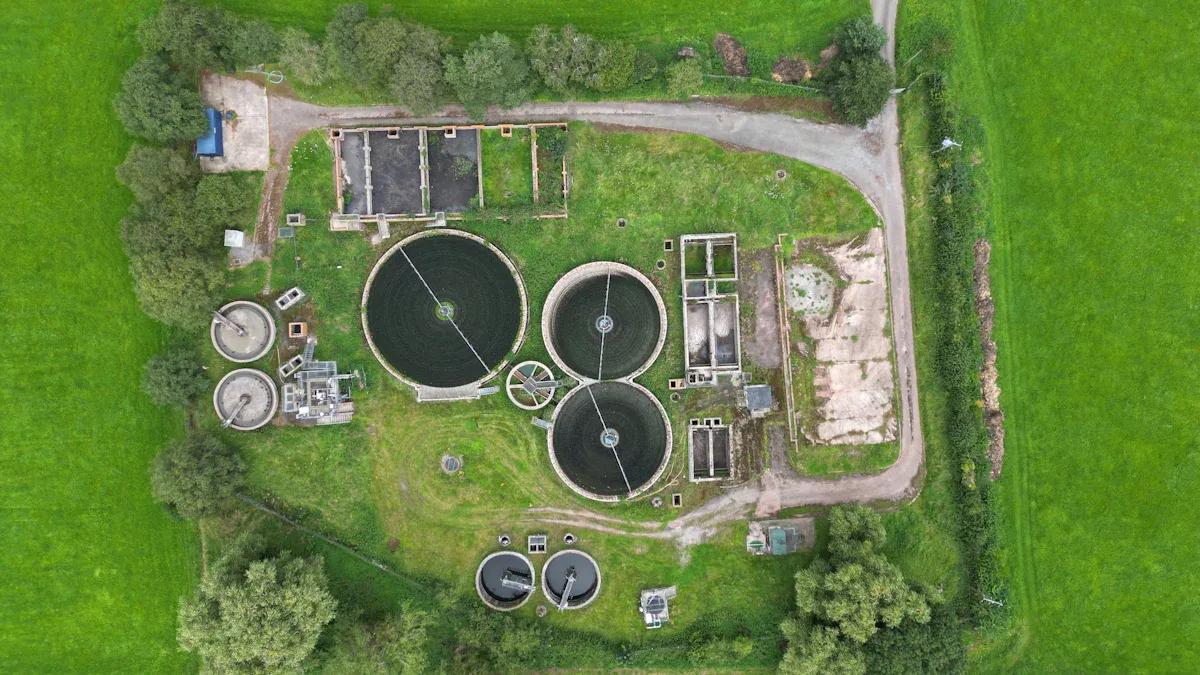
You can think of a decentralised wastewater treatment system as a way to treat water close to where you use it. These systems focus on local solutions instead of sending wastewater far away.
Decentralised systems are designed to be financially consistent, socially responsible, and environmentally friendly. They adapt to local conditions and can grow as your community grows. Community involvement matters, so you often help plan and operate these systems. Resilience is important, so the system keeps working even during tough times.
- Treats wastewater near its source
- Minimizes environmental impact
- Supports resource recovery
- Expands with population growth
- Encourages community participation
How Decentralised Systems Work
You see decentralised wastewater treatment systems working best in rural areas. These systems match local needs and lifestyles. You manage and maintain them locally, which makes sense for small towns or remote places. Extending big sewer networks costs a lot and gets complicated, so decentralised systems offer a practical and sustainable choice.
Common Uses for Decentralised Systems
You find decentralised wastewater treatment systems in many places:
- Rural areas and isolated communities
- Rapidly growing towns
- New residential developments
- Commercial sites
- Urban environments with aging infrastructure or rising costs
You may use different types of systems, such as septic tanks with soil absorption fields, aerobic treatment units, and extended aeration package plants. These options help you handle wastewater safely and efficiently.
Centralized Wastewater Treatment Systems
What Is a Centralized System
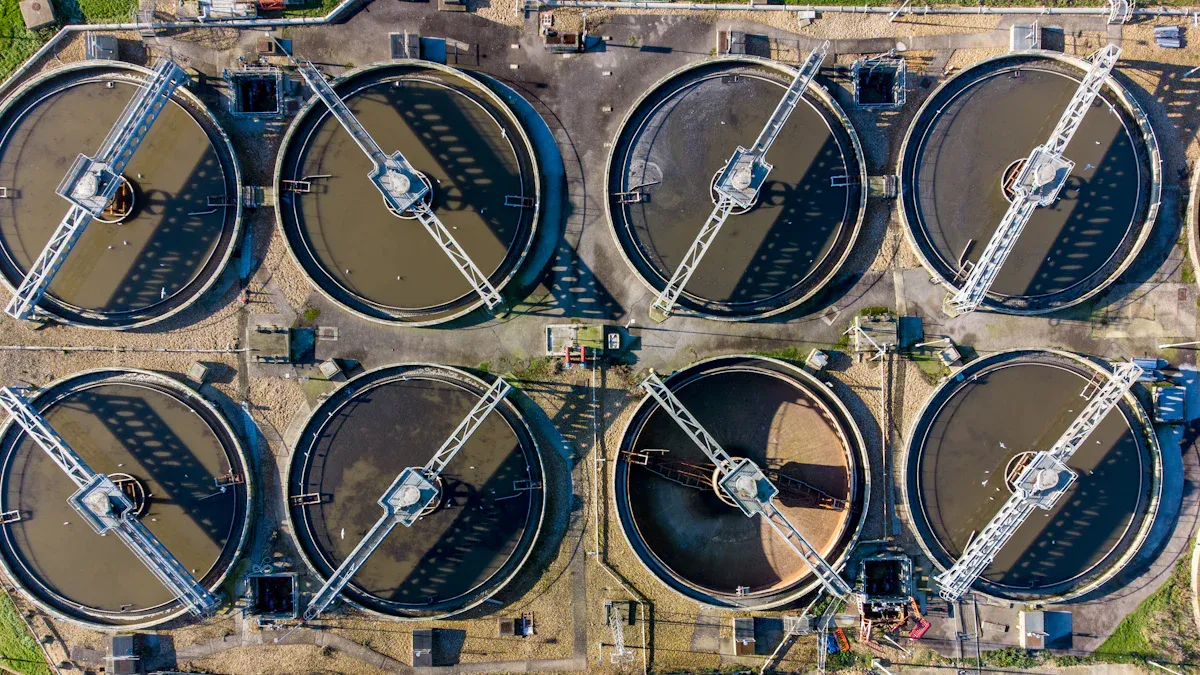
You see centralized wastewater treatment systems in large cities and industrial areas. These systems collect wastewater from homes, businesses, and factories through a network of underground pipes. The water travels long distances to reach a central facility. Here, experts use advanced technology to clean and treat the water before releasing it back into the environment.
Centralized systems handle huge amounts of wastewater every day. You rely on these systems to keep your community safe and healthy.
Here is a table that shows how centralized systems differ from decentralized systems:
| Feature | Decentralized Systems | Centralized Systems |
|---|---|---|
| Scale and Location | Treats wastewater close to its source | Large facilities far from service areas |
| Infrastructure | Smaller systems like septic tanks and package plants | Extensive sewer networks and pumping stations |
| Treatment Process | Typically two phases (primary and secondary) | Usually three phases (primary, secondary, tertiary) |
| Management and Operations | Managed by local authorities or homeowners | Requires significant ongoing maintenance and oversight |
How Centralized Systems Work
You watch centralized systems use advanced chemical and biological methods to treat large volumes of wastewater. These facilities test waste streams before treatment to make sure everything works smoothly. The plants store millions of gallons of wastewater and recycle over 95% of materials, which helps reduce landfill use. Experts monitor the process to meet strict environmental rules and keep your water safe.
- Advanced chemical and biological treatment methods
- Pre-qualification testing for waste streams
- High processing capacity and large storage
- Focus on regulatory compliance and sustainability
- Recycling of most materials received
Common Uses for Centralized Systems
You find centralized wastewater treatment systems in densely populated cities and industrial regions. These systems manage sewage through vast underground networks. Urban areas depend on centralized plants to handle the high volume of wastewater and protect public health. You benefit from reliable service and professional oversight in these environments.
Comparing Decentralised and Centralized Systems
Scale and Coverage
You need to think about how many people a system can serve. Decentralised wastewater treatment system works well for small communities or neighborhoods. You see these systems use shorter pipelines and focus on local areas. Centralized systems cover large cities and transport wastewater over long distances. Some places use a hybrid approach, mixing both systems for better results.
| System Type | Scale and Coverage Description |
|---|---|
| Decentralized | Serves specific areas or communities with smaller conveyance networks, often limited to one pipeline. |
| Centralized | Serves larger populations through extensive pipeline networks transporting wastewater over long distances. |
| Hybrid | Combines elements of both systems, applied to parts of larger areas, especially in urban settings. |
Infrastructure and Costs
You notice big differences in infrastructure and costs. Centralized systems need large sewer networks and advanced treatment plants. These systems cost more to build and run, but they handle more wastewater. Decentralised wastewater treatment system uses smaller clusters and simpler pipes. You spend less money if you have fewer than sixteen clusters, but you need more land for each system.
| System Type | Cost Characteristics | Infrastructure Requirements |
|---|---|---|
| Centralized Wastewater Management (CWWM) | Higher operational costs, economies of scale | Conventional sewer and activated sludge plant |
| Decentralized Wastewater Management (DWWM) | Lower cost with fewer than 16 clusters, higher capital and land requirement | Cluster subsystems with simplified sewer and DEWATS |
Operation and Maintenance
You must keep your system working well. Decentralized systems need regular checks and maintenance. You inspect the system and pump out septic tanks often. You need technical skills to run these systems, which can be hard in rural areas. Community members play a big role in keeping everything running. Centralized systems rely on trained professionals for operation and maintenance.
- You inspect and maintain decentralized systems regularly.
- You need technical knowledge for decentralized systems.
- Community involvement helps decentralized systems succeed.
Advantages of Decentralised Wastewater Treatment System
Cost Savings
You save money when you choose a decentralised wastewater treatment system. These systems let you build in phases, so you avoid spending on unused capacity. You can install units as your community grows, which keeps costs low. Studies show that decentralised systems often have a lower present value cost than centralized ones. You also see similar life cycle costs for each unit of wastewater treated.
- You reduce idle capacity.
- You grow your system step by step.
- You spend less on installation and operation.
Flexibility and Local Adaptation
You gain flexibility with a decentralised wastewater treatment system. You treat wastewater near its source, so you can respond quickly to local challenges like water shortages. You customize each system to fit your site’s needs. You scale the system as your community changes. This approach works well in rural and remote areas where large plants are not practical.
- You tailor the process to your wastewater.
- You adapt to local resources and conditions.
- You avoid high costs for long-distance transport.
Environmental Impact
You help the environment when you use a decentralised wastewater treatment system. These systems encourage stewardship and support efficient utility structures. You reduce the energy needed for transportation and lower the risk of pollution in your area.
Decentralised systems promote cleaner water and healthier communities.
Community Control
You take charge of your wastewater solutions. Community leaders focus on public health and plan for future growth. You help evaluate options and understand local challenges. Your involvement makes the system more effective and ensures it meets your needs.
- You shape the system to fit your community.
- You keep costs manageable.
- You support long-term success.
Limitations of Decentralised Wastewater Treatment System
Regulatory and Compliance Issues
You may face challenges when you try to set up a decentralised wastewater treatment system. Many rules and regulations favor centralized systems, which makes approval harder for local solutions. Sometimes, you find that the legal framework is not clear. You may see different rules in each state or city, which leads to confusion. You need to work with local authorities to understand what is required. Consistent regulations help you expand treatment options and keep your system running smoothly.
- Regulatory frameworks and institutional support are often inadequate.
- Approval processes may favor centralized systems.
- Lack of clear legal guidelines and monitoring procedures.
- Regulations differ from state to state, causing inconsistencies.
Tip: You should check local laws before you start planning your system.
Maintenance Demands
You must keep your system in good shape. Decentralised systems need regular inspections and maintenance. You may need to pump out tanks, check equipment, and fix problems quickly. Maintenance happens onsite, so you take responsibility for your own system. You spend less on capital and operation, but you need to stay alert to avoid breakdowns.
| Feature | Centralized System | Decentralized System |
|---|---|---|
| Location | Off-site (municipal) | Onsite (at the facility) |
| Cost | High infrastructure | Lower capital & O&M costs |
| Flexibility | One-size-fits-all | Custom & scalable |
Capacity Constraints
You need enough space for your system to work well. Most modular decentralised facilities require about two acres for equipment and future growth. You should keep a buffer zone of 150 feet between your system and nearby homes to control odors and protect safety. Modular systems let you expand as your community grows, but you must plan for these needs early.
| Evidence | Description |
|---|---|
| Space Requirements | Modular facilities need about two acres for equipment and expansion. |
| Buffer Zone | A 150-foot buffer zone helps with safety and odor control. |
| Scalability | Modular systems allow phased expansion as demand increases. |
Advantages of Centralized Wastewater Treatment Systems
High Capacity and Efficiency
You benefit from centralized wastewater treatment systems because they handle large amounts of water every day. These systems use advanced technology to clean water and recover valuable materials. You see these advantages:
- Centralized plants reclaim water and recover materials at a scale that smaller systems cannot match.
- Advanced treatment methods, like chemical precipitation and biological processes, improve how well the system works.
- Resource recovery, such as energy generation from organic sludge and nutrient capture, supports sustainability.
- Shared infrastructure costs and predictable budgets help you save money over time.
You get reliable service and efficient treatment, even in busy cities.
Professional Oversight
You rely on trained professionals to manage centralized systems. These experts watch over the process and make sure everything runs smoothly.
Many communities have faced problems when no one takes care of wastewater systems. When you have professional oversight, you avoid the cycle of neglect and costly repairs. Good management includes regular maintenance, clear responsibilities, and strong asset management plans. This approach keeps your system working well for years.
You gain peace of mind knowing that skilled workers protect your health and environment.
Regulatory Compliance
You meet strict state and federal rules with centralized wastewater treatment systems. These facilities use the latest technologies and processes to follow all regulations. You also help protect the environment and public health.
- Centralized plants use advanced tools to assess risks and take preventive steps.
- Compliance specialists use new technologies to focus resources and improve results.
- Facilities recycle treated water and recover solids for power generation, showing a commitment to sustainability.
You can trust that your community’s wastewater is managed safely and responsibly.
Limitations of Centralized Wastewater Treatment Systems
High Initial Investment
You face high upfront costs when you choose a centralized wastewater treatment system. These costs include building large plants and installing long pipelines. You must pay for advanced treatment technology and custom designs. Some systems use pre-engineered parts to lower construction expenses. Others use modular components for faster installation.
- You invest in capital costs for both pre-engineered and custom systems.
- Pre-engineered systems help reduce on-site infrastructure costs.
- Modular designs make installation more efficient.
Complex Infrastructure
You deal with complex infrastructure in centralized systems. These plants treat billions of gallons of wastewater every day. Many facilities now operate above their design capacity because populations keep growing. When you run a plant over capacity, you see more wear and shorter equipment life.
- You use fixed film and lagoon-based systems for smaller communities.
- You rely on primary media filtration and anoxic removal of organics.
- You replace blowers, motors, and drives to keep the system running.
- You can use methane from biosolids as an energy source.
As systems age, you need regular inspections and preventive maintenance. Asset management helps you keep costs down and extend equipment life.
Environmental Considerations
You must think about the environment when you use centralized wastewater treatment. Storms can cause more pollution and lead to problems like eutrophication and ecotoxicity. Rainfall increases pollutant levels in incoming water. During dry seasons, plants remove pollutants well, but diluted water from storms can cause operational issues.
| Study | Findings |
|---|---|
| Risch et al. (2018) | Storm events significantly contribute to eutrophication and ecotoxicity. |
| Mines et al. (2006) | Rainfall intensity increases pollutant concentrations in influent. |
| Lorenzo-Toja et al. (2015) | Diluted influent during storms causes operational challenges. |
Choosing the Right Wastewater Treatment System
Key Decision Factors
You need to look at several important factors before you choose a wastewater treatment system. Your location shapes what is possible. If you live in a city, you may have access to large treatment plants. Rural areas often need local solutions. Budget matters because advanced systems cost more to build and maintain. The size of your community also affects your choice. A small town may not need a big facility, but a growing city does. You should think about future growth. If your population will increase, you need a system that can expand. Regulations and local rules guide what you can install. You must check these before you start planning.
Tip: Make a list of your priorities. Write down your location, budget, population size, and any special needs. This helps you compare options and find the best fit.
| Factor | What to Consider |
|---|---|
| Location | Urban or rural, access to utilities |
| Budget | Upfront costs, long-term expenses |
| Scale | Population size, future growth |
| Regulations | Local, state, and federal requirements |
| Site Conditions | Land availability, environmental impact |
When to Choose Decentralised Systems
You should consider a decentralised wastewater treatment system when you want to treat water close to its source. These systems work well in new developments, remote communities, and places with limited utility access. You see benefits like lower energy use for pumping and easier reuse for irrigation. You can recover nutrients and energy, which supports sustainability. You avoid costly pipe extensions and can invest in phases as your community grows. Operational costs stay low, and you limit disruptions to your area. You also get the chance to tailor governance and scale the system as needed.
Decentralised systems are a smart choice in these situations:
- New residential or commercial developments
- Remote or underserved communities
- Resorts, manufacturing, mining, or food processing facilities
- Temporary or phased development projects
- Sites with permitting or utility access challenges
You save money over time. These systems need about half the investment compared to centralized ones. You spend less on energy and maintenance. You avoid building long pipelines, which lowers costs and speeds up installation. Municipalities can use the savings for housing and community services. You get faster payback periods and stronger financial resilience.
Note: Decentralised wastewater treatment system helps you minimize environmental impacts and promote resource recovery. You can reuse water for irrigation and recover valuable materials.
When to Choose Centralized Systems
You may need a centralized system if you live in a large city or industrial area. These systems handle high volumes of wastewater and use advanced technology. You get professional oversight and strict regulatory compliance. Centralized plants work best when you have a big population and enough budget for construction and maintenance. You should choose this option if you need high capacity and efficiency. Centralized systems support long-term growth and provide reliable service.
Consider centralized systems when:
- You serve a large urban population
- You need advanced treatment for industrial waste
- You want professional management and oversight
- You must meet strict environmental regulations
- You have the budget for high initial investment
You benefit from shared infrastructure and predictable costs. Centralized plants reclaim water and recover materials at a scale that smaller systems cannot match. You get peace of mind knowing experts manage your wastewater and protect public health.
Tip: If your community expects rapid growth, centralized systems can expand to meet future needs. You should plan for long-term success and compliance with all regulations.
You make the best choice by weighing both systems’ strengths and weaknesses. Experts suggest using the Choosing by Advantages method. You start with a full assessment of your community’s needs. Check water demand and look for quality issues. Consult local authorities to meet regulations and plan for future growth.
- Use the Choosing by Advantages method.
- Assess your community’s water needs.
- Identify water quality problems.
- Consult experts and local authorities.
FAQ
What is the main difference between decentralized and centralized wastewater treatment?
You treat wastewater locally with decentralized systems. Centralized systems collect and treat wastewater at a large facility far from homes and businesses.
Can you expand a decentralized system as your community grows?
You can add new modules or units to a decentralized system. This lets you scale up treatment capacity easily.
Tip: Plan for future growth when designing your system.
Which system costs less to maintain?
You spend less on maintenance with decentralized systems in small communities. Centralized systems need more professional oversight and higher maintenance budgets.
| System Type | Maintenance Cost |
|---|---|
| Decentralized | Lower |
| Centralized | Higher |
See Also
Benefits of Using Self-Priming Water Pumps in Systems
Comparing EHEDG Guidelines With 3A SSI Standards for Hygiene
Reducing Environmental Impact Through Plate Heat Exchangers
A 2025 Overview of Semi-Welded Plate Heat Exchangers
Innovative Materials Transforming the Heat Exchanger Industry