How DIMERYL-DI-ISOCYANATE (DDI) CAS No. 68239-06-5 Solves Moisture Sensitivity in Polyurethane Adhesives
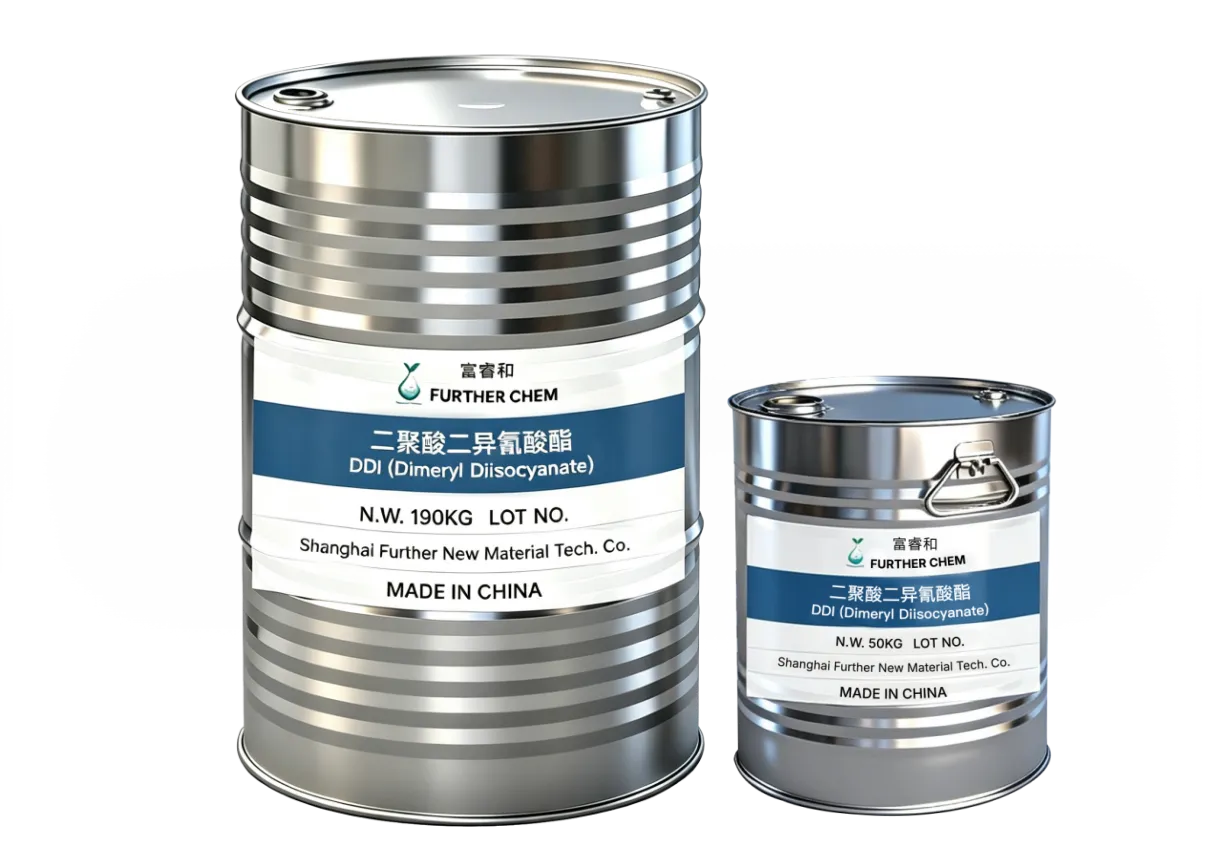
DIMERYL-DI-ISOCYANATE (DDI) CAS No. 68239-06-5 combines a long hydrophobic C36 dimer fatty acid backbone with flexible, low-reactivity isocyanate groups. This structure slows water ingress and shields hydrolyzable linkages, so cured adhesives resist hydrolysis. The built-in flexibility preserves bond strength and elongation—up to 1000% elongation at 9.02 MPa tensile strength—after moisture exposure. Formulators confirm these benefits through targeted hydrolysis and aging tests. Buyers source DDI reliably by evaluating purity, isomer distribution, and supplier documentation.
Key Takeaways
- DDI's hydrophobic backbone repels water and protects adhesives from moisture damage.
- DDI keeps adhesives flexible and strong even after exposure to humid conditions.
- Formulators should test DDI in complete adhesive systems and source it from reliable suppliers.
Why Moisture Breaks Polyurethane Adhesives
Water poses a persistent threat to polyurethane adhesives. Moisture enters the adhesive matrix from humid air, liquid water exposure, or substrate surfaces. Once inside, water molecules attack the chemical bonds that hold the polymer network together. This attack weakens the adhesive from within.
The Hydrolysis Mechanism
Hydrolysis drives most moisture-related adhesive failures. Water molecules react with ester and urethane linkages in the polymer backbone. This reaction cleaves those linkages and breaks the polymer chains. The process accelerates under warm, humid conditions. Each broken chain creates new acid groups, and those groups catalyze further hydrolysis. The cycle continues until the polymer network loses structural integrity. Conventional polyurethane adhesives contain many hydrolyzable groups along their backbones. These groups offer easy targets for water molecules.
Consequences for Bond Performance
Hydrolysis produces measurable damage to adhesive bonds. Chain scission reduces molecular weight and weakens cohesive strength. The adhesive may soften, swell, or develop surface whitening. Bond strength drops as the polymer network degrades. Elongation and flexibility decline, so the adhesive becomes brittle. In severe cases, the bond fails completely at the interface or within the adhesive layer. These failures often appear after months of service in humid environments. Formulators need moisture-resistant chemistries to prevent this degradation.
How DIMERYL-DI-ISOCYANATE (DDI) CAS No. 68239-06-5 Delivers Moisture Resistance
Moisture resistance does not happen by accident in polyurethane adhesives. It comes from molecular design. DIMERYL-DI-ISOCYANATE (DDI) CAS No. 68239-06-5 builds moisture protection into the adhesive at the structural level. Its unique chemistry addresses the root causes of hydrolysis rather than treating symptoms after damage occurs.
Hydrophobic Structure Limits Water Attack
The C36 dimer fatty acid backbone gives DIMERYL-DI-ISOCYANATE (DDI) CAS No. 68239-06-5 its distinctive hydrophobic character. This long hydrocarbon chain repels water molecules and slows their penetration into the cured adhesive matrix. Water encounters a barrier before it reaches vulnerable chemical linkages.
The length of the C36 chain matters. Short-chain isocyanates leave hydrolyzable groups exposed and accessible. The dimer fatty acid segment creates a dense, nonpolar environment around the reactive sites. Water molecules must navigate this hydrophobic zone before they can attack urethane or ester bonds. Many water molecules never complete this journey.
This structural shield directly improves hydrolysis resistance in cured adhesives. The dimer-acid-derived backbone protects the polymer network from moisture-driven chain scission. Adhesives formulated with DDI retain their molecular weight and cohesive strength far longer than those built on conventional isocyanates. The hydrophobic effect works continuously, not just during initial exposure.
DDI also demonstrates low reactivity with water compared to standard isocyanates. This low reactivity provides processing advantages. Formulators gain working time and reduce the risk of premature crosslinking from ambient moisture. The adhesive cures predictably even in humid production environments.
Flexibility Preserves Adhesive Performance
Moisture exposure often makes adhesives brittle. Chain scission reduces molecular weight and eliminates the flexibility that bonds need to survive stress. DDI counters this problem through its built-in molecular flexibility.
The long C36 backbone promotes molecular chain movement. This internal flexibility translates directly to adhesive performance. DDI-based polyurethane adhesives achieve up to 1000% elongation at 9.02 MPa tensile strength. These properties persist after moisture exposure because the hydrophobic structure limits degradation in the first place.
Flexibility serves bond performance in practical ways. Adhesives must accommodate thermal expansion, substrate movement, and mechanical stress. A brittle adhesive fails at the bond line when these forces act. A flexible adhesive distributes stress across the joint and maintains contact between surfaces. DDI-based adhesives retain this stress distribution capability even after prolonged humidity exposure.
The combination of hydrophobicity and flexibility creates a dual defense. The hydrophobic backbone slows water ingress. The flexible chain structure maintains adhesive integrity when some moisture does penetrate. This synergy explains why DDI-based adhesives outperform conventional isocyanates in moist service conditions.
Formulation Determines Long-Term Durability
DDI provides a strong foundation for moisture resistance. The complete formulation determines whether that potential reaches full expression. Polyol selection, catalyst choice, and stabilizer packages all influence long-term durability.
Polyol selection shapes the final network structure. Polyester polyols offer excellent mechanical properties but contain ester linkages that water can attack. Polyether polyols resist hydrolysis better but may sacrifice some strength. Formulators balance these trade-offs based on the application. DDI's hydrophobic backbone partially shields ester linkages in polyester-based systems, expanding the range of viable polyol choices.
Catalyst systems affect cure kinetics and network completeness. Incomplete cure leaves unreacted groups that water can target. Formulators select catalysts that drive cure to completion without introducing side reactions. DDI's low reactivity with water gives formulators more flexibility in catalyst selection.
Stabilizers add another layer of protection. Hydrolysis stabilizers, UV absorbers, and antioxidants extend adhesive life in demanding environments. These additives work alongside DDI's structural moisture resistance. The combination of hydrophobic backbone and well-chosen stabilizers creates adhesives that withstand years of moisture exposure.
Formulators should evaluate DDI as part of a complete system. Isolated testing of DDI alone does not predict final adhesive performance. The interactions between DDI, polyols, catalysts, and stabilizers determine real-world durability.
Validating Hydrolysis Resistance Through Testing
Claims about moisture resistance require proof. Formulators validate DDI-based adhesives through targeted hydrolysis and aging tests. These tests simulate real-world exposure conditions and measure performance changes over time.
Accelerated aging tests expose adhesive samples to elevated temperature and humidity. Standard conditions include 85°C and 85% relative humidity for periods ranging from days to weeks. Formulators measure tensile strength, elongation, and bond strength before and after exposure. DDI-based adhesives typically show minimal property loss under these conditions.
Hydrolysis resistance testing focuses on molecular changes. Gel permeation chromatography measures molecular weight changes after moisture exposure. Fourier-transform infrared spectroscopy detects new acid groups formed by hydrolysis. These analytical methods confirm that DDI's hydrophobic structure protects the polymer backbone from chain scission.
Bond durability testing evaluates complete adhesive joints. Formulators bond representative substrates and expose them to moisture, then measure lap shear strength retention. Tests may include immersion in water at elevated temperatures, cyclic humidity exposure, or salt spray conditions. DDI-based adhesives maintain bond strength across these varied challenges.
Formulators should design test programs that match the intended application. An adhesive for outdoor construction needs different validation than one for electronics potting. DDI's moisture resistance benefits both applications, but the specific test protocols differ. Theorem Chem provides technical guidance to help formulators design appropriate test programs.
What Bulk Buyers Should Evaluate When Sourcing DDI
Purchasing DDI in bulk requires careful supplier evaluation. Product quality, documentation, and supply reliability all affect the buyer's success with this specialty isocyanate.
Purity tops the list of quality parameters. High purity ensures predictable reactivity and consistent adhesive performance. Buyers should request certificates of analysis that document purity levels and impurity profiles. Isomer distribution also matters. DDI exists as a mixture of isomers, and the distribution affects viscosity, reactivity, and final adhesive properties. Suppliers should provide isomer distribution data with each lot.
Supplier documentation supports regulatory compliance and quality management. Safety data sheets, technical data sheets, and regulatory certifications should accompany every shipment. Buyers in regulated industries need documentation that supports their own compliance obligations. Theorem Chem provides comprehensive documentation packages with every DDI order.
Supply reliability separates strong suppliers from weak ones. DDI is a specialty product with limited global production capacity. Buyers should evaluate supplier production capacity and inventory management practices. Theorem Chem operates at 10,000-ton scale, providing stable supply for large-volume adhesive production.
Technical support adds value beyond the product itself. Suppliers who understand DDI chemistry can help buyers optimize formulations and troubleshoot problems. Theorem Chem offers custom R&D services and technical guidance backed by over 30 years of specialty isocyanate experience. This support accelerates development timelines and reduces formulation risk.
Packaging and storage requirements complete the sourcing evaluation. DDI ships in 50 kg or 190 kg drums. Buyers should confirm that suppliers follow proper storage protocols to maintain product quality. Sealed storage at room temperature with moisture protection preserves DDI's performance for its 12-month recommended shelf life.
DIMERYL-DI-ISOCYANATE (DDI) CAS No. 68239-06-5 tackles moisture sensitivity from two directions. Its hydrophobic dimer-acid backbone limits hydrolysis. Its flexible linkages keep adhesive performance strong in moist conditions. Long-term durability still depends on the full formulation, including polyol selection, catalysts, and stabilizers. Formulators should therefore evaluate DDI as part of a complete system. Theorem Chem supports this work with technical data, testing guidance, custom R&D, and consistent DDI quality backed by 10,000-ton-scale capacity. These resources speed up development and sourcing decisions.
FAQ
How does DDI compare to conventional isocyanates for moisture resistance?
DDI's C36 dimer fatty acid backbone repels water and shields hydrolyzable linkages. Conventional isocyanates like TDI and IPDI lack this hydrophobic shield. DDI-based adhesives therefore resist hydrolysis longer in humid service conditions.
Which tests confirm DDI's hydrolysis resistance?
Formulators run accelerated aging at 85°C and 85% relative humidity. They measure tensile strength, elongation, and lap shear retention. Gel permeation chromatography and infrared spectroscopy detect molecular-level chain scission.
How do bulk buyers verify DDI quality?
Buyers request certificates of analysis documenting purity and isomer distribution for each lot. They confirm complete documentation packages and stable supply capacity. Theorem Chem backs DDI orders with 10,000-ton-scale production and technical support.
See Also
Exploring Novel Industrial Uses of N,N-Dimethyl-N,N-Diphenylurea Today
Industrial Applications and Dissolution Methods for 2,5-Furandicarboxylic Acid
Evidence-Based Strategies to Enhance 2,5-Furandicarboxylic Acid Sustainability
Comparing EHEDG Guidelines and 3A SSI Standards for Hygienic Design
Contemporary Synthesis Methods and Industrial Uses of Aminoguanidine Bicarbonate