How Customization Affects Optical Sorter Price
Custom features often impact the optical sorter price more than any other factor. Buyers see each upgrade or specialized option reflected in the final cost. Careful evaluation of these options allows companies to maximize value and minimize unnecessary expenses.
Customization Options That Influence Optical Sorter Price
Sensor Types and Imaging Technology
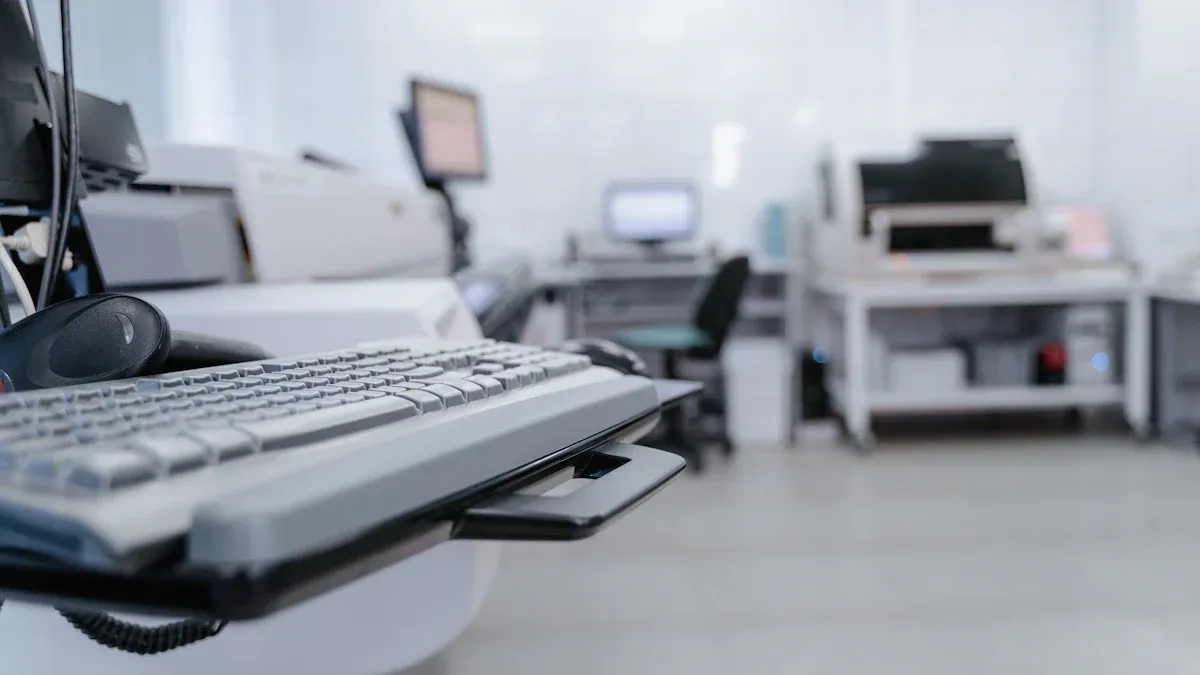
Sensor selection and imaging technology represent the foundation of any optical sorter. Manufacturers offer a range of options, from basic color cameras to advanced hyperspectral and X-ray sensors. These choices directly affect the optical sorter price. Basic models suit straightforward applications, while advanced imaging enables detection of subtle differences in material composition.
The following table compares price ranges for basic and advanced imaging technology across several industries:
| Application | Basic Model Price Range | Advanced Model Price Range |
|---|---|---|
| Plastic Recycling | $100,000 - $250,000 | $500,000 - $1,000,000+ |
| Metal Recycling | $120,000 - $300,000 | $400,000 - $900,000+ |
| Glass Recycling | $80,000 - $200,000 | $250,000 - $600,000+ |
| Municipal Solid Waste | $150,000 - $350,000 | $500,000 - $1,200,000+ |
| Textile Sorting | $100,000 - $250,000 | $300,000 - $700,000+ |
| E-waste Recycling | $150,000 - $300,000 | $400,000 - $900,000+ |
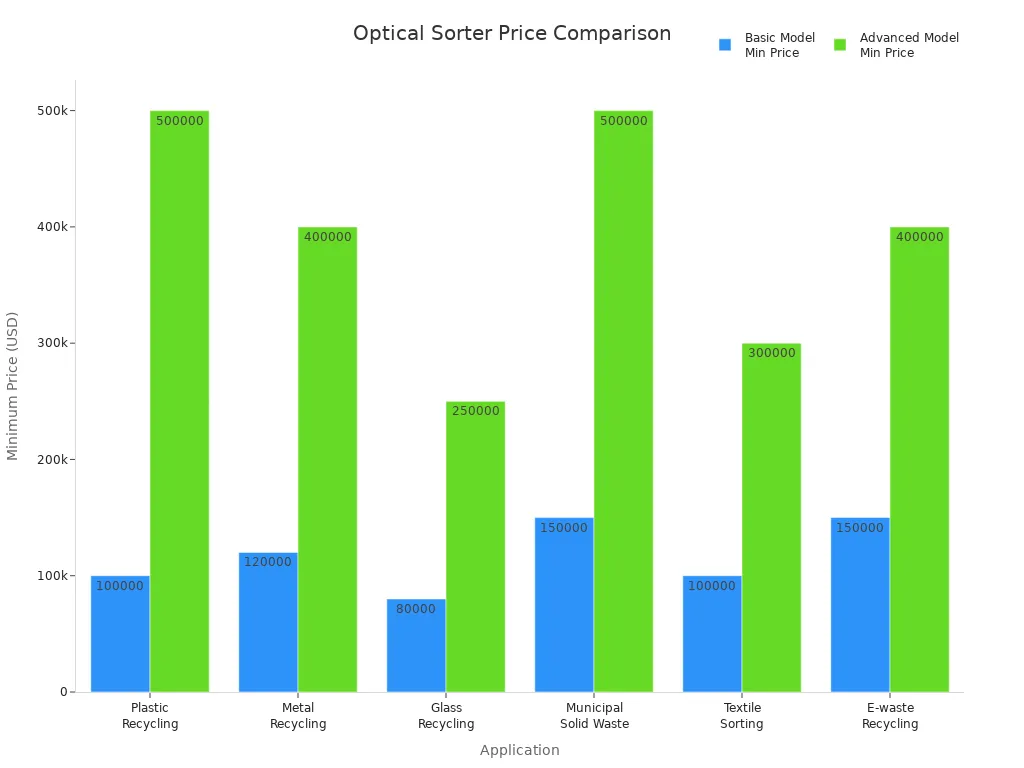
Advanced imaging technology can more than triple the optical sorter price in some cases. Companies must evaluate whether the added detection capabilities justify the investment for their specific application.
Software Features and Sorting Algorithms
Software customization plays a critical role in modern optical sorters. Enhanced sorting algorithms and real-time data analytics improve accuracy and adaptability. These features often increase the optical sorter price, but they also deliver operational benefits.
Real-time data analytics allow operators to monitor performance and adjust settings instantly. This capability minimizes downtime and reduces sorting errors, which can lead to significant financial savings, especially in industries like food processing.
| Evidence Type | Description |
|---|---|
| Operational Efficiency | Real-time data analytics enhances operational efficiency and adaptability in optical sorting. |
| Downtime Minimization | Continuous calibration and feedback loops minimize downtime, crucial in industries like food processing. |
| Financial Impact | Even minor sorting errors can lead to significant financial losses, emphasizing the importance of real-time analytics. |
Investing in advanced software features can raise the initial cost, but the long-term value often outweighs the expense for high-throughput or quality-sensitive operations.
Throughput Capacity and Machine Size
Throughput capacity determines how much material the sorter can process per hour. Larger machines with higher throughput require more robust components and advanced engineering, which increases the optical sorter price.
- Increasing throughput capacity in optical sorters generally leads to higher costs.
- Advanced technology and components are required to achieve greater efficiency.
- Machines that process larger volumes in shorter timeframes tend to be more expensive.
A facility that handles large quantities of material will need to budget for a higher-priced sorter. However, the investment can pay off through improved productivity and reduced labor costs.
Material Handling and Integration Upgrades
Material handling systems and integration upgrades ensure seamless operation within existing production lines. Custom conveyors, feeders, and reject mechanisms can add to the optical sorter price. Integration with plant control systems or data networks also requires specialized engineering.
In recycling, food processing, and mining, customization trends reflect industry-specific needs. Food processors focus on quality and safety, recyclers prioritize material recovery, and mining operations seek yield improvement and waste reduction.
| Industry | Customization Focus |
|---|---|
| Food Processing | Ensuring consistent quality and safety |
| Recycling | Enhancing material recovery and meeting environmental standards |
| Mining | Prioritizing yield improvement and waste reduction |
Selecting only the necessary upgrades for a given application helps control costs while maintaining performance.
Build Materials and Durability
The choice of build materials affects both durability and price. Stainless steel construction resists corrosion and meets hygiene standards in food processing, but it costs more than standard steel. Heavy-duty frames and reinforced components extend machine life in harsh environments, such as mining or e-waste recycling.
Facilities operating in demanding conditions should consider the long-term savings from reduced maintenance and downtime. While premium materials increase the initial optical sorter price, they often lower total cost of ownership over the machine’s lifespan.
Practical Considerations for Optical Sorter Price
Case Study: Comparing Basic and Customized Optical Sorters
Companies often compare basic and customized optical sorters to determine the best fit for their operations. Basic models offer standard technology and fixed capacities, while customized options provide advanced detection systems and variable throughput. The following table highlights key differences:
| Factor | Customized Optical Sorters | Standard Models |
|---|---|---|
| Technology | Advanced | Basic |
| Detection Systems | High-end | Standard |
| Capacity | Variable | Fixed |
| Installation Costs | Typically higher | Generally lower |
Customized optical sorters usually command a higher optical sorter price. However, they deliver better long-term ROI through reduced waste and improved product quality.
Installation, Training, and Support Costs
Installation, training, and support services add to the total investment. Buyers should evaluate what each supplier offers. Many providers include free training and warranty service, while others deliver personalized programs and lifetime software upgrades. Support options such as 24/7 consultation and flexible maintenance contracts help ensure optimal performance.
- Free training and warranty services reduce initial expenses.
- Personalized programs and preventive maintenance extend machine lifespan.
- Continuous support minimizes downtime and maximizes productivity.
Balancing Customization with Budget
Buyers must balance customization needs with budget constraints. Several strategies help control costs:
| Strategy | Description |
|---|---|
| Negotiate for Total Value | Secure value-added services like installation and training. |
| Optimize for Local Conditions | Adjust specifications to local needs to avoid unnecessary features. |
| Assess Total Cost of Ownership | Consider long-term costs, including maintenance and parts. |
| Clarify Customs and Local Regulations | Understand duties and paperwork to avoid unexpected expenses. |
| Compare Multiple Quotations | Use competitive quotes to negotiate better terms. |
Selecting the right level of customization can lead to significant long-term savings. Increased throughput and improved material recovery rates contribute to a favorable total cost of ownership. Companies that partner with experienced suppliers often achieve better operational profitability over time.
Customization shapes the optical sorter price more than any other factor. Buyers should focus on features that fit their application and budget. They need to review all costs, including installation and support. Careful planning helps companies achieve the best value from their investment.
FAQ
How does customization impact the delivery time of an optical sorter?
Custom features often extend lead times. Manufacturers need extra time for engineering, sourcing, and testing. Buyers should confirm timelines before placing orders.
Are software upgrades available after installation?
Manufacturers usually offer software upgrades. These updates improve performance and add features. Companies should ask about upgrade policies and costs before purchasing.
Can a company retrofit existing optical sorters with new sensors?
Many suppliers provide retrofit options. Upgrading sensors can enhance detection capabilities. Companies should consult with the manufacturer to confirm compatibility and pricing.
See Also
The Importance of Capsule Sorters in Eliminating Defects
Top Capsule Checkweighers to Evaluate for 2025 Purchases
Evaluating Custom Cargo Lifts: Benefits and Drawbacks for Businesses
2025 Innovations in Folder Gluer Technology for Carton Production