Customized Food Truck Trailers Drive Growth in Mobile Dining
Customized fast food truck trailers empower operators to optimize performance and elevate customer experiences. Purpose-built kitchens enable menu innovation and streamline workflows, especially in larger units. This flexibility helps food entrepreneurs meet evolving demands, increase efficiency, and expand their businesses sustainably.
Market Trends in Fast Food Truck Trailer Industry
Demand for Unique Mobile Dining Experiences
| Factor | Description |
|---|---|
| Urbanization | Increased urban living has led to a higher demand for convenient dining options. |
| Changing Consumer Preferences | Consumers are seeking diverse culinary offerings and unique dining experiences. |
| Technological Advancements | Innovations such as AI-driven menu optimization and smart kitchen technologies have enhanced mobile dining. |
| Ghost Kitchens | The rise of delivery-only restaurant models has expanded the market for mobile food services. |
| Health-Conscious Options | Growing demand for health-focused menus has influenced mobile dining trends. |
Operators recognize that urbanization and technology drive the need for innovative mobile dining. Consumers expect fast food truck trailer businesses to deliver fresh, diverse menus and memorable experiences. Health-conscious options and ghost kitchens continue to shape the industry.
Growth of Food Truck Events and Festivals
Food truck events and festivals have gained popularity across urban centers. Organizers host gatherings that showcase regional flavors and authentic cuisine. Vendors benefit from dependable schedules and streamlined permitting workflows. These events provide opportunities for brand visibility and customer engagement. Many operators use digital integration, such as real-time location updates and mobile ordering, to attract larger crowds.
Changing Consumer Preferences
Consumers now prioritize sustainability and eco-friendly packaging. Many food truck operators source local ingredients to meet these expectations. Technological adoption has increased, with mobile ordering platforms and data analytics improving service. Health-conscious menu options, including plant-based offerings, appeal to a wider audience. Social media plays a crucial role in brand visibility and customer interaction. Markets in China, India, and Europe reflect these trends, with urbanization and digital platforms enhancing convenience and supporting sustainable practices.
Custom Kitchens for Enhanced Performance
Specialized Equipment for Menu Innovation
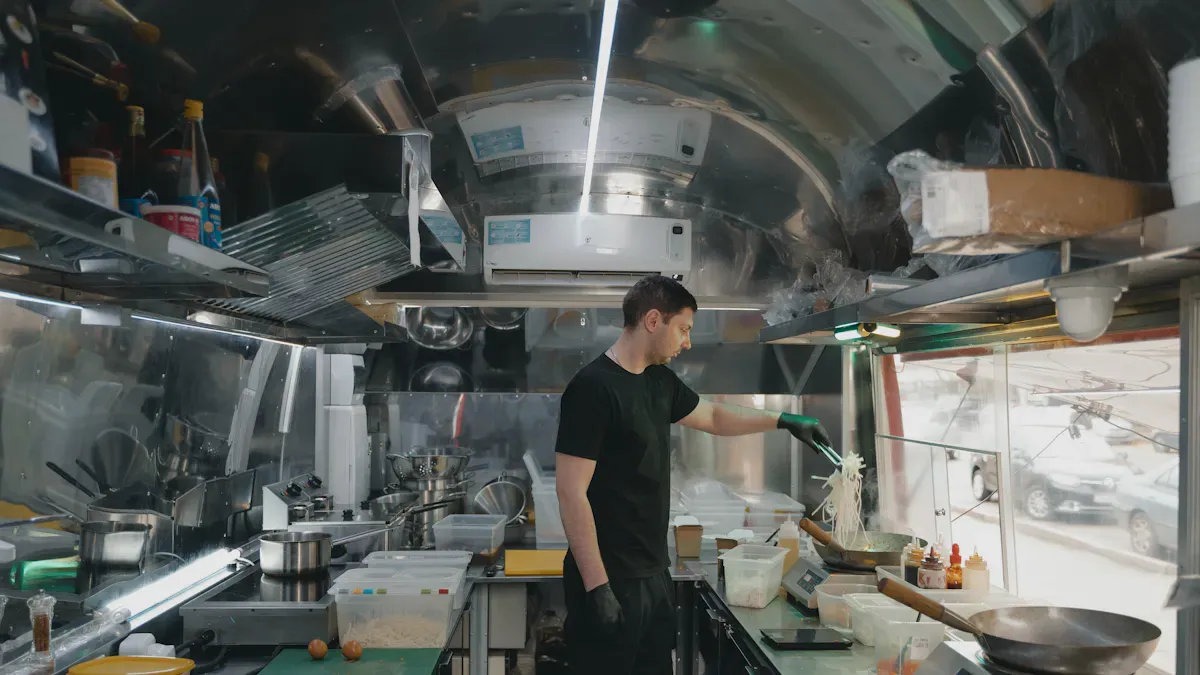
Food truck operators rely on custom kitchens to drive menu innovation. They select specialized equipment that supports diverse cooking techniques and rapid service. The Customized Food Truck With Full Kitchen Y-XINJINGYAO offers a range of options, enabling chefs to experiment with new flavors and expand their offerings. The following table highlights essential equipment commonly used in custom food truck trailers:
| Equipment Type | Purpose in Menu Innovation |
|---|---|
| Flat-top grills | Essential for cooking various food items quickly |
| Steam tables | Keeps food warm and ready for service |
| Efficient prep stations | Facilitates quick preparation and assembly of dishes |
Operators use flat-top grills to prepare everything from burgers to stir-fried vegetables. Steam tables maintain food at optimal temperatures, ensuring consistent quality. Efficient prep stations streamline assembly, allowing teams to serve customers faster and introduce new menu items with ease.
Efficient Workflow and Space Utilization
Custom kitchens maximize operational performance by optimizing workflow and space utilization. Operators establish station systems, assigning specific tasks to each team member. This approach reduces overlaps and ensures smooth operations. Well-stocked stations allow staff to access tools and ingredients quickly, minimizing delays and mistakes. Organized layouts promote faster service and improve customer satisfaction. Food truck trailers like the Y-XINJINGYAO provide flexible interior designs, supporting efficient movement and collaboration among staff. Teams benefit from clear work zones, which enhance productivity and reduce stress during peak hours.
Tip: Operators should regularly review their kitchen layout and workflow to identify areas for improvement. Small adjustments can lead to significant gains in speed and accuracy.
Food Safety and Compliance Standards
Food truck operators must adhere to strict safety and compliance standards. Custom kitchens incorporate certified equipment and follow regulatory guidelines to protect staff and customers. The Y-XINJINGYAO food truck meets COC, DOT, and CE certifications, ensuring street-legal operation and smooth licensing. The table below outlines key requirements for food truck trailers:
| Category | Key Requirements |
|---|---|
| Equipment Specifications | All equipment must have certifications (NSF for sanitation, UL for electrical safety). |
| Fire Safety | Type I hood systems for grease-laden vapors, fire suppression systems, and regular inspections required. |
| Water and Wastewater Regulations | Fresh water tanks must be food-grade; gray water tanks must exceed fresh water capacity. |
| Electrical Code Compliance | Must follow National Electrical Code provisions for mobile units, including GFCI protection. |
| Ventilation Standards | Mechanical ventilation must remove cooking vapors and maintain air quality; specific air change rates apply. |
Operators also follow best practices to maintain safety:
- Maintain at least 10 feet clear space from buildings and combustibles.
- Install automatic fire suppression systems compliant with NFPA 17A.
- Conduct semi-annual professional inspections by licensed contractors.
To ensure ongoing compliance, operators take these steps:
- Ensure proper ventilation systems are installed.
- Carry at least one Class K fire extinguisher for cooking oil fires.
- Schedule regular fire suppression inspections every six months.
Food truck owners who prioritize safety and compliance build trust with customers and regulators. They protect their business and create a secure environment for staff and guests.
Technological Advancements in Food Truck Trailers
Recent years have seen rapid progress in food truck trailer technology. Operators now benefit from innovations that improve efficiency, reduce costs, and enhance customer satisfaction. The table below highlights key advancements:
| Advancement Type | Description | Example/Stat |
|---|---|---|
| Energy-Efficient Solutions | Use of solar panels and energy-efficient appliances to reduce emissions. | Solar-powered food trailers cut energy costs by up to 30% (GoSun Research, 2023). |
| Smart Kitchens | IoT devices for real-time kitchen monitoring and optimization. | Smart fryers improve efficiency by 20% (Food Service Technology Center, 2022). |
| Temperature-Controlled Storage | Smart cooling systems to prevent food spoilage. | 17% of food waste in foodservice is due to improper storage (Food Waste Alliance, 2022). |
| Mobile Payment Systems | Systems like Square for faster transactions. | Food trucks using Square report 40% faster transaction times (Square Case Studies, 2023). |
| Digital Menus and Apps | Dynamic displays and apps for customer interaction. | A food trailer saw a 25% increase in orders after launching a custom app (Restaurant Tech Digest, 2023). |
Smart Kitchen Appliances and Controls
Smart kitchen appliances transform daily operations. They use IoT technology to monitor and adjust cooking processes automatically. Operators see benefits such as:
- IoT-enabled fryers and grills that adjust temperatures based on order volume, increasing efficiency by 20%.
- Smart inventory systems that track ingredient usage and automate reordering, reducing waste and streamlining workflow.
These tools help teams deliver consistent quality and respond quickly to changing demand.
Integrated Ordering and Payment Systems
Modern food trucks rely on integrated ordering and payment systems to serve customers efficiently. The table below outlines their main benefits:
| Benefit | Description |
|---|---|
| Offline Functionality | Processes sales even in low-connectivity areas, preventing missed opportunities. |
| Multi-Channel Order Consolidation | Combines orders from various channels into one dashboard, reducing manual entry errors. |
| Support for Multiple Payment Types | Accepts cash, credit cards, and digital wallets, meeting all customer preferences. |
| Real-Time Inventory Management | Tracks supplies and alerts when stock is low, preventing stockouts. |
| Customer Engagement Features | Offers loyalty programs and automated marketing to boost retention and sales. |
These systems speed up transactions and improve the customer experience.
Energy-Efficient Design Features
Energy-efficient design has become a priority for food truck operators. Many trailers now feature solar panels, electric or hybrid power sources, and multi-functional appliances. Efficient layouts, extra storage, and adjustable shelves help maximize space and reduce energy use. These innovations lower operational costs and support sustainability, meeting the expectations of today’s eco-conscious consumers.
Culinary Innovation Enabled by Customization
Diverse Cuisine Offerings
Customization in food truck trailers gives operators the freedom to design kitchens that match their culinary vision. They can select specialized equipment and efficient layouts to support unique menus. This flexibility allows chefs to introduce dishes from various culinary traditions. For example, a team may install a pasta cooker for Italian fare or a rotisserie oven for Mediterranean specialties. These choices help operators stand out in the competitive fast food truck trailer market and attract customers seeking new dining experiences.
Adaptation to Dietary Trends
- Dedicated vegan operations simplify kitchen management by removing the need for separate allergen surfaces.
- Specialty sliders focus on a limited range of proteins and toppings, making it easy to rotate menu items and encourage repeat visits.
- Gourmet loaded fries serve as a primary menu item, allowing for quick customization and efficient service.
- Moroccan spiced pulled lamb tacos combine unique flavors in a familiar format, showcasing culinary fusion.
Operators use these strategies to respond quickly to changing dietary preferences and trends.
Seasonal and Rotating Menus
Seasonal and rotating menus offer several advantages for food truck businesses. They allow operators to use fresher ingredients, which improves food quality and taste. Sourcing local produce during peak seasons reduces costs and supports community farmers. These menus also encourage creativity, attract new customers, and keep regulars engaged with innovative dishes. By focusing on seasonal flavors, operators can deliver healthier and more appealing options, which can increase profits and customer satisfaction.
Operational Efficiency and Cost Savings
Streamlined Prep and Service Processes
Food truck operators achieve greater profitability by streamlining prep and service processes. Starting with a focused menu of 4-8 items allows teams to purchase ingredients in bulk, reducing costs and simplifying inventory management. This approach also enables experimentation with seasonal items, keeping the menu fresh and appealing. An organized workspace and compact menu help staff stay efficient and focused during busy periods. Proper food handling practices and advance preparation maintain speed and quality. Training staff to handle pressure positively improves customer experience and encourages repeat business.
A clean setup and short wait times often lead to better customer reviews and increased word of mouth.
Operators benefit from this approach in several ways:
- Reduced inventory complexity.
- Minimized food waste.
- Efficient staff operations during peak hours.
- Faster customer decision-making, which increases transaction volume.
Reduced Maintenance and Downtime
Custom food truck trailers use durable materials and smart design to minimize maintenance needs. FRP panels, for example, are non-porous and resist bacteria and grease build-up. This feature reduces cleaning time and helps maintain a sanitary environment. Their durability means fewer repairs, resulting in long-term savings and less downtime. Quick installation of these panels allows food trucks to return to service faster, supporting consistent revenue generation.
Optimized Storage Solutions
Optimized storage solutions play a crucial role in operational efficiency. The following table highlights key benefits:
| Benefit | Description |
|---|---|
| Maximizing Space Utilization | Creates distinct work zones that enhance workflow and reduce clutter. |
| Easy Access to Supplies | Ensures that backup supplies and materials are readily accessible during service. |
| Maintaining Organization | Prevents clutter, allowing for a streamlined operation during food preparation. |
Low operational costs and a well-designed kitchen space enhance workflow efficiency. These factors directly reduce expenses and increase profitability for food truck businesses.
Sustainability and Eco-Friendly Practices
Use of Green Materials and Appliances
Food truck operators increasingly prioritize sustainability by choosing green materials and energy-efficient appliances. Many select stainless steel for its durability and recyclability. They often install solar panels to harness renewable energy and reduce reliance on fossil fuels. Energy-efficient appliances, such as those with ENERGY STAR ratings, help lower power consumption. Operators also use LED lighting to save energy and extend fixture lifespan. The adoption of compostable packaging further minimizes environmental impact and aligns with consumer expectations for eco-friendly service.
| Sustainable Practice | Description |
|---|---|
| Integration of solar panels | Many food trucks are incorporating solar panels to harness renewable energy. |
| Use of compostable packaging | Compostable materials are being used to minimize waste and environmental impact. |
| Adoption of electric or hybrid vehicles | Transitioning to electric or hybrid options reduces emissions and fuel consumption. |
| Local ingredient sourcing | Sourcing ingredients locally helps lower carbon footprints and supports local economies. |
| Zero-waste practices | Implementing strategies to eliminate waste, such as avoiding single-use plastics. |
| Energy-efficient appliances | Utilizing appliances with ENERGY STAR ratings to reduce energy consumption. |
Waste Reduction Strategies
Operators implement several strategies to reduce waste and improve efficiency:
- Conducting waste audits helps identify where waste occurs and guides targeted improvements.
- Staff engagement creates a waste-aware culture and encourages practical solutions.
- Technology assists in tracking waste, automating logging, and revealing trends.
- Donation programs for surplus food recover value and strengthen community relationships.
These practices support both environmental goals and operational savings.
Lower Environmental Impact
Food truck trailers achieve a lower environmental impact compared to traditional restaurants. They use less energy, produce less waste, and often source ingredients locally. Many adopt green initiatives, such as solar panels and compostable packaging, to further reduce their footprint.
| Sustainable Practice | Description |
|---|---|
| Green Initiatives | Many food trucks are adopting solar panels and using compostable packaging to reduce their impact. |
| Local Sourcing | Prioritizing local ingredients helps to lower the carbon footprint associated with transportation. |
| Waste Reduction | Implementing zero-waste practices, such as eliminating single-use plastics, minimizes waste. |
Consumers now show greater concern for health and environmental impact. Food trucks respond with sustainable practices and healthier menu options, appealing to a growing market focused on wellness and eco-friendliness.
Branding and Customer Experience with Fast Food Truck Trailer
Custom Exterior Design for Brand Visibility
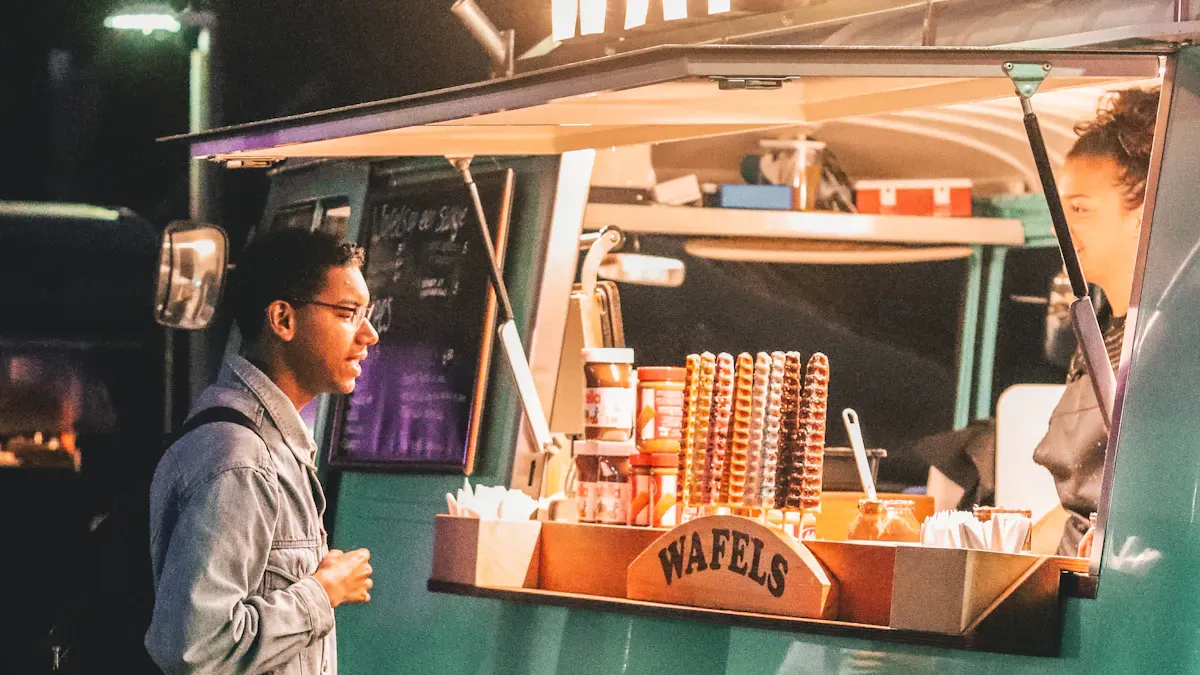
A custom exterior design plays a vital role in making a fast food truck trailer stand out in a crowded market. Operators who invest in unique wraps, bold colors, and clear logos create a strong visual identity. Maria, a pastry chef, saw her weekend sales rise by 217% in just six weeks after transforming her truck’s appearance. Customers felt drawn to her brand and shared their experiences on social media, which increased her visibility. A well-designed exterior not only attracts attention but also communicates the brand’s personality and values, helping to build recognition and loyalty.
Personalized Interiors for Guest Engagement
Personalized interiors enhance the customer experience by creating a welcoming and memorable environment. Operators choose custom finishes, murals, and lighting to reflect their brand’s story. Maria’s food truck, featuring soft lavender siding and hand-painted murals, became a destination for guests seeking a unique dining atmosphere. This approach encourages guests to linger, interact, and share their experiences, which leads to higher engagement and repeat visits.
Consistent Brand Messaging
Consistent brand messaging strengthens customer loyalty. Operators use clear signage, uniforms, and menu boards to reinforce their brand at every touchpoint. Loyalty programs, such as memberships and subscriptions, reward regular customers and encourage repeat business. The combination of visual consistency and customer rewards helps build lasting relationships and supports long-term growth for food truck businesses.
| Branding Element | Impact on Customer Experience |
|---|---|
| Custom Wraps | Increases recognition and appeal |
| Personalized Interiors | Enhances guest engagement |
| Consistent Messaging | Builds loyalty and repeat business |
Actionable Steps for Food Truck Owners
Assessing Business Needs and Goals
Food truck owners should begin by evaluating their business needs and setting clear goals. A detailed business plan provides direction and helps identify priorities. Owners benefit from outlining a mission statement, defining a target audience, and developing a marketing strategy. Financial planning remains essential for long-term success. The following table summarizes key steps for assessment:
| Actionable Steps | Description |
|---|---|
| Calculate startup costs | Understand the initial investment required to start the business. |
| Assess ingredient margins | Determine menu profitability based on ingredient costs. |
| Plan for monthly overhead | Identify ongoing expenses for smooth operations. |
| Evaluate staffing needs | Analyze the number of employees needed for efficiency. |
| Project profits | Estimate potential earnings to gauge business viability. |
Tip: Owners should revisit their business plan regularly to adapt to market changes and customer preferences.
Choosing Reputable Custom Builders
Selecting a reputable builder for a fast food truck trailer ensures quality and compliance. Owners should look for builders who guarantee adherence to local health codes and offer strong post-sale support. Material selection impacts durability and maintenance. Reviewing a builder’s previous projects and warranty terms helps avoid future issues. Key criteria include:
| Criteria | Description |
|---|---|
| Compliance Guarantees | Builder ensures designs meet health codes before construction. |
| Post-Sale Support | Availability of replacement parts and maintenance guides. |
| Material Choices | Use of durable materials like FRP walls and diamond plate flooring. |
| Vendor Vetting | Review of past work, transparent pricing, and clear warranty terms. |
Investing in Scalable Custom Features
Investing in scalable features positions food truck businesses for growth. Owners can expand by adding more trucks in high-demand areas or exploring online ordering through delivery platforms. Event catering opens new revenue streams at private and corporate gatherings. Building brand recognition through social media and community engagement increases visibility. Regular menu innovation and customer feedback help maintain relevance. Technology adoption, such as AI-driven systems, can boost operational efficiency and sales.
Note: In 2025, food trucks with effective cost management and technology adoption can see significant revenue growth, with some platforms increasing earnings by up to 30%.
Customized food truck trailers help operators achieve growth in mobile dining. Purpose-built kitchens and advanced features drive innovation and efficiency. Investing in a fast food truck trailer positions owners for long-term success. Ongoing advancements in design and technology will create new opportunities in the industry.
FAQ
What customization options do food truck trailers offer?
Operators select trailer length, kitchen equipment, and exterior colors. Jingyao provides flexible layouts and certified appliances to match diverse business needs.
How do food truck trailers meet safety and compliance standards?
Manufacturers like Jingyao equip trailers with COC, DOT, and CE certifications. Internal equipment receives certification, supporting licensing and health inspections.
What maintenance support is available for food truck trailers?
Jingyao offers after-sales service centers across Europe. Staff receive timely maintenance and support, ensuring stable performance and long service life.
See Also
Evaluating Custom Cargo Lifts: Benefits and Drawbacks for Businesses
Essential Industrial Checkweighers for Every Food Processing Facility
Innovative Folder Gluer Features Expected in 2025 Carton Production
Cost Benefits and Advantages of Plate Packs in 2025
Understanding the Advantages of Commercial Heat Exchangers for 2025