Toughening Epoxy Resins with CTBN Reactive Liquid Rubber
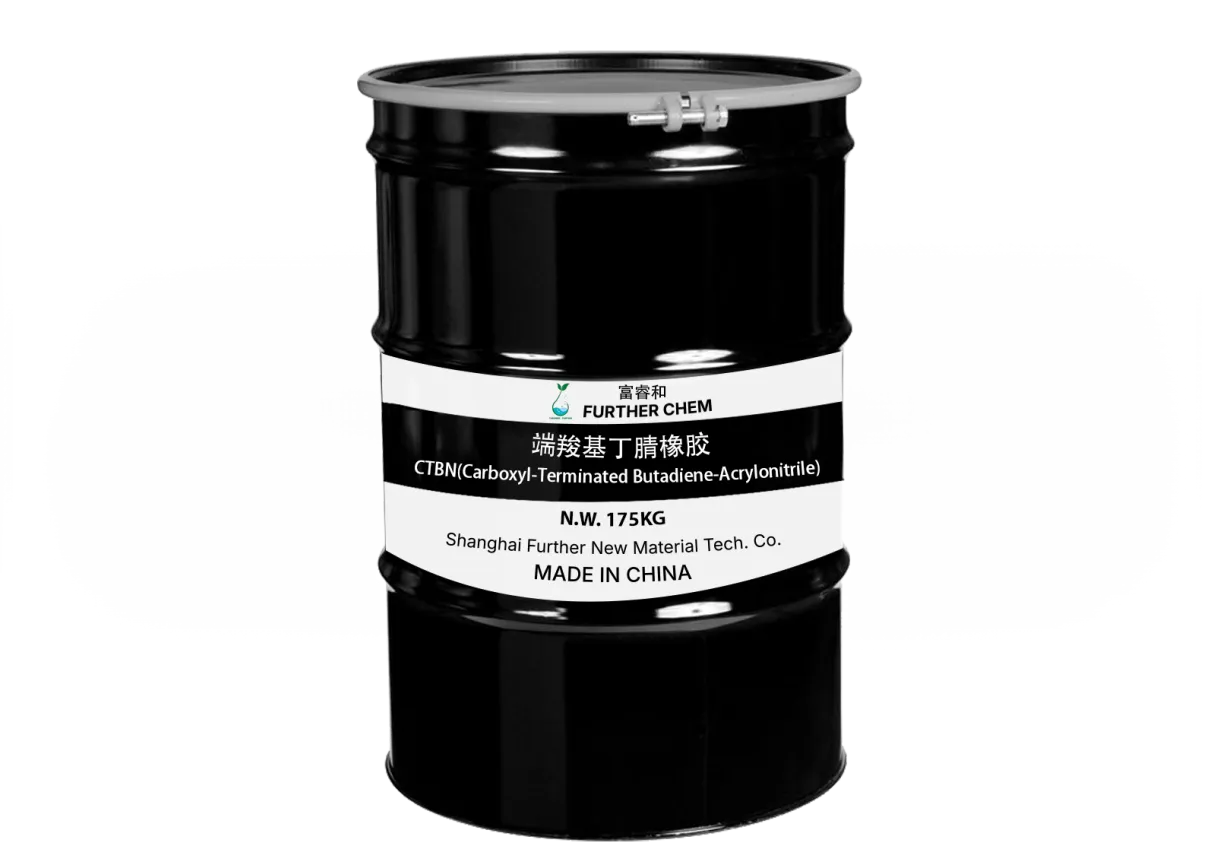
Epoxy resins offer excellent strength, yet they crack under stress. CTBN reactive liquid rubber solves this brittleness. The rubber reacts into the resin and phase-separates into discrete domains. These domains absorb stress and arrest crack growth. Explore the toughening performance of CTBN (Carboxyl Terminated Butadiene-Acrylonitrile copolymer) to see how toughness rises while mechanical strength and the thermal backbone stay intact. Toughened epoxies deliver durable performance across electronics, optics, medical devices, and cryogenic assemblies. The service-temperature trade-off stays minor and rarely limits real applications.
Key Takeaways
- CTBN rubber bonds directly to epoxy, making the material stronger and more resistant to cracking.
- Tiny rubber particles form inside the epoxy and absorb stress to stop cracks from growing.
- Toughened epoxies work well in electronics, optics, medical devices, and cold environments.
Explore the Toughening Performance of CTBN (Carboxyl Terminated Butadiene-Acrylonitrile copolymer)

Toughness does not come from mixing rubber into epoxy. It comes from chemistry that ties the rubber into the network and then lets it separate into the right microstructure. Explore the toughening performance of CTBN (Carboxyl Terminated Butadiene-Acrylonitrile copolymer) at three levels: the reactive chemistry, the phase morphology it produces, and the energy dissipation mechanisms that stop cracks. Each level builds on the one before it.
Reactivity Is the Difference
CTBN carries a carboxyl group at each end of its chain. These groups react with the epoxide rings and hydroxyl groups of the curing resin. The reaction forms covalent bonds between the rubber chain and the epoxy network. The rubber therefore becomes part of the crosslinked structure instead of sitting in it as an inert filler.
This chemical attachment separates CTBN from simple liquid rubbers and plasticizers. A non-reactive rubber can migrate, leach, or form weak boundaries inside the cured part. A reactive oligomer locks itself in place. The bond anchors the rubber chain at both ends, so the interface between rubber and epoxy stays strong under load.
The carboxyl functionality also gives formulators control. Theorem Chem supplies CTBN in five grades (CTBN-1 to CTBN-5) with different carboxyl values, viscosities, and acrylonitrile contents. The acrylonitrile level ranges from 8% to 28%. A higher nitrile content raises polarity and oil resistance. A lower nitrile content favors flexibility. The formulator matches the grade to the resin system and the target balance of toughness and chemical resistance.
Reactivity also shapes how the rubber distributes during cure. The carboxyl groups pull the rubber toward the epoxy phase early in the reaction. This compatibility keeps the mixture homogeneous long enough for good dispersion. The system then separates in a controlled way as the epoxy network grows. That control is the starting point for the morphology described next.
Phase Separation Creates Rubber Domains
As the epoxy cures, its molecular weight rises and its compatibility with the rubber falls. The rubber separates into discrete spherical domains dispersed in a continuous epoxy matrix. This process is called reaction-induced phase separation. The result is a two-phase morphology: a rigid epoxy phase that carries load and soft rubber particles that absorb energy.
The CTBN loading controls the size of these domains. Higher rubber content enlarges the particles through reagglomeration and coalescence of the dispersed rubber phase. The blends contain two particle classes, micron-sized and nano-sized, and both grow with rubber content.
| Particle class | Size metric | Trend with increasing CTBN content |
|---|---|---|
| Micron-sized rubber particles | Number-average diameter (Dn) | Increases |
| Micron-sized rubber particles | Weight-average diameter (Dw) | Increases |
| Nano-sized rubber particles | Number-average diameter (Dn) | Increases |
| Nano-sized rubber particles | Weight-average diameter (Dw) | Increases |
The cure schedule adds another lever. For the same rubber content, micron-sized particles are smaller in pre-crosslinked CTBN/epoxy blends than in non-crosslinked blends. Nano-sized particles show the opposite trend. A formulator can therefore tune domain size through both loading and cure profile.
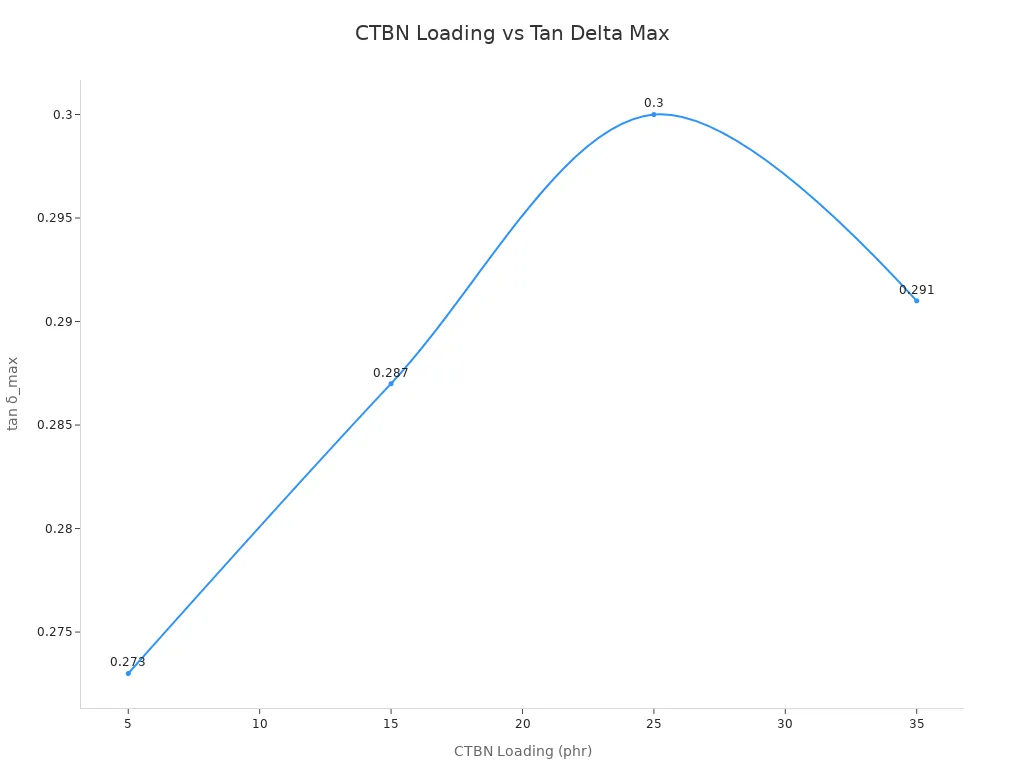
Loading also has an optimum. A dynamic mechanical study tracked the damping peak, tan δ_max, across a CTBN series. The peak rose from 0.273 at 5 phr to 0.300 at 25 phr, then slipped to 0.291 at 35 phr. Peak broadening (ΔT_half 18.5 to 24.8 °C) points to additional relaxation pathways. The decline at high loading reflects phase coarsening. These results support 25 phr as the typical optimal loading for toughening.
The morphology matters because each domain size serves a different role. Nano-sized particles promote shear banding in the matrix. Micron-sized particles bridge cracks and tear under stress. A formulation with both classes gains several toughening routes at once. Explore the toughening performance of CTBN (Carboxyl Terminated Butadiene-Acrylonitrile copolymer) through this lens, and the loading decision becomes a design decision, not a guess.
Energy Dissipation Stops Cracks
A crack grows when stress at its tip exceeds what the material can absorb. CTBN-toughened epoxy absorbs that stress through several mechanisms that act together. The table below summarizes the main routes.
| Energy Dissipation Mechanism | Role in CTBN-Toughened Epoxy |
|---|---|
| Rubber cavitation | Rubber particles rupture internally or at the particle–matrix interface under triaxial stress at the crack tip, creating voids that relieve triaxial stress, concentrate stress on rubber particles, and induce local shear yielding (crack tip passivation). |
| Shear yielding | Small rubber particles induce shear bands through voids; cavitation-induced shear yielding of the matrix around rubber particles is an important toughening mechanism. |
| Rubber particle bridging | Larger merged rubber particles bridge the two crack faces, restraining and closing crack expansion and preventing it from reaching a highly destructive level. |
| Pinning effect | Bridging points exert a pinning effect that deflects the crack from its main plane, increases surface area, and causes the primary crack to branch into finer secondary cracks, raising the energy needed for propagation. |
| Plastic deformation | Rubber particles undergo plastic deformation and become irregular spheres under stress; the flexible block polymer eases deformation, promoting plastic deformation that absorbs fracture energy. |
| Void formation | Rubber particles detach from the matrix leaving voids, creating large surface area that consumes significant fracture energy; microvoids accompany plastic stretching and cracking. |
| Tensile tearing of rubber particles | Large phase-separated particles undergo tensile tearing and plastic deformation under stress, absorbing large amounts of fracture energy and slowing fracture. |
The sequence starts with cavitation. Under the triaxial stress ahead of a crack tip, a rubber particle either tears open internally or pulls away from the matrix. The resulting void relieves the triaxial constraint on the surrounding epoxy. That relief lets the matrix yield instead of cleaving. The crack tip blunts, and the driving stress drops.
Shear yielding follows. Small rubber particles and the voids they leave concentrate stress into narrow bands. The epoxy deforms along these bands and consumes energy in the process. This mechanism turns a brittle matrix into one that can flow locally at the crack tip.
Larger particles add bridging and pinning. A merged rubber domain can span both crack faces and hold them together. The bridging point pins the crack and forces it off its main plane. The crack then branches into finer secondary cracks. Each branch creates new surface, and new surface costs energy. The primary crack loses momentum.
Plastic deformation and tearing complete the picture. Rubber particles stretch into irregular shapes under load. Large particles tear outright. Void formation at the interface adds surface area. Together these events absorb fracture energy and slow the fracture.
The payoff is measurable. CTBN addition raises fracture toughness by roughly 70.7% over pure epoxy. Tensile and flexural strength do drop relative to the unmodified resin, and multi-phase designs can recover that strength with additives such as 1–3 wt% graphene nanoplatelets. Among toughening routes, rubber modification remains a low-cost option with good processability. Thermoplastic, nanoparticle, hyperbranched polymer, and flexible chain segment methods each fit different priorities. Explore the toughening performance of CTBN (Carboxyl Terminated Butadiene-Acrylonitrile copolymer) as one tool in that set, and the choice comes down to the balance of cost, toughness, and thermal requirements a given application demands.
Performance Gains and Trade-Offs
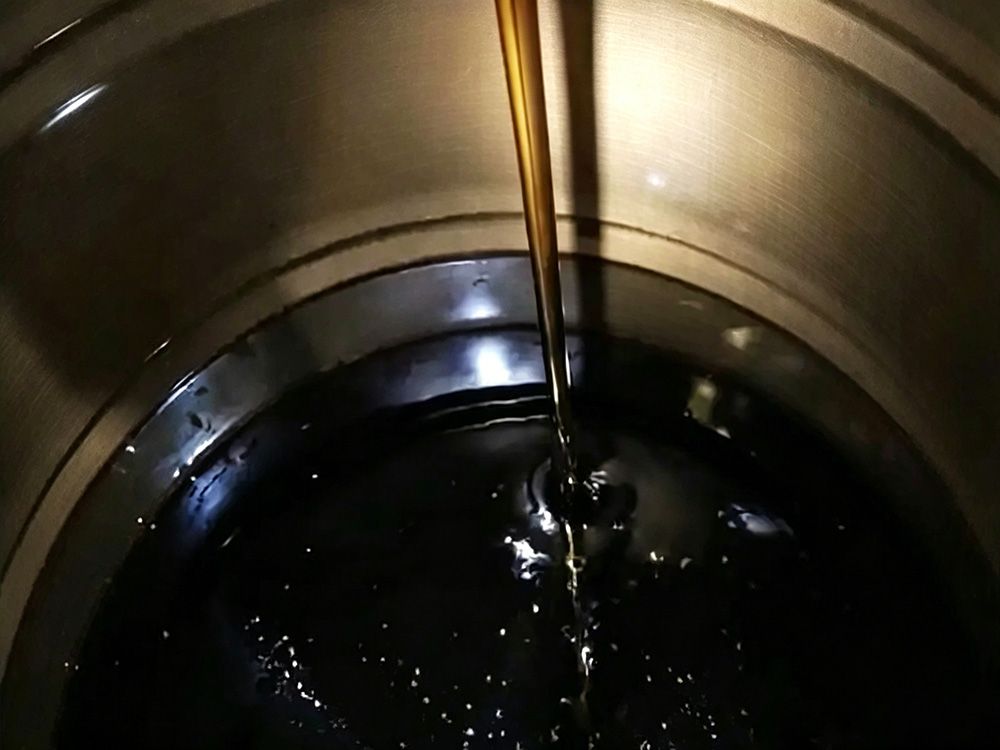
Toughening changes the mechanical profile of epoxy in measurable ways. Some properties rise sharply. Others shift by small amounts. A formulator needs the full picture before committing to a CTBN grade and loading. Explore the toughening performance of CTBN (Carboxyl Terminated Butadiene-Acrylonitrile copolymer) across elongation, impact, thermal expansion, and core mechanical properties to see where the gains land and where the trade-offs sit.
Improved Elongation and Impact Resistance
Pure epoxy fails with little warning. It stretches only a fraction of a percent before it breaks. CTBN modification changes that behavior. The rubber domains let the matrix deform further before fracture. Ductility rises, and the material absorbs more energy on impact.
Two independent studies quantify the gain in elongation at break. Both used standard tensile testing on CTBN-modified epoxy systems.
| Study | CTBN loading (phr) | Elongation at break before | Elongation at break after | Increase |
|---|---|---|---|---|
| Akbari | 0–25 | 1.60% | 3.87% | +2.27 percentage points (~142% relative) |
| Xiaoxue Song (pre-crosslinking method) | 5–15 | 3.70% | 6.40% | +2.70 percentage points (~73% relative) |
The Akbari study more than doubled the elongation at break at 25 phr. The Song study, using a pre-crosslinking approach at a lower loading range, raised elongation by roughly 73% relative. Both results point the same way. The rubber phase converts brittle failure into a more gradual, energy-absorbing process.
Impact resistance follows the same trend. The energy dissipation mechanisms described earlier—cavitation, shear yielding, bridging, and tearing—all activate under dynamic loading. A crack that would run straight through unmodified epoxy now branches, blunts, and slows. The part survives an impact that would have shattered the brittle baseline.
The elongation gain also improves processability in some cases. Toughened epoxy tolerates more handling stress during assembly. Thin sections resist cracking during demolding and machining. Flexible circuits and bonded joints benefit from this added margin.
Better CTE Mismatch Accommodation
Every assembly that joins epoxy to metal, glass, or ceramic faces a thermal expansion mismatch. Epoxy expands several times more than steel or silicon over the same temperature swing. That mismatch builds stress at the interface. Repeated thermal cycling can initiate cracks, debond the joint, or warp the part.
CTBN toughening helps the epoxy accommodate that mismatch. The rubber domains lower the overall stiffness of the matrix and add local compliance. When the assembly heats or cools, the epoxy can strain without fracturing. The interface survives cycles that would crack a rigid, unmodified resin.
This benefit matters most in three situations. The first is a large bonded area, where the accumulated mismatch strain grows with joint size. The second is a wide service-temperature range, such as an assembly that moves between cryogenic storage and room-temperature operation. The third is a stiff adherend, such as metal or ceramic, that cannot flex to share the strain.
Cryogenic assemblies illustrate the point well. Cooling to liquid nitrogen temperature contracts the epoxy far more than the metal it bonds. A brittle resin cracks under that contraction. A CTBN-toughened resin deforms and holds the bond. The same logic applies to potted electronics, optical mounts, and sensor housings that see thermal cycling in service.
Core Properties Stay Intact
Toughness gains rarely come free. CTBN modification does shift some core mechanical properties, and the shifts follow predictable rules. Tensile strength and modulus both decrease as CTBN content rises. The reduction occurs roughly in proportion to the fraction of the epoxy matrix that the CTBN replaces. In other words, the rubber takes the place of rigid resin, and the composite reflects that substitution.
This trade-off is modest at typical loadings. A formulator who needs higher strength can recover it with additives. The earlier discussion noted that 1–3 wt% graphene nanoplatelets can offset the strength loss in multi-phase designs. The result is a formulation that keeps toughness and strength together.
The glass transition temperature tells a more nuanced story. The EPA HERO record for Akbari et al. (2013), studying dicyandiamide-cured DGEBA-based epoxy resins toughened with CTBN liquid rubber, reports that Tg significantly increased by 11.3 °C at 25 phr CTBN. That result runs against the common assumption that rubber always softens the matrix. Proper phase separation explains it. The rubber leaves the epoxy phase, and the remaining matrix cures with a tighter, more constrained network.
Phase separation is the key variable. The acrylonitrile component in CTBN can reduce both Tg and modulus when it stays dissolved in the matrix. A formulation that fails to phase-separate loses high-temperature performance and stiffness. A well-controlled cure produces discrete domains and preserves the thermal backbone. The cure schedule therefore deserves as much attention as the CTBN loading.
The Service-Temperature Trade-Off
The maximum service temperature of a CTBN-toughened epoxy sits slightly below that of the unmodified resin in most formulations. This shift is real, and it is small. The rubber phase softens at a lower temperature than the epoxy network. The composite therefore loses some stiffness at the high end of its range.
The size of the trade-off depends on the formulation. A well-phase-separated system keeps most of its thermal performance. The Akbari result, with Tg rising 11.3 °C at 25 phr, shows that the effect can even reverse. A poorly separated system loses more. The formulator controls the outcome through grade selection, loading, and cure profile.
In practice, this trade-off rarely limits an application. Most electronics, optical, medical, and cryogenic assemblies operate well below the point where the rubber phase softens. The toughness gain pays for itself many times over in those service windows. A designer who needs the absolute highest service temperature can lower the CTBN loading or select a grade with a higher acrylonitrile content for better polarity and thermal stability.
The right question is not whether a trade-off exists. The right question is whether the trade-off matters for the specific application. For a cryogenic bond, a flexible circuit, or a potted sensor, it does not. The toughened epoxy delivers crack resistance where the brittle baseline would fail. That balance defines the value of CTBN modification.
Where Toughened Epoxies Excel
CTBN-toughened epoxies earn their place in applications where a crack means failure. Four sectors show the pattern clearly.
Electronics and Flexible Circuits
Circuit boards and flexible circuits combine rigid components with thin, bendable substrates. Unmodified epoxy cracks during flexing, thermal cycling, or rework. CTBN-toughened resin bends without fracturing. The rubber domains absorb stress at solder joints and trace edges. Potting compounds built on CTBN protect components from vibration and thermal shock. Flexible circuits gain a wider processing window and survive repeated bending in service.
Optical Systems and Sensors
Optical assemblies demand clarity and dimensional stability. A crack in a lens mount or sensor housing ruins alignment. Toughened epoxy holds optical elements in place through temperature swings. The rubber phase accommodates CTE mismatch between glass and metal housings. Sensors potted in CTBN-modified resin resist cracking during thermal cycling. The cured resin keeps its optical clarity and bond strength.
Medical Devices and Cryogenic Assemblies
Medical devices often combine dissimilar materials in small packages. Sterilization cycles and handling stress test every bond. CTBN-toughened epoxy survives both. Cryogenic assemblies push the material further. Cooling to liquid nitrogen temperature contracts epoxy far more than metal. A brittle resin cracks under that strain. A toughened resin deforms and holds the bond. Theorem Chem supplies CTBN grades that formulators match to each application's thermal and chemical demands.
Specialty Grades for Added Function
Theorem Chem offers five CTBN grades (CTBN-1 to CTBN-5) with varying carboxyl values, viscosities, and acrylonitrile contents. Acrylonitrile content ranges from 8% to 28%. Higher nitrile grades deliver stronger oil and solvent resistance. Lower nitrile grades favor flexibility. Formulators select the grade that fits the resin system and the target property balance. This range lets one chemistry serve electronics, optics, medical devices, and cryogenic assemblies alike.
Explore the toughening performance of CTBN (Carboxyl Terminated Butadiene-Acrylonitrile copolymer) at the mechanism level. Rubber domains dissipate stress before cracks propagate. Toughness gains come with only a minor service-temperature reduction. That trade-off rarely limits real applications. CTBN-toughened epoxies deliver durable, crack-resistant performance across electronics, optics, medical devices, and cryogenic assemblies.
FAQ
How much CTBN does a typical epoxy formulation need?
Most formulations use about 25 phr of CTBN. Studies show peak damping and toughness around this loading. Higher levels cause phase coarsening and reduce the benefit.
Does CTBN toughening lower heat resistance?
The maximum service temperature drops slightly in most systems. Well-controlled phase separation keeps the loss small. Some formulations even show a higher glass transition temperature after modification.
How does a formulator choose the right CTBN grade?
Theorem Chem offers five grades with different carboxyl values, viscosities, and acrylonitrile contents. Higher nitrile grades improve oil resistance. Lower nitrile grades favor flexibility. The resin system and target properties guide the choice.
See Also
Key WT20 Thoriated Tungsten Electrode Facts For Improved TIG Welding
Micro-Channel Technology Applied In Hydrogen Fuel Cell Heat Exchangers
Surprising Methods For Troubleshooting Sulfur Recovery Catalyst Issues
Construction And Decoration Silicone Sealant: Modern Homes' Secret Glue