CTBN (Carboxyl-Terminated Butadiene-Acrylonitrile) CAS 25265-19-4/68891-46-3 proven to boost epoxy adhesive performance
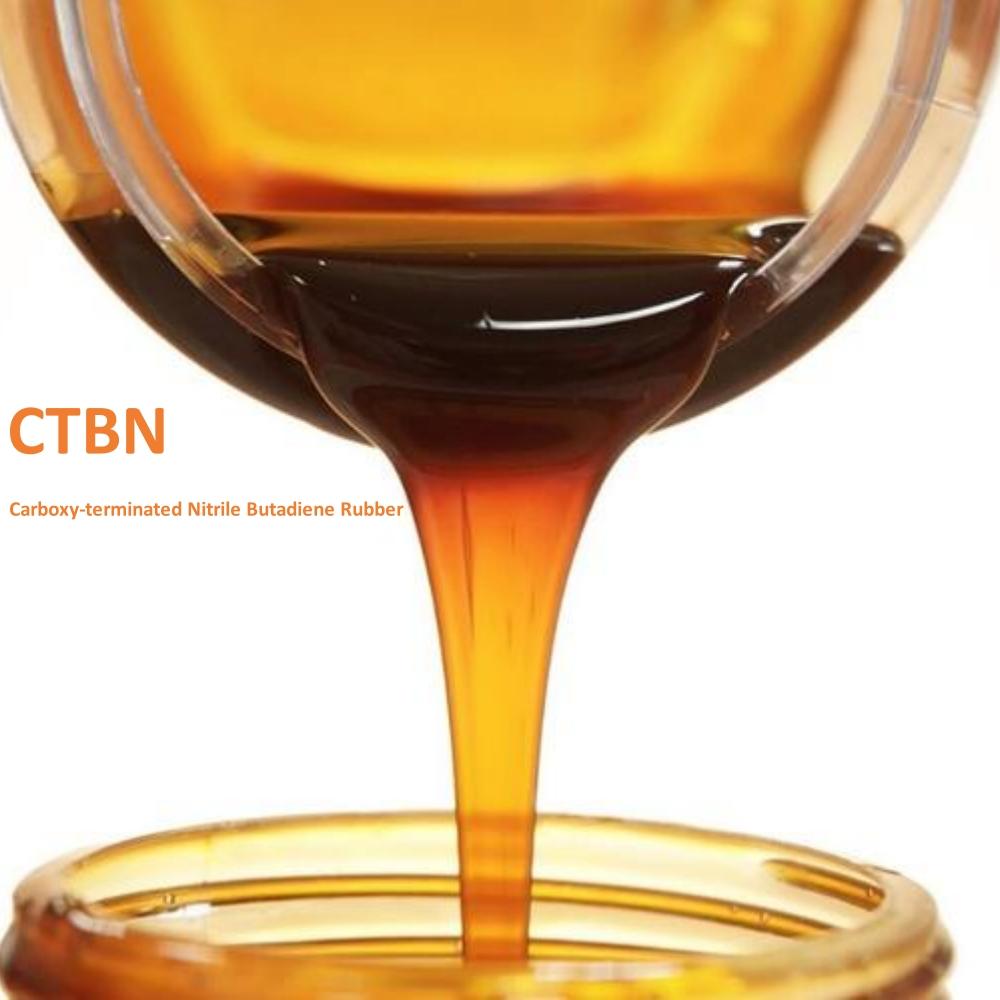
You can boost the performance of epoxy adhesives with CTBN (Carboxyl-Terminated Butadiene-Acrylonitrile) CAS 25265-19-4/68891-46-3. This additive increases flexibility and toughness. You see higher impact resistance and better adhesion. The table below shows how CTBN (Carboxyl terminated butadiene nitrile rubber) improves epoxy properties:
| Property | Value with CTBN | Improvement (%) |
|---|---|---|
| Tensile Strength | 50 MPa | 10% higher than without CTBN |
| Elongation at Break | 2.0% | 32% increase at 15 wt.% CTBN |
| Impact Strength | 11.2 kJ/m2 | 31% higher than without CTBN |
| Thermal Conductivity | Maximum at 5 wt.% CTBN | 173% higher than pure epoxy |
You gain these benefits:
- Toughness and flexibility
- Strong adhesion to hard-to-bond substrates
- Higher impact and crack resistance
- Better durability and fatigue resistance
Key Takeaways
- CTBN enhances epoxy adhesives by increasing flexibility and toughness, making them more durable and resistant to cracking.
- Using CTBN improves adhesion to various surfaces, including metals and plastics, ensuring strong bonds even in harsh conditions.
- CTBN-modified adhesives perform well in low temperatures, maintaining flexibility and strength, ideal for outdoor applications.
CTBN (Carboxyl-Terminated Butadiene-Acrylonitrile) CAS 25265-19-4/68891-46-3 in Epoxy Adhesives

Definition and Key Properties
You can think of CTBN (Carboxyl-Terminated Butadiene-Acrylonitrile) CAS 25265-19-4/68891-46-3 as a special liquid rubber that brings unique qualities to epoxy adhesives. This material stands out for its ability to absorb energy, boost toughness, and keep flexibility even in cold conditions. Here is a quick look at its main properties:
| Property | Description |
|---|---|
| Impact Resistance | Absorbs and disperses energy, helps prevent cracking. |
| Toughness and Elasticity | Increases crack resistance and toughness in rigid materials. |
| Low-Temperature Flexibility | Maintains flexibility in cold environments. |
| Adhesion | Bonds well to metals, plastics, and composites. |
| Molecular Weight Variability | Comes in different grades for custom performance. |
You will find CTBN (Carboxyl-Terminated Butadiene-Acrylonitrile) CAS 25265-19-4/68891-46-3 in products for aerospace, automotive, and sports equipment because of these features.
Role in Epoxy Formulations
When you add CTBN (Carboxyl-Terminated Butadiene-Acrylonitrile) CAS 25265-19-4/68891-46-3 to epoxy adhesives, you follow a careful process. First, you mix the epoxy resin and CTBN at 60°C for 20 minutes. Next, you add a curing agent and blend everything well. You might use about 10–15% CTBN for the best balance of strength and flexibility. After mixing, you pour the blend into a mold, remove bubbles under vacuum, and cure it at high temperatures. This process helps CTBN dissolve into the epoxy, making the final adhesive more flexible and tough.
Direct Impact on Adhesive Performance
By using CTBN (Carboxyl-Terminated Butadiene-Acrylonitrile) CAS 25265-19-4/68891-46-3, you see big improvements in your epoxy adhesives. The adhesive becomes much tougher and resists cracking. For example, adding 15% CTBN can boost elongation at break by 32% and impact strength by 31%. You also notice better bonding to metals and plastics. The glass transition temperature drops, which means your adhesive stays flexible in cold weather. These changes help your adhesives last longer and perform better in demanding jobs.
Performance Improvements with CTBN-Modified Epoxy Adhesives

Enhanced Flexibility and Toughness
You want your epoxy adhesives to handle stress and movement. When you add CTBN (Carboxyl-Terminated Butadiene-Acrylonitrile) CAS 25265-19-4/68891-46-3, you give your adhesives more flexibility. This means the adhesive can bend and stretch without breaking. You see this improvement in many industries, like automotive and construction, where materials often move or vibrate. The carboxyl groups in CTBN help it mix well with epoxy resins. This creates a network that absorbs energy and spreads it out. As a result, your adhesive becomes tougher and less likely to crack under pressure. You can use CTBN (Carboxyl-Terminated Butadiene-Acrylonitrile) CAS 25265-19-4/68891-46-3 to make products that last longer and perform better in tough conditions.
Tip: If you need an adhesive that can handle bending or twisting, choose a formulation with CTBN. You will notice fewer cracks and breaks over time.
Improved Impact and Fatigue Resistance
You often need adhesives that can take a hit and keep working. CTBN (Carboxyl-Terminated Butadiene-Acrylonitrile) CAS 25265-19-4/68891-46-3 helps your epoxy adhesives absorb shocks and resist repeated stress. This is important for products that face drops, bumps, or constant vibration. When you use CTBN, your adhesive can handle more cycles of bending and stretching before it fails. However, you should know that CTBN-modified epoxy adhesives may not reach the highest levels of impact resistance compared to some other toughening agents. For example, tests show that CTBN-toughened adhesives do not always absorb as much energy as PTPU-modified adhesives. Even so, you still get a big improvement over standard epoxy. Your adhesive will last longer and perform better in real-world situations where impacts and fatigue are common.
Better Adhesion and Durability
You want your adhesive to stick well to many surfaces. CTBN (Carboxyl-Terminated Butadiene-Acrylonitrile) CAS 25265-19-4/68891-46-3 helps your epoxy adhesives bond to metals, plastics, and composites. The carboxyl groups in CTBN create strong chemical links with the epoxy resin and the surfaces you want to join. This means your adhesive holds tight, even when exposed to heat, cold, or moisture. You also get better durability. Your adhesive resists aging and keeps its strength over time. This is why you see CTBN-modified adhesives in demanding fields like aerospace and electronics. You can trust these adhesives to keep working, even in harsh environments.
Note: For projects that need long-lasting bonds and resistance to weather or chemicals, CTBN-modified epoxy adhesives are a smart choice.
You gain real advantages when you use CTBN (Carboxyl-Terminated Butadiene-Acrylonitrile) CAS 25265-19-4/68891-46-3 in epoxy adhesives. Manufacturers and end-users see better toughness, strong low-temperature performance, and stable mechanical properties. The table below shows how you benefit:
| Aspect | Impact of CTBN |
|---|---|
| Toughness | Increased fracture toughness |
| Low-temperature performance | Enhanced performance in low temperatures |
| Mechanical properties | Maintained without significant reduction |
FAQ
What is CTBN used for in epoxy adhesives?
You use CTBN to make epoxy adhesives tougher and more flexible. It helps your adhesives resist cracking and improves their performance in demanding applications.
How do you store CTBN for best results?
You should store CTBN in a cool, dry, and well-ventilated place. Keep the temperature between -20°C and 38°C for the best shelf life.
Can you use CTBN-modified adhesives in cold environments?
Yes! CTBN-modified adhesives stay flexible and strong even in low temperatures. You can trust them for outdoor or cold-weather projects.
See Also
Sustainable Strategies for Enhancing 2 5-Furandicarboxylic Acid Use
Industrial Applications and Solubility of 2 5-Furandicarboxylic Acid
Key Benefits of WT20 Thoriated Tungsten Electrodes for TIG Welding
Contemporary Techniques for Aminoguanidine Bicarbonate Production and Uses
Creative Uses of N,N-Dimethyl-N,N-Diphenylurea Across Industries