Freestanding vs Countertop Water Dispenser A 2026 Buyer's Guide
Choosing the right cold and hot water dispenser is simple. Your decision rests on two key factors: available space and the number of users. You can easily find the perfect match for your hydration needs.
Quick Tip: A countertop dispenser saves space for fewer users. A freestanding dispenser serves high-demand areas in a busy home or office.
Key Takeaways
- Choose a countertop dispenser for small spaces and fewer users. It is easy to set up and costs less money.
- Pick a freestanding dispenser for many users and busy places. It offers more features and holds more water.
- Consider your space, how many people will use it, and your budget. These help you choose the best water dispenser.
Space: How Much Room Do You Have?
Your first step is to look at your available space. A water dispenser's size determines where you can put it. You need to measure your area to find the right fit for your home or office.
Countertop: The Space-Saving Solution
You can place a countertop dispenser in small spaces. These compact units fit easily on your kitchen counter, in a pantry, or on a sturdy shelf. They are perfect for apartments, dorm rooms, and small office breakrooms. You get instant hot and cold water without sacrificing valuable floor space.
Pro Tip: Always measure the vertical space above your counter. You need enough room to lift and place a new water bottle on top of the dispenser.
Freestanding: The Dedicated Floor Unit
A freestanding dispenser is a standalone appliance. You will need a dedicated spot on the floor for this type of unit. These models are taller and wider because they hold more water or include extra features. You should place them in a corner or against a wall where they will not block foot traffic.
Freestanding models come in various sizes. You must also account for clearance space around the unit for proper ventilation. Here are a few examples of typical dimensions:
| Model | Height (in.) | Width (in.) | Depth (in.) |
|---|---|---|---|
| iSpring DS4S | 41.7 | 11.8 | 14.1 |
| Bevi Standup 2.0 | 66.25 | 16.5 | 22.0 |
Always check the manufacturer's guidelines for required clearance on the sides, back, and top.
Capacity: How Much Water Do You Need?
Next, you should think about your daily water usage. The dispenser's capacity determines how much water it holds and how often you will need to refill it. Your choice depends on the number of people using the dispenser each day.
Countertop: Best for Small Groups
Countertop dispensers are a great fit for individuals, families, and small teams. Most models use standard 3- or 5-gallon water bottles. This size provides plenty of water for daily hydration without needing constant refills in a smaller setting. Some high-capacity countertop units can even serve larger groups effectively.
You can see how different models accommodate various user counts below:
| Countertop Water Dispenser Model | Ideal Headcount (Daily Users) |
|---|---|
| Natural Choice ION TS400 | 0–50 people |
| Follett 7/15 Series | 51–100 people |
Freestanding: Built for High Demand
You should choose a freestanding dispenser for busy environments. These units are perfect for large households and bustling offices where many people need water throughout the day. Their larger size often means they can support bigger water bottles or connect directly to a water line, reducing refill frequency.
Did You Know? Freestanding dispensers also have internal tanks that keep a reserve of water at the perfect temperature, ready for you to use instantly. 💧
These internal tanks ensure you always have access to hot or cold water. Here is an example of a unit's internal capacity:
| Water Type | Capacity (gallons) |
|---|---|
| Cold | 1.1 |
| Hot | 0.75 |
| Ambient | 4.5 |
This large reserve makes freestanding models the best option for high-demand situations.
Cost: What's Your Budget?
Your budget plays a big role in choosing a water dispenser. You need to think about the initial purchase price and the long-term running costs. Both factors will help you find a model that fits your finances.
Countertop: Lower Initial Price
You will find that countertop dispensers are often the more budget-friendly option upfront. Their smaller size and simpler design usually result in a lower purchase price. This makes them an excellent entry-point for individuals or small offices.
However, you should also plan for ongoing expenses. The long-term costs include electricity, filter replacements, and potential maintenance.
Running Costs: A water dispenser typically costs between $7 and $15 per month to run. The hot water function uses the most electricity, so models with energy-saving standby modes can help reduce your monthly bill.
Filter cartridges usually need replacing every 3 to 6 months, adding a recurring expense to your budget.
Freestanding: Higher Upfront Investment
You should expect to pay more for a freestanding dispenser. These units are a larger investment because of their size, higher capacity, and advanced features. Models with direct water line connections or built-in ice makers will have a higher price tag.
While the initial cost is higher, the long-term running costs are often comparable to hot and cold countertop units. You will still have expenses for electricity and maintenance.
Here are some potential long-term expenses you should consider: 💰
| Expense Item | Estimated Cost (USD) | Frequency |
|---|---|---|
| Filter Replacement | $15–$40 per filter | Every 3–6 months |
| Leaking Tap Repair | $15–$60 | As needed |
| Heating Element Repair | $40–$120 | As needed |
Planning for these costs helps you manage your budget over the life of the appliance.
Features: What Functions Matter Most?
When you choose a cold and hot water dispenser, you should look at its features. Your daily needs will determine which functions are most important to you. Countertop models focus on the basics, while freestanding units often include premium upgrades.
Countertop: The Essentials
You will find that countertop dispensers deliver core functions efficiently. They are designed to give you clean water without taking up much space. Most models prioritize simplicity and reliability.
Key Takeaway: Countertop units are perfect if you need essential features like filtration and temperature control in a compact package.
You can expect to find these common features in modern countertop models:
- Built-In Filtration: Many units include advanced filters to remove impurities and improve water taste.
- Energy Efficiency: Look for models with energy-saving modes to help lower your electricity costs.
- User-Friendly Controls: Simple buttons or touchscreens give you quick access to water at your desired temperature.
Freestanding: Advanced Options
You should consider a freestanding dispenser if you want more than just the basics. These larger units often come with a variety of high-end features that enhance convenience and hygiene. They are built for modern homes and offices that demand more functionality.
Some advanced options you might find include:
- Touchless Dispensing: You can use a sensor or scan a QR code to get water without touching the unit.
- Built-in Ice Maker: Certain models produce ice, giving you an all-in-one hydration station.
- Bottle Filling Stations: A dedicated alcove makes it easy to refill tall water bottles.
- ADA Compliance: Some dispensers are designed to be accessible for individuals with disabilities.
Cold and Hot Water Dispenser Functions
You should consider the temperature options when choosing a cold and hot water dispenser. Your daily habits, like making tea, iced coffee, or just drinking cool water, will guide your choice. Both countertop and freestanding models offer different levels of temperature control.
Temperature Options in Countertop Models
You can expect countertop models to provide the essential temperature settings. Most units deliver two main options: hot and cold water. The hot water is perfect for instant soups or tea, while the cold water offers refreshing hydration. These dispensers focus on providing these core functions reliably.
Pro Tip: If you want more control, look for a countertop cold and hot water dispenser that includes a room-temperature option. This gives you a third choice for your drinking water.
Multi-Temp Settings in Freestanding Units
You will find more advanced temperature controls in freestanding units. These models often give you the ability to fine-tune the water temperature to your exact preference. A freestanding cold and hot water dispenser is ideal for users who want precise control for different beverages.
Many units offer a wider range of temperatures. You can often find settings like these:
- Cold Water: 39°F - 46°F (4°C - 8°C)
- Chilled Water: 42°F - 50°F
- Hot Water: Up to 201°F (94°C)
Some models even feature adjustable controls for both hot and cold outputs. This allows you to set the perfect temperature for everything from a delicate green tea to a perfectly chilled glass of water.
Installation: How Easy Is the Setup?
You should think about how much effort you want to put into setting up your new appliance. The installation process varies greatly between countertop and freestanding models. Your choice will depend on whether you prefer a quick setup or a more permanent installation.
Countertop: Simple Plug-and-Play
You will find that setting up a countertop water dispenser is very straightforward. Most models are designed for simple plug-and-play convenience. You just need to place the unit on a flat surface, put the water bottle on top, and plug it into a standard wall outlet.
The whole process takes 1.5 hours on average from unboxing to your first glass of water.
Before you buy, you should check that you have the right electrical connection. Most units require a standard outlet with power specifications like these:
- Power: 115V/60Hz
- Power: 15A/120V/1800W
Freestanding: Placement and Plumbing
You need to plan more for a freestanding dispenser's installation. First, you must find a suitable floor space that is level and near a power outlet. Some models, called point-of-use (POU) dispensers, require a direct connection to your home's water supply. This plumbing connection gives you an unlimited supply of water without needing bottles.
You also need to think about safety, especially with children in the house. Look for models with important safety features.
- Child Safety Lock: Many freestanding units include a lock on the hot water tap to prevent accidental burns. 🔒
This makes them a safer choice for busy family homes.
Maintenance: What Cleaning is Required?
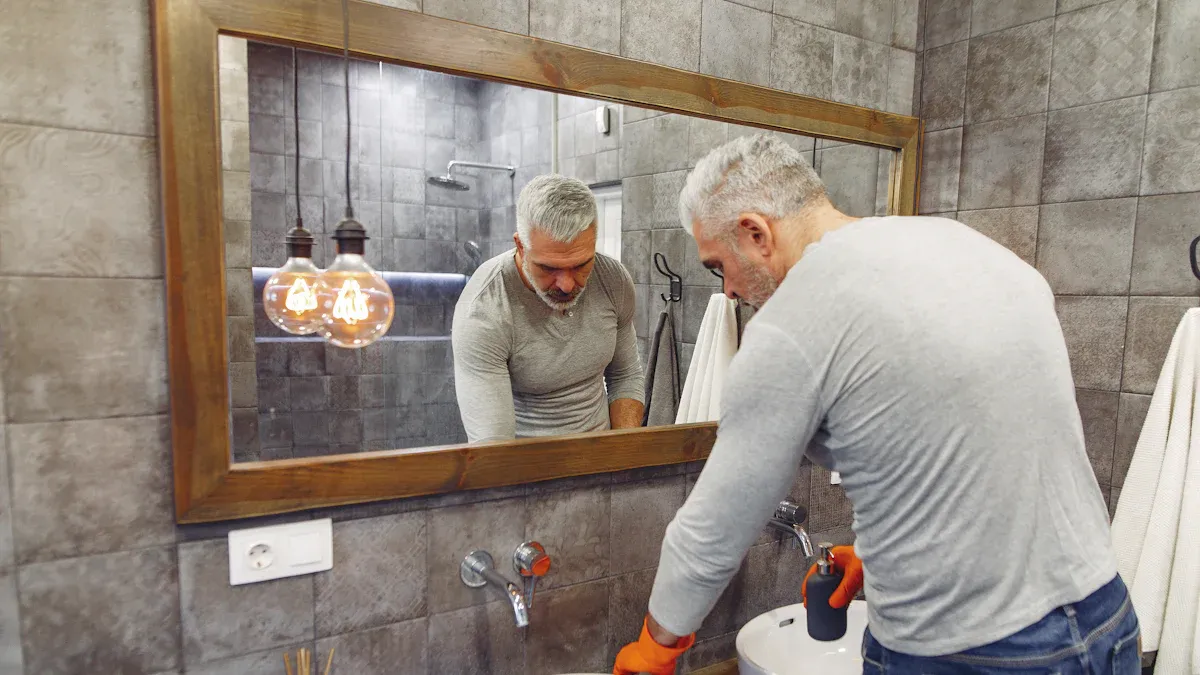
You need to keep your water dispenser clean to ensure it provides fresh, great-tasting water. Regular maintenance prevents the buildup of germs and minerals. The cleaning process is slightly different for countertop and freestanding models.
Cleaning Your Countertop Dispenser
You should clean your countertop dispenser regularly to keep it in top condition. Descaling the unit removes mineral deposits from the water. You can follow these simple steps to clean your unit every three to six months.
- Unplug the dispenser and take off the water bottle.
- Drain all the water from the reservoir through the cold tap.
- Remove the water guard and the baffle inside.
- Wash these parts with mild dish soap and warm water, then rinse them well.
- Mix one cup of white vinegar with three cups of hot water.
- Pour this solution into the reservoir and wipe the inside with a soft cloth.
- Drain the cleaning solution completely.
- Rinse the reservoir twice with clean water.
- Put the baffle and water guard back in place.
- Place a new water bottle on top and plug the dispenser in.
Maintaining Your Freestanding Dispenser
You will find that maintaining a freestanding dispenser involves a simple routine. Regular cleaning ensures the unit runs efficiently and safely. You should always check your user manual for specific instructions for your model.
Quick Tip: Set a recurring reminder on your phone to help you stay on track with your dispenser's cleaning schedule. 🗓️
Here is a general maintenance schedule you can follow:
- Wipe the exterior and nozzles weekly.
- Empty and wash the drip tray as needed.
- Clean the internal reservoir at least once a month.
- Replace the filters every six months, or as the manufacturer suggests.
Your choice of a cold and hot water dispenser is clear.
Choose a Countertop Dispenser If:
- You live in a small space.
- You serve 1–15 people.
- Your budget is a primary concern.
- You prefer an easy-to-install option.
Choose a Freestanding Dispenser If:
- You have a busy household.
- You need high water capacity.
- You want advanced features.
- You have available floor space.
FAQ
How often should you clean a water dispenser?
You should clean your dispenser every three to six months. Regular cleaning prevents germ buildup and ensures your water tastes fresh and clean.
Can you use any water bottle with a dispenser?
You must check your model's specifications. Most dispensers fit standard 3- or 5-gallon bottles, but some require specific types for a proper fit.
Do water dispensers use a lot of electricity?
Your dispenser's electricity use depends on the model. The hot water function uses the most power. Energy-saving modes can help reduce your monthly costs.