Is a Countertop Hot Cold Water Dispenser Worth It?
A countertop hot cold water dispenser gives you instant convenience. Fewer than one-third of people drink unfiltered tap water, making this appliance a game-changer for better-tasting water on demand. It is perfect for your daily coffee, tea, or chilled drinks.
Note: The market is growing by 8.7% annually. This shows many people find the investment worthwhile if they have the budget and counter space.
Key Takeaways
- A countertop water dispenser offers instant hot and cold water. It saves time and improves water taste with built-in filters.
- Dispensers help the environment. They reduce the need for plastic water bottles.
- Consider the cost, counter space, and cleaning needs. These factors help you decide if a dispenser is right for your home.
The Pros: Key Benefits of a Dispenser
A countertop dispenser offers more than just water. It provides a new level of convenience and quality to your daily routine. You gain immediate access to perfectly heated or chilled water, making it a valuable kitchen upgrade. Let's explore the key benefits.
Ultimate Convenience
Imagine you want a cup of tea. A kettle takes 3 to 5 minutes to boil water. You must wait for your hot drink. A dispenser eliminates this waiting period completely. You get steaming hot water in seconds, not minutes. This saves you a surprising amount of time. Office workers can spend about 24 minutes each day just making hot drinks. A dispenser gives you that time back.
The time savings are clear when you compare devices.
| Device | Volume (ml) | Heating Time |
|---|---|---|
| Instant Hot Water Dispenser | 180 | 15 seconds |
| Kettle | 180 | 3-5 minutes |
This convenience extends beyond hot water. You no longer need to store water bottles in the refrigerator to get a cold drink. Users often praise dispensers for these simple but impactful benefits:
- They are easy for the whole family to use, often including safety locks for the hot water tap.
- You can make coffee, tea, or instant noodles immediately.
- Many models operate quietly, so they do not add noise to your kitchen.
- The push-button design makes filling a glass or bottle effortless.
Improved Water Taste and Quality
Your tap water may be safe, but it can contain elements that affect its taste and smell. Most dispensers include advanced filtration systems that solve this problem. These filters are designed to remove a wide range of common contaminants directly from your water source.
Did You Know? A quality filter can significantly reduce unwanted substances in your water. Common targets include:
- Disinfectants: Chlorine and chloramines that cause a "pool water" taste.
- Metals: Lead and mercury.
- Solids: Microplastics, asbestos, and other particulates.
- Biological Cysts: Cryptosporidium and Giardia.
- Chemicals: Pesticides, herbicides, and industrial solvents like BPA.
These systems primarily use carbon filtration. Activated carbon acts like a sponge for impurities. It uses a process called adsorption to trap chemicals that cause bad tastes and odors. This process removes up to 99.9% of certain chemicals, leaving you with crisp, clean, and refreshing water every time.
A Greener Alternative to Plastic Bottles ♻️
Choosing a water dispenser is a positive step for the environment. The production of single-use plastic bottles has a large carbon footprint. Making just one plastic bottle requires fossil fuels and can release around 82 grams of CO₂. Transporting bottled water from plants to stores adds even more emissions.
By filtering water at home, you eliminate the need for this entire cycle. You reduce plastic waste that often ends up in landfills and oceans. You also conserve the energy and water used in bottle manufacturing and transport. A dispenser allows you to enjoy pure water while supporting a more sustainable lifestyle.
Stylish and Compact Design
Modern dispensers are designed to complement your kitchen, not clutter it. Manufacturers create them with both function and style in mind. Many units are surprisingly compact and fit easily between your counter and upper cabinets.
For a clear idea of size, here are the typical dimensions of a popular model:
| Dimension | Measurement |
|---|---|
| Length | 19-3/16" |
| Width | 10-1/4" |
| Height | 16-7/16" |
Designs have become very sophisticated. Some award-winning models, inspired by Italian aesthetics, integrate hot and cold functions into a single, elegant handle. They are built from high-quality solid brass and come in dozens of finishes to match your decor. A stylish countertop hot cold water dispenser can serve as a functional centerpiece in a modern kitchen.
The Cons: Potential Downsides to Consider
While a dispenser offers many benefits, you should also look at the potential downsides. Understanding these points helps you make a fully informed decision. This appliance might not be the perfect fit for every kitchen or budget.
The Upfront Investment
The initial cost is a significant factor for many people. A high-quality countertop hot cold water dispenser can be a considerable purchase. Prices vary widely based on features, filtration technology, and brand. You can expect to pay anywhere from a hundred to several hundred dollars. This cost is much higher than a simple water filter pitcher or a standard electric kettle. You must decide if the long-term convenience and savings on bottled water justify this upfront expense.
It Takes Up Counter Space
Your kitchen counter has limited real estate. A dispenser will claim a permanent spot. You need to measure your available space before you buy one. For example, a typical unit might have a footprint of 10 inches by 11 inches. This takes up about 110 square inches of your counter. You should also consider the vertical space needed between the counter and your upper cabinets. If your kitchen is small or already feels cluttered, adding another appliance could make it feel cramped.
Tip: Use a tape measure to mark out the dispenser's dimensions on your counter. This helps you visualize how much space it will occupy and if you are comfortable with it.
Requires Regular Maintenance
A dispenser is not a "set it and forget it" appliance. It needs regular cleaning to ensure it works properly and provides safe, clean water. Neglecting maintenance can lead to bacteria growth and mineral buildup (scale), which affects water taste and flow. You will need to follow a consistent cleaning schedule.
Here is a general idea of the tasks involved:
| Frequency | Maintenance Task |
|---|---|
| Daily | Wipe the exterior and empty the drip tray. |
| Weekly | Clean the nozzles and sanitize the water tank with a vinegar solution. |
| Monthly | Replace the water filter and descale the system to remove mineral buildup. |
| Annually | Perform a deep clean of all removable parts. |
These tasks are simple but require commitment. You must factor the time for upkeep and the cost of cleaning supplies into your decision.
It Uses Electricity
A dispenser needs electricity to keep water hot and cold at all times. This continuous power usage adds to your monthly utility bill. The exact energy consumption depends on the model and your usage habits.
- Hot Water Dispensers: Use energy constantly to keep the water in the hot tank ready. This standby heating can contribute to your home's overall electricity use.
- Electric Kettles: Only use power when you are actively boiling water. They are efficient for single uses if you only boil the amount you need.
However, modern dispensers are becoming more energy-efficient. Some even use less energy than boiling a kettle multiple times a day.
| Usage Scenario | Energy Consumption (Our Taap Home Water System II) | Energy Consumption (Kettle) |
|---|---|---|
| 24 hours (10 hot mugs) | 0.46 kWh | 0.565 kWh (boiling half a kettle 5 times) |
| Per Use | 0.07 kWh | 0.225 kWh (boiling a full kettle) |
For frequent users, a dispenser can be more efficient than repeatedly boiling a full kettle. The chart below shows how the energy use compares in different situations.
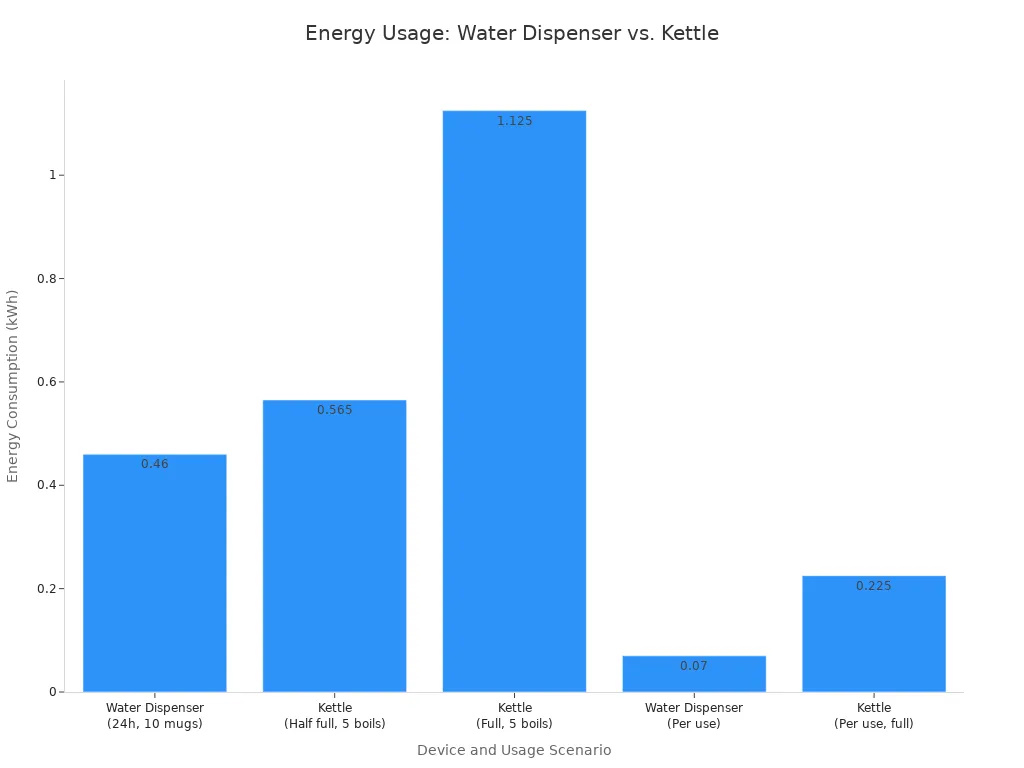
You must weigh the cost of continuous power against the convenience of having instant hot and cold water.
What to Consider Before Buying a Countertop Hot Cold Water Dispenser
Choosing the right appliance requires some thought. You should evaluate your lifestyle, space, and budget before you buy a countertop hot cold water dispenser. Answering a few key questions will help you decide if it is the right investment for your home.
Your Daily Drink Habits
First, think about what you drink each day. A dispenser is most valuable for people who frequently make hot or cold beverages. If you are a heavy coffee or tea drinker, the instant hot water is a major benefit.
- Many dispensers offer hot, cold, and room-temperature water from separate faucets.
- Some advanced models are all-in-one stations with features like a built-in coffee brewer.
These features cater directly to your beverage needs and can streamline your morning routine.
Your Tap Water Quality
Next, you should understand your local tap water quality. This helps you know if you need a powerful filtration system. You can find this information easily.
- Review your annual Consumer Confidence Report (CCR) from your local water supplier or the EPA website.
- Use a mail-in test kit from services like SimpleLab TapScore for a detailed analysis of contaminants.
Knowing what is in your water helps you choose a dispenser with the right filter.
Your Kitchen's Counter Space
You must also consider your available kitchen space. A dispenser is a permanent fixture on your counter. Measure the area where you plan to place it. Make sure there is enough room for the unit's footprint and enough vertical clearance below your cabinets. This simple step prevents you from buying an appliance that does not fit.
Your Budget for Purchase and Upkeep
Finally, look at your budget. Dispenser prices vary widely. You also need to account for ongoing costs like filter replacements.
| Category | Price Range |
|---|---|
| Entry-Level | $74 - $79 |
| Mid-Range | $229 - $279 |
| High-End | $387 - $449 |
The chart below shows how prices are distributed across these categories.
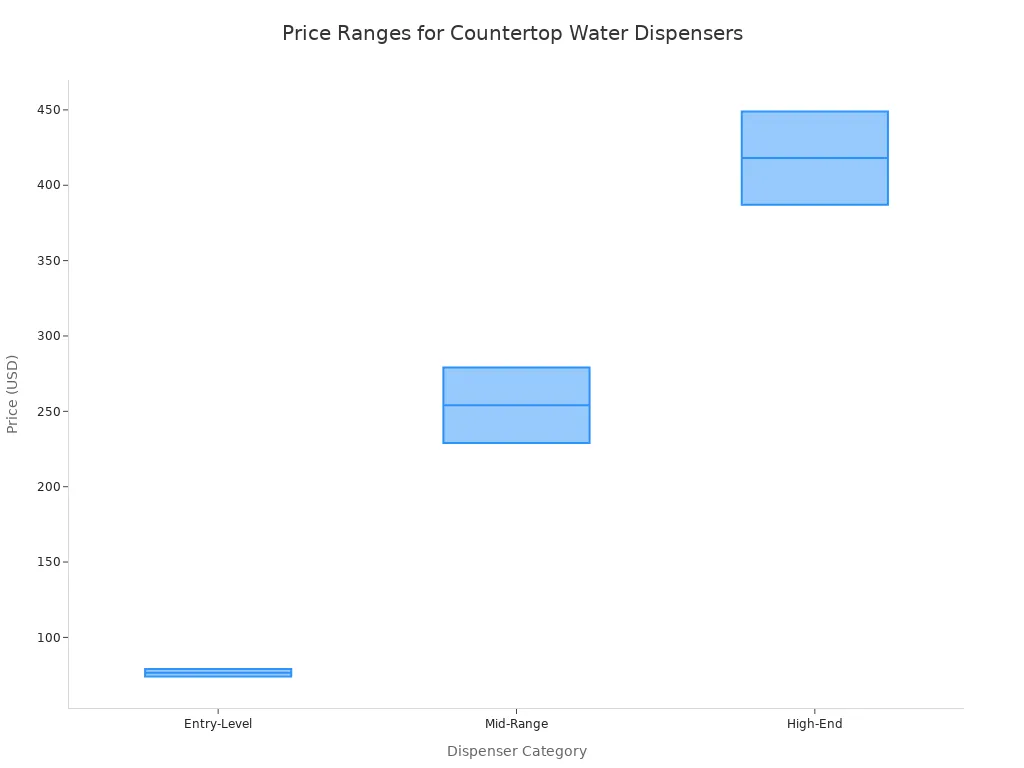
Consider both the initial purchase price and the long-term upkeep to see if a countertop hot cold water dispenser fits your finances.
Cost Breakdown: Is It Cheaper Than Bottled Water?
You might wonder if a dispenser saves you money. The answer depends on your current spending and long-term use. Let's break down the costs to see if a dispenser is a smarter financial choice than buying bottled water.
Calculating Your Bottled Water Costs
First, look at what you spend on bottled water now. A family of four can easily spend between $400 and $1,000 each year on bottled water. If you buy single-use bottles frequently, your annual total could be even higher. This recurring expense adds up quickly over time.
The Long-Term Dispenser Investment
A countertop dispenser has a higher initial price. However, it often pays for itself within the first year. After this break-even point, you start to see significant savings. You stop spending money on plastic bottles and only pay for small ongoing costs like filters and electricity.
Factoring in Filter Replacements
Your dispenser will need new filters to keep the water clean. The replacement schedule depends on the filter type and your water usage.
| Filter Type | Typical Replacement Frequency |
|---|---|
| Sediment/Carbon | Every 6-12 months |
| Reverse Osmosis (RO) | Every 2-3 years |
Tip: Many companies, like ZeroWater and Whirlpool, offer subscription services. They automatically ship new filters to you, often with a discount and free shipping. This makes maintenance simple and predictable.
The Final Cost Verdict
A bottleless dispenser has a higher upfront cost for the unit and installation. However, its recurring expenses for filters and energy are low, often totaling $90 to $210 per year. Bottled water systems have a lower initial price but much higher ongoing costs for water jugs. For most households, a countertop dispenser becomes the more economical choice after the first year.
A countertop hot cold water dispenser is worth it for ultimate convenience and better-tasting water. The value outweighs the cost if you frequently buy bottled water or make hot drinks. If your budget is tight, a filtered pitcher is a good starting point. For the right household, a top-rated model like the Avalon A8 makes a highly recommended kitchen upgrade.
FAQ
How hot and cold does the water get?
Dispensers deliver water at ideal temperatures for drinks. Hot water is just below boiling, while cold water is refrigerated. You can expect temperatures in these ranges.
| Water Type | Typical Temperature Range |
|---|---|
| Hot | 194°F - 208°F (90°C - 98°C) |
| Cold | 41°F - 50°F (5°C - 10°C) |
Can I use a dispenser without a water line?
Yes, you can choose a model that does not connect to plumbing. These dispensers use large, replaceable water jugs, giving you more flexibility for placement in your home.