Your 2025 Countertop Cold Water Dispenser Buying Checklist
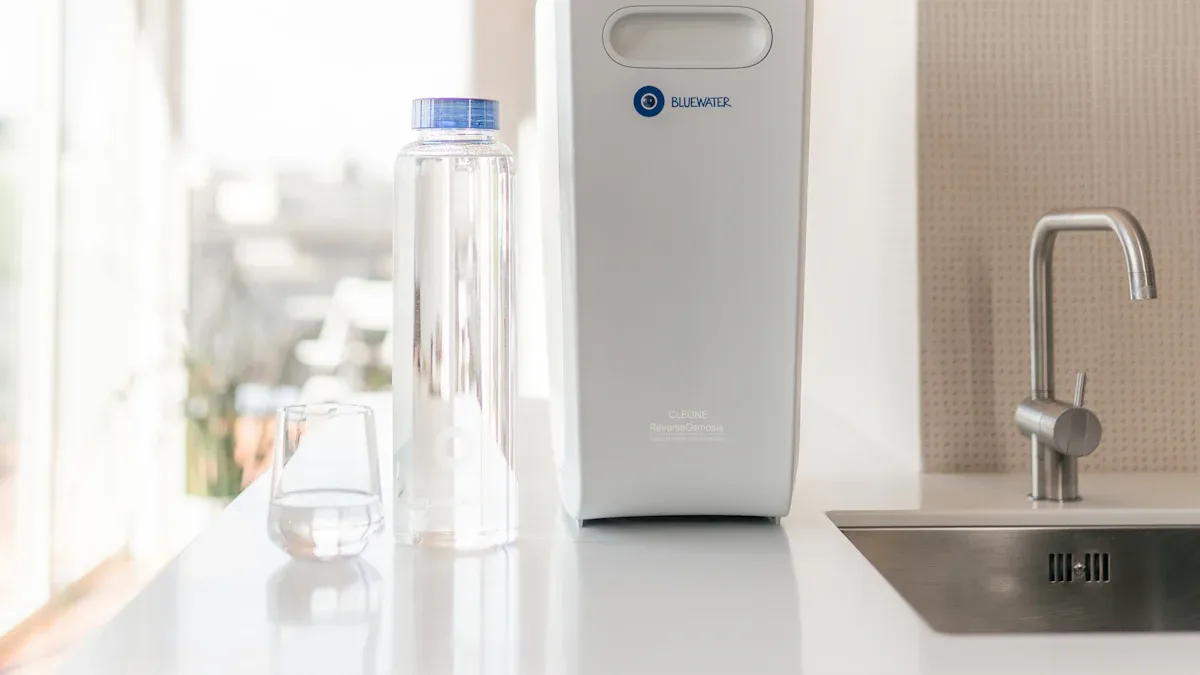
With 70% of Americans concerned about tap water, the market for solutions is growing over 5% annually. Your choice of a countertop cold water dispenser is crucial. The single most important factor is the filter's ability to remove your local water's specific contaminants.
Before You Buy: Verify the dispenser's filtration type, cold water performance, capacity, and maintenance costs.
Key Takeaways
- Check your local water report. This helps you choose a dispenser that removes specific contaminants in your water.
- Look at the filter type and cooling system. These features make sure your water is clean and cold.
- Consider the size, cost, and maintenance. Pick a dispenser that fits your space and budget.
Key Performance Metrics: Filtration and Temperature
You must evaluate two core functions before choosing a dispenser: how well it cleans your water and how well it chills it. These performance metrics directly impact your water's safety, taste, and your daily enjoyment.
Filtration System & Contaminant Removal
The primary job of any water dispenser is to provide clean water. You first need to know what contaminants you are trying to remove. Your local water report is a great starting point. Common contaminants found in U.S. tap water include:
- PFAS, also known as “forever chemicals”
- Metals like Lead, Arsenic, and Copper
- Disinfection byproducts like Chlorine
- Bacteria and other radiological contaminants
- Pesticides and industrial chemicals (VOCs)
Different filters target different problems. Understanding the main types helps you choose the right defense.
Filtration Tech Explained: Reverse Osmosis (RO), Activated Carbon, and UV Purification are the most common technologies. They are often combined in multi-stage systems for comprehensive filtration.
- Reverse Osmosis (RO): These systems use a special membrane to remove a wide range of contaminants. RO is highly effective against heavy metals like lead and can remove up to 99% of them. It also reduces bacteria and viruses.
- Activated Carbon: Carbon filters excel at improving taste and odor. They effectively remove chlorine. Certain high-quality carbon block filters are also certified to reduce lead. However, they are not effective against bacteria or viruses.
- UV Purification: A UV lamp destroys 99.99% of microorganisms like bacteria and viruses. It is a powerful disinfection method. UV does not remove physical or chemical contaminants, so it is almost always paired with a carbon or RO filter.
This table shows how different filters handle key contaminants.
| Contaminant | Reverse Osmosis (RO) | Activated Carbon | UV Purification |
|---|---|---|---|
| Chlorine | Excellent | Excellent | No Effect |
| Lead | Excellent | Good | No Effect |
| Bacteria/Viruses | Good | Poor | Excellent |
A multi-stage countertop cold water dispenser often gives you the best results by combining these technologies.
Cold Water Performance
You want a countertop cold water dispenser for refreshing, chilled water. The unit's ability to deliver this consistently is a key performance factor. You should check two things: cooling technology and temperature range.
- Cooling Technology: Dispensers use either a compressor or a thermoelectric system. Compressors work like a mini-refrigerator, delivering colder water faster and maintaining that temperature even with frequent use. Thermoelectric systems are quieter and more energy-efficient but cool water more slowly and to a less frigid temperature.
- Temperature Range: Look for the specific temperature range the dispenser can achieve. Top models can chill water down to 39-45°F (4-7°C). If you prefer truly ice-cold water, a compressor-cooled model is your best bet.
Other Temperature Options
Many modern dispensers offer more than just cold water. You can often find models that provide multiple temperature settings from a single tap.
- Room Temperature: This option is perfect for cooking or for those who prefer their water cool but not cold. It also uses less energy.
- Hot Water: Dispensers with a hot water function are great for tea, instant coffee, or oatmeal. These models heat water to near-boiling temperatures, typically between 185°F and 205°F (85-96°C).
Safety First! 🚨 If you choose a model with a hot water feature, check for safety certifications. These certifications ensure the product is safe from electric shock and fire risks. Look for marks from:
- Underwriters Laboratories (UL): A leading organization for product safety testing and certification.
- CSA International: An independent group that develops standards and certifies products.
These certifications give you peace of mind that your appliance meets strict safety standards.
Your Guide to the Best Countertop Cold Water Dispenser
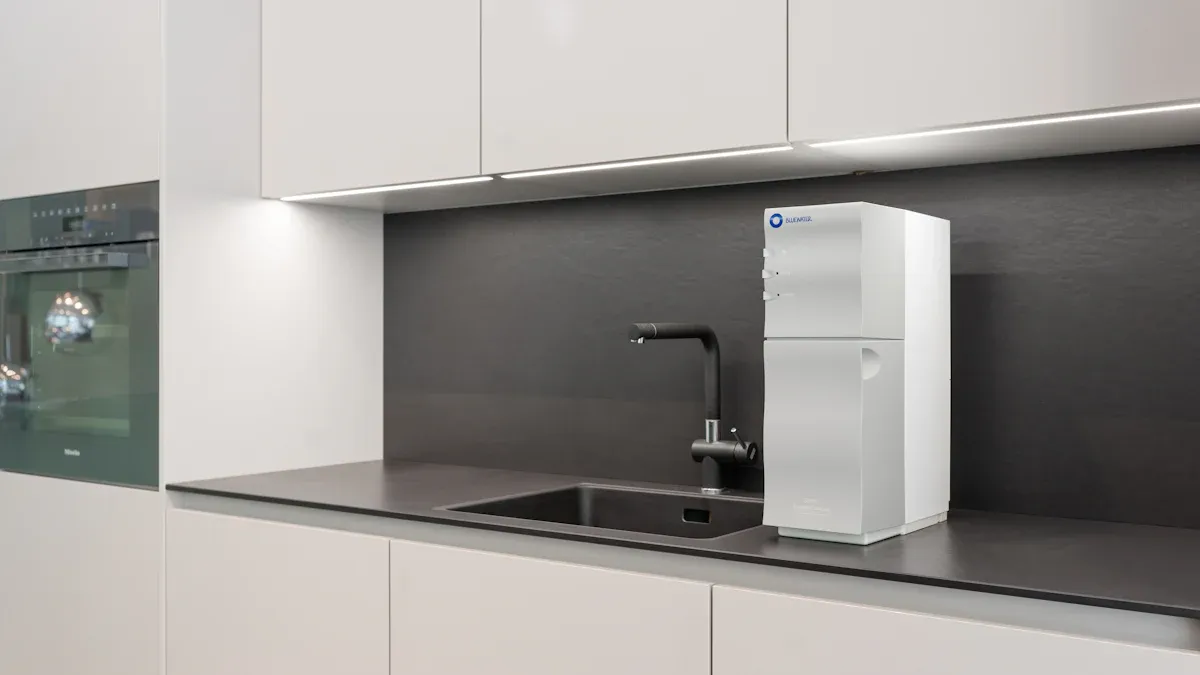
Practical details like size and long-term costs will determine how happy you are with your dispenser. You should evaluate these factors to find a model that fits your home and your budget.
Capacity, Size, and Design
You need a dispenser that fits your space and meets your family’s needs. First, measure the spot where you plan to place the unit. Check the product’s dimensions to ensure a good fit. Next, think about how much water your household uses. A typical countertop cold water dispenser may offer:
- Cold Tank Capacity: 1 gallon
- Hot Tank Capacity: 0.5 gallons
This capacity is usually enough for small families. Finally, consider how the unit will look in your kitchen. You can find modern dispensers in popular finishes that match your appliances.
- Stainless steel
- Matte black
- Pristine white
Maintenance and Long-Term Cost
The initial purchase price is only part of the total cost. You must also account for maintenance. You will need to replace filters regularly to keep your water clean. Most filters require replacement every six to twelve months.
Budget Tip: The annual cost for filters varies. Reverse Osmosis (RO) systems often have higher yearly filter costs than simpler activated carbon systems. Check the price of replacement filters before you buy.
Also, consider the product's lifespan. Some models are prone to issues like leaks. Reading user reviews can help you avoid a dispenser with a short life.
Advanced Features and Certifications
Modern dispensers offer helpful technology and important safety assurances. Smart features can make your life easier. Look for models with a filter life indicator, which tells you exactly when to order a replacement. Some even offer app connectivity to track your water quality.
Certifications prove that a dispenser meets high standards for safety and performance.
| Certification | What It Means for You |
|---|---|
| NSF/ANSI 42 | Improves water taste and odor by reducing chlorine. |
| NSF/ANSI 53 | Removes specific health-related contaminants like lead. |
| NSF/ANSI 58 | Confirms a Reverse Osmosis system effectively removes a wide range of contaminants. |
An ENERGY STAR certification means the countertop cold water dispenser uses less energy. This saves you money on electricity bills and is better for the environment.
The right dispenser perfectly matches your water quality, household size, and budget. You can use this guide as a final checklist. It will help you confidently compare your top choices and find the perfect fit for your home.
Your Quick Reference Checklist 📝
This table summarizes the key decision points.
| Decision Point | What to Check |
|---|---|
| Filtration | Does it remove your specific contaminants? (e.g., Lead, PFAS) |
| Temperature | Do you want ice-cold (compressor) or just cool (thermoelectric)? |
| Capacity | Is the tank large enough for your family's daily use? |
| Cost | Initial Price: $150 - $650+ (RO systems are often higher). Annual Filter Cost: $60 - $150+. |
FAQ
How often should I clean my dispenser?
You should clean your dispenser every three to six months. This prevents bacteria buildup. Always follow the manufacturer's specific cleaning instructions for your model.
Are countertop cold water dispensers noisy?
Some dispensers can be noisy. Models with compressors make a low hum, like a refrigerator. Thermoelectric models are much quieter but cool water more slowly.
What is the main benefit of a dispenser over a filter pitcher?
A dispenser provides instant chilled or hot water on demand. It also often uses more advanced, multi-stage filtration systems for cleaner, safer water.