Containerized Sewage Treatment Market Growth and Innovations in 2026
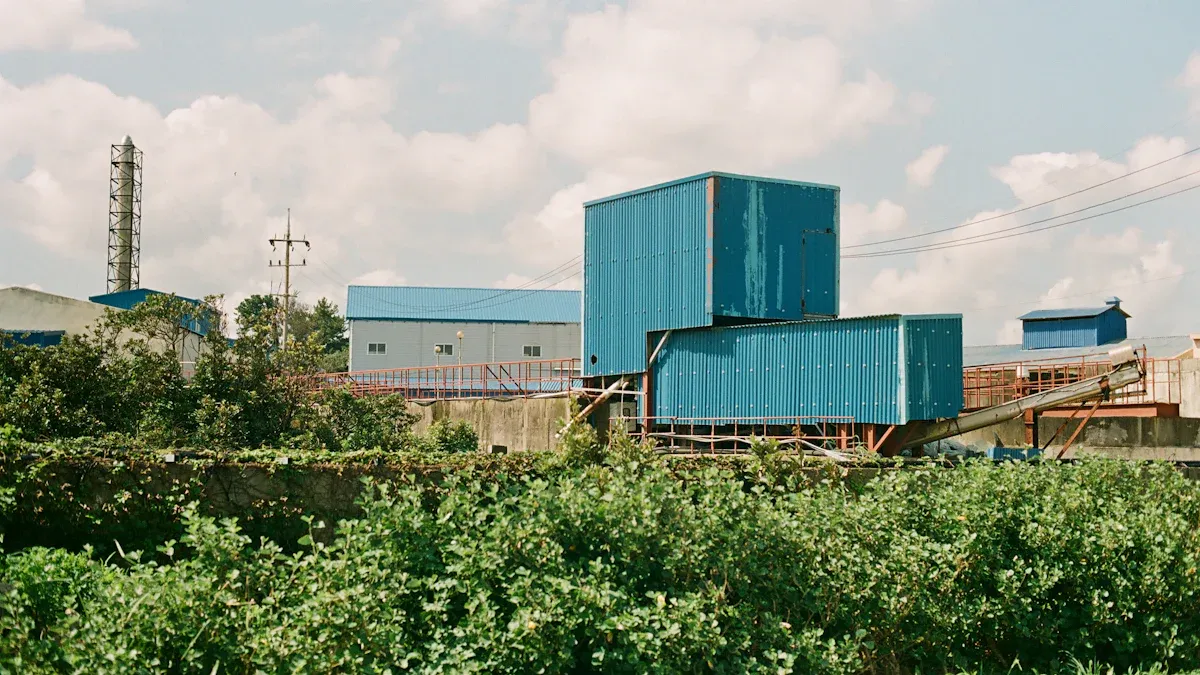
You see strong growth in the containerized sewage treatment market in 2026.
- The market will reach about USD 3.0 billion with an 8.5% CAGR.
- Innovations include modular systems, energy-efficient designs using anaerobic digestion, and advanced filtration like Membrane Bioreactor and Reverse Osmosis.
Key Takeaways
- The containerized sewage treatment market is projected to reach USD 3.0 billion by 2026, driven by innovations like modular systems and energy-efficient designs.
- Staying updated on regulatory changes is crucial for compliance and avoiding penalties, ensuring smooth operations in the sewage treatment industry.
- Containerized systems offer practical solutions in areas with limited infrastructure, allowing for quick deployment and effective sewage management.
Containerized Sewage Treatment Market Growth Drivers
Regulatory and Policy Influences
You see that regulations and policies play a big role in shaping the containerized sewage treatment market. Different countries set their own discharge standards, which can change often. This creates uncertainty for companies like yours. You must keep up with these changes and invest in compliance and certification.
- Regulatory uncertainties and variations in discharge standards across different countries may impact market growth.
- Ongoing investment in compliance and certification is necessary due to these regulatory challenges.
Government policies also encourage you to use eco-friendly wastewater treatment solutions. Urban areas keep growing, so the demand for better sewage infrastructure rises. Private companies invest more in new treatment technologies. The table below shows how these factors influence the market:
| Factor | Description |
|---|---|
| Government Policies | Favor eco-friendly wastewater treatment solutions |
| Urban Population | Growing demand for upgraded sewage infrastructure |
| Private Sector Investment | Increased investments in innovative treatment technologies |
Tip: Staying updated on local and international regulations helps you avoid penalties and keeps your operations running smoothly.
Environmental and Sustainability Demands
You face strong pressure to protect the environment and public health. Many people around the world still lack access to safe sanitation. Poorly managed sewage can cause water contamination and spread diseases. Containerized sewage treatment systems help you manage faecal sludge effectively, reduce greenhouse gas emissions, and protect local ecosystems.
- Containerized sewage treatment systems help in effective management of faecal sludge.
- They contribute to the reduction of greenhouse gas emissions.
- These systems protect public health and local ecosystems.
- 3.4 billion people lack access to safely managed sanitation facilities.
- Approximately 354 million people practice open defecation, leading to health risks.
- Poorly regulated faecal sludge management can result in water contamination and diseases.
- Faecal sludge management is crucial for maintaining public health safety.
- It is essential for environmental sustainability.
- The unsafe handling of faecal sludge poses significant health risks.
You also see a shift in the industry. Companies now treat wastewater as a resource, not just waste. This change supports global sustainability goals. For example, the United Nations wants everyone to have access to safe sanitation by 2030. To reach this goal, about 4.5 billion people need better sanitation services.
Economic and Infrastructure Factors
You notice that economic and infrastructure factors shape the growth of containerized sewage treatment. The availability of infrastructure affects how fast you can deploy these systems and meet regulations. In places with limited infrastructure, containerized solutions offer a practical way to treat sewage. Urban areas and industries need quick solutions, especially where there are no municipal connections.
- The growth of the containerized sewage treatment market is influenced by infrastructure availability, which affects deployment speed and compliance with regulations.
- Containerized solutions are increasingly adopted in areas with limited infrastructure, providing a practical means to meet treatment needs in constrained environments.
- Urban densification and industrial growth require wastewater treatment solutions that can be deployed quickly, especially in locations lacking municipal connections.
- Decentralized treatment nodes can be quickly deployed or relocated, enhancing resilience against extreme weather events.
- Labor constraints and the need for predictable costs drive the demand for automated and easily maintained solutions.
Note: Automated and modular systems help you save on labor costs and adapt to changing needs, making them a smart investment for both urban and remote locations.
Key Innovations in Containerized Sewage Treatment
Advanced Treatment Technologies
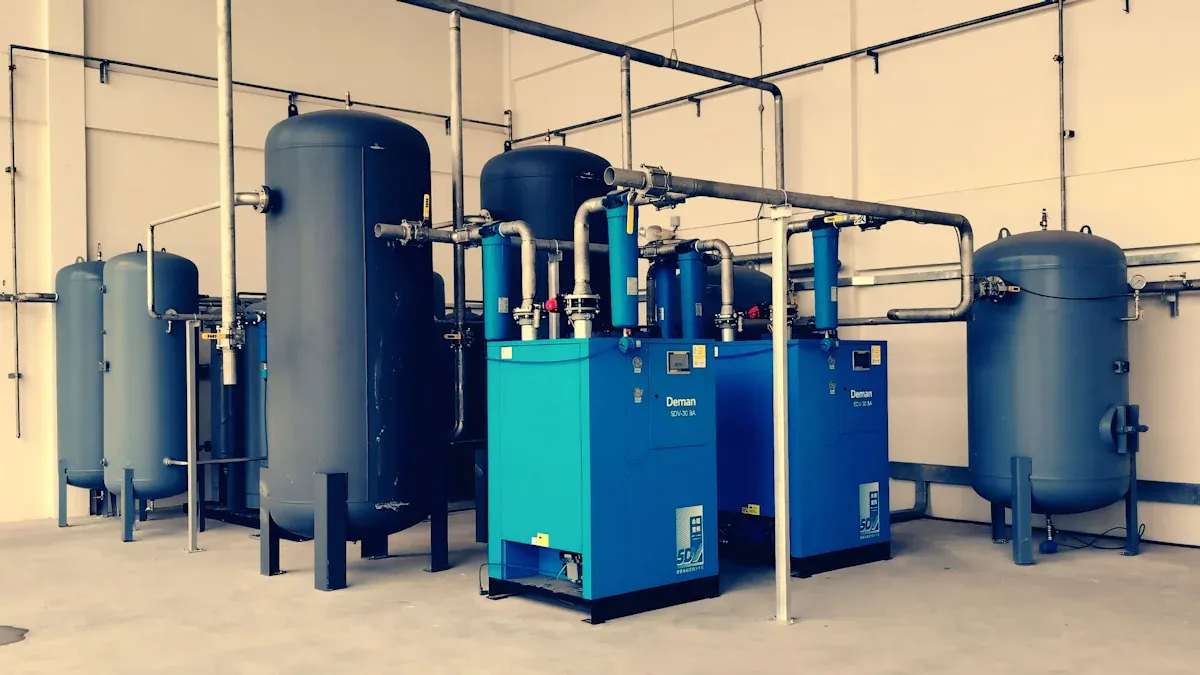
You see many new technologies making containerized sewage treatment more effective and efficient. These systems use a mix of biological, chemical, and physical processes to clean wastewater. Here are some of the latest advancements:
- Biological treatment processes use helpful microorganisms to break down waste.
- Membrane Bioreactors (MBRs) combine membrane filtration with activated sludge, giving you high-quality water after treatment.
- Sequencing Batch Reactors (SBRs) work well when the amount or type of waste changes often.
- Moving Bed Biofilm Reactors (MBBRs) help grow biofilm on small carriers, making treatment strong even in small spaces.
- Advanced filtration, like ultrafiltration and microfiltration, removes tiny particles and germs.
- Advanced Oxidation Processes (AOPs) use strong chemicals to break down tough pollutants.
- Granular Activated Carbon (GAC) filtration targets organic compounds and improves water quality.
- New nutrient removal strategies, such as the Anammox process, help remove nitrogen efficiently.
These technologies let you treat sewage in places where building a big plant is not possible. Off-site manufacturing saves you time and money. You do not need to build new facilities or fix old ones. The small size of these systems means you can install them quickly and avoid delays.
Digitalization and Smart Monitoring
Digital tools now play a big role in containerized sewage treatment. You can use sensors and smart platforms to track water quality and equipment status in real time. This helps you spot problems early and keep the system running smoothly.
- Digital sensors check water quality, pump pressure, and energy use every second.
- Data goes to a central cloud, so you or your team can monitor performance from anywhere in the world.
- IoT and automation help you manage the system without being on-site.
- AI and digital twins let you optimize the process and make sure you meet environmental rules.
Tip: Smart monitoring systems give you several benefits:
- You get accurate, real-time information about contaminants.
- AI can predict changes in water quality and warn you early.
- You can use resources more efficiently and save money.
- Continuous tracking helps you follow strict regulations.
- Early warnings help you fix issues before they become big problems.
Modular and Scalable System Designs
You benefit from modular and scalable designs in containerized sewage treatment. These systems come in standard shipping containers, so you can move them by road, rail, or sea. You can add or remove units as your needs change.
| Feature | Benefit |
|---|---|
| Scalable | You can expand the system as you need more capacity. |
| Reduced On-Site Construction | Pre-plumbed and pre-wired systems make installation fast. |
| Operator-Friendly | Easy to service and safe to use. |
- You can transport these systems easily to different locations.
- Quick setup means you spend less time waiting for installation.
- Factory assembly ensures the system is ready to use right away.
- User-friendly controls let you monitor and manage the system remotely.
Modular systems also help you manage water and wastewater at the site, giving you more control and resilience. You can tailor the treatment process to fit your project.
Circular Economy and Resource Recovery
You can now recover valuable resources from sewage, turning waste into something useful. This supports the circular economy and helps you meet sustainability goals.
- Cleaned water can be reused for irrigation, industry, or even drinking in some cases.
- Nutrients like nitrogen and phosphorus can be recovered and used as fertilizer.
- Some treatment processes create biogas, which you can use to produce renewable energy.
Containerized sewage treatment plants focus on sustainability. They use advanced processes to recover both energy and nutrients, making your operations more eco-friendly and cost-effective.
Containerized Sewage Treatment Market Segmentation and Regional Trends
Product Types and Applications
You can choose from different product types based on your needs. Each application uses a specific container size to match the amount and type of wastewater. Here is a table to help you see the main options:
| Application Type | Container Size |
|---|---|
| Industrial Wastewater | 10-foot Containers |
| Residential and Domestic Water | 20-foot Containers |
| Municipal Engineering | 40-foot Containers |
Industrial sites often use smaller containers for quick setup. Homes and small communities benefit from medium-sized units. Cities and large projects need bigger containers to handle more water.
Regional Growth Patterns
You see different regions growing at different speeds. Some areas lead the way because of strict rules or special needs. Here are the fastest-growing regions:
- North America: Strong growth because of tough environmental rules and old pipes that need replacing.
- Asia Pacific: Holds the largest market share, with China and India growing quickly due to more cities and factories.
- Middle East & Africa: The UAE stands out because water is scarce and the government supports green solutions.
Regional factors also shape adoption:
- Regulatory maturity pushes you to meet higher standards.
- Infrastructure gaps make modular systems more attractive.
- Climate risks, like floods, increase demand for resilient designs.
- Fast industrial growth means you need quick and simple solutions.
Emerging Markets and Investment Hotspots
The Asia-Pacific region grows the fastest in containerized sewage treatment. Rapid urbanization and new factories drive this trend. The Middle East, North Africa, and new communities in Europe and North America also attract investors. These places need better water management because of water shortages, strict pollution rules, and the push for efficient treatment systems.
Membrane-based packaged plants lead the market. Asia-Pacific offers big opportunities, especially if you work with local partners.
Strategic Initiatives in Containerized Sewage Treatment
Partnerships and Collaborations
You can boost your impact in the industry by forming strong partnerships. Many companies work with experienced professionals and trusted advisors. These teams share knowledge and learn from each other. When you collaborate, you help create better and more sustainable sewage handling systems. You also get new ideas from different users and experts.
- Work with professionals and advisors to improve operations and strategy.
- Share learning to make your solutions more effective.
- Bring together insights from many people to build sustainable systems.
Tip: Partnerships help you solve problems faster and reach your goals more easily.
R&D and Product Development
You need to invest in research and development to stay ahead. New treatment methods and smart technologies appear every year. By focusing on R&D, you can design systems that use less energy and work in more places. You can also test new ways to recover resources from wastewater. When you develop new products, you meet changing customer needs and set yourself apart from others.
Market Expansion Strategies
You can grow your business by using smart market expansion strategies. The table below shows some of the most effective ways to expand in the containerized sewage treatment market:
| Strategy Type | Description |
|---|---|
| Leverage Data for Strategic Decision-Making | Use detailed market data to find new growth opportunities. |
| Craft Expansion Strategies for Diverse Markets | Create plans that fit different market segments. |
| Conduct Comprehensive Competitor Analysis | Study your competitors to learn their strengths and weaknesses. |
| Gain Insight into Competitors' Financial Metrics | Look at sales and revenue numbers to understand the market better. |
| Benchmark Against Key Competitors | Compare your performance to top companies and find ways to improve. |
| Formulate Region-Specific Growth Strategies | Make plans for each region to match local needs and trends. |
Note: Using these strategies helps you find new customers and grow in different regions.
Challenges and Opportunities in Containerized Sewage Treatment
Regulatory Compliance and Certification
You face many challenges when you try to meet new rules in the containerized sewage treatment industry. Regulations change often, and you must keep up with them to avoid problems. Here are some of the main issues you may encounter:
- You need to prepare a lot of paperwork to show you follow the rules.
- You must keep your workers safe while they operate the systems.
- Discharge limits get tighter, so you have to improve your operations.
- You need to update your technology to meet higher standards.
- You must make sure your systems work well in sensitive places.
- Rules about removing phosphorus and nitrogen are getting stricter.
- Supply chain problems and tariffs can make it harder to get what you need.
You need to stay flexible and ready to adapt as these rules change.
Workforce and Skills Gaps
You may notice a shortage of skilled workers in the water industry. Many experienced workers are close to retirement, especially in places like California. About one-third of water utility operators will retire soon, so you need new people to fill these jobs. Water utilities must hire thousands of new workers each year to keep everything running.
You can help by supporting training programs and encouraging young people to join the field. On-the-job training is important, and there are many different roles you can explore. Local, state, and federal support for recruitment and training will help you build a strong team for the future.
Future Outlook and Market Potential
You can expect the containerized sewage treatment market to keep growing. New technology and smart systems will help you meet stricter rules and fill workforce gaps. You will see more focus on resource recovery and sustainability. If you stay informed and invest in new skills, you can take advantage of these opportunities and help your community stay healthy.
Sustainability considerations are now central to operational strategies, prompting a shift toward cleaner technologies, energy efficiency initiatives, and decarbonization pathways.
You will see containerized sewage treatment shaped by new rules, smart designs, and resource recovery.
- You face regulatory changes and labor shortages.
- Supply-chain issues and climate risks will test your plans.
- You can find growth by using advanced solutions and adapting to local needs.
FAQ
What is a containerized sewage treatment system?
You use a containerized sewage treatment system to clean wastewater. The system comes in a shipping container. You can move it easily and set it up quickly.
Why should you choose containerized sewage treatment?
You choose this system for fast installation and flexibility. You can use it in remote areas or places with limited space. It helps you meet strict rules.
How do you maintain a containerized sewage treatment plant?
You check sensors and clean filters often. You follow the manufacturer's guide. You can use smart monitoring tools to help you spot problems early.
See Also
Best Precoating Options for Filtration Systems in 2025
Understanding Advantages of Commercial Heat Exchangers in 2025
Innovative Materials Transforming Heat Exchanger Supply
Benefits of Plate Packs and Cost Evaluation for 2025
2025 Overview of Semi-welded Plate Heat Exchangers for Industries