Comprehensive Steps in Sewage Plant Treatment for 2026
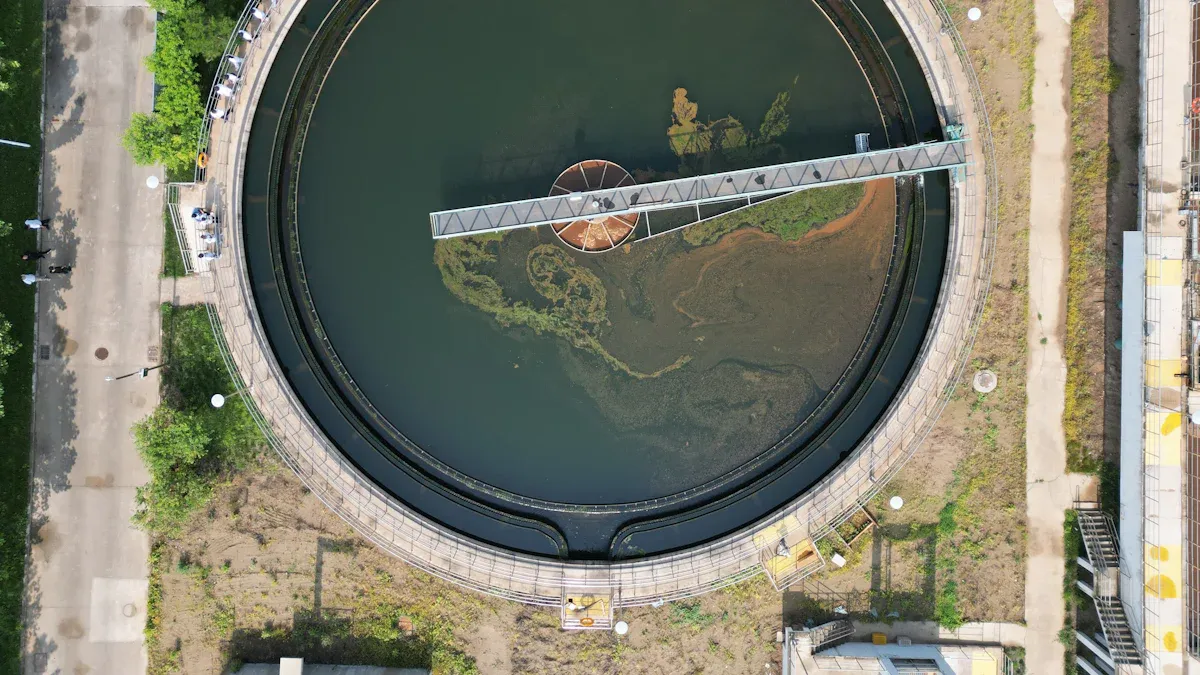
You rely on sewage plant treatment to make water safe for people and the environment. Each step follows strict rules from the Clean Water Act and the Safe Drinking Water Act. These steps also support global goals, like improving health and protecting aquatic life. You see how treatment keeps your community healthy.
Key Takeaways
- Efficient pumping is crucial for moving wastewater quickly and safely. Choose the right pump type to ensure a steady flow and reduce energy costs.
- Effective screening prevents blockages and protects equipment. Regularly check and clean screens to maintain system efficiency and avoid costly repairs.
- Disinfection is essential for eliminating harmful microorganisms. Select the appropriate method to ensure treated water is safe for discharge or reuse.
Pumping in Sewage Plant Treatment
Moving Wastewater to the Facility
You start the sewage plant treatment process by moving wastewater from homes and businesses to the facility. Pumps play a key role in this step. You can find several types of pumps in modern plants. Each type works best for certain tasks. The table below shows the most common pump technologies used in 2026:
| Pump Type | Description | Applications |
|---|---|---|
| Positive Displacement Pumps | Handle thick, high-viscosity sludge. | Food processing, chemical wastewater, thick sludge. |
| Submersible Pumps | Work underwater, ideal for sewage and stormwater. | Sewage plants, basement drainage, stormwater systems. |
| Centrifugal Pumps | Use a spinning impeller for high-volume movement. | Municipal water plants, irrigation systems. |
You rely on these pumps to move large amounts of wastewater quickly and safely. Submersible pumps often work best for deep or flooded areas. Positive displacement pumps handle thick sludge without clogging.
Maintaining Steady Flow
You need a steady flow of wastewater for effective treatment. Modern pumps help you keep this flow constant. They use advanced technology to save energy and reduce waste. Here are some facts about pump efficiency today:
- Modern pumps reach efficiency ratings above 80%.
- Older pumps waste up to half their energy as heat.
- Variable Frequency Drives (VFDs) let you adjust pump speed, cutting energy use by up to 70% when flow changes.
You see how these improvements lower costs and protect the environment. By choosing the right pumps, you make sure sewage plant treatment starts strong and stays reliable.
Screening in Sewage Plant Treatment
Removing Large Solids and Debris
You need to remove large solids and debris early in the sewage plant treatment process. This step helps you keep the system running smoothly. You find many types of screening equipment in modern plants. Each type works best for different kinds of waste.
- Auger screens use a spiral blade to push grit and rags into a collection hopper.
- Static screens trap solids with closely spaced openings. These screens form a mat that filters finer particles.
- Mechanical bar screens have vertical bars that catch large debris. They clean themselves, so you do not need to stop the process.
- Chain and rake screens work well for stormwater. These screens use a chain-driven rake to remove heavy debris.
You choose the right screen based on the size and type of waste in your system. This step helps you prevent blockages and keeps the flow steady.
Protecting Downstream Equipment
You protect pumps, pipes, and other equipment by removing solids early. Large debris can damage machines and cause costly repairs. When you use effective screening, you lower the risk of breakdowns. You also make sure the next steps in sewage plant treatment work as planned. Clean screens help you avoid clogs and keep maintenance simple. You see fewer problems and save money over time.
Tip: Regularly check and clean screens to keep your system safe and efficient.
Grit Removal in Sewage Plant Treatment
Eliminating Sand, Gravel, and Heavy Particles
You face sand, gravel, and other heavy particles in wastewater every day. These materials settle quickly and can cause problems if you do not remove them early. Grit removal helps you keep your sewage plant treatment process running smoothly. You use special tanks called grit chambers to separate these particles from the water. The water slows down in these chambers, letting grit settle to the bottom. You then collect and remove the grit before it moves further into the system.
Recent technology makes grit removal easier and more efficient. Systems like the Raptor Complete Plant combine screening and grit removal in one unit. These systems use automation to adjust for changes in flow and water quality. You also find compact solutions like the Grit King® Compact, which separates and washes grit in a small space. This helps you save room and lower costs, especially in smaller plants.
| Feature | Description |
|---|---|
| High Performance | Designed for high efficiency with very low maintenance requirements. |
| Flexible Installation Options | Can be adapted to fit within existing plant layouts, making it versatile for smaller facilities. |
| Compact Footprint | Smaller size allows for installation in limited spaces, ideal for smaller treatment plants. |
| Cost-Effectiveness | Lower overall costs compared to traditional systems, making it accessible for smaller plants. |
| Advanced Grit Management | Utilizes hydrodynamic separation with no moving parts, reducing maintenance needs significantly. |
| Pre-configured Components | Arrives with inlet and outlet connections ready for easy installation. |
Preventing System Damage
You protect your equipment by removing grit early. Sand and gravel can wear down pumps, pipes, and other machines. If you let grit build up, you risk expensive repairs and downtime. Modern grit removal systems use synthetic materials and stainless steel, so you spend less time on maintenance. You keep your sewage plant treatment process safe and reliable.
Tip: Check grit chambers regularly to avoid blockages and keep your system working at its best.
Primary Sedimentation in Sewage Plant Treatment
Settling Suspended Solids
You see a big change in the water during primary sedimentation. This step lets heavy particles settle to the bottom of large tanks. Gravity does most of the work. You watch as the water slows down and solids drop out. These solids form a thick layer called sludge. You remove this sludge to keep the process moving.
You can expect primary sedimentation to remove a large part of the suspended solids. Most plants see these results:
- Primary treatment removes about 60-70% of suspended solids.
- Primary clarification can be expected to remove 40 to 60% of total suspended solids.
This means you take out much of the material that would otherwise cause problems later. You help protect the next steps in sewage plant treatment by making the water cleaner right away.
Reducing Organic Load
You also lower the amount of organic matter in the water during this stage. Organic matter comes from food scraps, waste, and other natural materials. When you remove solids, you also take out a lot of this organic load. This helps the rest of the treatment process work better.
Primary sedimentation reduces the influent organic load and changes the balance of chemicals in the water. You notice that less organic matter means fewer nutrients for bacteria in later steps. This can affect how well the plant removes nitrogen and phosphorus. You need to balance how much organic matter you remove to keep the whole system working well.
Tip: Regular checks of sedimentation tanks help you spot problems early and keep your plant running smoothly.
Aeration and Biological Treatment in Sewage Plant Treatment
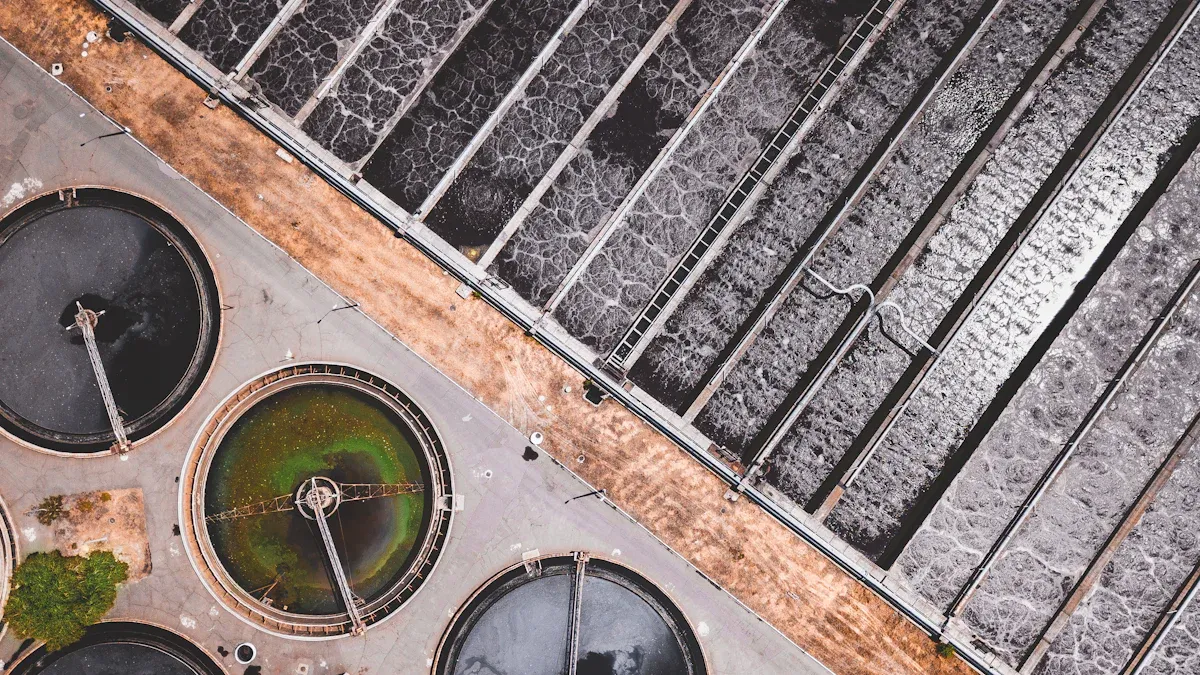
Introducing Oxygen for Microbial Breakdown
You help bacteria break down waste by adding oxygen to the water. This step is one of the most important in sewage plant treatment. Bacteria need oxygen to survive and eat the organic matter in the wastewater. You can choose from several aeration methods to get the best results in 2026:
- Surface aerators mix the water and add oxygen using mechanical action.
- Diffused aeration systems use fine bubble diffusers to spread oxygen throughout the tank.
- Jet aerators combine air and water to increase the time oxygen stays in contact with the wastewater.
- Hybrid aeration systems blend different technologies to save energy and boost efficiency.
You select the right system based on the size of your plant and the type of waste you treat. Each method helps you keep oxygen levels high so bacteria can do their job.
Decomposing Organic Matter
You rely on bacteria to eat and break down organic matter in the water. These tiny organisms turn harmful waste into safer forms. As bacteria work, they form clumps called flocs. These flocs make it easier to remove leftover solids in the next step. You watch as the water becomes clearer and cleaner. Good aeration keeps bacteria healthy and active. You see how this process protects rivers and lakes when treated water leaves your plant.
Tip: Check oxygen levels often to keep bacteria working at their best.
Secondary Sedimentation in Sewage Plant Treatment
Clarifying Treated Water
You reach the secondary sedimentation step after the biological treatment. Here, you let the water rest in large tanks. Gravity helps the remaining particles settle to the bottom. This process makes the water much clearer. You notice that the floating solids and leftover flocs from the aeration tank sink slowly. The clear water at the top is now ready for the next stage.
You can use a table to see what happens in this step:
| What Settles? | What Happens Next? |
|---|---|
| Flocs and solids | Sink to the bottom |
| Clear water | Moves to filtration stage |
Tip: Always check the water clarity in these tanks. Clear water means your earlier steps worked well.
Separating Remaining Sludge
You need to remove the sludge that collects at the bottom of the tank. This sludge contains bacteria and waste that did not break down before. You use special scrapers or pumps to move the sludge out. You send it to the sludge treatment area for further processing.
You keep the process running smoothly by removing sludge often. If you let sludge build up, it can cause problems in the tank. You help protect the quality of the treated water and keep the sewage plant treatment system efficient.
Note: Regular sludge removal keeps your tanks working at their best.
Filtration in Sewage Plant Treatment
Removing Residual Impurities
You reach the filtration stage after sedimentation. Here, you focus on removing the smallest particles that earlier steps missed. Filtration acts like a final barrier, catching impurities that can harm people or the environment. You can choose from several filtration technologies in modern sewage plant treatment:
- Sand and dual media filters trap particles by size.
- Activated carbon filters remove chemicals like chlorine.
- Microfiltration targets particles larger than 0.1 microns.
- Ultrafiltration removes even smaller particles, down to 0.01 microns.
- Reverse osmosis catches the tiniest impurities, as small as 0.001 microns.
- Cloth media filtration uses fabric layers to trap solids in large volumes.
- Microscreen filtration uses fine screens and saves energy.
- Membrane filtration separates particles at the molecular level.
You select the right filter based on the type of impurities and the needs of your plant.
Enhancing Water Quality
You improve water quality by using the right filtration method and rate. A slower filtration rate gives water more time to contact the filter media, which helps remove more solids and organic matter. If you set the rate too low, you risk clogging and slowdowns. If you go too fast, you might miss some contaminants. You balance these factors to get the best results.
Filtration helps you meet safety standards for water reuse or discharge. You use physical, chemical, and sometimes biological processes to remove contaminants. This step ensures the water leaving your plant is safe for people, animals, and the environment.
Tip: Check your filters often to keep them clean and working well. Clean filters mean cleaner water for everyone.
Disinfection in Sewage Plant Treatment
Eliminating Pathogens
You need to remove harmful microorganisms before you release treated water. Disinfection is the step that kills or inactivates bacteria, viruses, and parasites. You can choose from several methods to make sure the water is safe. The most common disinfection methods in sewage plant treatment include:
- Chlorination, which uses chlorine or sodium hypochlorite to kill germs.
- Ozonation, which uses ozone gas to destroy viruses and bacteria.
- Ultraviolet (UV) radiation, which damages the DNA of microorganisms.
Each method works in a different way. Chlorine is very effective and widely used, but it can create unwanted by-products. Ozone works well against many viruses and does not leave harmful chemicals. UV light destroys germs quickly, but it works best when the water is clear.
Here is a table to help you compare these methods:
| Disinfection Method | Effectiveness | Advantages | Disadvantages |
|---|---|---|---|
| Chlorination | Very effective for removing microbial pathogens | Inexpensive, widely used | Can produce harmful by-products, some microorganisms may be resistant |
| Ozonation | Effective against a wide range of pathogens | No harmful by-products, good for color and odor removal | More expensive, requires on-site generation |
| Ultraviolet (UV) | Destroys bacteria and viruses effectively | No harmful by-products | More expensive, effectiveness reduced by turbidity and suspended solids |
Ensuring Water Safety for Discharge
You must make sure the treated water is safe before you release it into rivers or reuse it. Disinfection lowers the risk of spreading disease. You protect people, animals, and the environment by using the right method. You also meet strict safety standards set by health and environmental agencies. Regular testing helps you check that the water meets these standards. When you finish this step, you know your sewage plant treatment process has made the water much safer for everyone.
Sludge Treatment and Disposal in Sewage Plant Treatment
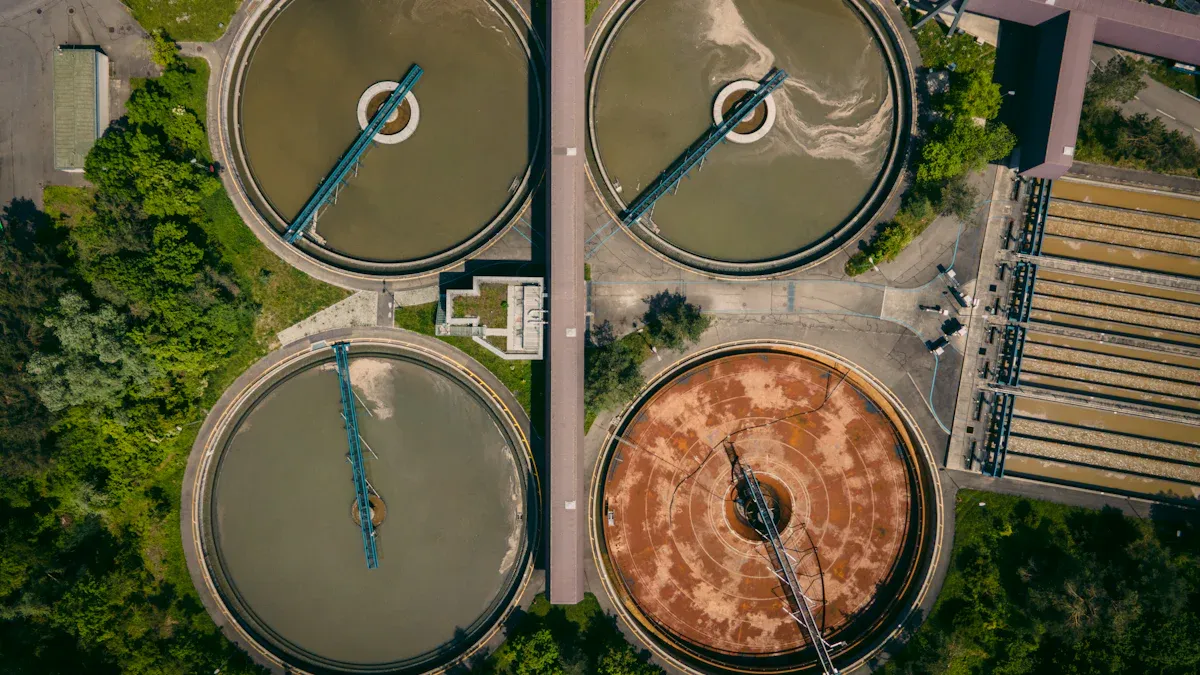
Processing Collected Solids
You handle a lot of solids during sewage plant treatment. These solids, called sludge, need special care before you can dispose of them safely. First, you thicken the sludge to remove extra water. Thickening makes the sludge easier to manage. Next, you use digestion to break down the organic material. Anaerobic digestion is common. In this process, bacteria eat the waste without oxygen. This step reduces the smell and makes the sludge safer.
After digestion, you move to dewatering. You use machines like centrifuges or belt presses to squeeze out even more water. Dewatering shrinks the volume of sludge, so you have less to handle. Sometimes, you dry the sludge further or use thermochemical processes to make it stable. Each step helps you prepare the sludge for its final use or disposal.
Tip: Regular checks on your equipment keep the sludge treatment process running smoothly.
Safe Disposal or Reuse
You have several options for what to do with treated sludge. You can send it to a landfill if it meets safety rules. Many plants now look for ways to reuse sludge. You can turn it into biosolids for farms or landscaping. Some plants use biogas from digestion to make electricity or heat. This helps you save energy and reduce waste.
Here are common ways you can handle treated sludge:
- Land application as fertilizer
- Landfill disposal
- Incineration for energy recovery
- Use in building materials
You choose the best option based on local rules and your plant’s needs. By treating and reusing sludge, you help protect the environment and support a cleaner community.
You follow each step in sewage plant treatment to protect health and the environment.
| Step | Purpose |
|---|---|
| Pumping | Moves wastewater efficiently |
| Screening | Removes debris |
| Grit Removal | Prevents damage |
| Sedimentation | Settles solids |
| Aeration | Breaks down waste |
| Disinfection | Kills germs |
New technologies save energy and improve water quality.
FAQ
What happens if you skip a step in sewage treatment?
You risk polluting water and harming health. Each step removes different pollutants. Skipping one can let dangerous substances reach rivers or lakes.
How often should you check equipment in a sewage plant?
You should check pumps, screens, and tanks every day. Regular checks help you catch problems early and keep the plant running safely.
Can you reuse water after sewage treatment?
- Yes, you can reuse treated water for:
- Irrigation
- Industrial cooling
- Toilet flushing
You must follow safety rules before reuse.
See Also
Best Precoating Options for Filtration Systems in 2025
Industrial Use of Semi-welded Plate Heat Exchangers in 2025
Key Steps for Obtaining PED 2014/68/EU Certification
Comparing EHEDG Guidelines with 3A SSI Standards for Hygiene
Unexpected Techniques for Troubleshooting Sulfur Recovery Catalysts