Never Mix Up Sublimation Grade vs Conventional Fullerene C60
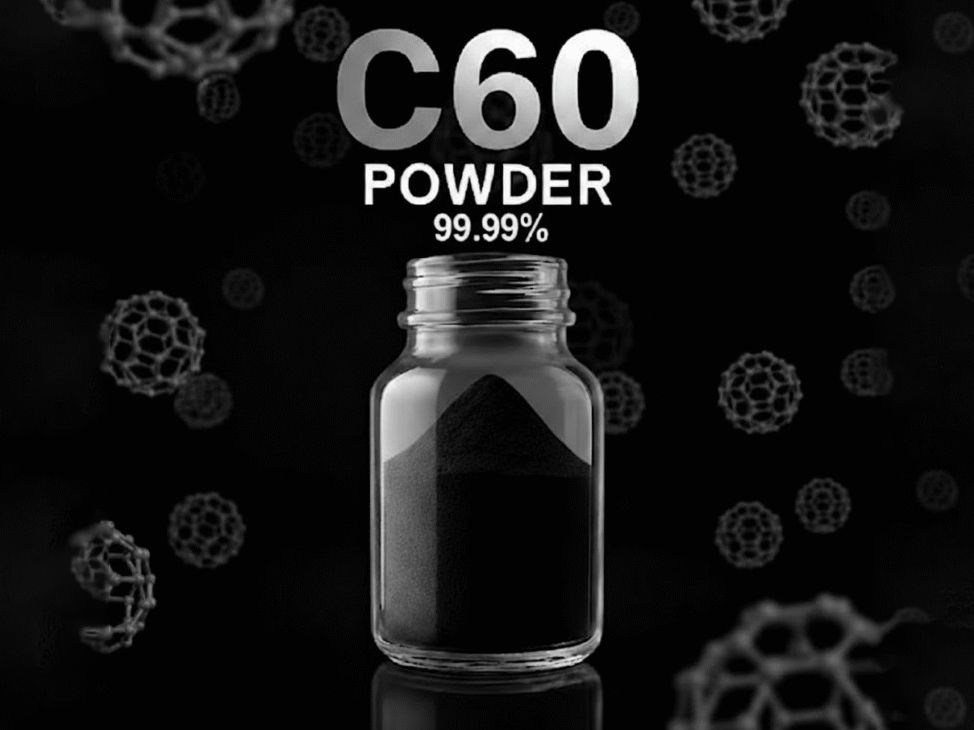
Sublimation grade C60 reaches purities above 99.9%. Conventional C60 typically ranges from 99% to 99.5%. Sublimation purification removes residual solvents and trace impurities. Conventional grade meets standard commercial purity. Application sensitivity determines the right choice. Neither grade is universally better. A comparison between Sublimation Grade Fullerene C60 and Conventional Grade reveals two stakes: trace-impurity performance risk versus unnecessary cost.
Key Takeaways
- Sublimation grade C60 has higher purity (above 99.9%) and suits impurity-sensitive work like electronics and biomedical research.
- Conventional grade C60 (99%–99.5% purity) works well for cost-sensitive uses such as lubricants, composites, and teaching labs.
- Always check the certificate of analysis to confirm purity and match the grade to your application's sensitivity.
Comparison between Sublimation Grade Fullerene C60 and Conventional Grade
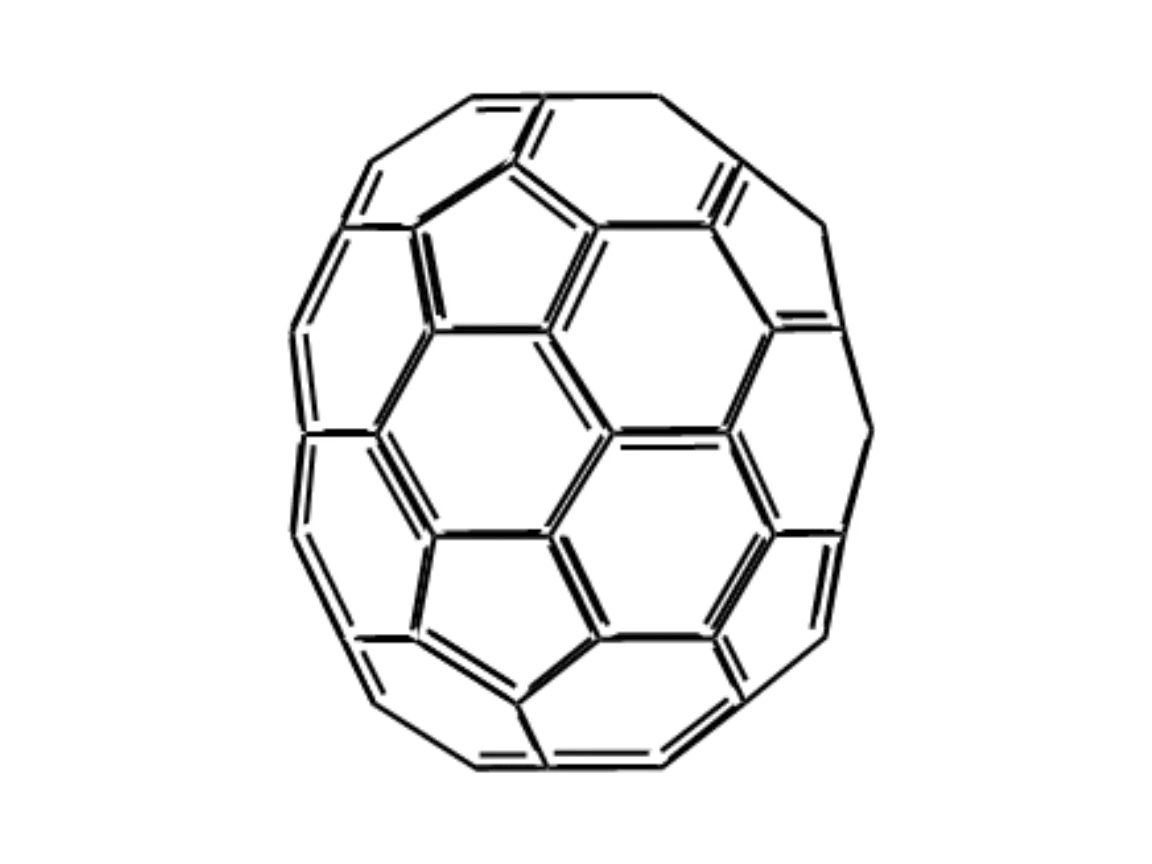
Purity Levels at a Glance
Purity defines the first real divide in any comparison between Sublimation Grade Fullerene C60 and Conventional Grade. Sublimation grade C60 typically reaches 99.9% or higher. Conventional C60 usually lands between 99% and 99.5%. That gap looks small on paper. It matters at the trace level.
A purity figure covers the main molecule and nothing else. The remaining fraction contains residual solvents, higher fullerenes such as C70, and trace metal residues. A 99.5% material carries roughly ten times the impurity load of a 99.9% material. Impurity-sensitive work feels that difference directly.
Theorem Chem supplies Fullerene C60 across a wide purity range, from 90% up to 99.99%. Both regular and sublimation grades sit within that portfolio. Buyers can match the grade to the job instead of accepting a single default specification.
| Parameter | Sublimation Grade C60 | Conventional Grade C60 |
|---|---|---|
| Typical purity | >99.9% | 99%–99.5% |
| Residual solvents | Removed to trace levels | Present at standard commercial levels |
| Higher fullerene content | Very low | Low but measurable |
| Typical use | Impurity-sensitive research and devices | General commercial and educational use |
How the Sublimation Process Works
Sublimation purification exploits a simple physical fact. Solid C60 converts directly to vapor under reduced pressure and moderate heat. It skips the liquid phase entirely. The vapor then condenses onto a cooled surface as a purified solid.
The process separates molecules by volatility. C60 travels as a vapor. Most solvents, metal traces, and heavier fullerenes stay behind in the source boat or deposit elsewhere. Each pass raises the purity tier. Repeated passes push the material above the 99.9% threshold.
The method also delivers a practical bonus. Sublimation removes residual solvents without wet chemistry. The final product arrives solvent-free and ready for demanding applications. This step separates sublimation grade from conventional grade more than any single number does.
Any comparison between Sublimation Grade Fullerene C60 and Conventional Grade should note the production route. Conventional C60 comes from standard synthesis and extraction. That route reaches commercial purity efficiently. Sublimation adds a refining stage on top. The extra stage explains both the higher purity and the higher price.
Property Differences That Matter
Purity shifts several properties that users actually notice. Electronic behavior ranks first. Trace impurities trap charge carriers and create defect states. Device-grade work in solar cells and organic electronics depends on clean band behavior. Sublimation grade protects that behavior.
Optical performance follows the same pattern. Residual solvents and higher fullerenes absorb light in unwanted regions. A cleaner batch gives sharper absorption profiles. Researchers working with UV to near-infrared response value that consistency.
Batch-to-batch reproducibility rounds out the list. A tight purity specification narrows the variation between lots. Teams running long experiments or scaled production rely on that stability. Conventional grade still performs well in many roles. Teaching labs, general formulation work, and exploratory chemistry rarely need the tighter tier.
A fair comparison between Sublimation Grade Fullerene C60 and Conventional Grade separates performance needs from habit. Neither grade wins everywhere. Each one fits a defined band of work. The next section maps those bands to real applications.
Application Fit by Grade

Grade selection starts with the job, not the price tag. Sublimation grade and conventional grade each serve a distinct band of work. Matching the grade to the application protects performance and controls cost at the same time.
Where Sublimation Grade Excels
Impurity-sensitive work rewards the higher purity tier. Organic photovoltaics and organic electronics rank near the top of that list. Charge transport in these devices depends on clean band behavior. Trace impurities trap carriers and create defect states. A 99.9% material keeps those losses low. Device teams that measure efficiency and lifetime lot by lot see the benefit directly.
Quantum computing research belongs in the same band. Qubit work demands materials with minimal paramagnetic and solvent residues. Sublimation grade removes residual solvents to trace levels. That cleanliness supports reproducible spin and coherence measurements.
High-end biomedical research also favors the sublimation tier. Antioxidant studies, drug delivery carriers, and photodynamic therapy work all involve biological systems. Trace metal residues and solvent carryover introduce variables that researchers cannot control. A cleaner batch narrows the noise floor. Teams publishing mechanistic work value that consistency.
Precision optical and spectroscopic standards round out the list. Reference materials must hold a fixed absorption profile. Residual solvents and higher fullerenes absorb light in unwanted regions. Sublimation grade delivers sharper, more stable spectra. Calibration labs depend on that stability across lots.
Long-running experiments and scaled device production share one more need. They need batch-to-batch reproducibility. A tight purity specification narrows lot-to-lot variation. Sublimation grade supplies that narrow window. Teams running months-long studies or pilot lines treat the premium as insurance against drift.
Where Conventional C60 Fits Best
Conventional grade covers a wide and legitimate territory. Cost-sensitive industries form the core of that territory. Not every application needs 99.9% purity. Over-specifying grade wastes money without improving results. Matching grade to application is the cost-sensitive choice.
| Purity Grade | Suitable Applications (Cost-Sensitive) | Cost Rationale |
|---|---|---|
| ~95% | Bulk exploratory work; composite additive research; antioxidant formulations (trace C70 acceptable) | Cost-effective for gram-scale chemistry |
| ~98% | Friction and lubrication studies; photochemistry; most OPV device fabrication | Workhorse grade for most published work |
Lubrication stands out as a flagship use for conventional C60. The near-spherical molecule and its low intermolecular friction give it a "molecular ball-bearing" function. As a lubricant additive, it lowers friction coefficients by roughly 10–30% in metal-on-metal contacts. The effect holds strongest under high-pressure or high-vacuum conditions. Conventional organic lubricants break down in those environments. C60 keeps working. This behavior supports use in ultra-high-vacuum precision bearings and as a solid-lubricant additive in spacecraft mechanisms.
Commercial lubricant markets already reflect that chemistry. Several application bands have taken shape:
- Premium automotive, motorcycle, and motorsport — C60 already appears in engine oils, motorcycle oils, chain lubricants, and treatment products.
- Refrigeration and compressor oils — C60 dispersed in mineral oil at 1–3 g/L has been evaluated for lubrication and compressor system performance.
- Precision industrial and boundary-lubrication systems — at ~1,000 ppm, ~10 nm C60 aggregates help retain oil film under slow-speed, high-load, start-stop, and long-interval conditions.
- EV drivetrains and advanced mobility — high-speed reduction gears, copper and polymer compatibility, thermal management, and noise control all draw interest.
- High-temperature, vacuum, and semiconductor systems — low-volatility, high-stability formulations suit outgassing-controlled clean manufacturing.
Formulation matters as much as grade here. Performance is concentration-dependent, with evaluations spanning 10, 100, and 1,000 ppm. The value lies in the controlled relationship between fullerene identity, base oil, concentration, dispersion state, and operating environment. C60 presence alone does not guarantee results.
Polymer composites and coatings form a second major band. Commercial fullerene reaches these markets mainly as powder, solution, or a composite within polymers and coatings. Powder dominates for transport ease, shelf life, and downstream processing compatibility. In lubricants and coatings, the molecular structure reduces friction and wear. That makes fullerene attractive for industrial coatings and specialty lubricants. In polymer composites, fullerene-polymer hybrids offer lighter weight, higher electrical conductivity, and improved UV and chemical resistance. Flexible printed circuits already use these hybrids. EV battery housings and aerospace panels represent expected expansion areas.
Teaching labs and exploratory chemistry complete the picture. General formulation work, educational demonstrations, and early-stage research rarely need the tighter tier. Conventional grade performs well in all these roles at a lower entry cost.
Quick Selection Guide
The decision rule stays simple. Start with the sensitivity of the application. Then confirm the specification and the certificate of analysis before ordering.
| Application Need | Recommended Grade | Reason |
|---|---|---|
| OPV and organic electronics | Sublimation grade | Clean band behavior; low defect states |
| Quantum computing research | Sublimation grade | Minimal paramagnetic and solvent residues |
| Biomedical and antioxidant studies | Sublimation grade | Controlled trace impurities |
| Optical and spectroscopic standards | Sublimation grade | Stable, sharp absorption profiles |
| Long studies and pilot production | Sublimation grade | Tight lot-to-lot reproducibility |
| Lubricant additives and tribology | Conventional grade | Cost-effective; performance driven by formulation |
| Polymer composites and coatings | Conventional grade | Bulk volumes; purity not the limiting factor |
| Teaching labs and exploratory work | Conventional grade | Lower entry cost; adequate for general use |
Theorem Chem supplies Fullerene C60 across purities from 90% to 99.99%, including both regular and sublimation grades. That range lets buyers match the grade to the job. A team can order conventional grade for bulk composite work and sublimation grade for device fabrication from the same supplier. The portfolio removes the false choice between one default specification and nothing else.
Regulatory Compliance and Documentation
Standards Relevant to Each Grade
Both grades meet the same baseline commercial standards. The difference lies in how tightly the supplier documents the specification. Conventional C60 follows standard commercial purity claims. Sublimation grade carries a tighter specification, so buyers often request stricter documentation to match.
A compliant certificate of analysis defines purity by the analytical method used, not by a marketing claim. Each batch should be verified by HPLC at 330 nm. Traceable batch records, residual solvent limits, and retained-sample protocols complete the package. This approach protects analytical integrity and traceability for either grade.
Certificates of Analysis and Traceability
A strong CoA does more than list a number. It ties every claim to a method and a batch record. Buyers should check four elements before ordering.
| CoA Element | What It Should Include | Why It Matters |
|---|---|---|
| Traceability documentation | CoA, batch records, and MSDS bundled together | Enables a full chain-of-custody and audit trail |
| Identity confirmation | Clear CAS number 99685-96-8 for C60 | Prevents misidentification or substitution |
| Purity value and method | Validated methods such as HPLC and MS, not just UV-Vis | Guards against inflated purity claims |
| Third-party verification | Independent lab testing on first batches | Confirms supplier CoA accuracy and reduces risk |
Theorem Chem supplies both grades with full documentation. Buyers should confirm the purity specification and request the CoA before placing any order.
Cost Analysis
Why the Price Difference Exists
Sublimation grade costs more for clear reasons. The refining stage adds equipment time, energy, and handling to every batch. Each sublimation pass also loses material. Yield drops as purity climbs. A producer needs more raw C60 to deliver one kilogram of 99.9% product than to deliver one kilogram of 99.5% product. Those losses carry a real price.
The tighter specification adds another layer of cost. Every lot needs verification by HPLC and mass spectrometry. Batch records, retained samples, and documentation all demand labor. Conventional grade follows a simpler route from synthesis to packaging. That efficiency keeps its price low and predictable.
When the Premium Pays Off
The premium pays off when impurities limit performance. Device teams measuring efficiency and lifetime see the return in cleaner data. Quantum researchers gain reproducible measurements. Calibration labs gain stable reference spectra. In each case, the extra purity protects results that cost far more than the material itself.
The premium does not pay off everywhere. Bulk composite work, lubricant formulation, and teaching demonstrations rarely feel the difference. Conventional grade delivers solid performance at a lower entry cost. Buyers should match the grade to the sensitivity of the work. Theorem Chem supplies both grades across a 90% to 99.99% range, so teams can scale spending to the actual need.
Purity tier drives application fit, not overall quality. Performance, applications, compliance, and cost all follow that split. Choose sublimation grade for impurity-sensitive work. Choose conventional grade for cost-driven general use. Buyers should confirm purity specifications and certificates of analysis before ordering.
FAQ
How does a buyer confirm the actual purity of a C60 batch?
A buyer reviews the certificate of analysis first. The document should list purity values from validated methods such as HPLC and mass spectrometry. Independent lab testing on first batches confirms supplier claims.
Can conventional grade C60 replace sublimation grade in device work?
Conventional grade suits many roles well. Device fabrication and quantum research demand cleaner material, though. Trace impurities trap charge carriers and shift measurements. Teams should match grade to the sensitivity of the application.
Which purity range does Theorem Chem offer for Fullerene C60?
Theorem Chem supplies Fullerene C60 from 90% to 99.99% purity. The portfolio includes both regular and sublimation grades. Buyers can order the grade that fits each application from a single supplier.
See Also
Data-Backed Strategies To Improve 2 5-Furandicarboxylic Acid Sustainability
Unexpected Methods For Troubleshooting Sulfur Recovery Catalyst Issues
Industrial Uses And Dissolution Methods For 2 5-Furandicarboxylic Acid
Leading Precoating Materials For Filtration Systems In 2025
Understanding The Chemical Structure Of 2 5-Furandicarboxylic Acid