Commercial Wastewater Treatment Equipment Compared for Performance and Value
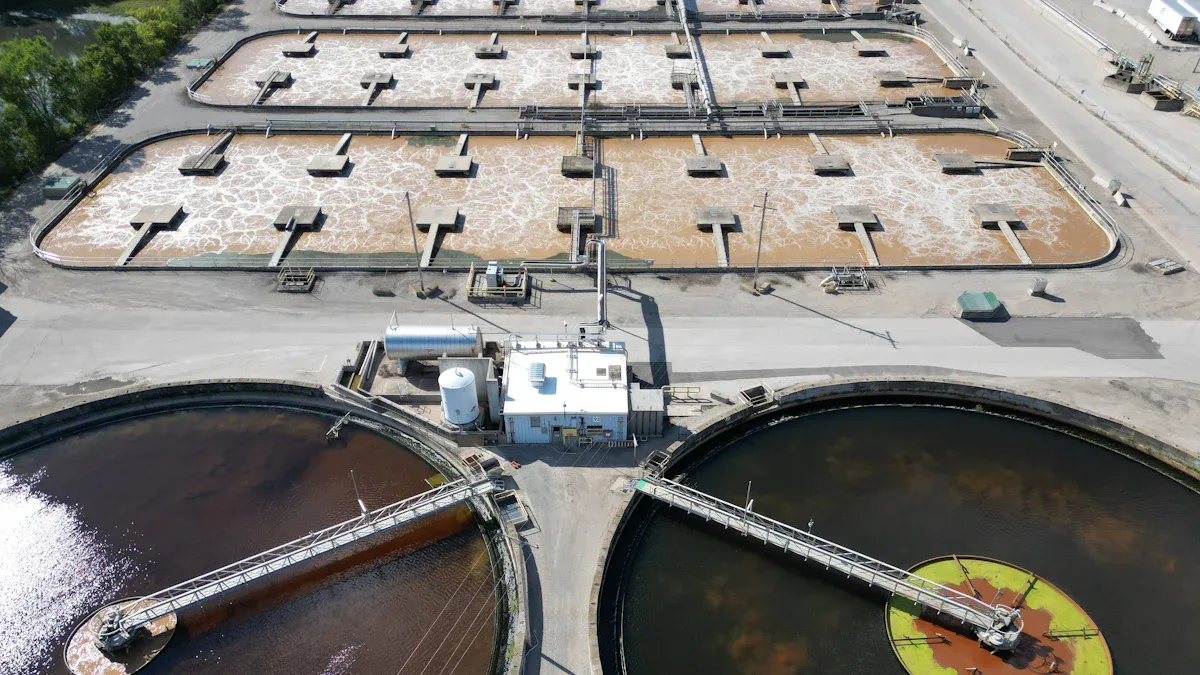
Hella Water, Culligan, Veolia, Aquatech, Evoqua, H2Ok Innovations, and Microvi Biotech Inc. lead the field in commercial wastewater treatment equipment in 2026. They use advanced technology and meet strict regulations. Businesses face high costs and tougher rules, so selecting reliable, sustainable solutions matters more than ever.
Key Takeaways
- Choose equipment that meets local regulations to avoid fines and protect the environment.
- Evaluate the total cost of ownership, including installation, maintenance, and energy use, to make informed decisions.
- Select systems that offer scalability and flexibility to adapt to changing business needs and wastewater characteristics.
Comparison Criteria for Commercial Wastewater Treatment Equipment
Treatment Efficiency
Treatment efficiency measures how well a system removes pollutants from wastewater. Industry reports show that technologies like SBR plants and vertical flow (VF) wetlands are common for small facilities. All leading systems meet strict legal standards for removing substances such as BOD5, COD, and ammonia. Systems with a VF bed as a polishing stage often achieve lower pollutant levels and show stable performance over time.
| Criteria | Findings |
|---|---|
| Technologies Implemented | SBR plants and VF wetlands are widely used for small plants. |
| Compliance with Regulations | All systems meet legal limits for key pollutants. |
| Performance Comparison | VF beds as a final stage improve water quality. |
| Aging Performance | Older VF wetlands maintain steady results. |
Operational Costs
Operational costs depend on treatment capacity, wastewater type, and local regulations. Larger systems and stricter rules increase costs. Regular maintenance, such as daily checks and quarterly tasks, helps keep costs down and ensures compliance. Budgeting for upgrades or replacements is important for long-term savings.
Maintenance Requirements
A good maintenance plan includes daily observations and scheduled preventive tasks. Routine inspections help reduce downtime and extend equipment life. Aging systems may need more repairs, so planning for future costs is key.
Scalability and Flexibility
- Smart containerized solutions lower infrastructure costs and adapt to different needs.
- Modular systems allow easy expansion and quick setup, which helps growing businesses.
- Decentralized units can serve remote areas and can be moved or sold if needs change.
Environmental Impact
Environmental impact covers several areas:
| Environmental Impact Category | Description |
|---|---|
| Human Health | Assesses risks to people. |
| Ecosystem Damage | Looks at harm to plants and animals. |
| Resource Depletion | Measures use of natural resources. |
| Eutrophication Potential | Checks risk of water pollution. |
| Global Warming Potential | Evaluates greenhouse gas emissions. |
| Water Use | Tracks water consumption. |
| Energy Consumption | Reviews energy needs. |
| Emissions | Analyzes pollutants released. |
| Raw Material Acquisition | Considers sourcing impacts. |
| End-of-Life Treatment | Reviews disposal and recycling. |
User Satisfaction
User satisfaction ratings for commercial wastewater treatment equipment often reach 4.0 out of 5 stars. Most users give positive feedback, with nearly half awarding five stars. Common praise includes reliability and ease of use.
| Product Name | Rating | 5★ | 4★ | 3★ | 2★ | 1★ | Reviews |
|---|---|---|---|---|---|---|---|
| Water Treatment Plants | 4.0 | 47% | 11% | 11% | 10% | 21% | 19 |
| Industrial Reverse Osmosis Plant | 4.0 | 47% | 11% | 11% | 10% | 21% | 19 |
Leading Commercial Wastewater Treatment Equipment Systems Overview
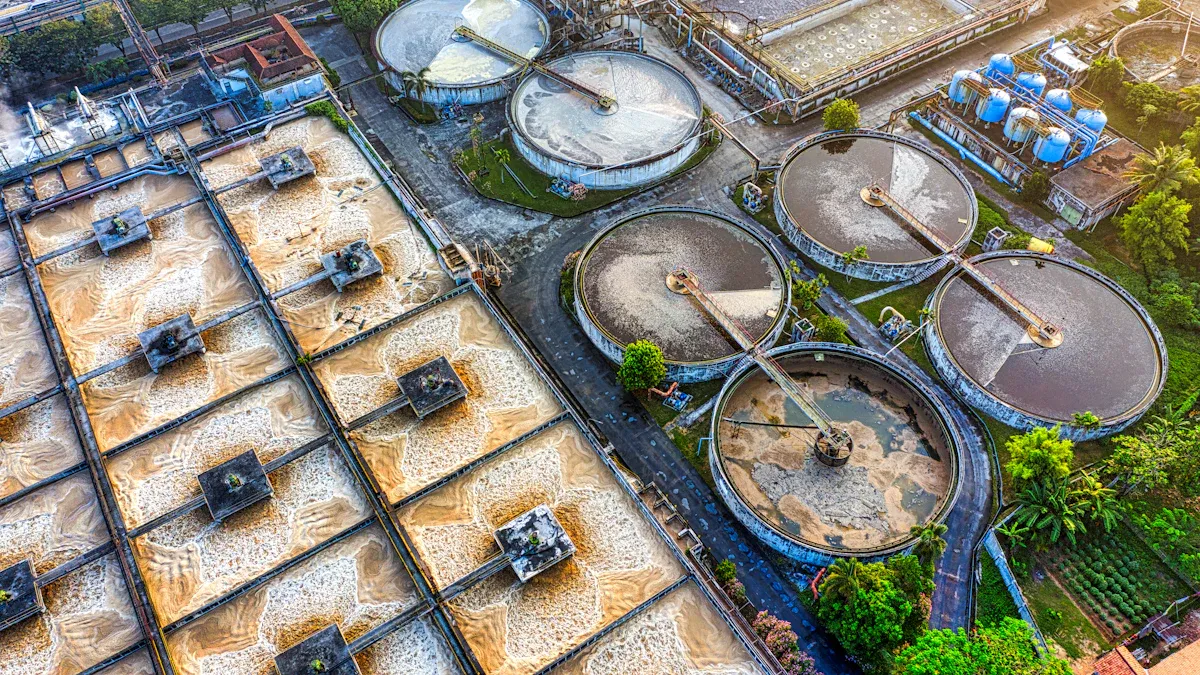
Hella Water Advanced Modular System
Hella Water offers a modular system that adapts to different facility sizes. The company uses advanced filtration and biological processes. Their design allows easy expansion and quick installation. Many businesses choose Hella Water for its reliability and flexible setup.
Culligan Industrial Wastewater Solutions
Culligan stands out for its focus on regulatory compliance and operational efficiency. The company customizes water treatment systems to meet industry standards. Advanced monitoring and automation reduce downtime. Culligan also uses environmentally friendly technologies to lower water use and support reuse.
| Aspect | Description |
|---|---|
| Regulatory Compliance | Customized systems meet specific industry requirements. |
| Operational Efficiency | Automation and monitoring enhance performance and reduce downtime. |
| Sustainability | Technologies reduce water consumption and support reuse. |
| Telemetry and Automation | Remote management provides real-time data for proactive maintenance. |
| Customization | Solutions tailored for various applications. |
Veolia Compact MBBR System
Veolia’s Compact MBBR system uses multi-stage treatment for high pollutant removal. In commercial settings, it achieves a 97% TOC removal rate, 80% nitrogen removal, and 99% phosphorus removal. The system treats up to 1,800 m³ of wastewater per day. Automation reduces energy use and operator oversight.
| Metric | Value |
|---|---|
| TOC Removal Rate | 97% |
| Nitrogen Removal Rate | 80% |
| Phosphorus Removal Rate | 99% |
| Treatment Capacity | 1,800 m³/d |
| Loading Rate | 440 kg/d TOC |
- Reduced energy consumption
- Minimal operator oversight
- Achieved regulatory compliance
Aquatech AI-Driven Decentralized Plant
Aquatech uses artificial intelligence to optimize decentralized wastewater treatment. The plant adjusts processes based on real-time data. This system works well for remote locations and facilities with changing needs. Aquatech’s design supports easy relocation and expansion.
Evoqua Prefabricated Treatment Unit
Evoqua’s prefabricated units feature bolted, modular assembly for fast installation. The company uses cast-iron precision drive units for reliable operation. Evoqua offers process warranties on effluent quality, showing confidence in their hydraulic design.
| Advantage | Description |
|---|---|
| Installation | Modular assembly fits standard shipping containers for easy setup. |
| Operational Reliability | Precision drive units ensure predictable performance. |
| Process Warranty | Guarantees effluent quality based on design. |
H2Ok Innovations Smart Monitoring Platform
H2Ok Innovations provides a smart monitoring platform with patented sensors and agentic AI. The system uses edge machine learning models for immediate data processing. Real-time optimization combines factory and sensor data. The contactless solution installs easily and works in many environments.
| Feature | Description |
|---|---|
| Patented Sensors | Advanced spectral sensors for continuous monitoring. |
| Agentic AI | Intelligent recommendations for process optimization. |
| Edge ML Models | Immediate data processing and optimization. |
| Closed-loop AI | Fully autonomous process without human intervention. |
| Real-time Data Optimization | Combines factory and sensor data for decisions. |
| Contactless Solution | Non-intrusive monitoring. |
| Built-In Illumination | Operates in various environments. |
| Easy Install | Simple setup without extensive requirements. |
Microvi Biotech Inc. Biological Reactor
Microvi Biotech Inc. uses MicroNiche Engineering™ for nitrate removal. The reactor employs biocatalysts in stainless steel to convert nitrate into nitrogen gas. This process reduces waste and simplifies operations. Ultrafiltration and disinfection ensure water is safe for drinking. The system handles spikes in contamination and maintains high efficiency.
Head-to-Head Performance Comparison of Commercial Wastewater Treatment Equipment
Efficiency and Compliance
Efficiency and compliance play a major role in choosing the right system. Each provider uses advanced technology to remove pollutants and meet strict regulations. Hella Water and Veolia use modular and multi-stage systems that achieve high removal rates for organic matter and nutrients. Veolia’s Compact MBBR system, for example, removes up to 97% of total organic carbon and 99% of phosphorus. Microvi Biotech Inc. uses biological reactors that convert harmful nitrates into nitrogen gas, making water safer for reuse or discharge.
Culligan and Aquatech focus on automation and real-time monitoring. Their systems adjust treatment processes to keep water quality within legal limits. Evoqua offers process warranties, which means they guarantee the treated water will meet required standards. H2Ok Innovations uses smart sensors and AI to track water quality and alert operators if problems arise.
Note: All leading systems meet or exceed local and national regulations for commercial wastewater treatment. This ensures businesses avoid fines and protect the environment.
Reliability and Uptime
Reliability and uptime matter for any business that depends on steady operations. Hella Water’s modular design allows for quick repairs and easy expansion. Veolia’s automated controls reduce the need for constant supervision, which lowers the risk of human error. Evoqua uses precision drive units that keep the system running smoothly, even during heavy use.
Aquatech’s AI-driven plant can adapt to changing water conditions. This flexibility helps prevent unexpected shutdowns. H2Ok Innovations provides real-time alerts, so operators can fix issues before they cause downtime. Microvi Biotech Inc. designs its reactors to handle sudden spikes in contamination, which keeps the system stable.
- Hella Water: Modular parts make repairs fast.
- Veolia: Automation keeps the system running with less oversight.
- Evoqua: Durable components ensure long-term reliability.
- Aquatech: AI adapts to changes and prevents failures.
- H2Ok Innovations: Smart monitoring catches problems early.
- Microvi Biotech Inc.: Handles contamination spikes without stopping.
Cost Analysis
Cost is a key factor when comparing commercial wastewater treatment equipment. Initial investment and ongoing expenses can vary widely based on technology and capacity.
| Treatment Level | Technology | Capacity (GPD) | Cost Range |
|---|---|---|---|
| Primary | Clarification | 25,000 | $80,000-$150,000 |
| Secondary | Activated Sludge | 50,000 | $200,000-$500,000 |
| Tertiary | MBR | 30,000 | $350,000-$650,000 |
Ongoing operational costs often exceed the cost of the equipment itself over time. Annual maintenance usually costs between 5% and 12% of the initial price. Labor is the largest expense, with facilities needing 0.5 to 3.0 operator hours per thousand gallons treated. Biological systems, like those from Microvi Biotech Inc., often have lower chemical costs, ranging from $0.10 to $0.50 per thousand gallons.
- Energy use can make up 25% to 40% of operating costs.
- Labor can account for 20% to 30% of the budget.
- Maintenance and repairs are needed to keep systems running well.
Beyond buying the equipment, hidden costs such as installation, land, and design can add 30% to 50% to the total project price. Careful planning helps avoid surprises and keeps budgets on track.
Tip: Understanding all costs, not just the price tag, helps businesses choose the most cost-effective solution for their needs.
Value Assessment of Commercial Wastewater Treatment Equipment
Total Cost of Ownership
Total cost of ownership helps businesses understand the real price of a wastewater system. This cost includes more than just the purchase price. Companies must also pay for installation, energy, chemicals, labor, and maintenance. Some systems need special buildings or extra land, which adds to the cost. Over time, older equipment may need more repairs or upgrades.
A table can help compare the main cost factors:
| Cost Factor | Description |
|---|---|
| Purchase Price | Initial cost to buy the equipment |
| Installation | Setup, site work, and connection fees |
| Energy Use | Power needed to run the system |
| Chemicals | Supplies for cleaning and treatment |
| Labor | Staff to operate and maintain the system |
| Maintenance | Regular checks and repairs |
| Upgrades | Future improvements or replacements |
| Disposal | Handling waste or old equipment |
Smart companies look at all these costs before making a decision. They choose systems that save money over many years, not just at the start.
Return on Investment
Return on investment, or ROI, shows how much value a business gets from its equipment. Many companies see big savings when they use advanced systems. For example, water reuse systems lower utility bills and help the environment. Membrane-based systems use less energy than older methods. This means lower power bills and better efficiency.
Some facilities reach zero liquid discharge. This helps them avoid fines and meet strict rules. In the pharmaceutical industry, some plants cut their freshwater use by 40% to 60%. Food processing companies keep their product quality high while saving water. These results show that commercial wastewater treatment equipment can pay for itself over time.
A list of ROI benefits includes:
- Lower utility costs from water reuse
- Less energy use with modern systems
- Fewer fines due to better compliance
- Savings from using less fresh water
- Improved product quality in some industries
Tip: Businesses should track savings each year to see how fast their investment pays off.
Long-Term Reliability
Long-term reliability means the system works well for many years. Reliable equipment needs fewer repairs and causes less downtime. Modular systems, like those from Hella Water, allow easy upgrades and quick fixes. Automated controls, such as those in Veolia and Aquatech systems, help prevent problems before they start.
Some companies offer warranties on their process, which gives extra peace of mind. Smart monitoring platforms, like H2Ok Innovations, alert staff to issues right away. Biological reactors, such as those from Microvi Biotech Inc., handle sudden changes in water quality without stopping.
A reliable system helps businesses avoid costly shutdowns. It also keeps them in line with environmental rules. Over time, this protects both profits and the planet.
Suitability by Commercial Application
Food Processing Facilities
Food processing plants create wastewater with high organic content. They need systems that remove solids, fats, and oils. Modular and automated solutions help these facilities adjust to changing production levels. Many plants choose equipment that supports water reuse, which lowers costs and meets strict food safety rules.
Hospitality Industry
Hotels and resorts must protect local water sources and avoid legal trouble. They often repair or upgrade old systems to prevent contamination. Modern systems improve efficiency and help hotels save money over time. Staff training ensures proper operation and maintenance. Hotels also consider the size of the property and daily wastewater volumes, especially during busy seasons. They focus on environmental sustainability to meet regulations and build a good reputation.
Hotels benefit from efficient systems, trained staff, and a focus on sustainability.
Manufacturing Plants
Manufacturing plants face strict rules for wastewater. They use equipment that reduces disposal costs and helps them follow environmental laws. Many plants recycle treated water to save resources. The right system also improves plant efficiency.
| Feature | Benefit Description |
|---|---|
| Reduced Disposal Costs | Minimizes the volume of wastewater, lowering transportation and disposal fees. |
| Environmental Compliance | Helps plants meet regulations by reducing waste output. |
| Increased Water Reuse | Enables recycling of treated water within the facility. |
| Enhanced Plant Efficiency | Streamlines wastewater and sludge handling, boosting productivity. |
Healthcare Facilities
Hospitals and clinics produce wastewater with chemicals and pathogens. They need reliable systems that disinfect water and protect public health. Automated monitoring helps staff respond quickly to problems. Many healthcare facilities choose systems that handle sudden changes in water quality.
Retail and Mixed-Use Developments
Retail centers and mixed-use buildings face challenges with changing wastewater quality. High-strength wastewater can appear without warning. Proper system design and ongoing monitoring are important for effective treatment. Owners must understand where the wastewater comes from to avoid poor treatment results.
Regular monitoring and careful planning help these developments avoid costly mistakes with commercial wastewater treatment equipment.
Pros and Cons Summary of Commercial Wastewater Treatment Equipment
Hella Water Advanced Modular System
Pros:
- Adapts to different facility sizes
- Allows quick installation and easy expansion
- Offers reliable performance
Cons:
- May require higher upfront investment for large sites
- Needs skilled staff for advanced modules
Culligan Industrial Wastewater Solutions
Pros:
- Customizes systems for industry needs
- Uses automation to reduce downtime
- Supports water reuse for sustainability
Cons:
- Customization can increase project time
- Some features may add to maintenance costs
Veolia Compact MBBR System
| Pros | Cons |
|---|---|
| High pollutant removal rates | May need more energy |
| Automated controls | Requires regular monitoring |
| Handles large volumes | Larger footprint for big plants |
Aquatech AI-Driven Decentralized Plant
Pros:
- Uses AI for real-time adjustments
- Works well in remote locations
- Easy to relocate or expand
Cons:
- Needs reliable internet for AI features
- May have higher tech support needs
Evoqua Prefabricated Treatment Unit
Pros:
- Fast setup with modular design
- Offers process warranties
- Durable drive units
Cons:
- Limited customization for unique needs
- May need extra space for modules
H2Ok Innovations Smart Monitoring Platform
This platform gives real-time data and alerts.
Pros:
- Installs easily without major changes
- Uses AI for process optimization
Cons:
- Does not treat water by itself
- Depends on sensor accuracy
Microvi Biotech Inc. Biological Reactor
Pros:
- Removes nitrates efficiently
- Handles contamination spikes
- Reduces chemical use
Cons:
- May need special biocatalyst replacement
- Initial setup can be complex
Top choices in commercial wastewater treatment equipment deliver strong performance and value. Businesses should follow these steps when selecting a system:
- Understand regulations to ensure compliance.
- Analyze wastewater characteristics.
- Evaluate efficiency and costs.
- Consider space needs.
- Choose providers with strong support.
FAQ
What is the most important factor when choosing commercial wastewater treatment equipment?
Businesses should focus on regulatory compliance. Equipment must meet local and national standards to avoid fines and protect the environment.
How often should commercial wastewater systems receive maintenance?
Most systems need daily checks and scheduled preventive maintenance. Regular inspections help prevent breakdowns and keep the system running smoothly.
Can commercial wastewater treatment equipment help save money?
Yes. Modern systems reduce water and energy use. Many businesses see lower utility bills and fewer fines after upgrading their equipment.
See Also
Innovations in Heat Exchanger Manufacturing Boost Industry Efficiency
New Materials Transforming Heat Exchanger Manufacturing Process
Understanding Advantages of Commercial Heat Exchangers by 2025
Essential Industrial Checkweighers for Every Food Processing Facility
Comprehensive 2025 Overview of Semi-welded Plate Heat Exchangers