Understanding Fish Collagen and Its Manufacturing Process
You discover collagen with fish in products made from fish skin, scales, and bones. This protein absorbs easily because its smaller molecules pass quickly into your bloodstream.
- The global fish collagen market reached USD 1.4 Billion in 2024 and is expected to grow further.
- Fish collagen enters your body up to 1.5 times more efficiently than other types.
Key Takeaways
- Fish collagen absorbs into your body 1.5 times more efficiently than other types, making it a great choice for skin health.
- Choose products made from wild-caught fish for higher quality and sustainability; look for certifications to ensure responsible sourcing.
- Hydrolyzed fish collagen offers better absorption; aim for at least 5g per day to experience benefits like improved skin hydration and reduced wrinkles.
What Is Collagen with Fish?
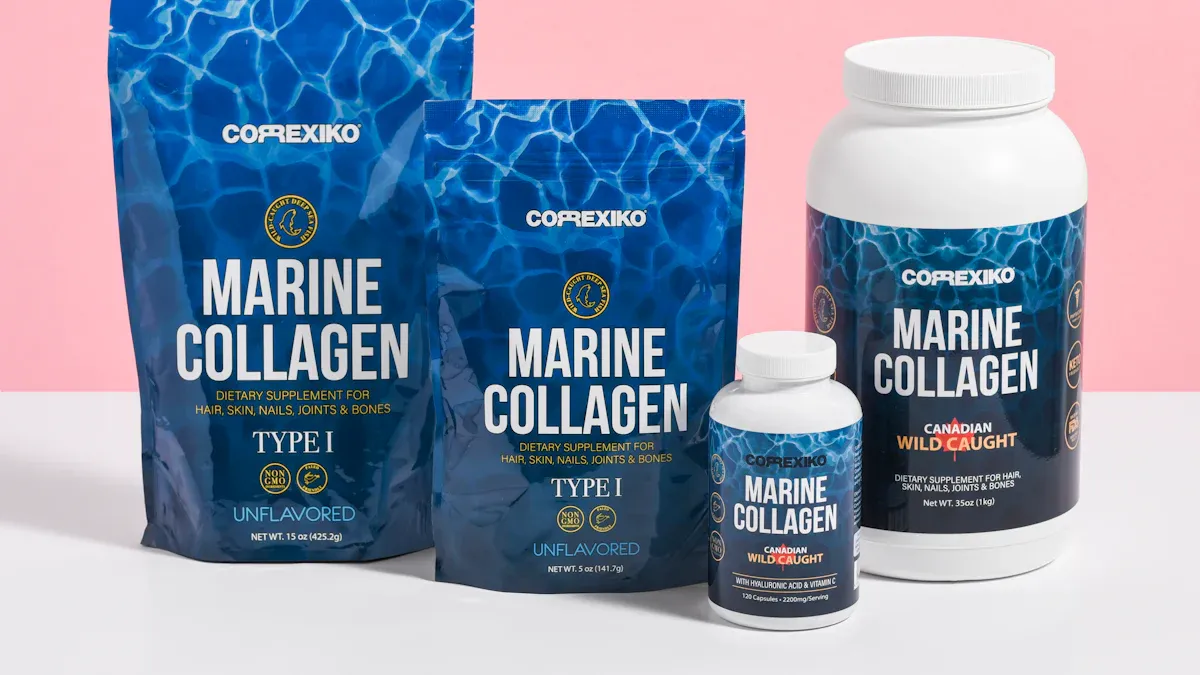
Main Sources of Fish Collagen
You find collagen with fish in many marine by-products. Manufacturers use parts of fish that would otherwise go to waste. This makes the process more sustainable and helps protect the environment.
The most common sources include:
- Salmon scales, which contain the highest collagen content (51.11% of dry matter)
- Salmon skin, with 27.45% of dry matter as collagen
- Cod and lumpfish, which also provide valuable collagen
- Fins, frames, and other fish by-products
You may also see collagen extracted from other marine organisms. These include jellyfish, sponges, mollusks like octopus and mussels, and some echinoderm species.
Tip: Choosing products made from wild-caught fish often ensures higher quality and purity.
Molecular Structure and Types
Collagen with fish stands out because of its unique molecular structure. You see a triple helical shape made of two α1 chains and one α2 chain. The amino acid sequence follows a pattern called glycine-X-Y, where X and Y are usually proline and hydroxyproline. This structure gives collagen its strength and flexibility.
Most fish collagen is Type I. This type supports your skin’s health and hydration. You absorb marine collagen peptides more easily because they are smaller than those from bovine sources. This means your body uses them faster and more efficiently.
You can compare different types of collagen and their properties in the table below:
| Type of Collagen | Source | Functional Properties |
|---|---|---|
| Type I | Fish | Main fibrillar collagen in fish skin; boosts skin health and hydration |
| Type V | Shortbill Spearfish | Unique bioactive functions; ACE inhibition, DPP IV inhibition, antithrombotic effects |
Fish collagen differs from bovine and porcine collagen. Bovine collagen contains both Type I and Type III, which help with skin elasticity and organ health. Porcine collagen has higher tensile strength, but fish collagen offers better absorption. Flatfish collagen has lower mechanical properties because of its porous structure.
You can see how purity and effectiveness compare in the table below:
| Collagen Type | Purity and Effectiveness |
|---|---|
| Fish Collagen | High bioavailability; mainly benefits skin health; less versatile in nutrients |
| Bovine Collagen | Supports skin and joint health; may cause digestive issues for some people |
| Eggshell Collagen | Superior amino acid profile; sustainable; offers joint support and diverse health benefits |
Note: Marine collagen is not the same as other collagen types. It comes mainly from fish scales and skin and is rich in Type I collagen. You benefit from improved skin, hair, and nails when you use collagen with fish.
You see many health and wellness studies showing positive results. For example, a 12-week trial found that fish collagen improved hair growth. Another study showed better skin appearance and wrinkle reduction after 90 days of supplementation. Type II collagen from fish also helped reduce joint pain and improved grip strength.
You may hear some myths about marine collagen. The table below clears up common misconceptions:
| Myth | Reality |
|---|---|
| Marine Collagen is the Same as Other Collagen Types | Marine collagen is unique in source and amino acid composition; mainly Type I from fish scales and skin |
| Marine Collagen is Not Effective for Skin Health | Marine collagen improves skin elasticity, hydration, and appearance due to high bioavailability |
| All Marine Collagen Supplements Are Created Equal | Quality depends on source and processing; wild-caught fish and hydrolyzation improve efficacy |
| Marine Collagen is Not Suitable for Vegetarians or Vegans | Plant-based alternatives exist; marine collagen suits those who eat fish |
| Marine Collagen Has No Side Effects | Risks exist for people with fish allergies; contamination possible if sourced from polluted waters |
You now understand that collagen with fish offers unique benefits. Its structure, sources, and types make it a valuable supplement for skin, hair, and joint health.
How Collagen with Fish Is Made

Extraction and Hydrolysis Process
You start with the careful selection of fish parts, such as skin, scales, and bones. These parts contain the highest levels of collagen. Manufacturers use these by-products to reduce waste and support the environment. The process begins with cleaning and preparing the raw materials. You see the next step as extraction, where water and special enzymes help break down the collagen. This method, called hydrolysis, uses water to split the collagen into smaller pieces called peptides. These peptides absorb quickly in your body and offer better health benefits.
Recent innovations use ultrasound-assisted pretreatment to improve the extraction process. This technology helps you recover more collagen from fish waste. You can adjust the ultrasound intensity, treatment time, and temperature to get the best results. Enzymatic methods also help you extract type I collagen efficiently. These steps make sure you get high-quality collagen with fish that works well in supplements, foods, and cosmetics.
Note: The extraction and hydrolysis process ensures that the collagen peptides are small enough for your body to use easily.
Purification and Quality Control
You need to make sure that collagen with fish is pure and safe. The purification process removes unwanted substances, such as heavy metals and other impurities. Advanced tools like ICP-MS and AAS help detect even tiny amounts of metals. HPLC checks the size and quality of the collagen peptides. These tests guarantee that you get a clean and effective product.
Manufacturers follow strict quality control standards. You see batch-specific testing, third-party certification, and GMP compliance as important steps. These measures ensure that every batch meets safety and quality requirements. The table below shows some key quality control aspects:
| Quality Control Aspect | Description |
|---|---|
| Cell Culture Passage Control | Ensures consistent collagen production. |
| Additives | Monitors animal-free additives for safety. |
| Purification Residue | Keeps processing aid residues low. |
| Collagen Content and Purity | Tests for high collagen content and purity. |
| Testing of Physicochemical Properties | Checks appearance, molecular weight, purity, and stability. |
| Biocompatibility Evaluations | Tests for safety in the body, such as irritation and sensitization. |
| Biosafety Tests for Animal-Derived Collagen | Validates virus removal and checks for immune reactions. |
| CNAS Role | Ensures compliance with national and international standards. |
You also see regulatory agencies, such as the FDA and EFSA, setting rules for labeling and health claims. These rules help you trust the safety and effectiveness of collagen with fish products.
Sustainability Practices
You play a role in protecting the planet when you choose collagen with fish. Manufacturers use by-products from the fishing industry, which reduces waste and supports a circular economy. Facilities often turn unused materials into fish meal, oil, or fertilizer, so nothing goes to waste.
Sustainability certifications, like those from the Marine Stewardship Council (MSC) and Aquaculture Stewardship Council (ASC), show that the collagen comes from responsible sources. These certifications help you identify products that support healthy oceans and ethical fishing. Companies like Wild Nutrition use sustainably farmed fish, such as Tilapia, to protect marine life and ensure high-quality collagen.
Tip: Look for products with sustainability certifications to make a positive impact on the environment.
Fish collagen production has a lower carbon footprint than bovine collagen. Cattle farming produces more greenhouse gases and uses more land and water. By choosing collagen with fish, you support a process that uses resources wisely and helps reduce environmental harm.
Benefits and Choosing Collagen with Fish
Health Benefits and Bioavailability
You can experience many health benefits when you add collagen with fish to your routine. People often notice better skin hydration, firmness, and elasticity. You may see fewer wrinkles and smoother skin. Fish collagen also helps your body heal scars and supports strong bones by helping you absorb calcium. Glycine in fish collagen can help keep your blood sugar steady and may lower inflammation.
You get these benefits because fish collagen absorbs well in your body. Hydrolyzed collagen breaks into small peptides, which your body uses quickly. Clinical studies show that fish collagen helps control cartilage loss in joint problems. Marine collagen works well for skin care because it holds water and keeps your skin moist. You can trust fish collagen as a safe choice, especially if you want to avoid animal diseases found in other sources.
Tip: Bioavailability is important. Hydrolyzed collagen with fish gives you better results because your body absorbs it faster.
Selecting High-Quality and Sustainable Products
You want to choose the best collagen with fish for your needs. Start by deciding if you want it for your skin, joints, or overall health. Pick products made from wild-caught, cold-water fish from clean places. Make sure the label says "hydrolyzed collagen peptides" for better absorption. Check the ingredients and avoid hidden additives. Look for brands that show lab test results for safety and purity.
You can use this checklist:
- Define your goal.
- Check the fish source.
- Verify hydrolyzation.
- Review ingredients.
- Look for lab testing.
- Evaluate dosage (at least 5g per day).
- Choose your preferred form.
- Avoid products with exaggerated claims.
You can also check for Certificates of Analysis and third-party testing. These steps help you pick products that are safe, pure, and good for the planet.
You gain unique benefits from collagen with fish, especially for your skin. This supplement improves hydration and reduces wrinkles. The manufacturing process uses strict testing and purification methods to ensure safety and purity:
| Safety and Purity | Details |
|---|---|
| Rigorous Testing | Each batch undergoes hydroxyproline analysis and SDS Page electrophoresis. |
| Purification | Advanced methods remove impurities and lower infection risks. |
Sustainable practices help protect marine life and reduce waste:
| Sustainability Practice | Impact |
|---|---|
| Responsible sourcing | Uses fish skin and scales, not whole fish. |
| Waste reduction | Extracts over 50% collagen from discards. |
| Marine biodiversity support | Supports well-managed fisheries. |
| Lower carbon footprint | Less impact than bovine collagen. |
You support your health and the planet when you choose reputable, sustainable products.
FAQ
What makes fish collagen different from bovine collagen?
You absorb fish collagen faster. Fish collagen contains mostly Type I collagen, which helps your skin. Bovine collagen has both Type I and Type III, supporting joints and skin.
Can you take fish collagen if you have a seafood allergy?
You should avoid fish collagen if you have a seafood allergy. Always check the label and talk to your doctor before using any supplement.
How do you use fish collagen powder?
You can mix fish collagen powder into water, juice, or smoothies. Use it daily for best results. Most people do not notice any taste.
See Also
The Process and Ingredients Behind Edible Gelatin Production
Comparing Bovine Gelatin Powder With Fish and Pork Varieties
Understanding Bovine Gelatin Powder: Ingredients and Production Methods
The Health Benefits of Bovine Gelatin Powder Explained
Key Indicators of High-Quality Bovine Gelatin Powder to Recognize