Collagen peptide protein fragments make a difference, just ask your body
Collagen peptide protein fragments provide essential building blocks for strong joints, healthy skin, and resilient bones. The body absorbs these smaller peptides efficiently, delivering them quickly to muscles and connective tissues. Scientific studies show that hydrolyzed collagen releases amino acids faster than intact proteins, resulting in improved bioavailability.
| Study | Findings |
|---|---|
| Oesser et al | Hydrolyzed gelatin released 95% of ingested protein, similar to free proline. |
| Skov et al | Enzymatically hydrolyzed collagen produced greater plasma availability of glycine, proline, and hydroxyproline. |
Smaller peptides cross the intestinal barrier more efficiently, supporting daily tissue repair and maintenance.
Collagen Peptide Protein Fragments: What They Are and How They Work

Collagen Peptides vs. Whole Collagen and Other Proteins
Collagen peptide protein fragments differ significantly from whole collagen and other proteins. Whole collagen consists of large, complex protein chains that provide structural support to tissues but are difficult for the body to absorb. In contrast, collagen peptides are shorter chains created through hydrolysis, which breaks down the triple-helix structure of collagen into smaller, more digestible fragments. This process enhances their bioavailability and allows them to stimulate the body’s own collagen production.
| Feature | Whole Collagen | Collagen Peptides |
|---|---|---|
| Structure | Large, complex protein | Shorter chains of amino acids |
| Absorbability | Difficult to absorb | Highly bioavailable |
| Functionality | Provides structural support | Stimulates collagen production |
Other proteins, such as whey, offer a complete amino acid profile and support muscle growth. However, whey protein contains higher levels of leucine, which is essential for muscle protein synthesis, while collagen peptide protein fragments excel in supporting skin, joint, and connective tissue health.
Absorption and Use in the Body
The body absorbs collagen peptide protein fragments more efficiently than whole collagen due to their smaller size. Enzymatic hydrolysis breaks down collagen into fragments that can cross the intestinal barrier and enter the bloodstream quickly. Marine collagen, in particular, features even smaller peptides, which further enhance absorption and support skin elasticity and hydration.
- Collagen peptides enriched with bioactive dipeptides, such as Pro-Hyp and Hyp-Gly, show superior absorption and efficacy for skin improvement.
- The hydrolysis process not only increases solubility but also ensures that these fragments reach target tissues where they stimulate fibroblast proliferation and matrix protein synthesis.
- Daily intake of collagen peptide protein fragments improves the density and integrity of the collagen network, supporting hydration and elasticity in the skin.
Collagen peptide protein fragments provide the body with highly bioavailable building blocks, making them a valuable addition to daily nutrition for tissue repair and maintenance.
Health Benefits of Collagen Peptide Protein Fragments
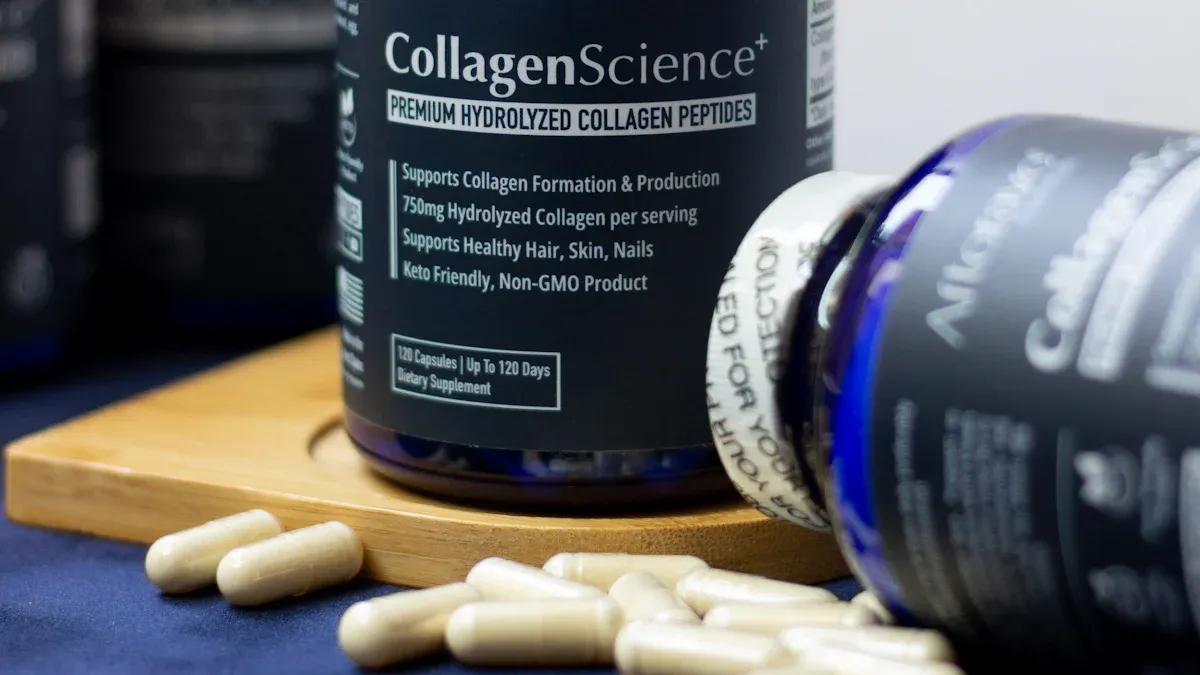
Joint and Bone Support
Collagen peptide protein fragments play a vital role in maintaining joint and bone health. These fragments stimulate cartilage-producing cells, which can enhance cartilage production and improve joint cushioning. Regular consumption has shown benefits for individuals with osteoarthritis, including reduced joint pain, improved mobility, and less stiffness after several weeks of daily intake. Clinical studies in both animals and humans have explored these effects:
| Study | Findings |
|---|---|
| Comblain et al. | Reported improvements in pain in dogs with OA, but no effect on cartilage biomarkers. |
| Dar et al. | Detected chondroprotective effects in mice with induced injury, including MMP-13 reduction. |
| Lee et al. | Demonstrated chondroprotective effects in a rabbit model with low-molecular weight collagen peptides. |
| Schadow et al. | Found no stimulation of type II collagen biosynthesis in human OA cartilage explants. |
| Simons et al. | Showed variability in peptide profiles affecting biological activity even within the same product. |
Note: While many studies highlight positive outcomes, some research suggests that certain collagen fragments may promote the expression of enzymes that degrade cartilage, especially in osteoarthritis. This complexity underscores the importance of ongoing research.
For optimal joint and bone support, experts recommend a daily intake of 5 to 15 grams of collagen peptides, especially for seniors who combine supplementation with physical activity and balanced nutrition.
Skin Health and Appearance
Collagen peptide protein fragments contribute significantly to skin health. They improve skin elasticity, hydration, and reduce the appearance of wrinkles. Clinical trials have demonstrated that oral supplementation leads to measurable improvements in skin condition within weeks. The following table summarizes key findings:
| Group | Time Point | Skin Elasticity Improvement | Significance |
|---|---|---|---|
| Test Group | 6 weeks | Significant improvement | p < 0.05 |
| Test Group | 12 weeks | Significant improvement | p < 0.01 |
| Placebo Group | 6 weeks | No significant improvement | N/A |
| Placebo Group | 12 weeks | No significant improvement | N/A |
Additional studies confirm that participants taking collagen peptides experience higher skin hydration, improved elasticity, and reduced wrinkle depth compared to placebo groups. The benefits become more pronounced with consistent use over 8 to 12 weeks.
| Parameter | LMWCP Group (After 12 weeks) | Placebo Group (After 12 weeks) |
|---|---|---|
| Skin Hydration | Significantly higher | Lower |
| Skin Wrinkling | Significantly improved | No significant change |
| Skin Elasticity | Two parameters improved | One parameter improved |
Dermatologists recognize the value of collagen peptide protein fragments in supporting the skin’s natural structure and resilience.
Muscle and Tissue Repair
Collagen peptide protein fragments support muscle and tissue repair, especially during recovery from injury or surgery. These fragments help recruit immune cells to wound sites, remove damaged tissue, and promote the formation of new blood vessels. This process accelerates healing and reduces the risk of complications.
- Collagen fragments act as signals for angiogenesis, which is essential for tissue repair.
- The C-propeptide fragment of collagen I stimulates new blood vessel growth, aiding wound healing.
- A daily dosage of 2.5 to 15 grams of hydrolyzed collagen is recommended for muscle and tissue repair.
Research shows that collagen biomarkers correlate with muscle mass changes in younger individuals, but the effects in older adults remain less clear. Physical activity and age-related changes in tissue turnover may influence these outcomes.
Gut and Immune Health
Collagen peptide protein fragments help maintain the integrity of the gut lining, which acts as a barrier against harmful substances. They support digestive health by sealing gaps in the intestinal lining, reducing symptoms associated with leaky gut syndrome, and soothing inflamed tissues.
- Collagen peptides reinforce the gut lining and reduce inflammation.
- Amino acids like glycine and proline are crucial for repairing damaged gut tissues.
- Collagen peptides derived from marine sources, such as Alaska pollock, protect the intestinal barrier and support tight junction function.
- Supplementation can modify gut microbiota composition and lower intestinal endotoxin levels, which benefits immune function.
| Findings | Description |
|---|---|
| Anti-inflammatory properties | Collagen peptides exhibit anti-inflammatory effects, influencing immune function through modulation of inflammatory pathways. |
| NF-κB/MAPK pathway | Collagen peptides inhibit the activation of the NF-κB/MAPK signaling pathway, which is crucial in regulating inflammation and immune responses. |
| Intestinal microbiota | Collagen peptides can modulate the composition of intestinal microbiota, which is linked to immune function. |
Collagen peptide protein fragments not only support digestive health but also contribute to a balanced immune response, making them a valuable addition to daily nutrition.
Collagen peptide protein fragments support joints, skin, bones, and overall health. Longitudinal studies show improvements in skin elasticity, joint health, and skin structure.
| Study Focus | Findings |
|---|---|
| Skin Elasticity | Daily oral supplementation with collagen peptides improves skin elasticity and hydration. |
| Joint Health | Positive effects on joint health and overall wellbeing were noted. |
| Skin Structure | Enhancements in the dermal collagen network and increased hyaluronic acid content were observed, leading to better skin appearance. |
Most users tolerate supplementation well, but some experience digestive issues, skin reactions, or changes in blood pressure.
- Digestive Issues (bloating, diarrhea, constipation, heartburn)
- Skin Reactions (rashes, acne breakouts)
- Allergic Reactions (hives, swelling)
- Changes in Blood Pressure
- Taste and Aftertaste
Collagen protein offers easier digestion than whey protein and may help reduce body fat. Adding collagen peptide protein fragments to a daily routine can help individuals feel and look their best.
FAQ
What is the best time to take collagen peptide protein fragments?
Many experts recommend taking collagen peptides in the morning or after exercise. The body absorbs them well at these times, supporting tissue repair and recovery.
Are collagen peptide protein fragments safe for daily use?
Most people tolerate collagen peptides well. Some may experience mild digestive discomfort. Individuals with allergies to specific sources should consult a healthcare provider before use.
Can vegetarians or vegans use collagen peptide protein fragments?
Collagen peptides come from animal sources like bovine, marine, or poultry. Vegetarians and vegans may consider plant-based alternatives, but these do not provide true collagen peptides.
See Also
The Health Benefits of Bovine Gelatin Powder Explained
Understanding the Production Process of Edible Gelatin
Key Indicators of High-Quality Bovine Gelatin Powder
Comparing Bovine Gelatin Powder with Fish and Pork Varieties
Creative Methods to Incorporate Bovine Gelatin Powder in Cooking