Fish Collagen What You Need to Know and How It Compares to Other Collagen

You may notice that collagen fish comes from fish skin and scales. Scientists have found that marine collagens have higher bioavailability than other sources. Your body can absorb collagen fish up to 1.5 times more efficiently. This happens because it has a lower molecular weight and smaller particle size.
Key Takeaways
- Fish collagen absorbs better than other types, making it a great choice for skin, hair, and nails.
- Consider your dietary needs and health goals when choosing a collagen supplement to ensure it fits your lifestyle.
- Look for eco-friendly and sustainably sourced collagen products to support both your health and the environment.
What Is Collagen Fish?
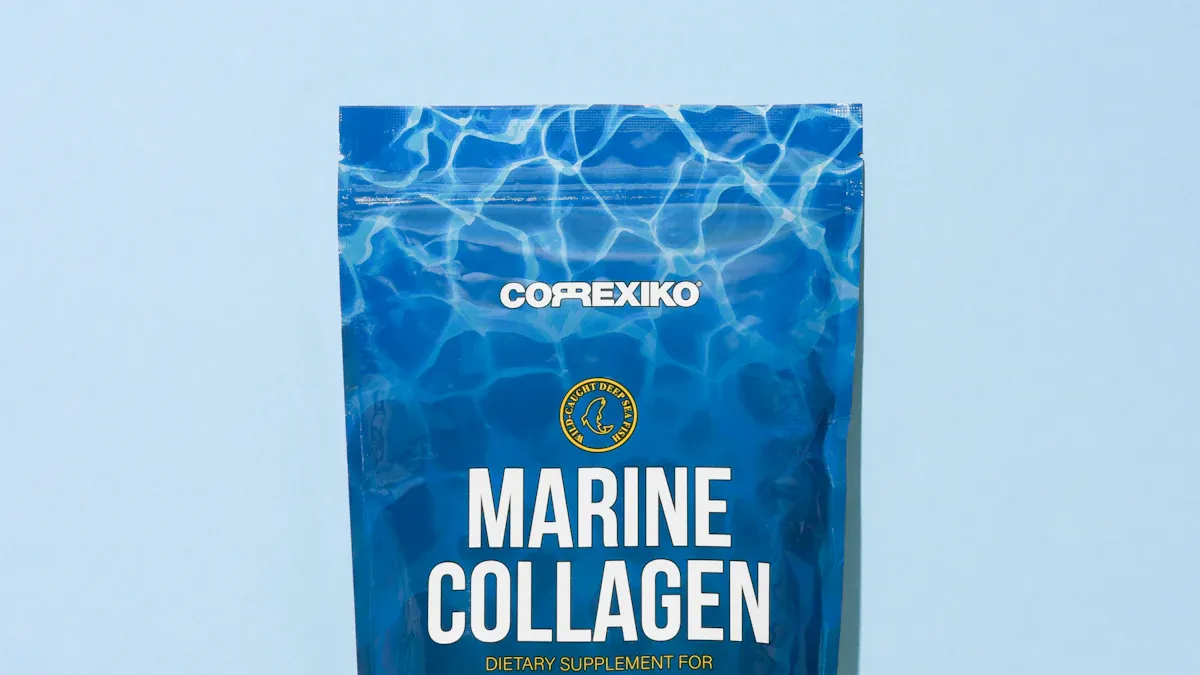
Definition and Source
You may wonder where collagen fish comes from. Manufacturers usually extract it from the skin and scales of fish. Other marine animals, such as sharks, sea urchins, and jellyfish, also provide sources for this type of collagen.
Here are the main steps used to process collagen fish:
- Cleaning and separating the animal parts
- Cutting the material into smaller pieces
- Using acid or special enzymes to extract the collagen
- Removing minerals with solutions like sodium hydroxide or sodium chloride
These steps help create a pure form of collagen that you can use in supplements or beauty products.
Basic Properties
Collagen fish stands out because of its unique structure and properties. Scientists use high-pressure size-exclusion chromatography to measure the molecular weight of hydrolyzed collagens. This method shows that collagen fish has a lower molecular weight than other types. Your body can absorb these smaller particles more easily.
The amino acid profile of collagen fish also differs from bovine and porcine collagen. For example, shark skin collagen contains less aspartic acid and hydroxyproline. Bovine collagen has more glutamic acid and aspartic acid. These differences can affect how your body uses the collagen and the benefits you may notice.
Tip: If you want a collagen that your body can absorb quickly, collagen fish may be a good choice.
Collagen Fish vs. Other Collagen Types
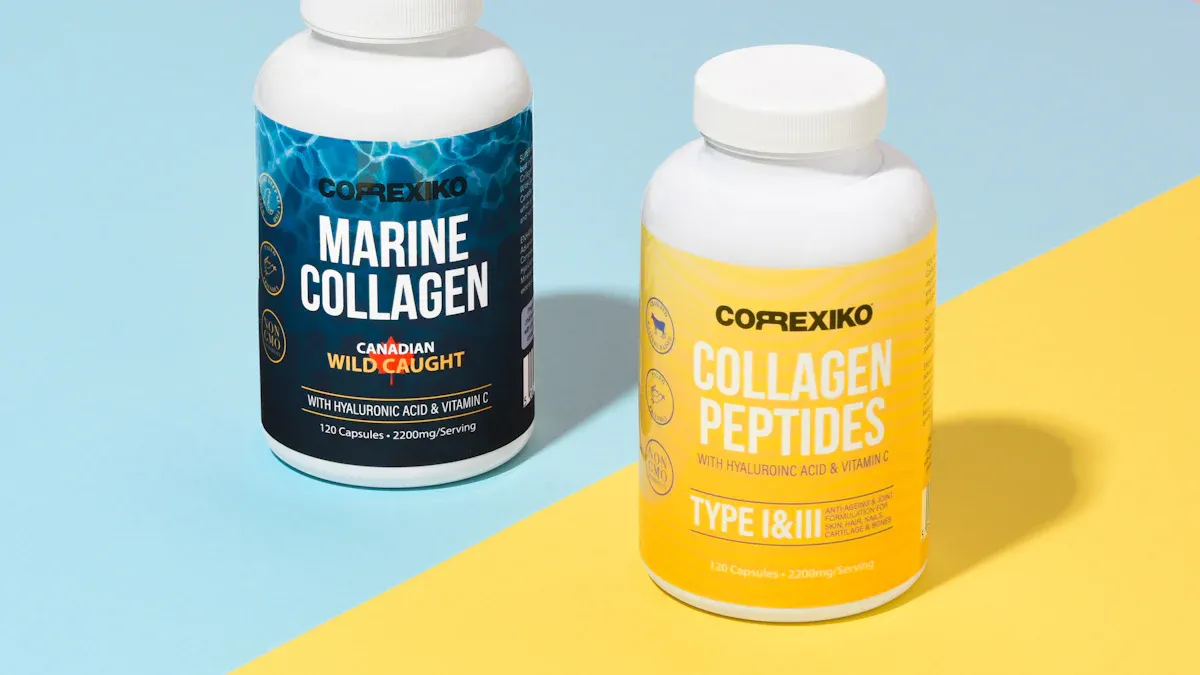
Types Compared: Fish, Bovine, Porcine, and Chicken
You can find collagen in many sources. The most common types come from fish, cows (bovine), pigs (porcine), and chickens. Each source has its own unique features and benefits. The table below shows how these types compare:
| Source | Type of Collagen | Characteristics |
|---|---|---|
| Marine (Fish) | Type I | 100% found in marine collagen, superior absorption, supports skin, hair, nails, and bone quality. |
| Bovine | Type I, III, II | Contains Type I and III for skin, hair, nails; Type II from cartilage for joint support. |
| Porcine | Type I, III | Similar to bovine, effective for skin, hair, nails, but less effective than marine collagen. |
| Chicken | Type II | Most effective for cartilage support, studied for joint pain and mobility issues. |
You may notice that collagen fish contains only Type I collagen. This type helps your skin, hair, nails, and bones. Bovine and porcine collagen have both Type I and Type III, which also help your skin and hair. Chicken collagen mainly provides Type II, which supports your joints.
Structure, Absorption, and Bioavailability
The structure of collagen affects how your body absorbs it. Collagen fish has a lower molecular weight than bovine, porcine, or chicken collagen. This means your body can break it down and use it more easily. Scientists use different methods to extract collagen from each source. The table below shows the main extraction methods:
| Type of Collagen | Extraction Methods | Key Characteristics |
|---|---|---|
| Fish Collagen | Acid-soluble, Enzyme-soluble, Ultrasound-assisted, Deep eutectic solvent, Supercritical fluid | Utilizes specific acids like acetic acid, diverse methods, high yield and purity |
| Bovine Collagen | Typically less diverse methods | Tailored techniques for unique collagen structures |
| Porcine Collagen | Typically less diverse methods | Tailored techniques for unique collagen structures |
| Chicken Collagen | Typically less diverse methods | Tailored techniques for unique collagen structures |
You get a higher yield and purity from collagen fish because of these advanced extraction methods. Clinical studies show that your body absorbs peptides from collagen fish faster than those from bovine or porcine sources. For example, the peptide Hyp-Gly reaches a higher level in your blood after you take collagen fish. This means you may notice benefits sooner.
Health Benefits of Collagen Fish
You may want to know how collagen fish can help your health. Human studies show that it can improve your skin in many ways. The table below lists some results from clinical trials:
| Study Year | Study Type | Findings |
|---|---|---|
| 2023 | Double-blind, placebo-controlled | Significant reductions in wrinkles (frontal: -14%, nasolabial: -31%, periorbital: -26%) and improved collagen morphology. |
| 2018 | Randomized, placebo-controlled | Increased skin elasticity and decreased pore count. |
| 2015 | Placebo-controlled | 9% increase in collagen density in the dermis and a dose-dependent increase in dermal collagen. |
You can also see how collagen fish improves your skin compared to a placebo. The chart below shows the percentage of improvement in different skin outcomes:
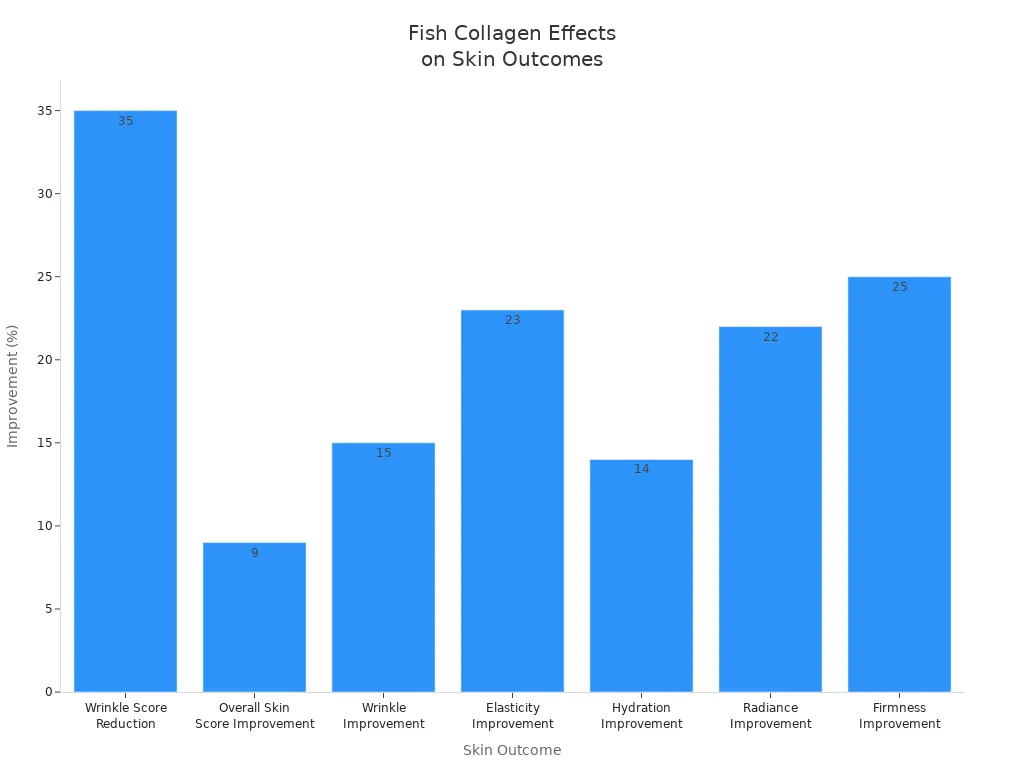
You may notice a 35% reduction in wrinkle scores, a 23% improvement in elasticity, and a 14% boost in hydration. These results show that collagen fish can help your skin look and feel better.
Potential Drawbacks and Considerations
You should also know about the possible risks and concerns with collagen fish. Some people have allergies to fish. Studies show that about half of Japanese patients with fish allergies react to fish collagen. This reaction can happen even after the collagen is heated for a long time. If you have a fish allergy, you should avoid collagen fish.
You may also want to think about the environment. The way companies catch and process fish can harm the ocean. Here are some concerns:
- Fishing methods like bottom trawling can damage the seafloor and catch other animals by mistake.
- Processing fish byproducts into collagen uses a lot of energy and water.
- Overfishing can hurt marine life and reduce biodiversity.
- Pollution from fish farms and factories can affect water quality.
Note: If you care about sustainability, look for collagen fish products that use eco-friendly practices and certified sources.
Choosing the Right Collagen for You
Factors to Consider
When you choose a collagen supplement, you need to think about your own needs and health. Here are some important factors:
- Dietary Restrictions: If you follow a pescatarian diet, you may prefer marine collagen. If you have allergies to fish or eggs, you should avoid collagen fish and chicken collagen.
- Health Goals: Decide what you want to improve. Marine collagen works well for skin, hair, and nails. Bovine collagen may help your joints more.
- Quality and Sourcing: Look for products that show clear ingredient lists and have been tested for purity. Check for certifications that show the product meets safety standards.
- Environmental Impact: Choose collagen from sources that use eco-friendly fishing and production methods.
- Allergies: Always read the ingredient list. If you have allergies, talk to your doctor before you start any new supplement.
Tip: Marine collagen often comes from cold-water fish and absorbs better than other types, which means you may see results faster.
Practical Recommendations
You can find collagen supplements in powders, capsules, and drinks. Marine collagen is not a byproduct but a main product from sustainably bred fish. This makes it a good choice for people who care about the environment.
Here is a table to help you compare daily dosages:
| Type of Collagen | Recommended Daily Dosage |
|---|---|
| Fish Collagen Tripeptide | 2.5 to 15 grams |
| Standard Collagen | 10 to 20 grams |
Bovine collagen usually costs less than marine collagen. You pay more for collagen fish because it absorbs better and supports skin health. Always check for quality marks like purity testing, ingredient traceability, and safety evaluations. If you take medicine or have health concerns, ask your doctor before starting any supplement.
You gain unique benefits from collagen fish. It absorbs quickly, supports your skin, and comes from a clean, sustainable source. When you choose a collagen supplement, think about your health goals, diet, and product quality. This helps you find the best option for your needs.
FAQ
What makes fish collagen different from other types?
You absorb fish collagen faster because it has smaller particles. You get mostly Type I collagen, which helps your skin, hair, and nails.
Can you take fish collagen if you have a seafood allergy?
You should not take fish collagen if you have a seafood allergy. You could have an allergic reaction, even if the product looks pure.
How do you use fish collagen supplements?
You can mix fish collagen powder into water, juice, or smoothies. You can also take it as capsules or add it to food.
See Also
Comparing Bovine Gelatin Powder With Fish And Pork Varieties
Key Indicators Of High-Quality Bovine Gelatin Powder To Recognize
The Production Process And Composition Of Edible Gelatin
Reasons Bovine Gelatin Powder Serves As A Strong Health Aid
Understanding The Ingredients And Production Of Bovine Gelatin Powder