How Transitioning from Coco to Rock Wool Substrate Improves Cannabis Cultivation Efficiency

You can improve your cannabis cultivation with a rockwool hydroponic system. This switch gives you superior control over water and nutrients. Unlike coco coir hydroponics, you reduce labor costs significantly.
Key Advantage: UPuper rock wool eliminates the need for substrate pre-treatment and extensive flushing.
This precise control also enables advanced growing techniques. You can implement crop steering for faster crop cycles and achieve higher yields. Your operation becomes more efficient compared to using coco coir hydroponics.
Key Takeaways
- Rock wool saves you time and money because it does not need special cleaning before you use it.
- You can give your plants the exact right amount of water and food with rock wool, helping them grow better.
- Rock wool helps you grow plants faster and get more product by letting you control how they grow.
- Shipping and throwing away rock wool is easier and cheaper than with coco coir.
- Even if rock wool costs a little more at first, it saves you money over time because it is so efficient.
Reduce Labor and Maintenance Costs
You can significantly cut down on operational expenses by switching to rock wool. Your team saves valuable time and resources. This allows you to focus on plant health instead of substrate preparation and cleanup.
Eliminate Substrate Pre-Treatment
Rock wool arrives sterile and ready for immediate use. You simply hydrate the blocks and your cultivation can begin. This eliminates the laborious pre-treatment process required for coco coir. Preparing coco coir is a multi-step, time-consuming task. A 10-pound block of coco expands to fill about four 5-gallon buckets, making preparation a large job.
Your team must follow a precise procedure to make coco coir usable:
- Rinse the coco coir to wash away dust and fine particles.
- Prepare a buffering solution with calcium nitrate to balance mineral content.
- Soak the coco coir in this solution for at least 24 hours.
- Rinse the substrate again to remove excess salts from the buffering solution.
- Squeeze out excess water until the material is just moist.
- Fluff the coco coir to create an airy texture for roots.
Skipping these steps directly translates to lower labor costs and a more efficient workflow.
Minimize Facility Cleaning and Pest Management
Rock wool provides a clean, inert growing environment from the start. Its sterile nature helps you avoid introducing soil-borne pests and diseases into your facility. While coco coir offers some natural pest resistance, both substrates can attract pests like fungus gnats if you do not manage moisture levels correctly.
Rock wool's initial sterility gives you a powerful advantage. You start with a clean slate, which simplifies your integrated pest management (IPM) program and reduces the need for chemical pesticides.
This clean foundation means less time spent on facility sanitation and pest control. Your operation becomes cleaner, safer, and more predictable. You gain greater control over the cultivation environment from day one.
Improve Water and Nutrient Efficiency
You gain total control over your plant's diet by switching to rock wool. This substrate does not hold or release any nutrients on its own. Your plants get exactly what you feed them, exactly when you feed them. This precision optimizes resource use and promotes vigorous growth.
Ensure Immediate Nutrient Availability
Rock wool is an inert substrate, meaning it has virtually no nutrient-holding capacity. This gives you a significant advantage over coco coir. Unbuffered coco coir can bind with nutrients like calcium and magnesium. It holds these essential minerals, preventing your plants from absorbing them. Rock wool avoids this problem entirely.
Your nutrient solution remains pure and immediately available to the roots. The substrate's unique design makes this possible.
- Its fibrous structure and thousands of tiny cavities efficiently store both water and air.
- A special hydrophilic binder helps the rock wool absorb liquid evenly.
- This creates a highly oxygenated root zone, promoting healthy growth and easy nutrient uptake.
Your plants can easily draw water and nutrients from the rock wool, even when the substrate is not fully saturated.
Achieve Precise Water Content Management
Rock wool’s uniform structure allows you to manage water levels with incredible accuracy. You can easily measure the volumetric water content (VWC) to prevent overwatering and root suffocation. This level of control is perfect for automation.
You can integrate moisture sensors directly into your rock wool blocks. These sensors are pre-calibrated for rock wool and send real-time data to your irrigation controller, like a TrolMaster or Aqua-X system.
This technology enables you to automate watering cycles with precision. The system irrigates only when the water content drops below your target level. This data-driven approach conserves water, reduces fertilizer runoff, and provides the stable root environment needed for advanced techniques like crop steering. You can even monitor moisture levels and receive alerts on your phone, giving you complete control over your crop's hydration from anywhere.
Enable Advanced Cultivation and Faster Cycles
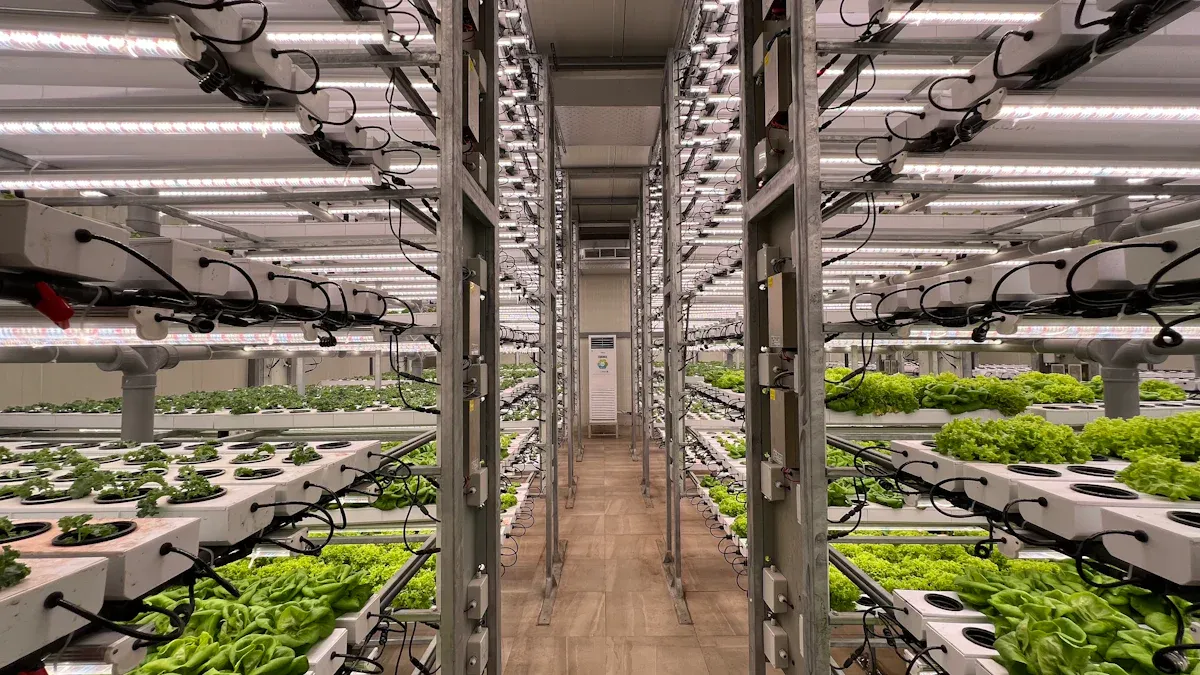
Rock wool gives you the precise control needed to adopt advanced growing techniques. You can guide your plant's development with accuracy. This leads to faster crop cycles and a more valuable final product.
Implement Precision Crop Steering
You can use a technique called crop steering to tell your plants how to grow. This involves creating specific conditions to encourage either leafy, vegetative growth or dense, generative (flower) growth. Rock wool is perfect for this because it lets you rapidly change the root zone's water content and nutrient levels.
You can steer your plants by adjusting your irrigation strategy:
- For Vegetative Growth: You keep the rock wool wetter with smaller, more frequent waterings. This promotes taller plants and helps buds swell late in the flower cycle.
- For Generative Growth: You allow for larger "dry backs" between waterings. This controlled stress encourages the plant to focus its energy on producing flowers.
This table simplifies the two main steering strategies:
| Strategy | Dryback | Substrate EC | Result | When to Use |
|---|---|---|---|---|
| Vegetative | Small (wetter) | Low | Promotes taller plants, bud swelling | Veg, Late Flower |
| Generative | Large (drier) | High | Faster flower site formation | Early Flower |
Shorten Overall Crop Cycle Time
Precision crop steering directly shortens your cultivation timeline. You can use generative steering techniques early in the flowering stage to speed up the formation of bud sites. By creating larger dry backs, you apply a controlled stress that signals the plant to reproduce. This accelerates the transition into full flower production.
This process does more than just save time. Managing these stress phases can also improve your harvest quality. You can influence the final cannabinoid and terpene profiles of your plants. Research shows that specific dry-back management in rock wool can lead to higher THC levels. You gain the ability to not only finish your crop cycle faster but also to enhance the potency and value of your product. 📈
Streamline Logistics vs. Coco Coir Hydroponics
You can make your operation more efficient by improving your logistics. Rock wool offers clear advantages over coco coir hydroponics from shipping to disposal. You save money and simplify your workflow at every stage.
Lower Shipping and Storage Costs
Rock wool arrives compressed and lightweight, which significantly cuts your shipping expenses. You can fit more product into a single shipment. This reduces freight costs and your carbon footprint. Storing rock wool is also easier. The compact blocks take up minimal space in your warehouse, freeing up valuable room for other supplies.
In contrast, coco coir hydroponics involves managing bulky materials. A small compressed block of coco expands into a large volume of substrate. This requires more storage space and more labor to handle. The logistics of coco coir hydroponics can quickly become complex and costly.
Choosing rock wool simplifies your inventory management from the moment it arrives. This is a key difference from coco coir hydroponics.
Simplify End-of-Cycle Disposal
When your crop cycle ends, you will find that managing used rock wool is simpler than disposing of coco coir hydroponics media. You have several sustainable options for handling the used substrate. This flexibility helps you run a cleaner and more responsible operation.
You can choose the best disposal method for your facility:
- Recycle it: Specialized services can collect used rock wool and process it into new materials for other industries.
- Reuse it: You can clean, sanitize, and reuse blocks for another crop cycle, especially for plants that grow quickly.
- Amend your soil: Shredded rock wool can be mixed into outdoor soil to improve its structure and aeration.
These straightforward options make cleanup faster and more efficient. You avoid the disposal challenges often associated with coco coir hydroponics, streamlining your end-of-cycle process.
You directly boost efficiency when you switch to rock wool. This change reduces your labor costs, optimizes resource use, and accelerates crop cycles. The switch prepares your facility for future upgrades. You can easily integrate automation and explore vertical farming. 🚀 Rock wool gives you the precise control needed to maximize your cultivation efficiency. This control directly improves your profitability.
FAQ
Is rock wool more expensive than coco coir?
Rock wool may have a higher upfront cost. However, you save money over time. You reduce expenses on labor, water, and nutrients. This makes rock wool a more cost-effective choice for your operation in the long run.
Can you reuse rock wool blocks?
Yes, you can reuse rock wool. You must first clean and sanitize the blocks after a harvest. This process removes old roots and prevents disease. Reusing the substrate helps you lower costs for your next crop cycle.
Do you need special nutrients for rock wool?
You do not need special nutrients. You can use any complete hydroponic nutrient formula. Rock wool is inert, so it does not lock up minerals. Your plants receive 100% of the nutrients you provide in the water.
How do you start seeds in rock wool?
You can easily start seeds in small rock wool starter cubes. First, you soak the cubes to the correct pH. Then, you place a seed in the hole of each cube. Once seedlings develop roots, you can transplant the entire cube into a larger block. 🌱