What to Consider When Choosing a Sewage Treatment Plant System
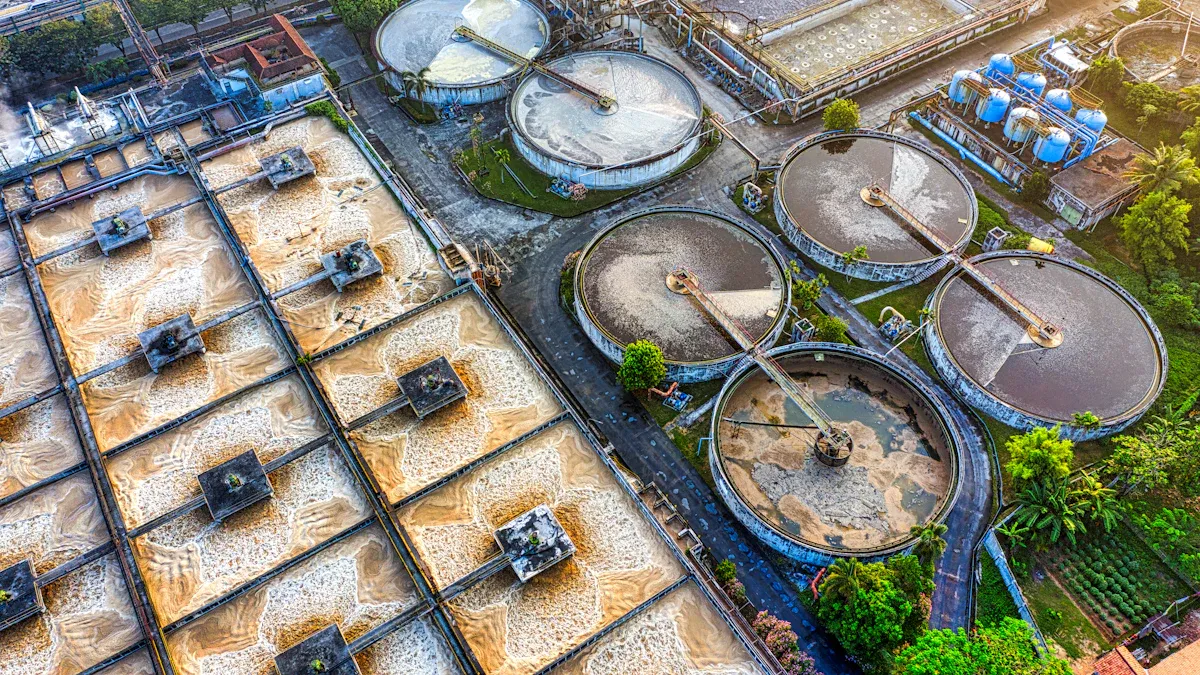
When you choose a sewage treatment plant system, you must look at your property’s needs. Many homes in the United States use onsite wastewater systems.
- 23% of households rely on these systems, serving about 60 million people.
| Factor | Description |
|---|---|
| Site-specific requirements | Think about your sewage type, waste quality, and where you will install. |
| Regulatory compliance | Check if you need building approval or planning permission. |
| Personal preferences | Some want low costs or want to keep their garden looking nice. |
Key Takeaways
- Assess your property size and household needs before choosing a sewage treatment plant system. A larger property allows for more options, while a smaller lot may require a compact system.
- Understand the type of wastewater your property generates. Matching your sewage treatment system to your wastewater type helps protect the environment and public health.
- Regular maintenance is crucial for the longevity of your sewage treatment plant system. Schedule routine checks and professional services to avoid costly repairs and ensure safe operation.
Assessing Your Property for a Sewage Treatment Plant System
Property Size and Household Needs
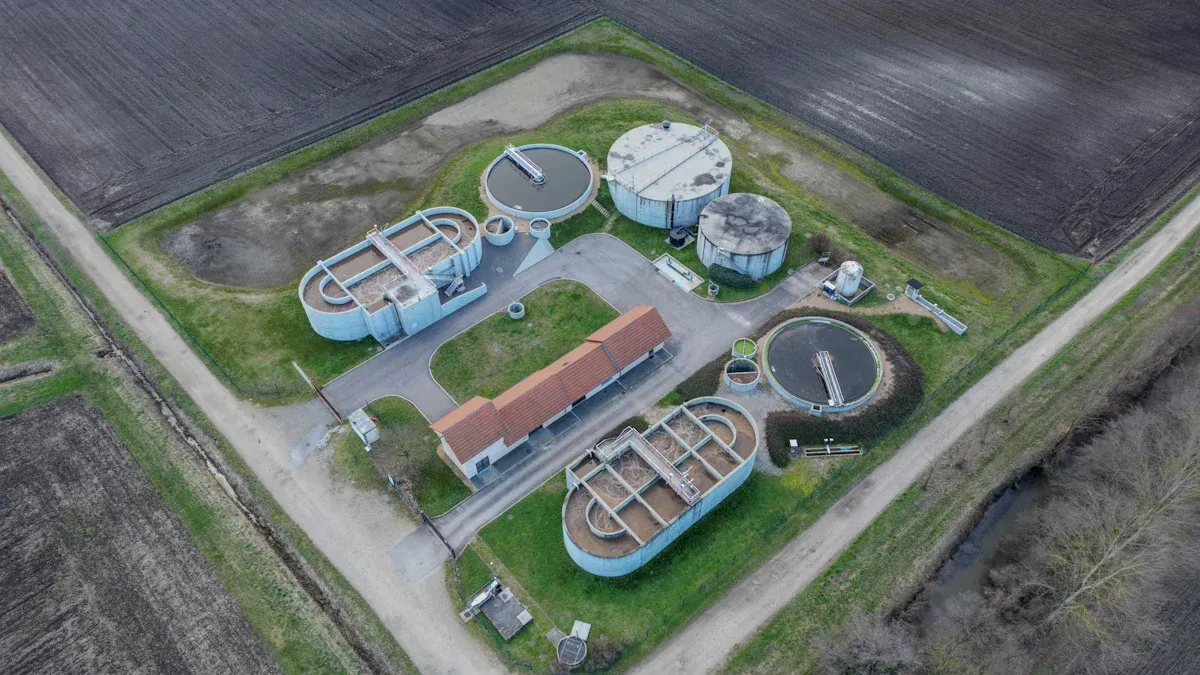
You need to look at the size of your property and the number of people living in your home. A larger property gives you more options for placing a sewage treatment plant system. If you have a small lot, you may need a compact system. The number of people in your house matters too. Each person uses water every day. On average, one home sends about 50 gallons of wastewater into the sewer system daily. If you have more people, you will need a system with a bigger capacity. For example, a plant that handles 15,000 gallons per day can serve over 200 homes. If you live alone or with one other person, you will use less water, so you can choose a smaller system.
Tip: Think about your future needs. If you plan to add more rooms or expect more people to live in your home, pick a system that can handle extra demand.
Location and Site Suitability
You must check if your land is right for a sewage treatment plant system. Soil type, slope, and local rules all play a part. Soil color, texture, and structure affect how well the system works and how long it lasts. A steep slope can make installation harder and change how wastewater moves underground. You also need to follow rules about how far the system must be from buildings and water sources. These rules protect your home and the environment.
The best spot for your system is outside flood zones. Floods can carry harmful waste into rivers or groundwater. You should keep the system away from lakes and streams, but close enough to areas that can safely take treated water. Always check local zoning laws and plan for future growth.
Understanding Wastewater Type for Your Sewage Treatment Plant System
Types of Wastewater Generated
You need to know what kind of wastewater your property creates before you choose a sewage treatment plant system. Wastewater comes from many sources. Here are the main categories:
- Residential wastewater includes blackwater from toilets and graywater from sinks, showers, and laundry.
- Nonresidential wastewater comes from places like offices, restaurants, schools, and hospitals. This type can also include stormwater that runs off roofs and parking lots.
Each type of wastewater has different levels of pollution. For example, blackwater contains more harmful germs and chemicals than graywater. Nonresidential sources may have grease, food scraps, or even medical waste.
Impact on System Selection
The type of wastewater you produce will guide your choice of sewage treatment plant system. If your property creates industrial or chemical waste, you must pay close attention. The system you pick must handle the type and amount of pollutants in your wastewater. You also need to follow local laws and think about how much water you use each day. These factors shape the treatment technology you need and the cost of the system.
If you choose the wrong system for your wastewater, you can face serious problems:
- Untreated sewage can harm the environment and put public health at risk.
- Water quality can drop, causing issues like algal blooms in lakes and rivers.
- Cleaning up untreated sewage later can cost much more and take a long time.
Tip: Always match your sewage treatment plant system to the type of wastewater your property generates. This helps protect your health, your community, and the environment.
Soil Type Analysis for Sewage Treatment Plant System Installation
Why Soil Type Matters
Soil type plays a big role in how well your sewage treatment plant system works. The soil under your property acts as a natural filter for treated water. If you have sandy soil, water moves through it very quickly. This high permeability can let wastewater pass before it gets cleaned enough, which may harm the environment. Clay soil works in the opposite way. It has low permeability, so water drains slowly. This can cause backups, odors, and even system failure. You need to know your soil type to avoid these problems and keep your system running smoothly.
Tip: Always check your soil before you install a sewage treatment plant system. The right soil helps protect your home and local water sources.
How to Evaluate Soil Conditions
You can use several methods to test your soil and see if it is suitable for a sewage treatment plant system:
- Percolation test: This test measures how fast water soaks into the ground. It tells you if your soil can absorb wastewater.
- Soil texture analysis: This method checks how much sand, silt, and clay your soil contains. The mix affects how well water drains.
- Compaction testing: This test looks at how dense your soil is. Dense soil can block water flow and cause drainage issues.
- Nutrient analysis: This test checks for nutrients in your soil. Too many nutrients can pollute groundwater.
You should use these tests to make sure your soil can support a safe and effective system.
Noise Levels in Sewage Treatment Plant System
Why Noise Matters
Noise from a sewage treatment plant system can affect your comfort and your property’s value. You may hear pumps, blowers, or motors running at different times of the day. If your home sits close to the system, you might notice these sounds more. High noise levels can disturb your sleep, make it hard to relax, or even lower your property’s worth. Local rules often set limits on how much noise a system can make, especially in residential areas.
You can see how distance from the plant changes both noise levels and property values:
| Distance from Plant | Noise Level (dB) | Property Value Reduction (%) |
|---|---|---|
| 0-1,000 feet | 65-75 | 15-25 |
| 1,000-2,600 feet | < 60 | 8-15 |
| 0.5-1 mile | Minimal | 3-8 |
| Beyond 1 mile | Negligible | Minimal impact |
Note: The closer you live to a noisy system, the more it can affect your daily life and your home’s value.
How to Evaluate Noise Levels
You can measure noise from a sewage treatment plant system using special tools and methods. Field measuring instruments help you check noise, air quality, and even ground vibrations. These tools give you real data about the system’s impact on your environment.
Here are some common ways to measure and predict noise:
- Field measuring instruments for real-time monitoring
- Integrating sound level meters for checking continuous noise
- Noise mapping to show where sound travels
- Frequency pattern analysis to find out which parts make the most noise
| Methodology/Tool | Description |
|---|---|
| Noise Prediction Methodology | Predicts and evaluates noise from industrial sources like treatment plants. |
| Integrating Sound Level Meter | Measures ongoing acoustic pressure at different spots. |
| Noise Mapping | Uses measured values to create a map of noise spread. |
| Frequency Pattern Analysis | Looks at sound patterns to pinpoint noise sources. |
If you want a quiet home, always ask about noise levels before you choose a system.
Effluent Quality from Sewage Treatment Plant System
Importance of Effluent Standards
You need to pay close attention to effluent standards when you choose a sewage treatment plant system. In the United States, the Clean Water Act sets the main rules for treated water. Local laws can make these rules even stricter, depending on where your treated water goes. You must check for limits on things like chemical oxygen demand (COD), biological oxygen demand (BOD), dissolved oxygen, suspended solids, nutrients, pH, and bacteria. These limits help protect rivers, lakes, and the animals that live there.
Effluent standards can change based on your property type. Here are some key differences:
- Residential systems handle regular household waste.
- Commercial systems treat more complex waste, such as grease from restaurants or chemicals from hospitals.
- Commercial systems must follow stricter rules and face more checks from health departments.
- Residential systems usually have fewer rules to follow.
Tip: Always ask your local health department about the standards you must meet before you install a system.
Assessing System Performance
You can measure how well your sewage treatment plant system works by checking how much pollution it removes. Experts use several metrics to test this. These include total suspended solids (TSS), BOD5, COD, total phosphorus (TP), total nitrogen (TN), ammonia (NH3), chromium (Cr), zinc (Zn), and iron (Fe). Each metric shows how clean the treated water is.
| Metric | Removal Efficiency (%) |
|---|---|
| TSS | 75 |
| BOD5 | 67.7 |
| COD | 70.2 |
| TP | 39.5 |
| TN | 61.6 |
| NH3 | 83.6 |
| Cr | 38.5 |
| Zn | 15.6 |
| Fe | -45 |
| Overall Treatment Performance | 65% |
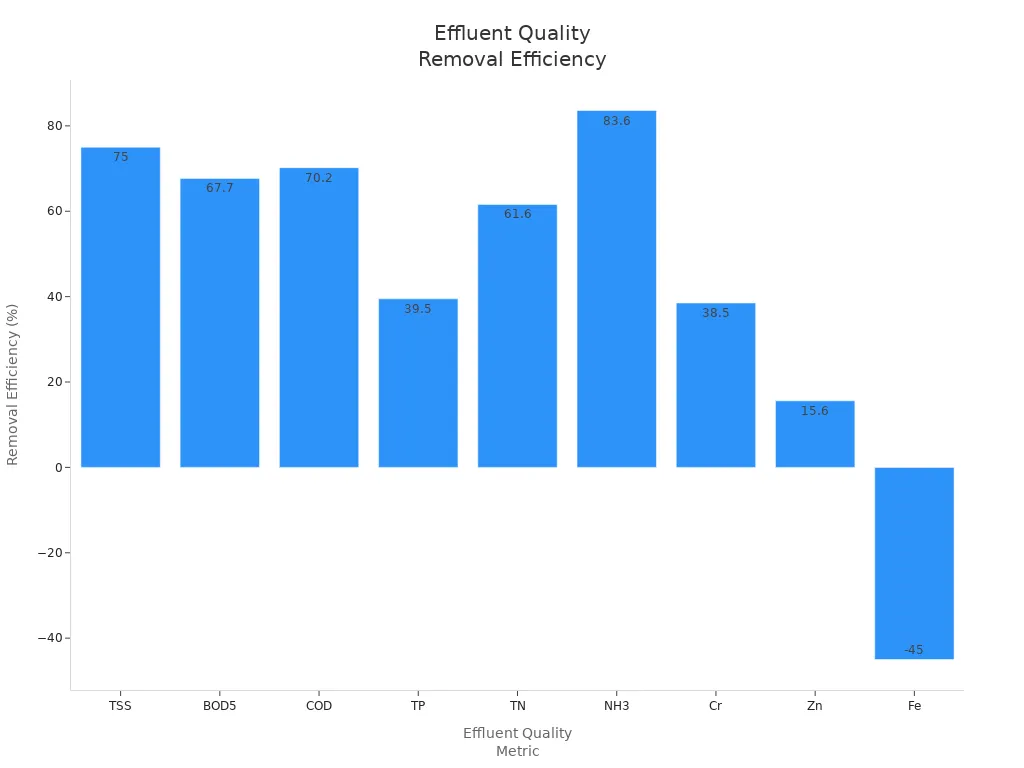
You should look for a system that meets or beats these numbers. High removal rates mean cleaner water and a safer environment. If you check these metrics often, you can make sure your system keeps working well for years.
Energy Consumption of Sewage Treatment Plant System
Impact on Utility Bills
You should know how much energy your sewage treatment plant system uses. Energy costs can make up a big part of your utility bills. In the United States, wastewater treatment plants use over 30 terawatts of energy each year. This costs more than $2 billion. Electricity can take up 25% to 50% of a plant’s budget. If you choose a system that uses less energy, you can save money every month. Lower energy use also means less impact on the environment.
- Annual energy use for wastewater treatment is very high.
- Electricity is a major part of the cost.
- Improving efficiency can lower your bills.
Comparing Energy Efficiency
You can compare different systems by looking at how much energy they use for each cubic meter of water treated. Here is a table that shows the average energy consumption for different plant sizes:
| Plant Size | Energy Consumption (kWh/m³) |
|---|---|
| Small Plants | 0.5 - 1.5 |
| Medium Plants | 0.4 - 1.0 |
| Large Plants | 0.3 - 0.8 |
Recent studies show that many plants can save up to 41.9% in energy use without lowering the quality of treatment. Some systems reach higher energy efficiency scores, which means you can get the same clean water for less energy. When you pick a sewage treatment plant system, look for one with a good energy rating. This helps you save money and supports a cleaner environment.
Maintenance Requirements for Sewage Treatment Plant System
Routine Upkeep Needs
You need to keep your sewage treatment plant system in good shape with regular care. Preventive maintenance helps your system run smoothly and last longer. You should check the system every day. Look at the pressure and flow rate. Inspect pumps and tanks for any problems. Each week, test emergency systems and alarms to make sure they work. Clean sludge dewatering equipment to keep it running well.
Here is a table that shows how often you should do these tasks:
| Frequency | Maintenance Task | Description |
|---|---|---|
| Daily | General performance checks | Monitor pressure, flow, and inspect pumps and tanks. |
| Weekly | Testing emergency systems | Check backup systems and alarms. |
| Weekly | Cleaning sludge equipment | Remove solids from wastewater. |
| Monthly | Inspecting aeration systems | Make sure oxygen levels are right for treatment. |
| Monthly | Checking chemical dosing systems | Adjust chemicals for best results. |
| Monthly | Inspecting UV disinfection | Keep water safe by removing germs. |
| Monthly | Vibration and thermal analysis | Find equipment issues early. |
You should also clean filters and screens every week. Remove sludge from tanks to prevent blockages. Each month, do a deeper check of all equipment.
Tip: Regular maintenance keeps your system safe and helps you avoid costly repairs.
Long-Term Maintenance Considerations
You should plan for long-term care of your sewage treatment plant system. Every three years, have a professional pump out your system. If you use a garbage disposal, do this every year. Regular professional checks help your system last longer and work better.
Some common long-term issues can happen. Older systems may not handle heavy use. This can cause backups and more service calls. Poor water quality can lead to strong smells and cloudy water. You may face high repair costs if your system gets old. Some properties do not have enough space for large leach fields. Businesses that create strong wastewater loads need special care.
Note: You can avoid most problems with regular checks and by following a maintenance schedule.
Warranty Coverage for Sewage Treatment Plant System
What to Look for in a Warranty
When you buy a sewage treatment plant system, you should always check the warranty. A good warranty gives you peace of mind. It protects you if something goes wrong. Look for a warranty that covers both parts and labor. Some companies only cover certain parts. Others may not include the cost of repairs. You want a warranty that lasts at least one year. Longer warranties show that the company trusts its product.
Here are some things you should check:
- What parts does the warranty cover?
- Does it include labor costs for repairs?
- How long does the warranty last?
- Are there any limits or exclusions?
Tip: Ask for a copy of the warranty before you buy. Read it carefully so you know what is included.
Understanding Warranty Terms
You need to understand the terms of your warranty. Some warranties only cover defects in materials. Others may not cover damage from poor maintenance. If you do not follow the maintenance schedule, you could lose your coverage. Always keep records of any service or repairs.
Here is a table to help you compare warranty terms:
| Warranty Feature | What to Check |
|---|---|
| Coverage Period | How many years does it last? |
| Parts Covered | Are all key parts included? |
| Labor Coverage | Does it pay for repair work? |
| Exclusions | What is not covered? |
A clear warranty helps you avoid surprise costs. It also shows that the company stands behind its sewage treatment plant system.
Installation Process for Sewage Treatment Plant System
Site Preparation
You need to follow several steps to prepare your property for a sewage treatment plant system. Each step helps ensure safe and effective installation.
- Start with a site evaluation. Check the soil, groundwater level, and distance to existing pipes.
- Choose the right design. Match the system to your wastewater needs.
- Get all permits. Make sure you follow local laws and environmental rules.
- Excavate the area. Prepare a strong foundation for the system.
- Install the main components. Set up tanks, pumps, and control systems according to the manufacturer’s instructions.
- Connect the electrical parts. Use a qualified electrician for all wiring.
- Test the system. Make sure everything works before you start using it.
- Train the operator. Learn how to monitor and maintain the system.
- Plan for regular maintenance. Keep your system running well for years.
Tip: Careful preparation helps prevent problems and extends the life of your system.
Installation Timeline and Costs
You should know how much time and money the installation will take. Most residential systems take a few days to a few weeks to install, depending on the size and complexity.
Here is a table showing the average cost per gallon for different types of treatment systems:
| Treatment Type | Cost Range (per gallon) |
|---|---|
| Conventional Secondary Treatment | $6.50 – $7.50 |
| Advanced Tertiary Treatment | $8.50 – $10.50 |
| Natural or Low-Energy Systems | $0.80 – $1.50 |
| Membrane Bioreactor (MBR) Systems | $9.50 – $12.00 |
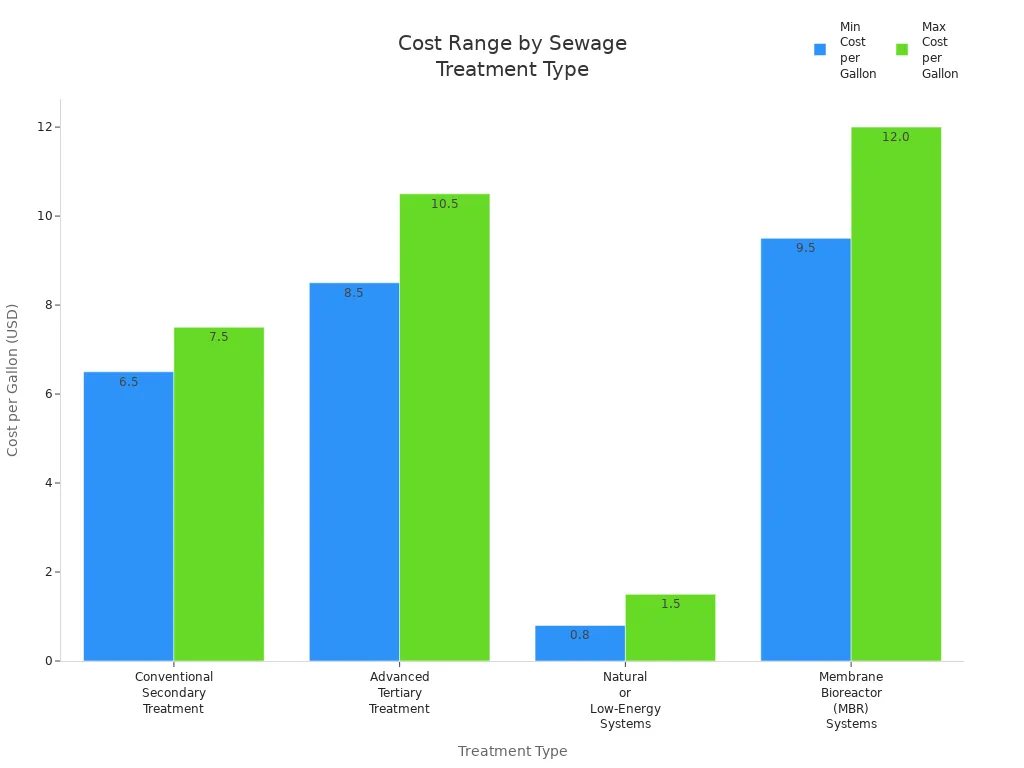
You can see that natural or low-energy systems cost less, while advanced systems cost more. Always compare costs and choose the system that fits your budget and needs.
You should review every important factor before you choose a sewage treatment plant system. Think about your property, wastewater, soil, noise, effluent, energy, maintenance, warranty, and installation.
- Process applicability
- Flow and variation
- Influent characteristics
- Environmental constraints
- Reliability and area availability
FAQ
How often should you service your sewage treatment plant system?
You should schedule a professional service at least once a year. Regular checks help your system run safely and prevent costly repairs.
Can you install a sewage treatment plant system yourself?
You should not install it yourself. Always hire a licensed professional. Proper installation ensures safety and meets local regulations.
What happens if you ignore regular maintenance?
Ignoring maintenance can cause system failure, bad smells, and water pollution. You may face expensive repairs or fines from local authorities.
See Also
Benefits of Using Self-Priming Water Pumps in Systems
Essential Insights on Semi-Welded Plate Heat Exchangers 2025
Three Essential Checkweighers for Food Processing Facilities
Comparing EHEDG Guidelines and 3A SSI Standards for Hygiene
Choosing Materials for Pressure Vessels per ASME BPVC Section VIII