Choosing a Frozen Food Packaging Machine A 2025 Guide
Selecting the right frozen food packaging machine is a critical decision. The best equipment choice depends on three key factors: the specific product, the required production scale, and the desired final package style. Common solutions include Vertical Form Fill Seal (VFFS) machines, pouch fillers, thermoformers, and tray sealers. Each system offers distinct advantages for different applications. This guide provides a clear, step-by-step process for choosing the ideal equipment to meet a company's unique operational needs.
Step 1: Analyze Your Product and Packaging Goals
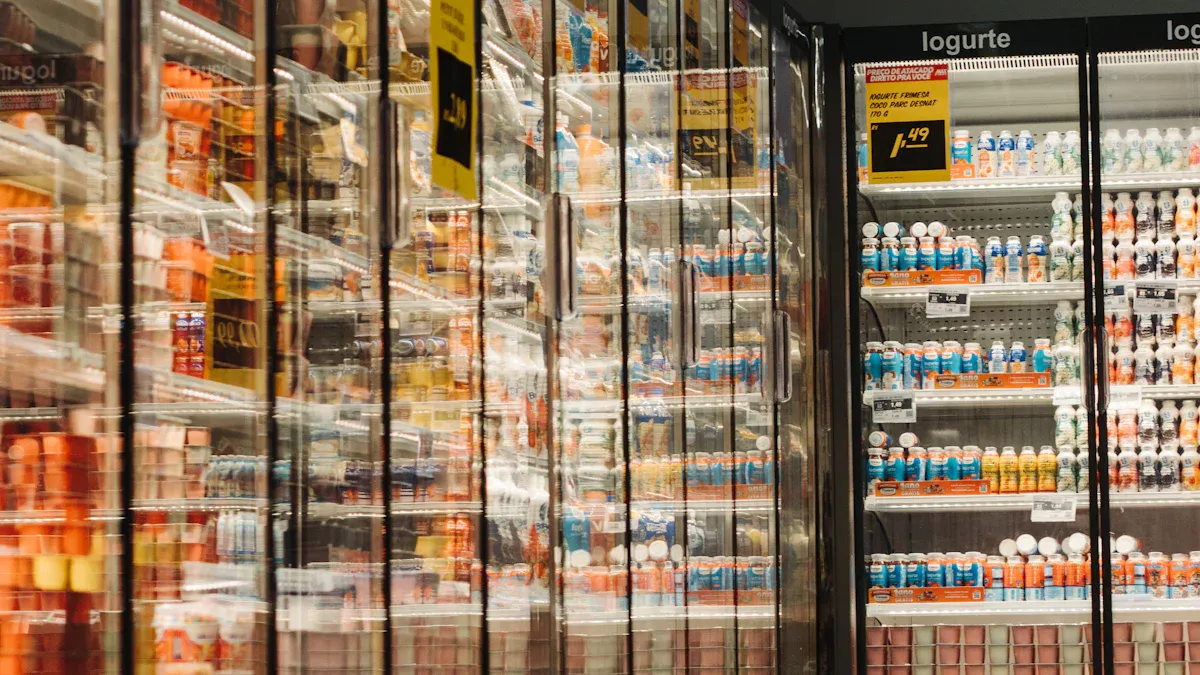
The first step in selecting a packaging machine is a thorough analysis of the product itself. A product's physical characteristics—such as its size, shape, and whether it is free-flowing or a discrete portion—directly influence the type of equipment needed. Equally important are the company's packaging goals, which include brand presentation, consumer convenience, and product protection. Aligning the machine's capabilities with these core factors ensures an optimal packaging outcome.
For Loose IQF Products: VFFS Machines
Vertical Form Fill Seal (VFFS) machines are the industry standard for packaging Individually Quick Frozen (IQF) products. These are items frozen as separate pieces, allowing them to flow freely. VFFS technology is engineered for high-speed, automated packaging of these goods. The machine forms a bag from a flat roll of film, fills it with the product from above, and then seals it.
This method is exceptionally efficient for high-volume production lines. The use of rollstock film significantly reduces material costs compared to pre-made bags, making it a cost-effective choice for commodity products. The most common package style produced is the pillow bag, which is simple and economical.
Products best suited for VFFS machines include:
- Frozen vegetables (peas, corn, green beans)
- Frozen fruits (berries, diced mango)
- Shredded cheese
- Small proteins (shrimp, chicken nuggets, meatballs)
- French fries and other potato products
💡 Professional Tip: For maximum accuracy and minimal product giveaway, manufacturers pair a VFFS machine with a multi-head weigher. The weigher precisely measures the IQF product before dropping it into the bag, ensuring each package meets its target weight.
For Premium Stand-Up Pouches: Pouch Fillers
For products requiring a premium retail presence, an automatic pouch filling and sealing machine is the superior choice. These machines work with pre-made pouches, including popular stand-up pouch formats that offer excellent shelf appeal. This solution is ideal for value-added frozen products where branding and consumer convenience are top priorities.
A pouch filler automates the process of picking a bag from a stack, opening it, filling it with product, and sealing it shut. These machines can easily handle pouches with special features like resealable zippers and tear notches, enhancing the end-user experience. While typically operating at slower speeds than VFFS machines, pouch fillers deliver a higher-end final package that stands out on crowded freezer shelves.
| Advantage | Description |
|---|---|
| Brand Appeal | Pre-made pouches allow for high-quality, full-panel graphics that attract consumer attention. |
| Consumer Convenience | Features like zippers make the package easy to open, use, and reclose, preserving product freshness. |
| Versatility | The machine can often handle multiple pouch sizes and styles with straightforward changeover. |
This approach is perfect for gourmet frozen meals, organic fruits and vegetables, and specialty seasoned items where the packaging itself is part of the product's value proposition.
For Portion Control: Thermoforming Machines
Thermoforming machines, also known as rollstock machines, create packages from two separate rolls of film. This technology is unmatched for applications requiring precise portion control or packaging for uniquely shaped products. The machine heats a bottom layer of film to make it pliable, then forms it into a custom-shaped cavity using a mold. Operators then place the product into the cavity before a top layer of film is applied and sealed.
This process creates a package that is perfectly formed around the product. It is an excellent solution for eliminating excess headspace and providing a secure, durable package. Thermoformers can also perform vacuum sealing or Modified Atmosphere Packaging (MAP) to extend shelf life.
Common applications for thermoforming include:
- 🍔 Burger patties and sausage links
- 🐟 Fish fillets and seafood portions
- 🥩 Steaks and other meat cuts
- 🧀 Blocks of cheese or portioned cheese slices
A key benefit of thermoforming is its flexibility. By simply changing the forming die, a manufacturer can produce packages of various shapes and sizes on the same machine, making it highly adaptable to new product introductions.
For Ready-to-Eat Meals: Tray Sealers
Tray sealers are the premier solution for packaging frozen ready-to-eat meals and multi-component entrees. These machines provide a robust, high-quality package that protects delicate products and offers exceptional consumer convenience. The process involves placing a product into a pre-formed rigid tray. The machine then hermetically seals a layer of lidding film over the top of the tray.
This technology excels at creating a premium, retail-ready package. The rigid tray prevents the product from being crushed, preserving its visual appeal from the production line to the consumer's freezer. Tray sealers are also essential for Modified Atmosphere Packaging (MAP). This process replaces the oxygen inside the package with a specific gas blend (often nitrogen or carbon dioxide) before sealing.
Key benefits of using a tray sealer include:
- Superior Product Protection: The sturdy tray shields the meal during shipping and handling.
- Enhanced Shelf Life: MAP significantly slows down spoilage and preserves the flavor, color, and texture of the food.
- Excellent Presentation: Crystal-clear lidding film showcases the high-quality meal inside, while the tray acts as a "plate."
- Consumer Convenience: Many trays are designed to be microwave-safe or oven-safe, allowing the consumer to heat and eat directly from the package.
💡 Expert Insight: For frozen ready-to-eat meals, MAP is not just a feature; it is a critical quality-control tool. It effectively prevents freezer burn and oxidative rancidity, ensuring the meal tastes as fresh as the day it was packaged.
Tray sealers are the go-to equipment for a wide range of value-added frozen products.
Ideal applications for tray sealers:
- 🍝 Single-serving frozen entrees (lasagna, mac and cheese)
- 🍽️ Multi-component meals (chicken with rice and vegetables)
- 🥗 Frozen meal kits and bowls
- 🍲 Soups and sauces in a tray format
Ultimately, companies choose tray sealers when product integrity, extended shelf life, and a convenient end-user experience are the primary packaging goals.
Step 2: Calculate Your Production Requirements
After identifying the right machine type for a product, a company must quantify its operational needs. This step translates business goals into technical specifications. A thorough analysis of production volume, facility space, and labor resources is essential. These calculations guide the selection of a machine that not only fits the budget but also integrates seamlessly into the existing workflow.
Determine Required Output and Speed
A manufacturer must first determine its required production output. This is typically measured in packages per minute (PPM) or bags per minute (BPM). Companies should calculate this figure based on their current daily or weekly production targets. It is also wise to plan for future growth and seasonal peaks in demand. Selecting a machine that can exceed current needs provides a buffer for expansion without requiring a new capital investment later.
💡 Pro Tip: Always ask potential vendors for the machine's realistic production speed for your specific product and package size, not just its maximum theoretical speed. A machine's actual output can vary based on product flow, film type, and package complexity.
Assess Your Facility's Footprint
Packaging machinery requires more space than just its physical dimensions. A company must assess its facility to ensure adequate room for the entire packaging line. This includes:
- Operating Space: Room for operators to work safely and efficiently around the machine.
- Maintenance Access: Sufficient clearance on all sides for technicians to perform cleaning, service, and repairs.
- Infeed and Outfeed Areas: Space for product to enter the machine and for finished packages to be collected and cased.
- Material Storage: A designated area for storing packaging materials like film rolls, pre-made pouches, or trays.
Careful floor planning prevents operational bottlenecks and ensures a safe working environment.
Evaluate Automation vs. Labor Costs
Choosing between a semi-automatic and a fully automated machine involves a critical financial analysis. A manual or semi-automatic process has a lower initial cost but incurs higher ongoing labor expenses. A fully automated system requires a larger upfront investment but delivers significant long-term savings. Automation reduces labor costs, minimizes human error, and provides more consistent output and seal quality. Companies should calculate the return on investment (ROI) by comparing the machine's cost to the projected savings in labor and waste reduction over time.
Plan for Product Changeover Flexibility
Modern food producers often manage a diverse portfolio of products. A company must consider how efficiently a machine can switch from one product or package size to another. This process, known as changeover, directly impacts operational uptime and profitability. A lengthy changeover can create significant downtime, reducing a facility's overall output. Companies with a high-mix, low-volume production strategy must prioritize machines designed for rapid and simple changeovers.
Several features determine a machine's changeover efficiency. Manufacturers should look for equipment that minimizes the need for specialized labor or complex procedures. Key attributes include:
- Tool-less Adjustments: Components that operators can adjust or swap by hand, without needing wrenches or other tools.
- Digital Recipe Management: Systems that store settings for different products. Operators can recall a recipe from a touchscreen HMI to automatically adjust machine parameters.
- Color-Coded Change Parts: Clearly marked components that simplify and speed up the process of swapping parts for different package sizes.
- Ease of Cleaning: Quick-release belts and open-access frames that allow for fast and thorough sanitation between production runs, which is crucial for allergen control.
💡 Strategic Insight: During the evaluation process, a company should ask vendors for a documented changeover time for their specific applications. Better yet, request a live or video demonstration of a complete changeover. This provides a realistic benchmark of the machine's flexibility and the labor required.
Ultimately, a machine with fast changeover capabilities acts as a force multiplier. It allows a business to respond quickly to changing market demands, launch new products, and run smaller, more targeted production batches without sacrificing efficiency. This flexibility is a powerful competitive advantage in the fast-paced frozen food industry.
Step 3: Key Features for a Frozen Food Packaging Machine
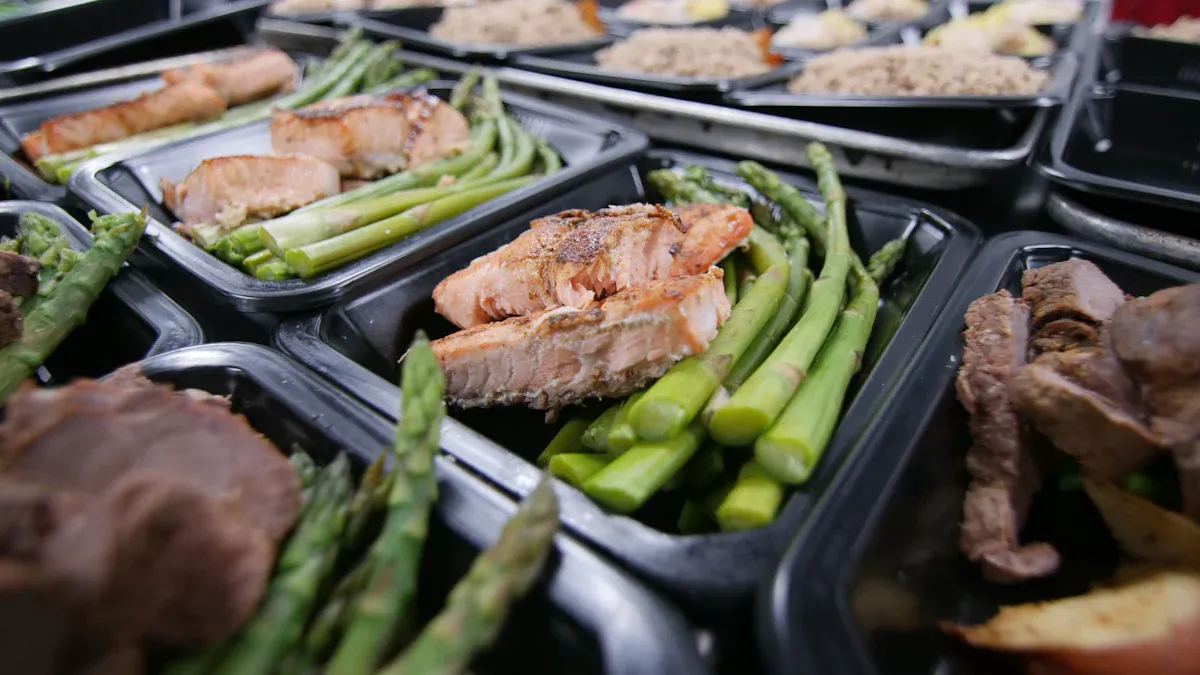
Once a company defines its production requirements, the focus shifts to the machine's technical capabilities. The harsh, cold environment of a frozen food facility places unique demands on equipment. Certain features are not just beneficial; they are essential for ensuring food safety, operational efficiency, and product quality. Evaluating these key attributes is a critical part of the selection process.
Non-Negotiable Sanitary Design
Food safety is the highest priority in any food processing operation. The design of a frozen food packaging machine must prevent the growth of bacteria and allow for easy, thorough cleaning. A sanitary design is non-negotiable. Manufacturers must look for equipment built specifically for the rigors of a cold, washdown environment.
Key elements of a superior sanitary design include:
- Stainless Steel Construction: The machine frame and all product contact parts should be made from high-grade stainless steel, typically 304 or 316, to resist corrosion.
- IP Rating: The equipment should have an Ingress Protection (IP) rating of at least IP65. This rating ensures that electrical enclosures and sensitive components are protected from dust and low-pressure water jets during cleaning. An IP66 rating offers protection against powerful water jets.
- Open-Frame Architecture: An open design eliminates hidden cavities and flat surfaces where water and product debris can collect. Sloped surfaces and rounded frames allow water to drain away completely.
- Tool-less Removable Parts: Components like forming tubes, belts, and funnels should be easy to remove without tools. This feature allows operators to perform quick and effective sanitation procedures between production runs, which is vital for allergen management.
💡 Food Safety Alert: A poorly designed machine can become a breeding ground for pathogens like Listeria, which can thrive in cold, damp environments. Investing in a machine with a proven sanitary design is a fundamental step in protecting consumers and the company's brand.
Weighing and Filling Accuracy
Accuracy in weighing and filling directly impacts a company's bottom line. Every fraction of an ounce of product giveaway, when multiplied by thousands of packages per day, results in significant financial loss. Conversely, underfilled packages can lead to regulatory fines and damage to consumer trust. A high-quality frozen food packaging machine must integrate seamlessly with an accurate weighing system.
The choice of weigher depends on the product characteristics.
| Product Type | Recommended Weigher | Why It's a Good Fit |
|---|---|---|
| IQF Products (Vegetables, Shrimp) | Multi-head Weigher | Uses multiple weigh buckets to calculate the perfect combination to hit the target weight with extreme precision. |
| Powders & Granules (Seasonings) | Auger Filler | A rotating screw dispenses a precise volume of product, ideal for non-free-flowing items. |
| Large Pieces (Chicken Breasts) | Linear Weigher | A simpler, cost-effective solution for weighing larger, uniform items at moderate speeds. |
A primary goal is to minimize "product giveaway." A system that reduces giveaway by just one or two grams per bag can generate tens of thousands of dollars in savings over a year. This makes the investment in a high-precision weigher one of the fastest ways to achieve a return on investment.
Sealing Integrity in Cold Temperatures
Creating a perfect, hermetic seal is one of the most difficult challenges in frozen food packaging. The cold production environment often introduces moisture and condensation. Product dust or small particles can also get caught in the seal area. Any one of these factors can compromise the seal, leading to leaks, freezer burn, and product spoilage.
A robust frozen food packaging machine must have features designed to overcome these challenges. Powerful sealing jaws that apply consistent pressure and precise temperature controls are fundamental. These systems ensure the sealant layers of the film melt and fuse together completely, even with minor contamination.
Advanced machines may also offer features to guarantee seal quality:
- Jaw Obstruction Detection: The machine can detect if a product is caught in the seal area and stop the cycle, preventing a bad seal and wasted product.
- Air Blasts: A quick puff of air can clear the seal area of dust or light debris just before the jaws close.
- Ultrasonic Sealing: This technology uses high-frequency vibrations to create a seal. It is exceptionally effective at sealing through contaminants and is ideal for delicate or heat-sensitive products.
Ensuring every package has a strong, reliable seal protects the product's quality from the factory to the consumer's freezer.
Compatibility with Freezer-Grade Materials
A packaging machine and its materials form an integrated system. The equipment must be fully compatible with the specific freezer-grade films used for production. Standard packaging materials often become brittle and crack at low temperatures. Freezer-grade films are engineered to remain durable and flexible, preventing package failure during freezing, shipping, and handling.
Manufacturers design these specialized materials to provide specific benefits.
- Durability: They resist punctures and tears in cold, harsh conditions.
- Barrier Properties: Multi-layer films create a barrier against moisture and oxygen, which helps prevent freezer burn.
- Sealability: They contain sealant layers, often made of Linear Low-Density Polyethylene (LLDPE), designed to fuse at specific temperatures.
A frozen food packaging machine must have the technical capability to handle these materials effectively. The machine's sealing system needs precise temperature, pressure, and dwell time controls. These parameters must match the exact requirements of the film to create a strong, hermetic seal. The film transport system, including rollers and belts, must also be designed to pull the specific film thickness and type without slipping or stretching. An incorrect setup can lead to poor package quality and operational downtime.
💡 Vendor Verification: Always provide your film supplier's material specifications to the equipment vendor. Better yet, send a roll of your film for testing. This ensures the frozen food packaging machine you purchase is perfectly configured for your materials from day one, preventing costly surprises later.
Confirming this compatibility is a critical step. It guarantees that the final package will maintain its integrity and protect the product throughout its lifecycle.
Step 4: Budgeting Beyond the Initial Purchase
A smart investment in packaging machinery looks beyond the initial price tag. The true cost of a machine unfolds over its entire operational life. A comprehensive budget considers long-term expenses, vendor reliability, and future production needs. This approach ensures the chosen equipment delivers sustained value and supports long-term business goals.
Calculating Total Cost of Ownership (TCO)
The Total Cost of Ownership (TCO) provides a complete financial picture of the investment. It includes the initial purchase price plus all associated costs over the machine's lifespan. A company must analyze these factors to understand the true financial impact.
Key components of TCO include:
- Installation and Training: Costs for professional setup and operator training.
- Consumables and Utilities: Expenses for packaging materials, compressed air, and electricity.
- Spare Parts: The budget for essential replacement parts to minimize downtime.
- Maintenance and Labor: The ongoing cost of service and the labor required to operate the machine.
💡 Financial Insight: A machine with a lower initial price may have a higher TCO due to greater energy use, frequent maintenance needs, or higher material waste. Calculating TCO helps a company make a more financially sound decision.
Evaluating Vendor Support and Service
A reliable vendor is a crucial long-term partner. Strong vendor support minimizes costly downtime and keeps the production line running smoothly. A company should evaluate a vendor's service capabilities before making a purchase. This evaluation protects the investment and ensures help is available when needed. Important service aspects include technical support availability, local technician response times, and the cost of service contracts. A vendor with a robust spare parts inventory can ship critical components quickly, preventing extended shutdowns.
Ensuring Scalability for Future Growth
A packaging machine should be an asset that grows with the business. A company must consider its future goals when selecting equipment. A scalable machine can adapt to increased production demands or new product lines without requiring a complete replacement. This foresight saves significant capital in the long run. Scalability might mean a machine can be upgraded to run faster, handle a wider range of package sizes, or integrate with future automation like case packers. Choosing a machine with built-in flexibility is a strategic move that prepares a company for success.
Step 5: Making the Final Decision
The final phase of the selection process involves verifying vendor claims and confirming financial projections. A company takes these last steps to ensure the chosen machine is the right strategic fit. This due diligence solidifies the decision and builds confidence in the investment.
Requesting Demos and Samples
Theoretical performance is not enough. A company must see the machine operate with its own products and packaging materials. Requesting a demonstration, either in person or via live video, is a critical step. This allows the team to observe the machine's actual speed, changeover process, and overall build quality.
💡 Actionable Insight: A company should always send its specific product and film rolls to the vendor for testing. The vendor can then produce sample packages. This allows the team to inspect the final seal integrity, package appearance, and overall quality before committing to a purchase.
Checking References and Case Studies
Vendors provide performance data, but third-party validation is essential. A company should ask for a list of current customers who are running similar applications. Speaking with these references provides honest feedback on the machine's reliability, the vendor's support, and any unexpected challenges.
Key questions to ask a reference include:
- Does the machine consistently meet the quoted production speeds?
- How responsive is the vendor's technical support team?
- What is the typical lead time for receiving spare parts?
- Would you purchase from this vendor again?
Case studies also offer valuable performance metrics and demonstrate the vendor's experience in the frozen food industry.
Finalizing Your ROI Projections
The final step is to refine the Return on Investment (ROI) calculation. A company uses the data gathered from demos and reference checks to create a precise financial forecast. This projection should go beyond the initial purchase price. It must incorporate all elements of the Total Cost of Ownership (TCO).
The final ROI calculation confirms the machine's financial viability. It should clearly show how the investment will pay for itself through:
- Reduced labor costs from automation.
- Savings from minimized product giveaway.
- Increased revenue from higher production output.
- Lower material waste.
This final analysis provides the clear financial justification needed to move forward with the purchase.
A company's final decision hinges on matching the machine to its product, production needs, and budget. The right frozen food packaging machine is a strategic asset. It drives efficiency, protects product quality, and supports business growth. For a tailored assessment, a manufacturer should contact an equipment expert. This step ensures the selected system aligns perfectly with their specific application and long-term goals.
FAQ
What is a typical speed for a VFFS machine?
A VFFS machine's speed varies based on the product and bag size. A company can generally expect speeds from 30 to 100 bags per minute (BPM). High-speed models can exceed this range for certain applications, making them ideal for large-scale production of IQF products.
How often should a frozen food packaging machine be cleaned?
Operators should clean the machine daily. A thorough washdown at the end of each production day is standard practice. Companies must also perform sanitation procedures between product runs, especially when managing allergens. This practice ensures food safety and prevents cross-contamination.
How long does it take to see a return on investment (ROI)?
The ROI timeline depends on several factors. These include labor savings, reduced product giveaway, and increased output. Most companies see a full return on their investment within 12 to 24 months. A detailed TCO analysis provides a more precise forecast for a specific operation.
What is the main difference between a thermoformer and a tray sealer?
A thermoformer creates the entire package from two rolls of film, forming the tray cavity itself. A tray sealer, in contrast, uses pre-formed rigid trays and seals a layer of lidding film over the top. Tray sealers offer superior product protection for ready-to-eat meals.
See Also
Essential Folder Gluer Innovations Shaping 2025 Carton Packaging Production Lines
Key Capsule Checkweighers: A Buyer's Guide for 2025 Pharmaceutical Manufacturing Decisions
Unpacking Plate Pack Benefits: A Comprehensive Cost Analysis for 2025
Crucial Industrial Checkweighers: The Top Three for Every Modern Food Plant
Ampoule Filling Production Lines: A Head-to-Head Comparison of Leading Manufacturers