Choosing a Heavy Metal Test Kit What to Look For
A person chooses a heavy metal test kit by evaluating five key factors. These are the required sample type, the specific metals tested, lab certification, result clarity, and total cost. A Heavy Metal Rapid Test Kit, for example, might screen for common elements like:
- Lead
- Arsenic
- Mercury
- Cadmium
Note: A more specialized Heavy Metal Rapid Test Kit For Lead Test Kit, Arsenic Test Kit, Mercury Test Kit, Glyphosate Test Kit can identify several different substances at once.
Key Takeaways
- Choose a heavy metal test kit based on your needs. Consider the sample type, the metals it tests for, and if a certified lab does the analysis.
- Blood tests show recent exposure. Urine tests show what your body removes. Hair tests show long-term exposure.
- Always pick a kit that uses a CLIA-certified lab. These labs provide accurate and reliable results.
Key Features to Match to Your Needs
A person's specific health concerns and potential exposure sources guide their choice of a heavy metal test kit. Evaluating the sample type and the specific metals included in the panel are the first steps. These features determine if a kit can provide the relevant information an individual needs.
Choosing the Right Sample Type
Heavy metal test kits require a sample of blood, urine, or hair. Each sample type provides a different kind of information about the body's exposure. The best choice depends on whether a person wants to check for recent, acute, or long-term exposure.
-
🩸 Blood Tests: A blood test is a snapshot in time. It shows heavy metals that are currently circulating in the bloodstream. This makes it useful for identifying very recent or ongoing exposure. In emergency situations, doctors use blood or serum tests to assess acute heavy metal poisoning. For example, serum aluminum levels are a good indicator of recent exposure, especially for dialysis patients. However, blood tests have limitations. The body quickly moves metals from the blood into tissues and organs. This means a blood test is not suitable for measuring past or chronic exposure.
Sample Type Advantages Disadvantages Blood Shows recent or acute exposure. Does not reflect past or chronic exposure. Widely available and easy to collect. Metals are cleared from blood quickly. Good for screening and diagnosis. May not show metals stored in tissues. -
💧 Urine Tests: A urine test shows which heavy metals the body is currently excreting. This can help identify metals that the body has absorbed and is trying to remove. A comprehensive urine test often screens for a wide array of metals. Common elements include arsenic, cadmium, cobalt, lead, mercury, and thallium. This makes urine testing a good option for a broad initial screening.
-
✂️ Hair Tests: Hair analysis provides a long-term record of exposure. As hair grows, the body deposits heavy metals into the hair shaft. These metals become permanently trapped. This creates a timeline of exposure over weeks and months. Hair can show metal levels that are 200 to 300 times more concentrated than in blood or urine. It is an ideal tissue for detecting exposure to elements like arsenic, aluminum, cadmium, lead, and mercury. The Centers for Disease Control and Prevention (CDC) also recognizes hair mercury levels as a valid marker for exposure to methylmercury.
Tip: Choose a sample type based on your goal. Use a blood test for suspected acute poisoning. Use a hair test for a history of exposure. Use a urine test for a broad screening of what your body is currently removing.
Verifying the Metals Tested
Not all test kits screen for the same heavy metals. A person should select a kit that tests for the specific elements they are concerned about. This decision can be based on potential exposure sources or specific health symptoms.
A standard heavy metals panel often includes the most common toxic elements.
- A typical blood test usually screens for lead, arsenic, and mercury.
- A comprehensive urine test often measures arsenic, cadmium, lead, mercury, cobalt, and thallium.
A person can narrow down their choice by matching a test panel to their environment and lifestyle. Different sources of exposure are linked to specific metals.
Based on Exposure Risks:
-
Contaminated Drinking Water: If water quality is a concern, a person should look for a test that includes metals commonly found in water supplies.
- Lead
- Arsenic
- Copper
- Chromium
- Manganese
-
🏭 Occupational Hazards: Certain jobs increase the risk of exposure to specific metals. People in manufacturing, construction, mining, or welding should consider tests that screen for these elements.
- Arsenic: Found at hazardous waste sites.
- Cadmium: A risk for welders and those who process ore.
- Lead: Prevalent in construction, smelter operations, and at firing ranges.
- Mercury: A risk in mining and gold refining.
- Hexavalent Chromium: An exposure risk in industries that produce pigments.
Based on Health Symptoms: Certain symptoms may point toward high levels of specific heavy metals. Matching symptoms to a test panel can be a useful starting point for an investigation.
Note: The following symptoms are potential indicators, not a diagnosis. An individual must consult a healthcare provider to interpret any health concerns.
-
Arsenic: Immediate symptoms of arsenic poisoning can include nausea, vomiting, diarrhea, and a "pins and needles" feeling in the fingers and toes. Long-term exposure may lead to skin changes, warts, and constant digestive issues.
-
Mercury: High exposure to mercury can cause a wide range of issues. Symptoms depend on the type of mercury.
- Methylmercury (from fish) may cause loss of peripheral vision, muscle weakness, and impaired speech or coordination.
- Inorganic mercury can lead to skin rashes, mood swings, memory loss, and kidney damage.
- Metallic mercury (from vapor) can cause tremors, insomnia, headaches, and emotional changes like irritability or shyness.
Choosing a kit that tests for metals linked to one's symptoms or environment ensures the results are as relevant as possible.
Evaluating Kit Quality and Accuracy

After a person identifies the right sample type and metal panel, the next step is to assess the kit's quality. Key indicators of quality include the use of a certified lab, the reliability of the test method, the clarity of its instructions and results, and transparent pricing. These factors separate a trustworthy screening tool from a product that might provide misleading information.
Prioritizing CLIA Certified Lab Analysis
The most reliable at-home heavy metal tests require a person to send a sample to a laboratory for analysis. The best of these labs are CLIA certified. Congress passed the Clinical Laboratory Improvement Amendments (CLIA) in 1988. This act created quality standards for all lab testing on human specimens. The goal is to ensure test results are accurate, reliable, and timely for diagnosis, prevention, or treatment purposes.
A CLIA certified lab must meet strict federal requirements. These standards ensure quality at every stage of the testing process.
- Proficiency Testing: Labs must regularly test external samples and report the results for evaluation to maintain their certification.
- Quality Control: Labs follow the test manufacturer's guidance on operations and quality assurance. The requirements become more stringent as the complexity of the test method increases.
- Personnel Qualifications: A qualified supervisor must oversee the lab. The staff needs proper training and regular competency assessments.
Tip: A person can verify a lab's certification status. The Centers for Medicare & Medicaid Services (CMS) offers a public Laboratory Demographics Lookup tool. CMS also publishes an annual Laboratory Registry with detailed information on certified labs.
Choosing a kit that uses a CLIA certified lab gives a person confidence in the accuracy of their results.
The Problem with a Heavy Metal Rapid Test Kit
Some kits offer instant results without sending a sample to a lab. This type of product is often called a Heavy Metal Rapid Test Kit. While convenient, these kits have significant limitations in accuracy and reliability. Professional testing in a certified lab is the gold standard for detecting heavy metal exposure.
A Heavy Metal Rapid Test Kit often relies on simple color-changing strips. This method has several scientific problems.
- Low Sensitivity: These kits often fail to detect low levels of heavy metals. This can lead to a false sense of security, as even minor exposures can be harmful over time.
- Subjective Results: The user must interpret a color change by eye. This judgment can be subjective and lead to inaccurate conclusions.
- Chemical Interference: Other substances can interfere with the test. For example, some lead test kits show a false positive result when barium is present. Other chemicals can hide the presence of lead, causing a false negative.
The rates of false positives and false negatives for a Heavy Metal Rapid Test Kit can be high. The table below shows false negative rates for some kits, highlighting their unreliability.
| Test Kit Type | False Negative Rate (Lead) | False Negative Rate (Cadmium) |
|---|---|---|
| Chromogen (specific lead kit) | 17.4% | N/A |
| Lead Zone™ (specific lead kit) | 8.7% | N/A |
| Cadmium Kit | N/A | 29% |
Medical professionals advise against using any rapid test kit for a final diagnosis. A negative result does not rule out a problem, especially if a person has symptoms or known exposure. The accuracy of a Heavy Metal Rapid Test Kit is often questionable. For this reason, a lab-analyzed test is a much better choice for getting dependable information. A Heavy Metal Rapid Test Kit may be a starting point, but it is not a definitive tool.
Assessing Instructions and Result Clarity
A good test kit is easy to use and provides results that a person can understand. Unclear instructions or confusing reports can make a test worthless.
Clear Instructions Poorly written instructions can lead to mistakes during sample collection. This can ruin the sample and produce a failed test. A person should look for kits with simple, clear guidance.
- Avoids Jargon: Good instructions use plain language instead of complex medical terms.
- Step-by-Step Guidance: The process should be broken down into simple, numbered steps. Visual cues and well-designed packaging can create a smooth, intuitive journey for the user.
- Simple Language: Information should not be in long, dense paragraphs. Short sentences and clear headings make instructions easier to follow.
Easy-to-Understand Results The final lab report is the most important part of the test. A quality report presents complex information in a simple way. Top-rated kits provide results in a clear, easy-to-read format.
A good report should always include these key elements:
- Your Result: The measured level of each heavy metal.
- Reference Range: The normal or expected range for each metal. This helps a person see if their level is high, low, or normal.
- Clear Highlighting: Results that fall outside the normal range are typically highlighted to draw attention.
- Explanatory Notes: Some reports add brief comments to explain the clinical significance of a result. For example, a critically abnormal result might have a bolded comment like, “Contact your doctor at your earliest convenience.”
Some services also offer follow-up support. This might include an email notification, access to a secure online portal, or the option to speak with an independent physician to discuss the results.
Understanding the Total Cost
The price of a heavy metal test kit can vary widely. A person should understand the total cost before making a purchase. This includes the kit price and any additional fees.
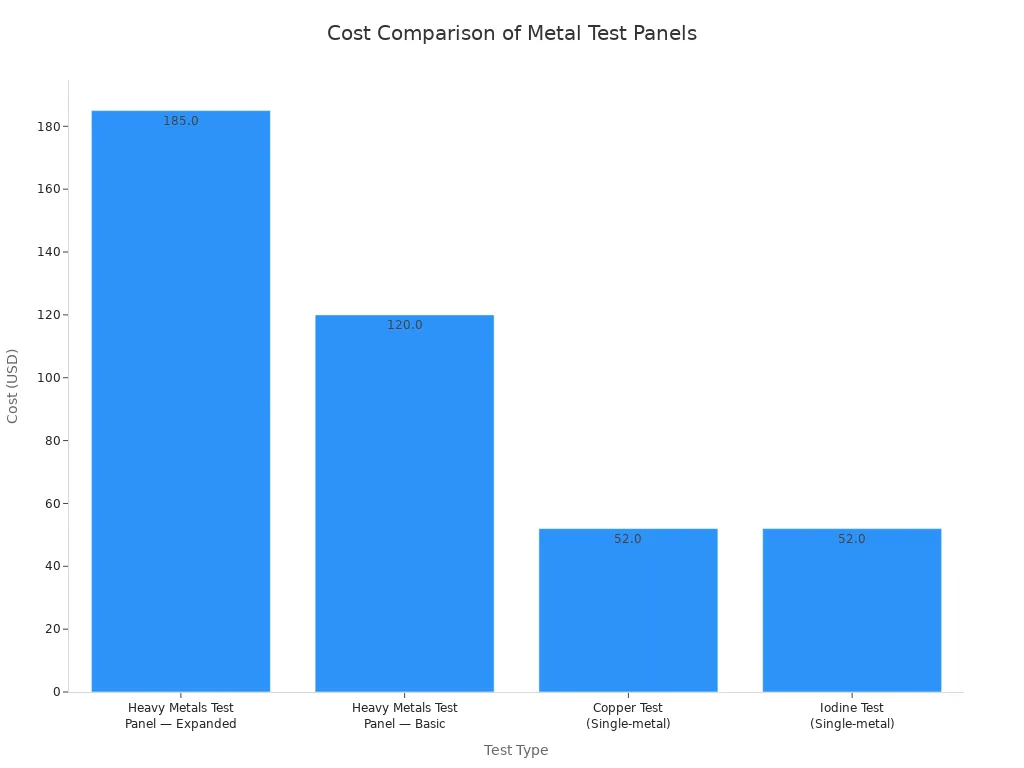
The initial price for lab-analyzed kits typically ranges from around $120 to over $350. For example, a basic urine panel for arsenic, cadmium, lead, and mercury might cost about $126. A more extensive test for metals in a solid or liquid sample could be $250 or more.
A person should also check for hidden fees.
- Shipping Fees: Some companies offer free shipping, while others charge extra. Sometimes free shipping is only available with a paid membership program.
- Lab Analysis Fees: Most quality kits include the lab analysis fee in the initial price. A person should always confirm this to avoid an unexpected bill.
- Physician Service Fees: Some services add a small fee (around $6) for an independent physician to order the test.
Comparing the cost of different panels is also useful. A comprehensive multi-metal panel is often more cost-effective than buying several single-metal tests.
Finally, a person might be able to use a Health Savings Account (HSA) or Flexible Spending Account (FSA) to pay for a test. Many test providers accept HSA/FSA cards. However, insurance coverage is less common for direct-to-consumer tests. A person should check with their plan provider to confirm eligibility.
A person can use a final checklist to select the right kit.
- Does it use the right sample type?
- Does it test for the metals of concern?
- Is the analysis done by a certified lab?
- Are the instructions and results clear?
- Is the cost transparent?
Remember, an at-home kit is a valuable first step. A person must always consult a healthcare provider to discuss concerning results. A provider can offer a proper diagnosis and create a treatment plan, which may include options like chelation therapy.
FAQ
What is the best heavy metal test kit?
The best kit depends on a person's needs. A person should choose a kit that uses a CLIA certified lab. It must also test for specific metals of concern.
How often should a person test for heavy metals?
Most people do not need regular testing. A person with known exposure risks or symptoms should consult a doctor. The doctor can recommend an appropriate testing schedule for them.
Tip: A single baseline test can be useful. A person can use it to establish their normal heavy metal levels for future reference if concerns arise.
See Also
Selecting the Optimal A1 A2 Milk Test Kit for Dairy Operations
Tablet Sampling Machines: An Essential Guide for Laboratory Equipment Selection
Frame Plate Kits for Auto Reinforcement: A Comprehensive Beginner's Handbook
Top Capsule Checkweighers for Buyers to Evaluate in the Year 2025
Achieving Superior Results with Steel Processing in Heat Exchange Applications