How to Choose the Right Packing Machine for Your Food Products
Selecting the right packing machine for food products starts with a clear understanding of each product’s unique packaging needs. Different foods require different packaging solutions. For example, fresh produce demands gentle handling, while dry snacks need airtight sealing. Companies must match their product’s characteristics with machine capabilities to achieve quality and efficiency.
Proper alignment between product requirements and machine features ensures consistent results and supports food safety.
Understand Your Product and Packaging Requirements
Define Your Food Product Type
Every food product presents unique challenges during packaging. Companies must identify the physical characteristics of their products. For example, powders, liquids, solids, and granules each require different handling methods. Moisture content, fragility, and shelf life also influence the choice of packing machine for food products.
Tip: Create a checklist of product attributes such as texture, size, and sensitivity to temperature. This step helps narrow down suitable machine options.
Choose the Right Packaging Format
Packaging format plays a critical role in product presentation and preservation. Businesses select formats based on marketing goals, storage needs, and distribution channels. Common packaging formats include pouches, trays, bottles, cartons, and vacuum-sealed bags. Each format works best with specific types of packing machine for food products.
| Packaging Format | Suitable Food Types | Recommended Machine Type |
|---|---|---|
| Pouches | Snacks, powders | Vertical Form Fill Seal Machine |
| Trays | Ready meals, fresh produce | Tray Sealing Machine |
| Bottles | Sauces, beverages | Liquid Filling Machine |
| Cartons | Cereals, baked goods | Cartoning Machine |
| Vacuum-sealed bags | Meats, cheese | Vacuum Packaging Machine |
Selecting the right format ensures product safety and enhances shelf appeal.
Determine Production Volume and Speed
Production requirements influence machine selection. Companies must estimate daily output and peak demand periods. High-volume operations need machines with greater speed and automation. Small-scale producers may prioritize flexibility and ease of changeover.
- High-speed machines suit large factories with continuous production.
- Flexible machines benefit businesses with frequent product changes.
- Accurate throughput calculations prevent bottlenecks and reduce waste.
Note: Matching machine speed to production goals improves efficiency and reduces operational costs.
Consider Food Safety and Compliance
Food safety stands as a top priority for every food manufacturer. Packing machines must support hygienic operations and comply with industry regulations. Companies should evaluate machines for features that prevent contamination and maintain product integrity.
Regulatory agencies such as the FDA and USDA set strict standards for food packaging equipment. Manufacturers must select machines that use food-grade materials and offer easy cleaning access. Stainless steel surfaces resist corrosion and simplify sanitation. Sealed components protect products from dust and moisture.
Tip: Always request documentation that proves compliance with local and international food safety standards.
A packing machine for food products should include safety interlocks and automated cleaning cycles. These features reduce human error and improve consistency. Machines with minimal crevices and smooth surfaces help prevent bacterial growth.
| Compliance Factor | Why It Matters | What to Look For |
|---|---|---|
| Food-grade construction | Prevents chemical contamination | Stainless steel, BPA-free parts |
| Easy cleaning access | Reduces risk of residue buildup | Removable panels, CIP systems |
| Sealed electronics | Protects against moisture | IP-rated enclosures |
| Traceability features | Supports recalls and audits | Batch coding, data logging |
Companies must also consider allergen management. Machines should allow for thorough cleaning between product runs to avoid cross-contact. Automated systems can track cleaning schedules and record maintenance activities.
Safety certifications provide assurance that machines meet legal requirements. Look for CE, UL, or NSF marks when evaluating equipment. These certifications indicate that the machine passed rigorous testing.
Note: Investing in compliant packing equipment protects brand reputation and reduces the risk of costly recalls.
Types of Packing Machine for Food Products and Their Suitability
Vertical Form Fill Seal Machines
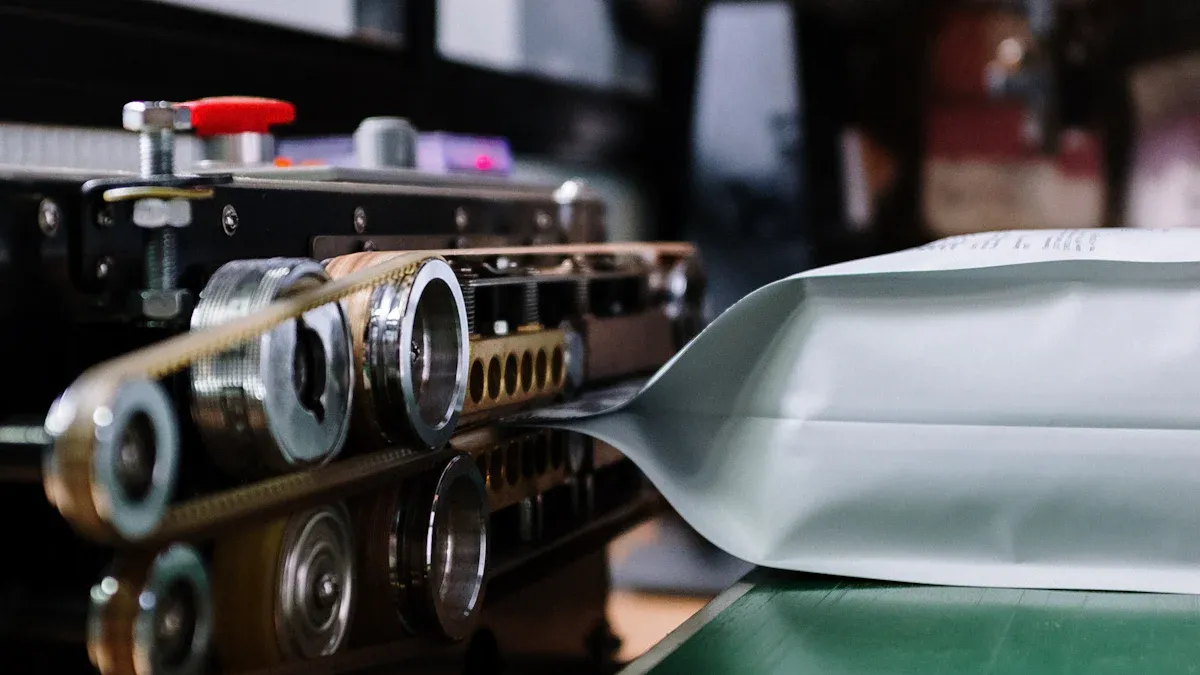
Vertical Form Fill Seal (VFFS) machines stand out as a popular choice in the food industry. These machines form a pouch from a flat roll of film, fill it with product, and seal it—all in a vertical orientation. Companies use VFFS machines for a wide range of products, including snacks, powders, grains, and frozen foods.
Key Advantages:
- High-speed operation supports large-scale production.
- Compact design saves valuable floor space.
- Versatile enough to handle different bag sizes and materials.
| Feature | Benefit |
|---|---|
| Automated film feeding | Reduces manual labor |
| Precise filling | Minimizes product giveaway |
| Quick changeover | Increases production uptime |
Tip: VFFS machines work best for free-flowing products and can integrate with multihead weighers for improved accuracy.
Manufacturers often select this type of packing machine for food products when they need efficiency and flexibility. VFFS machines also support various sealing options, such as pillow, gusseted, or block-bottom bags.
Horizontal Flow Wrap Machines
Horizontal Flow Wrap machines package products by wrapping them in a continuous film and sealing both ends. The product moves horizontally through the machine, making this method ideal for items that require gentle handling or have a regular shape.
Common Applications:
- Candy bars
- Biscuits
- Granola bars
- Fresh produce
Benefits:
- Maintains product integrity with minimal handling.
- Delivers attractive, tamper-evident packaging.
- Handles high-speed production lines.
| Product Type | Suitability for Flow Wrap |
|---|---|
| Solid bars | Excellent |
| Bakery items | Very Good |
| Fruits/Vegetables | Good |
Note: Horizontal Flow Wrap machines allow for easy integration with labeling and coding systems, which helps with traceability and compliance.
Companies often choose this solution for products that need a tight, protective wrap and a visually appealing presentation.
Tray Sealing Machines
Tray sealing machines seal pre-formed trays with a film or lid. These machines suit products that require rigid packaging, such as ready meals, fresh produce, and meat. Tray sealing helps extend shelf life and maintain product freshness.
Advantages:
- Provides a secure, leak-proof seal.
- Supports modified atmosphere packaging (MAP) to preserve freshness.
- Offers flexibility for different tray sizes and materials.
| Application | Benefit of Tray Sealing |
|---|---|
| Ready meals | Leak-proof, microwaveable |
| Fresh produce | Extended shelf life |
| Meat and poultry | Enhanced food safety |
Callout: Tray sealing machines often include features like automatic tray denesting and film cutting, which streamline the packaging process.
A packing machine for food products like tray sealers ensures consistent sealing quality and supports compliance with food safety standards. Many models allow for quick changeovers, which benefits companies with diverse product lines.
Vacuum Packaging Machines
Vacuum packaging machines remove air from the package before sealing. This process helps preserve food by slowing down oxidation and inhibiting the growth of bacteria and mold. Many food manufacturers rely on vacuum packaging to extend shelf life and maintain product freshness.
Key Benefits of Vacuum Packaging Machines:
- Protects food from spoilage and freezer burn.
- Maintains flavor, texture, and nutritional value.
- Reduces the need for preservatives.
| Application | Benefit |
|---|---|
| Meats and seafood | Longer shelf life |
| Cheeses | Prevents mold growth |
| Prepared meals | Maintains freshness |
Vacuum packaging machines suit a wide range of products, including fresh meats, cheeses, and ready-to-eat meals. Operators can select from chamber vacuum machines or external vacuum sealers, depending on production volume and package size.
Tip: Companies should choose a packing machine for food products that offers adjustable vacuum levels. This feature allows operators to customize packaging for delicate items like bakery goods or soft cheeses.
Vacuum packaging also supports sous vide cooking, which has gained popularity in both commercial kitchens and home use. Machines with automated sealing and cutting functions help streamline production and reduce labor costs.
Aseptic Packaging Machines
Aseptic packaging machines fill and seal food products in a sterile environment. This technology keeps food safe without refrigeration and extends shelf life. Many manufacturers use aseptic packaging for dairy products, juices, sauces, and liquid foods.
Advantages of Aseptic Packaging:
- Preserves product quality and taste.
- Eliminates the need for chemical preservatives.
- Enables storage at room temperature.
| Product Type | Suitability for Aseptic Packaging |
|---|---|
| Milk and dairy | Excellent |
| Fruit juices | Very Good |
| Liquid sauces | Good |
Aseptic packaging machines sterilize both the product and the packaging material before filling. Operators must monitor temperature, pressure, and sterilization cycles to ensure food safety. These machines often include advanced controls and sensors for precise operation.
Note: Aseptic packaging requires strict compliance with food safety standards. Companies should verify that machines meet regulatory requirements and provide documentation for audits.
Aseptic systems support high-speed production and reduce the risk of contamination. Many models offer flexibility for different package sizes and formats, such as cartons, bottles, or pouches.
Multihead Weighers and Combination Weighers
Multihead weighers and combination weighers deliver fast and accurate portioning for food products. These machines use multiple weighing heads to calculate the exact amount of product for each package. Manufacturers rely on them for products like snacks, candies, frozen foods, and fresh produce.
Features of Multihead Weighers:
- High-speed weighing and filling.
- Consistent portion control.
- Minimal product giveaway.
| Product Type | Benefit of Multihead Weighers |
|---|---|
| Snack foods | Precise weight in every pack |
| Frozen vegetables | Fast, automated filling |
| Confectionery | Reduced waste |
Operators can program multihead weighers for different target weights and product types. These machines integrate easily with vertical form fill seal machines and other packing equipment. The combination of speed and accuracy helps companies meet production goals and maintain quality standards.
Callout: Multihead weighers improve efficiency and reduce labor costs. Automated systems minimize human error and support consistent packaging results.
Manufacturers should select a packing machine for food products that matches their portioning needs and integrates with existing production lines. Advanced models offer user-friendly interfaces and quick changeover features for different products.
Key Features to Evaluate in a Packing Machine for Food Products
Speed and Throughput
Speed and throughput determine how many units a machine can package within a set time. Manufacturers often measure throughput in packs per minute or hour. High-speed machines suit large-scale operations that need to meet tight deadlines. Companies should compare the rated speed of each model with their production targets.
| Machine Type | Typical Speed (packs/min) |
|---|---|
| Vertical Form Fill Seal | 60-120 |
| Horizontal Flow Wrap | 80-200 |
| Tray Sealing | 20-60 |
A fast packing machine for food products helps reduce labor costs and increase output. Operators should also consider downtime for maintenance or changeovers. Machines with quick setup features support higher overall productivity.
Tip: Always check if the machine maintains speed without sacrificing seal quality or accuracy.
Accuracy and Consistency
Accuracy ensures each package contains the correct amount of product. Consistency maintains uniformity across all packages. Multihead weighers and advanced sensors help achieve precise filling. Inaccurate machines can lead to product giveaway or underfilled packs, which affects profit and customer satisfaction.
Manufacturers should look for machines with automated weighing and portioning systems. Consistent performance supports brand reputation and reduces waste. Regular calibration and maintenance keep accuracy levels high.
- Accurate filling protects against costly recalls.
- Consistent packaging builds trust with consumers.
Automation and Flexibility
Automation streamlines the packaging process and reduces manual intervention. Flexible machines adapt to different product types, sizes, and packaging formats. Companies benefit from automation through improved efficiency and lower error rates.
Modern machines offer programmable controls and touch-screen interfaces. Operators can switch between products with minimal downtime. Flexible systems allow manufacturers to respond quickly to market changes or seasonal demand.
| Feature | Benefit |
|---|---|
| Automated changeover | Faster product switches |
| Modular design | Easy upgrades |
| Recipe storage | Consistent settings |
Note: Investing in automation and flexibility prepares businesses for future growth and changing consumer preferences.
Ease of Maintenance and Cleaning
Manufacturers prioritize machines that simplify maintenance and cleaning. Easy access to internal components reduces downtime and supports consistent production. Operators look for designs with removable panels and tool-free entry points. These features allow quick inspections and repairs.
Food packaging environments demand strict hygiene. Machines with smooth surfaces and minimal crevices help prevent residue buildup. Stainless steel construction resists corrosion and supports frequent sanitation cycles. Many models include automated cleaning systems, such as Clean-in-Place (CIP) technology.
Tip: Regular cleaning schedules and clear maintenance logs help companies meet food safety standards and avoid contamination risks.
Maintenance-friendly machines often feature:
- Color-coded parts for easy identification
- Quick-release mechanisms for belts and conveyors
- Accessible lubrication points
Operators benefit from clear manuals and training resources. Manufacturers who provide video tutorials and troubleshooting guides help teams resolve issues faster. Companies should evaluate the availability of spare parts and technical support when selecting equipment.
| Feature | Maintenance Benefit |
|---|---|
| Removable panels | Faster cleaning |
| CIP systems | Automated sanitation |
| Modular design | Easy part replacement |
A packing machine for food products that supports efficient cleaning and maintenance helps companies maintain high standards and reduce operational costs.
Cost and Return on Investment
Companies assess both upfront costs and long-term value when choosing packaging equipment. Initial investment includes the price of the machine, installation, and training. Ongoing expenses cover maintenance, spare parts, and energy consumption.
Decision-makers compare machines based on total cost of ownership. High-quality equipment may cost more but often delivers better reliability and lower downtime. Energy-efficient models reduce utility bills and support sustainability goals.
Return on investment (ROI) depends on increased productivity, reduced labor costs, and minimized product waste. Automated machines often pay for themselves through higher throughput and fewer errors. Companies calculate ROI by measuring improvements in output and reductions in operational expenses.
Note: Investing in reliable equipment protects against unexpected breakdowns and supports business growth.
Key factors influencing cost and ROI include:
- Machine durability and warranty coverage
- Availability of local service technicians
- Flexibility to handle multiple product types
Companies should request detailed quotes and compare warranty terms before making a final decision. Long-term savings often outweigh initial costs when equipment supports efficient production and easy maintenance.
Assessing Manufacturers and After-Sales Support
Manufacturer Reputation and Experience
A reliable packing machine starts with a trusted manufacturer. Companies should research the manufacturer’s history in the food packaging industry. Experienced manufacturers often deliver higher quality machines and better innovation. They usually have a proven track record of successful installations and satisfied customers.
Tip: Look for manufacturers with at least five years of experience in food packaging equipment.
A reputable manufacturer invests in research and development. They also provide clear documentation and training resources. Many leading brands showcase case studies or testimonials on their websites. These resources help buyers understand real-world performance.
Checklist for Evaluating Manufacturer Reputation:
- Years in business
- Industry awards or certifications
- Customer testimonials
- Global presence
Warranty and Service Agreements
A strong warranty protects a company’s investment. Manufacturers who offer comprehensive warranties show confidence in their products. Buyers should review warranty terms carefully. Coverage should include parts, labor, and technical support for a reasonable period.
Service agreements add extra value. They often include scheduled maintenance, emergency repairs, and software updates. These agreements help prevent unexpected downtime and extend machine life.
| Warranty Feature | Why It Matters |
|---|---|
| Parts replacement | Reduces repair costs |
| Labor coverage | Ensures quick fixes |
| Remote support | Solves issues faster |
Note: Always request a written copy of the warranty and service agreement before purchase.
Availability of Spare Parts and Technical Support
Fast access to spare parts keeps production running smoothly. Manufacturers with local warehouses or authorized distributors can ship parts quickly. This reduces downtime and avoids costly delays.
Technical support plays a key role in machine reliability. Leading manufacturers offer 24/7 support lines, online troubleshooting guides, and on-site service visits. Well-trained technicians help resolve issues and provide training for operators.
Key Questions to Ask:
- Are spare parts stocked locally?
- How fast can technicians respond to service calls?
- Does the manufacturer offer operator training?
Companies that prioritize after-sales support build long-term partnerships and ensure consistent machine performance.
Customer Reviews and References
Customer reviews and references provide valuable insights into the real-world performance of packing machines for food products. Buyers often rely on feedback from other companies to assess reliability, ease of use, and after-sales support. These firsthand accounts help identify potential issues and highlight strengths that may not appear in product specifications.
Tip: Companies should read reviews from businesses with similar production needs. This approach ensures that feedback is relevant and practical.
Manufacturers with positive reviews usually deliver consistent quality and dependable service. Negative feedback may reveal recurring problems, such as frequent breakdowns or poor technical support. Buyers should look for patterns in customer comments rather than focusing on isolated complaints.
Key points to consider when evaluating customer reviews:
- Consistency in machine performance
- Responsiveness of technical support
- Ease of installation and training
- Durability and maintenance requirements
References offer another layer of assurance. Reputable manufacturers provide contact information for previous clients. Speaking directly with these references allows buyers to ask specific questions about machine operation, reliability, and support.
| What to Ask References | Why It Matters |
|---|---|
| Was the machine easy to set up? | Reveals installation challenges |
| How quickly does support respond? | Shows after-sales reliability |
| Has the machine met production goals? | Confirms performance claims |
Buyers should request references from companies in the same industry or with similar packaging needs. This strategy helps ensure that the packing machine for food products will perform as expected in a comparable environment.
Note: Customer reviews and references build confidence in the purchasing decision. They help buyers avoid costly mistakes and select equipment that meets their requirements.
By prioritizing feedback from real users, companies make informed choices and strengthen their investment in food packaging technology.
Selecting the right packing machine for food products requires careful alignment between machine capabilities and product needs. Companies should focus on product requirements, essential machine features, and manufacturer reliability.
- List specific packaging needs.
- Research available machine types.
- Consult reputable suppliers for expert advice.
Smart planning leads to efficient operations and long-term success in food packaging.
FAQ
What factors determine the best packing machine for a food product?
Several factors influence the choice. Product type, packaging format, production volume, and food safety requirements all play a role. Companies should match machine features to their product’s needs for optimal results.
How often should a packing machine undergo maintenance?
Manufacturers recommend regular maintenance based on usage. Most machines need daily cleaning and monthly inspections. Preventive maintenance reduces downtime and extends equipment life.
Can one packing machine handle multiple food products?
Many modern machines offer flexibility. Operators can adjust settings or change parts to accommodate different products. However, some machines work best with specific product types.
What certifications should a food packing machine have?
Packing machines should carry certifications like CE, UL, or NSF. These marks show compliance with safety and hygiene standards. Companies should always request proof of certification.
How does automation improve food packaging operations?
Automation increases speed and accuracy. Machines with automated controls reduce manual labor and minimize errors. Companies benefit from higher productivity and consistent packaging quality.
See Also
Essential Checkweighers For Food Plants In 2025
Must-Have Capsule Checkweighers For Buyers This Year
Enhancing Pharma Efficiency With Modern Capsule Decapsulation Machines
Innovative Folder Gluer Features For Carton Lines In 2025
Comparing Leading Manufacturers Of Ampoule Filling Production Lines