How to Choose High Volume Water Dispenser for Public Spaces
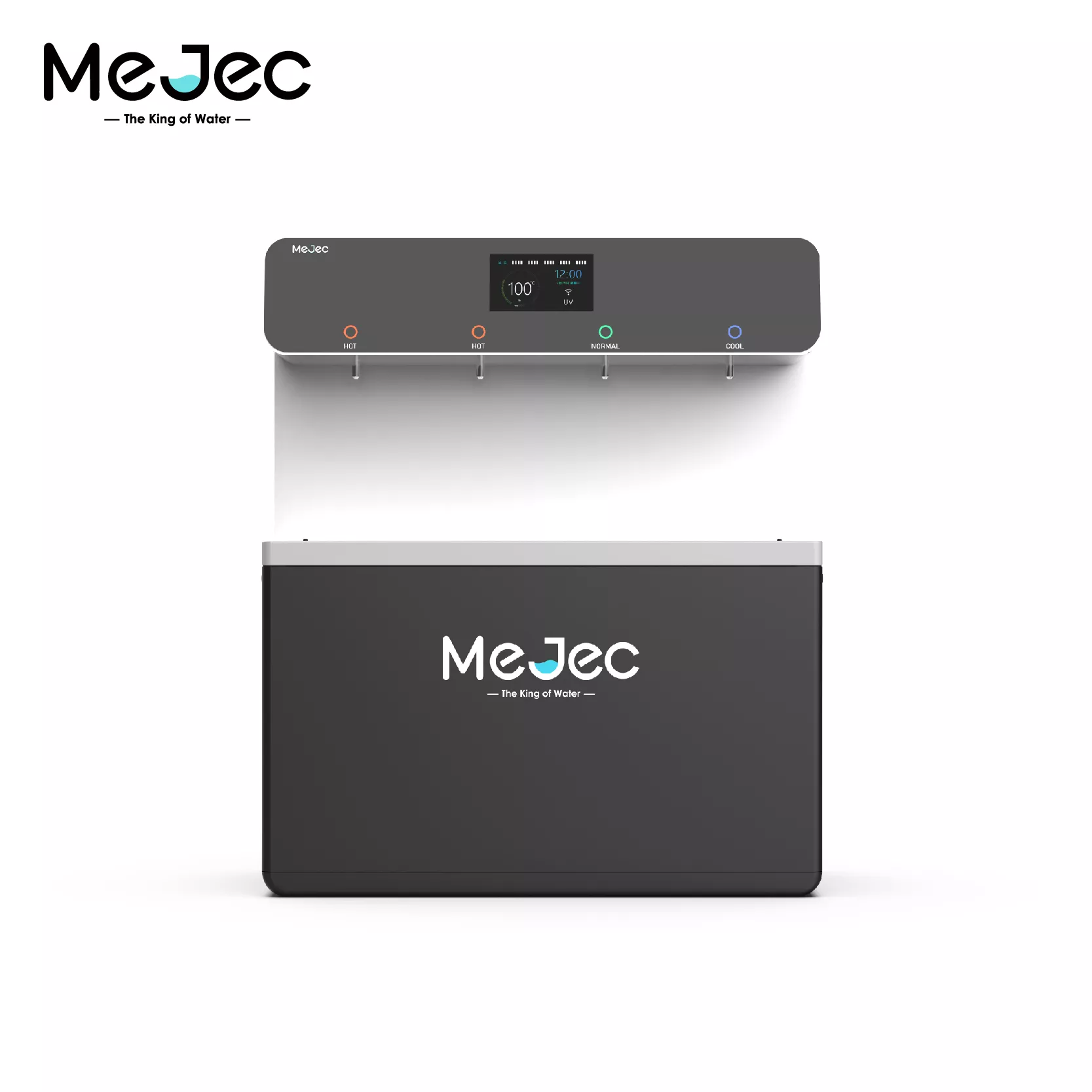
Choosing a high volume water dispenser is essential for public spaces with heavy foot traffic. Capacity plays a key role in meeting hydration needs for schools, offices, gyms, and healthcare facilities. Many water dispenser models feature rapid chill technology and dual dispensing options, allowing users to access hot or cold water instantly. Efficient water dispenser systems help reduce queues, especially during peak demand. Built-in purification systems in each dispenser ensure clean water by drawing from municipal supplies and treating it through multi-stage filtration. Advanced high volume water dispenser designs, such as those with multi-tap and customizable options, enhance user experience and support sustainability by encouraging reusable bottles.
High volume water dispenser units provide accessible water stations for shopping malls, transit stations, parks, and airports.
Water dispenser models with heating and cooling units deliver safe, clean water for everyone.
Key Takeaways
Estimate daily water needs by multiplying the number of users by 8 to 12 gallons per person. This helps ensure everyone has access to hydration.
Choose dispensers with the right capacity to match user traffic. This reduces wait times and improves user satisfaction.
Select bottle-less dispensers for continuous water access and lower long-term costs. They also support sustainability by reducing plastic waste.
Implement smart monitoring systems to track filter health and water quality. This ensures consistent service and reduces maintenance costs.
Prioritize safety and accessibility by choosing dispensers that meet ADA requirements. This ensures all users can access water comfortably.
Capacity Needs for High Volume Water Dispenser
Estimating Usage in Public Spaces
Understanding how much water people need in public spaces is the first step in choosing the right water dispenser. Facility managers often estimate daily water usage by looking at the number of people who use the space. For example, in a busy school or office, you can use simple formulas to predict daily water needs:
Multiply the average number of daily occupants by 8 gallons per person for a low estimate.
Multiply the average number of daily occupants by 12 gallons per person for a high estimate.
These calculations help managers decide the right capacity for each water dispenser. Accurate estimates prevent shortages and ensure everyone has access to safe hydration throughout the day. In places like gyms or stadiums, where people need more water, these numbers may be even higher.
Tip: Always consider the type of public space and the activities taking place. Active environments, such as sports centers, require more hydration options than quiet libraries.
Matching Dispenser Capacity to Traffic
The capacity of a water dispenser must match the number of people using it, especially during busy times. If the dispenser is too small, people may have to wait in line, which can cause frustration. On the other hand, a dispenser with the right capacity keeps the flow steady and reduces wait times. Automated water dispensers are especially helpful in high-traffic areas like airports and malls. They provide quick access to water and help avoid long lines.
Strategy | Description |
|---|---|
Technological Innovations | Automated dispensers reduce congestion and improve service efficiency. |
Fast-Track Queues | Special lines can help during very busy periods in some locations. |
Workflow Improvements | Better processes make it easier for people to get water quickly. |
Automated water dispenser systems appeal to busy users who want fast hydration without waiting. The right capacity ensures that everyone can fill their bottles or cups quickly, even during peak hours.
Planning for Peak Demand
Public spaces often experience peak demand during events like festivals, conferences, or school assemblies. Planning for these times is important to avoid running out of water or causing long waits. Here are some strategies to help plan for peak hydration needs:
Make sure water is available for everyone, including people with disabilities who may need more frequent hydration.
Check if the current water dispenser setup is enough for the size and length of the event.
For large or long events, add portable water containers or coolers in easy-to-reach spots.
Choose dispensers with easy-to-use controls, such as levers or touch panels.
Assess the highest expected demand to pick the right size for each water dispenser.
A small dispenser can lead to delays and unhappy users, while a very large one may waste resources.
For small venues, a 2.5 to 5-gallon dispenser may be enough. For bigger events, consider 5 to 10-gallon units or more.
The right capacity helps avoid constant refilling and keeps the water supply steady during busy hours.
Note: Getting the capacity right is key. Too little capacity causes delays and frustration. Too much can waste energy and lower water quality. For high-demand settings, larger dispensers (5 to 10 gallons) are best for uninterrupted hydration.
By carefully estimating usage, matching dispenser capacity to traffic, and planning for peak demand, facility managers can ensure reliable hydration for everyone in public spaces.
Dispenser Types & Features
Bottleless vs. Bottled Water Dispenser
Choosing between bottle-less and bottled water dispenser models depends on the needs of the public space. Bottle-less dispensers connect directly to the water supply, offering continuous access to water. These dispensers require regular filter changes and annual sanitization to maintain performance and water quality. Bottled water dispensers rely on large water jugs, which need frequent replacement and cleaning of internal reservoirs. The maintenance requirements differ, as shown below:
Dispenser Type | Maintenance Requirements |
|---|---|
Point-of-Use Systems | Regular filter replacements (every 6–12 months), annual sanitization of internal parts. |
Bottled Water Dispensers | Less frequent maintenance, but internal reservoirs need cleaning every 3–6 months. |
Operational costs also vary. Bottle-less dispensers have higher upfront costs but lower ongoing expenses, since they do not require bottle deliveries. Bottled dispensers have lower initial costs but higher long-term expenses due to bottle purchases and delivery. Environmental impact is lower with bottle-less models, as they reduce plastic waste and support sustainability.
Freestanding vs. Countertop Models
Water dispenser models come in freestanding and countertop designs. Freestanding dispensers require floor space and suit open areas, while countertop models fit smaller spaces like break rooms. Wall-mounted dispensers save space and work well in hallways. The table below compares space and accessibility:
Model Type | Space Requirements | Suitability |
|---|---|---|
Floor-Standing | Requires ample floor space | Best for open areas |
Countertop | Compact, suitable for smaller spaces | Ideal for break rooms or counters |
Wall-Mounted | Space-saving, fits narrow areas | Good for hallways or outdoor use |
Freestanding dispensers often offer higher capacity and durability, making them ideal for high-traffic areas. Countertop models provide convenience in limited spaces and are easy to install.
Multi-Tap & Temperature Options
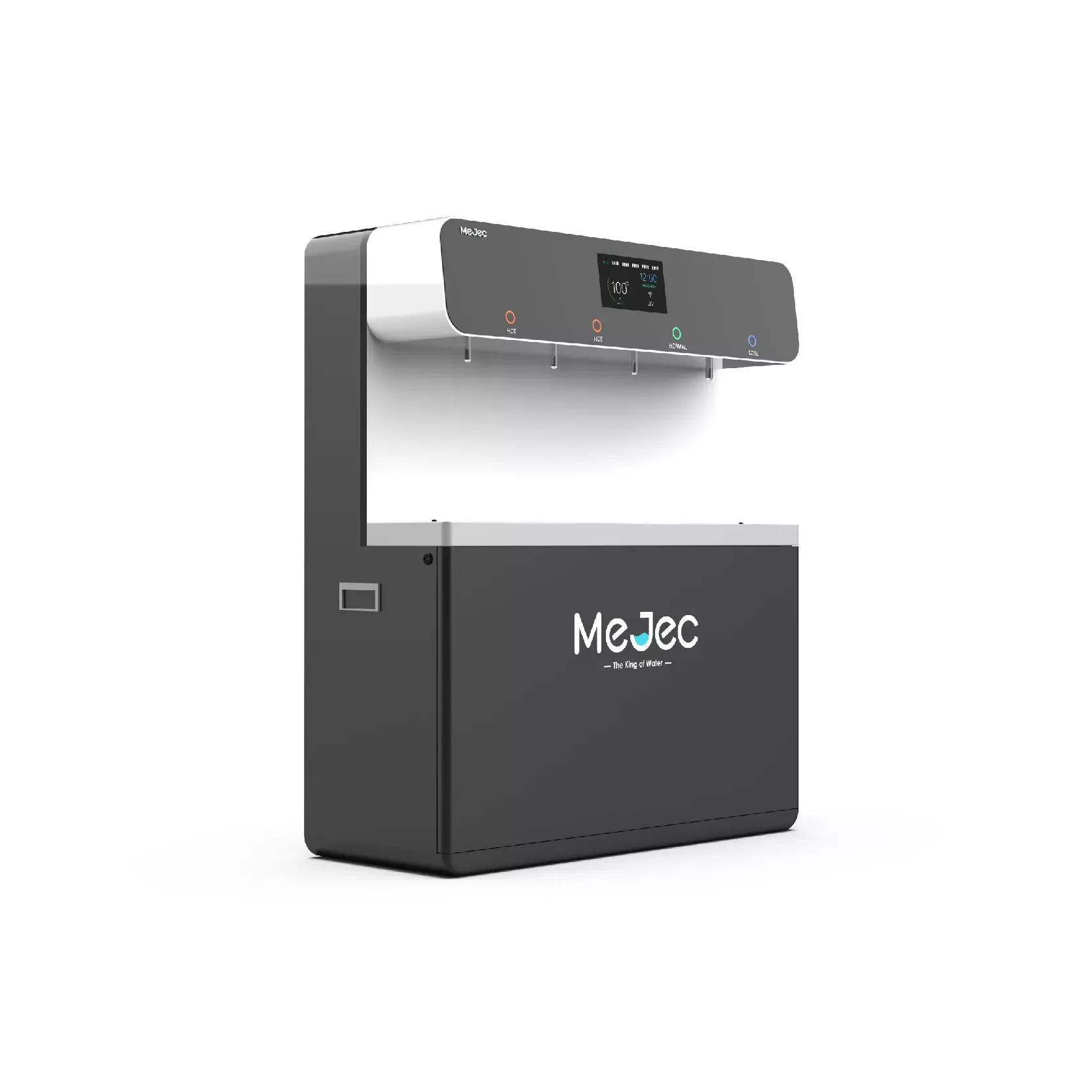
Advanced water dispenser designs, such as Mejec, feature multi-tap systems and temperature configurations. Multi-tap dispensers allow several users to access water at once, improving efficiency and reducing wait times. Temperature options include cold, hot, or dual settings, meeting diverse hydration needs. Hot and cold water dispenser models enhance user satisfaction by providing instant access to water at the desired temperature. Performance improves in public spaces when dispensers cater to individual preferences.
Aspect | Description |
|---|---|
Focus | Influence of temperature options on user satisfaction and efficiency in public spaces |
Findings | Multi-tap and dual temperature dispensers enhance comfort and performance while improving energy efficiency in shared spaces |
Tip: Customizable dispensers with touch control panels and smart monitoring systems boost performance and durability in busy environments.
Bottle-less dispensers with multi-stage filtration and sterilization technology ensure safe water and reliable performance. Choosing the right dispenser type and features increases durability and user satisfaction in public spaces.
Safe Drinking Water & Filtration
Multi-Stage Filtration Systems
Multi-stage filtration systems play a vital role in delivering safe drinking water in public spaces. These systems combine several methods to target different contaminants. Each stage removes specific impurities, such as sediment, chlorine, heavy metals, and bacteria. Single-stage filters may not remove all types of impurities, which can affect water quality. Multi-stage filtration systems improve filter quality and provide higher water quality and purification.
Multi-stage filtration systems use layers like activated carbon, sediment filters, and reverse osmosis membranes.
Each layer targets a unique group of contaminants, making the water safer for consumption.
Many Americans trust filtered water, showing the importance of effective filtration in public dispensers.
Advanced water dispenser models, such as Mejec, feature up to eight stages of purification. These dispensers ensure that every drop of water meets strict safety standards. The reverse osmosis membrane removes microscopic particles, while other stages eliminate odors and improve taste. This process guarantees safe drinking water for everyone in busy environments.
Note: Multi-stage filtration systems are essential for public spaces with high traffic. They provide reliable water quality and help build trust among users.
Sterilization Technology
Sterilization technology is crucial for maintaining the safety and taste of water in public dispensers. Methods like UV disinfection and antimicrobial materials help eliminate bacteria and pathogens. These technologies prevent microbial regrowth and biofilm formation, which can affect water quality. Nanoparticle-coated components add another layer of protection by stopping bacteria from sticking to surfaces.
Proper maintenance is necessary for sterilization systems to work effectively. Without regular upkeep, the performance of these systems can drop, leading to unsafe water. Facility managers must follow sanitation protocols to keep dispensers running smoothly. When sterilization technology operates correctly, it ensures safe drinking water and preserves the natural taste of water.
Modern water dispenser units often combine filtration and sterilization. This combination delivers high-quality water and reduces health risks in public spaces.
Maintenance & Filter Monitoring
Regular maintenance is essential for keeping water dispensers in top condition. Facility managers must follow recommended schedules to ensure consistent water quality. The table below shows common maintenance tasks and their frequency:
Maintenance Task | Recommended Frequency |
|---|---|
Filter Replacement | Every 6–12 months (or after 3,000–5,000 gallons) |
Internal Sanitization | Quarterly |
Leak Inspections | Regular checks |
Cooling & Heating System Checks | As needed |
Filter Monitoring Systems | As needed |
Exterior Cleaning | Regularly |
Smart filter monitoring systems, such as Mejec’s Home Intelligence Nexus, help reduce maintenance costs and improve water quality assurance. These systems use sensors to track filter health and water quality in real time. Mobile app notifications alert facility managers when maintenance is needed. Digital monitoring systems also track filter lifespan and water supply levels.
Smart dispensers with filter-life indicators prevent performance drops.
Proactive alerts ensure consistent water quality and uninterrupted service.
These systems reduce downtime by up to 90%, saving money on repairs.
Manual checks become less frequent, lowering maintenance costs.
Tip: Investing in smart filter monitoring systems helps maintain high water quality and reduces the risk of unexpected breakdowns.
Water dispenser units with advanced filtration, sterilization, and smart monitoring provide safe drinking water for all users. Facility managers can rely on these features to deliver reliable water quality and minimize maintenance challenges in public spaces.
Why Choose Mejec High-Capacity Water Dispenser
Space & Placement Considerations
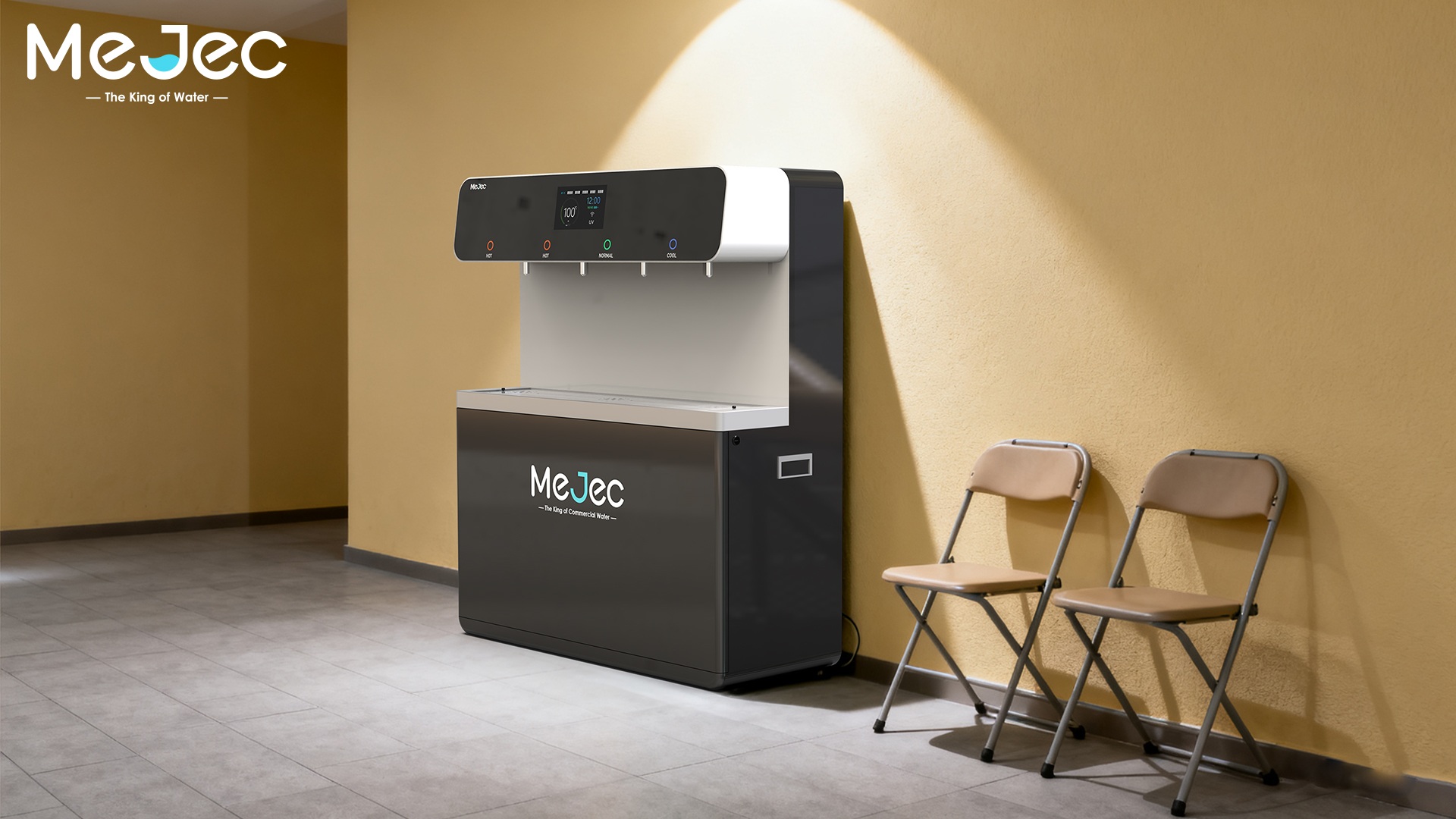
Selecting the right spot for a high capacity water dispenser is important for both efficiency and accessibility. Mejec models offer flexible installation options, making them suitable for schools, offices, gyms, and public venues. Placing the dispenser in high-traffic areas ensures that more people can access water quickly. Facility managers should consider clear floor space, easy access for all users, and proximity to electrical and plumbing connections. The table below highlights best practices for placement:
Best Practice | Description |
|---|---|
High-Traffic Areas | Place dispensers where people gather most, such as hallways or cafeterias. |
User Needs Assessment | Survey users to determine preferred water temperature and usage patterns. |
Sustainability & Cost-Efficiency | Choose plumbed, filter-based, energy efficient water dispenser models. |
Maintenance | Schedule regular cleaning and filter changes for reliable operation. |
Customization options allow the commercial water dispenser to blend with the environment, supporting both branding and aesthetics.
User Safety & ADA Compliance
Safety and accessibility are top priorities in public spaces. Mejec dispensers include advanced safety features such as UV sterilization, self-cleaning cycles, and child-safe locks. These features protect users from bacteria and accidental burns. The dispenser design also meets ADA requirements, making it accessible for everyone. Key ADA specifications include:
Requirement | Specification |
|---|---|
Spout Height | No higher than 36 inches from the floor |
Knee Space | 27 inches from floor to bottom of unit |
Toe Space | 9 inches high for toe clearance |
Clear Floor Space | 30 x 48 inches in front of the dispenser |
At least two accessible units should be installed: one for wheelchair users and one for standing users.
Dispensers should not create hazards as protruding objects.
These standards ensure that every user can access water safely and comfortably.
Budgeting for Initial & Ongoing Costs
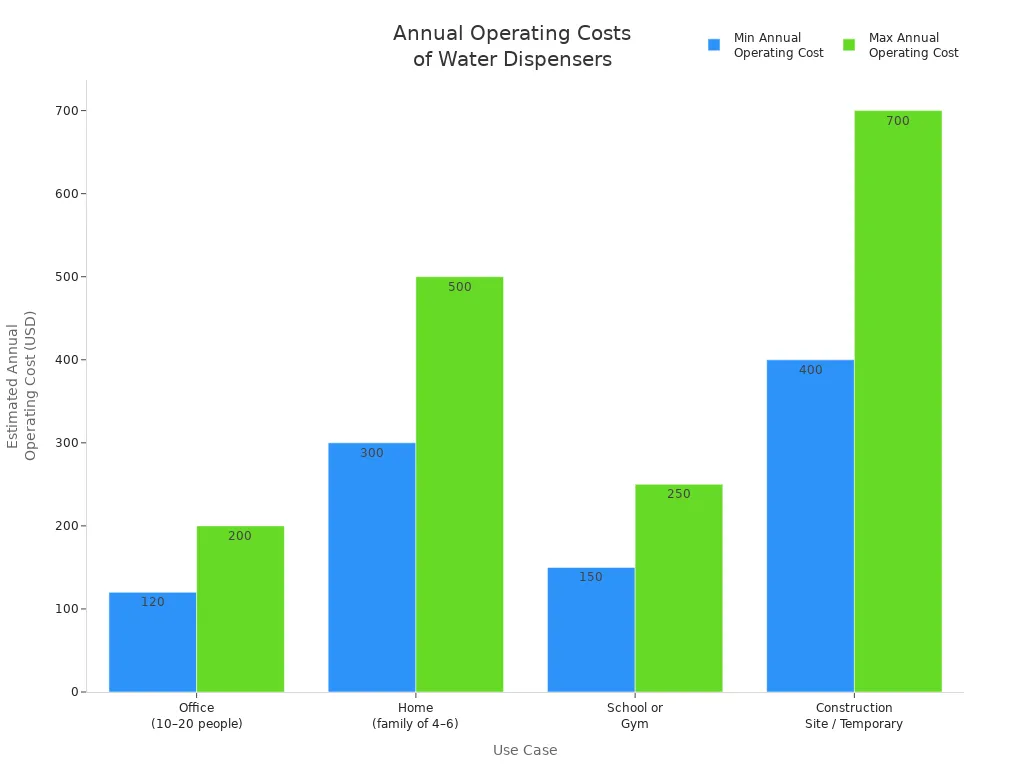
Understanding costs helps organizations plan for long-term hydration needs. Plumbed-in dispensers, like Mejec, have higher initial installation costs but lower ongoing expenses since there are no bottle purchases or delivery fees. Energy-efficient features, such as insulated tanks and auto shut-off, reduce electricity bills over time. Smart monitoring systems, like the Home Intelligence Nexus, help prevent costly repairs by alerting staff to maintenance needs. The chart below compares annual operating costs for different dispenser types:
Tip: Leasing options can help spread out costs for commercial applications, making it easier to manage budgets.
Choosing a Mejec high capacity water dispenser means investing in advanced technology, safety, and long-term savings.
Choosing the right water dispenser for public spaces starts with understanding daily water needs and matching dispenser capacity to traffic. Facility managers should compare options using a checklist that includes budget, installation, energy efficiency, maintenance, water hardness, available space, capacity, temperature settings, filter needs, and user controls. Advanced features like multi-tap design, filtration, and smart monitoring improve water quality, hygiene, and user satisfaction. Customization and real-time monitoring make each dispenser more accessible and efficient. This buying guide water dispenser helps organizations meet hydration needs and maintain safety.
Checklist for comparing water dispenser options:
Budget
Installation requirements
Energy efficiency
Long-term maintenance costs
Estimated daily usage
Water hardness
Available office space
Capacity
Temperature and water settings
Filter and cleaning needs
Touch-Free vs. Push Button
Multi-functionality and beverage options
FAQ
What is the best way to maintain a water dispenser in public spaces?
Regular cleaning and filter replacement keep the dispenser in good condition. Facility managers should check water quality and monitor filter status. Smart systems help track maintenance needs and alert staff when service is required.
How does a multi-stage filtration system improve water quality?
Multi-stage filtration removes sediment, chlorine, heavy metals, and bacteria from water. Each stage targets specific contaminants. This process ensures that the dispenser provides safe and clean water for everyone.
Can a water dispenser handle peak demand during events?
High-capacity dispensers with multi-tap designs supply water quickly to many users. These models prevent long lines and keep water available during busy periods. Facility managers should plan for extra water needs at large gatherings.
Are water dispensers safe for children and people with disabilities?
Modern dispensers include safety features like child-safe locks and ADA-compliant designs. These features protect users and make water accessible for everyone. Facility managers should install dispensers in easy-to-reach locations.
What are the benefits of choosing a bottleless water dispenser?
Bottleless dispensers connect directly to the water supply. They reduce plastic waste and lower long-term costs. These dispensers provide continuous water access and require less manual handling compared to bottled models.