What You Need to Know About Chondroitin Sulfate Sodium
Chondroitin sulfate sodium supports skin hydration, boosts anti-aging effects, and calms irritation. Many skincare professionals recommend this ingredient for its ability to help maintain a healthy complexion.
Experts note that proper application enhances visible skin improvement and reduces risk of adverse reactions.
What Is Chondroitin Sulfate Sodium?
Definition and Source
Chondroitin sulfate sodium is a naturally occurring compound found in animal cartilage. Its chemical structure consists of repetitive disaccharide units, specifically glucuronic acid and N-acetylgalactosamine sulfate. The following table summarizes its main components and sources:
| Component | Description |
|---|---|
| Chemical Structure | Composed of repetitive disaccharide units of glucuronic acid and N-acetylgalactosamine sulfate. |
| Natural Source | Extracted from cow or pig cartilage through a purification process. |
Manufacturers obtain chondroitin sulfate sodium through several methods:
- Animal tissue extraction uses cartilage from pigs and cattle, offering high biological activity.
- Chemical synthesis allows precise control over purity but increases production complexity and cost.
- Microbial fermentation uses microorganisms, providing efficiency and reduced contamination risks.
Chondroitin sulfate chains are unbranched polysaccharides. They contain D-glucuronic acid and N-acetyl-D-galactosamine. Marine sources often yield longer chains and higher molecular weights compared to terrestrial sources.
Role of Chondroitin Sulfate Sodium in Skincare
Chondroitin sulfate sodium plays a significant role in skin health. Clinical studies show that it increases the proliferation of keratinocytes and fibroblasts, which are essential for skin renewal. It also stimulates the migration and synthesis of extracellular matrix components in fibroblasts. This activity supports the skin’s structure and resilience.
Researchers have observed that chondroitin sulfate sodium induces the expression of type I procollagen by activating the extracellular signal-regulated kinase pathway. In both wound healing and aged skin models, it promotes regeneration and repair. These properties make it a valuable ingredient in skincare products designed for hydration, anti-aging, and soothing benefits.
Key Benefits of Chondroitin Sulfate Sodium for Skin
Hydration and Moisture Retention
Chondroitin sulfate sodium delivers exceptional hydration to the skin. Researchers have compared its moisture retention capacity to glycerin, a widely used moisturizing agent. The results highlight its superior water-holding ability.
- The CS-AA complex retains more moisture than glycerin under identical drying conditions.
- The CS-Q complex shows a weight loss of 40.6% at 1 hour, 20.5% at 2 hours, and 18.7% at 4 hours.
- The CS-R complex demonstrates 50.2% at 1 hour, 37.5% at 2 hours, and 33% at 4 hours.
These findings confirm that chondroitin sulfate sodium helps maintain skin hydration for longer periods, supporting a healthy and supple appearance.
Anti-Aging and Collagen Support
Chondroitin sulfate sodium plays a vital role in anti-aging skincare. It stimulates chondrocyte metabolism, which is essential for collagen synthesis. Collagen provides structural support and elasticity, helping skin resist wrinkles and sagging. The compound also promotes the production of proteoglycan, a key element in new cartilage formation. By enhancing hyaluronic acid levels, chondroitin sulfate sodium contributes to skin firmness and reduces visible signs of aging.
Soothing and Calming Effects
Clinical studies show that chondroitin sulfate sodium reduces redness and inflammation in patients with skin conditions. Individuals treated with this ingredient report dramatic improvements, including decreased swelling, itching, and flaking. Histopathological analysis reveals a significant reduction in epidermal thickness and keratinocyte count. In trials with psoriasis patients, most experienced softer, more hydrated skin and marked relief from irritation.
Dermatologists recommend chondroitin sulfate sodium for its ability to calm sensitive skin and support recovery from inflammation.
How to Use Chondroitin Sulfate Sodium in Your Skincare Routine
Types of Skincare Products with Chondroitin Sulfate Sodium
Manufacturers add chondroitin sulfate sodium to a variety of skincare and cosmetic products. These formulations target hydration, anti-aging, and soothing effects. The ingredient appears most often in glosses, lipsticks, mascaras, and anti-aging creams. The following table shows the percentage of chondroitin sulfate sodium found in common product types:
| Product Type | Percentage |
|---|---|
| Gloss and lip gloss | 1.8% |
| Lipstick | 1.33% |
| Mascara | 1.31% |
| Anti-aging day face cream | 0.81% |
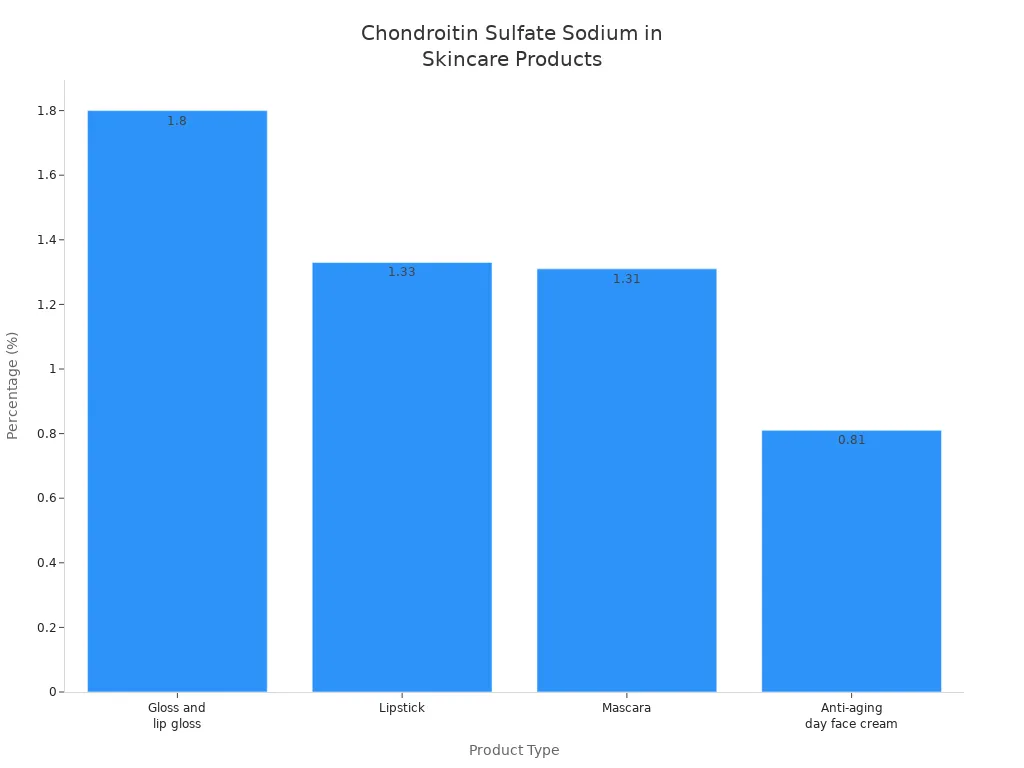
Cosmetic chemists select chondroitin sulfate sodium for its ability to enhance moisture retention and support skin barrier function. They often recommend anti-aging creams for daily use, while glosses and lipsticks provide hydration and shine. Mascara formulas benefit from the soothing properties, reducing irritation around the eyes.
Application Order and Frequency for Best Results
Dermatologists advise users to apply products containing chondroitin sulfate sodium after cleansing and toning. This sequence allows the ingredient to penetrate the skin and deliver maximum hydration. They suggest the following order for a basic routine:
- Cleanser
- Toner
- Serum or cream with chondroitin sulfate sodium
- Moisturizer
- Sunscreen (morning routine)
Individuals should use these products once or twice daily, depending on their skin type and sensitivity. Morning application protects the skin from environmental stressors. Evening use supports repair and hydration overnight. Consistent use improves skin texture and reduces dryness.
Tip: Users should monitor their skin’s response and adjust frequency if irritation occurs.
Layering Tips and Common Mistakes
Skincare professionals emphasize the importance of proper layering. They recommend applying lighter products first, followed by heavier creams. Chondroitin sulfate sodium works best when layered under occlusive moisturizers. This method locks in hydration and prevents water loss.
Common mistakes include:
- Applying too many active ingredients at once
- Using products with conflicting pH levels
- Skipping patch tests before full application
Individuals should avoid mixing chondroitin sulfate sodium with strong exfoliants or acids. This practice reduces the risk of irritation and maintains the ingredient’s effectiveness.
Note: Patch testing ensures compatibility and minimizes adverse reactions.
Choosing the Right Chondroitin Sulfate Sodium Products
How to Read Ingredient Labels
Consumers often struggle to identify high-quality skincare products. They should examine ingredient labels for purity and content accuracy. Manufacturers sometimes include contaminants, such as keratan sulfate, which can reduce product effectiveness. Labels that specify biological activity, structural characteristics, and precise quantity help buyers select reliable options.
Tip: Look for products that clearly state the source and purity of chondroitin sulfate sodium.
Recommended Concentrations and Formulas
The effectiveness and safety of chondroitin sulfate sodium depend on its concentration. Most skincare products contain between 0.1% and 2%. Haircare products may use slightly higher concentrations, ranging from 1% to 3%. Formulations above 5% can increase viscosity and alter sensory properties, making them less pleasant to use.
| Product Type | Recommended Concentration |
|---|---|
| Skincare Products | 0.1% - 2% |
| Haircare Products | 1% - 3% |
| Concentration Note | Above 5% may increase viscosity and affect sensory properties |
Clinical studies suggest that combining chondroitin sulfate sodium with glucosamine enhances efficacy. Trials and systematic reviews indicate improved outcomes when these ingredients work together, especially for skin and joint health.
| Study Type | Findings |
|---|---|
| Clinical Trial | Combined glucosamine and chondroitin improves symptoms |
| Systematic Review | Combination may be more beneficial than previously thought |
Product Formats: Serums, Creams, and More
Product format influences absorption and effectiveness. Highly purified chondroitin sulfate, with optimal molecular mass and charge density, absorbs better and delivers greater bioavailability. The origin of the ingredient, such as avian or bovine, can also affect clinical efficacy. Serums and creams remain popular choices, offering targeted hydration and anti-aging benefits.
Note: Choose formats that match your skin type and desired results for optimal performance.
Safety, Side Effects, and Precautions with Chondroitin Sulfate Sodium
Possible Side Effects and Reactions
Most individuals tolerate chondroitin sulfate sodium well in topical skincare products. Dermatological studies report a rare incidence of allergic reactions, which supports its reputation for long-term safety. Some users may notice mild redness, itching, or irritation, especially when first introducing a new product. These symptoms usually resolve quickly and do not require medical attention. Severe reactions remain uncommon, but anyone experiencing persistent discomfort should discontinue use and consult a healthcare provider.
Note: Always observe the skin for any unusual changes after starting a new ingredient.
Who Should Avoid Chondroitin Sulfate Sodium
Certain individuals should exercise caution or avoid products containing this ingredient. People with known allergies to animal-derived substances may face a higher risk of sensitivity. Those taking specific medications may also experience interactions. The following table lists medications that can interact moderately with chondroitin sulfate sodium:
| Medication | Interaction Type |
|---|---|
| anisindione | moderate |
| dicumarol | moderate |
| warfarin | moderate |
Patients using anticoagulants should consult their physician before adding new skincare products to their routine.
Patch Testing and Safe Introduction
Patch testing helps prevent unwanted reactions. Experts recommend conducting a patch test on a small area of skin before full application. If a user has experienced a previous reaction, they should wait several weeks to months after symptoms resolve before testing again. This approach reduces the risk of irritation during a refractory period. Consistent monitoring ensures safe and effective use of new skincare products.
Frequently Asked Questions About Chondroitin Sulfate Sodium
1. What skin types benefit most from chondroitin sulfate sodium?
Dermatologists observe that dry, sensitive, and mature skin types respond well to this ingredient. Individuals with normal skin also notice improved hydration and resilience.
2. Can teenagers use products containing chondroitin sulfate sodium?
Skincare experts confirm that teenagers can safely use these products. They recommend patch testing before regular application.
3. How long does it take to see visible results?
Most users report noticeable improvements in hydration and texture within two to four weeks. Consistent use enhances long-term benefits.
4. Is chondroitin sulfate sodium vegan-friendly?
Manufacturers usually source this ingredient from animal cartilage. Vegan alternatives remain rare in the market.
5. Does chondroitin sulfate sodium interact with other skincare ingredients?
Cosmetic chemists advise caution when combining it with strong acids or exfoliants. They suggest layering it under moisturizers for optimal effect.
Note: Always consult a dermatologist before introducing new products, especially if you have allergies or medical conditions.
| Question | Short Answer |
|---|---|
| Safe for sensitive skin? | Yes, with patch testing |
| Suitable for daily use? | Yes, once or twice daily |
| Causes allergic reactions? | Rare, monitor skin closely |
6. Where can consumers find reliable information about product purity?
Industry professionals recommend checking manufacturer websites and third-party certifications. Labels that specify source and concentration provide greater transparency.
- Chondroitin sulfate sodium offers hydration, anti-aging, and soothing benefits for skin.
- Individuals should check product labels and introduce new products gradually.
- Monitoring skin response ensures safe and effective results.
Making informed choices helps users enhance their skincare routine and achieve healthy, glowing skin.
FAQ
Can chondroitin sulfate sodium help with acne-prone skin?
Dermatologists observe reduced redness and irritation in acne-prone skin.
Tip: Patch testing ensures safe use for sensitive skin types.
How should users store products containing chondroitin sulfate sodium?
Manufacturers recommend storing products in a cool, dry place.
| Storage Condition | Recommendation |
|---|---|
| Temperature | Below 77°F |
| Humidity | Low |
Is chondroitin sulfate sodium safe during pregnancy?
Doctors advise pregnant individuals to consult healthcare providers before use.
Note: Safety data remains limited for topical application during pregnancy.
See Also
Essential Indicators of High-Quality Bovine Gelatin Powder
Key Applications and Synthesis of Aminoguanidine Bicarbonate
Research-Driven Strategies to Enhance 2 5-Furandicarboxylic Acid Sustainability
Contemporary Techniques for Aminoguanidine Bicarbonate Production and Uses
Industrial Applications and Solubility of 2 5-Furandicarboxylic Acid