Why x-ray inspection is critical for chocolate food safety in 2025

X-ray inspection plays a crucial role in food safety for chocolate products in 2025. This technology detects foreign objects like glass and plastic that traditional methods often miss. By identifying these contaminants, x-ray inspection protects consumer safety and prevents costly recalls. A chocolate x ray machine uses advanced imaging to meet strict safety standards. Manufacturers reduce waste and financial loss with this approach.
Detecting foreign objects early supports a safer, more sustainable chocolate industry.
Chocolate contamination risks

Common foreign bodies in chocolate
Chocolate production faces many contamination risks. These risks come from both natural and human-made sources. The table below shows the most common sources of contamination found in chocolate:
Source of Contamination | Description |
|---|---|
Potentially Toxic Trace Elements (PTEs) | Cadmium, lead, arsenic, mercury, nickel, chromium, and aluminum can enter chocolate through soil, processing, or packaging. |
Soil Properties | Soil pH, texture, and volcanic activity affect PTE levels in cocoa plants. |
Anthropogenic Factors | Fertilizers, pesticides, and roads increase PTEs in soil. |
Other Ingredients | Cocoa butter, milk, sugar, and fat may add contaminants. |
Post-Harvest Practices | Processing can raise PTE levels in cocoa beans. |
Packaging | Packaging materials may transfer PTEs to chocolate. |
Storage Conditions | Poor storage can expose chocolate to more contaminants. |
Health and brand impact
Foreign bodies in chocolate can cause serious health problems. For example:
Cadmium can build up in the body and damage kidneys and liver.
Exposure to cadmium may also cause bone disease and neurological issues.
The International Agency for Research on Cancer lists cadmium as a cancer risk.
Children face a higher risk of poisoning from contaminated chocolate.
Contamination prevention protects both consumers and brands. When a recall happens, companies can lose millions of dollars. For instance:
Barry Callebaut lost $77 million after a major recall.
Strauss saw its market value drop by $300 million in three days after a recall.
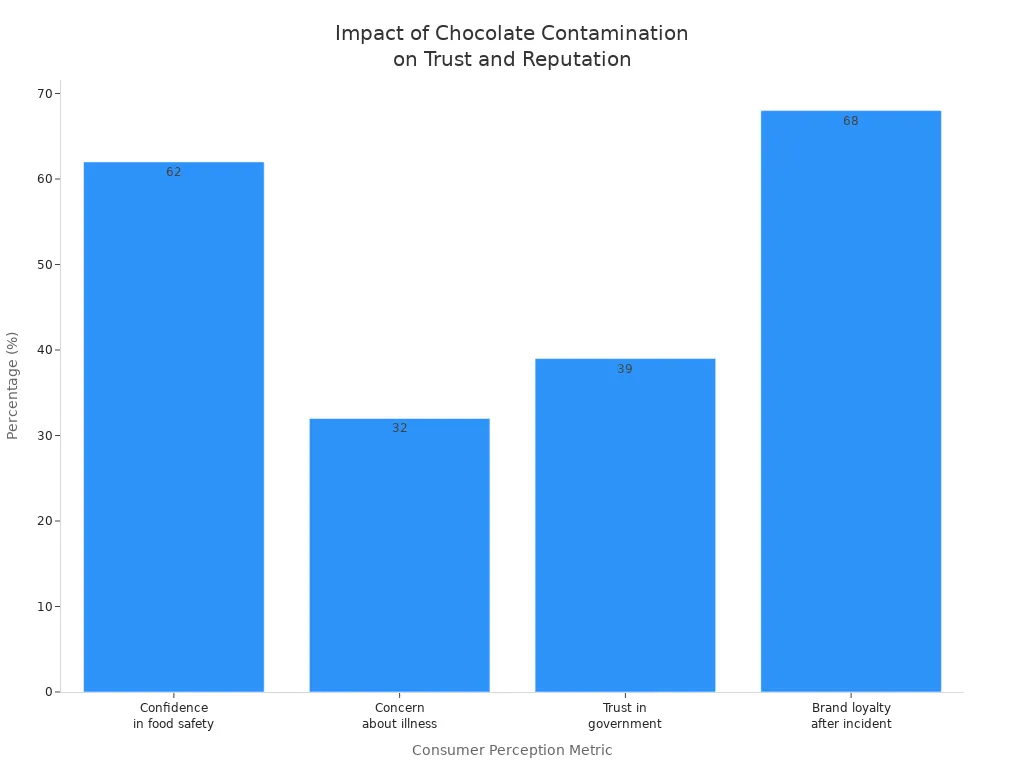
Brand reputation also suffers. The chart below shows how consumer trust and loyalty decline after contamination incidents:
Recent recalls and incidents
Chocolate manufacturers have faced several recalls in recent years:
In April 2022, Ferrero recalled Kinder Happy Moments and Kinder Mix due to salmonella.
In May 2024, Clasen recalled over 4 million pounds of chocolate for possible salmonella.
In August 2023, Nestlé recalled Toll House Cookie Dough Bars because of wood fragments.
In May 2023, Meijer recalled dark chocolate almonds for undeclared milk allergens.
In January 2023, Clasen Quality Chocolate recalled products for peanut residue.
These incidents show why strong contamination prevention measures are essential for the chocolate industry.
Limits of traditional inspection
Visual and metal detection gaps
Traditional inspection methods in chocolate production rely on human eyes and metal detectors. Visual inspection depends on workers spotting problems as chocolate moves along the line. This approach often misses small or hidden issues. Metal detectors only find metallic objects. They cannot detect glass, stones, hard plastic, or other non-metallic contaminants. As chocolate products become more complex, these gaps in food inspection create risks for both consumers and brands.
Missed contaminants
Many contaminants in chocolate do not contain metal. For example, fragments of glass, stones, or dense plastic can enter chocolate during processing or packaging. Metal detectors cannot identify these threats. Visual inspection also struggles with small or well-hidden contaminants. Workers may overlook tiny pieces, especially when chocolate moves quickly on the production line. These missed contaminants can cause health problems and lead to costly recalls.
Note: Even the most experienced inspectors can miss defects when working long shifts or under pressure.
Need for advanced solutions
Chocolate manufacturers now turn to advanced inspection systems to address these challenges. Automated bean inspection and sorting use AI and machine learning to assess cacao beans for quality. Sensors and cameras check the size, shape, color, and defects of each bean. AI algorithms analyze this data to spot imperfections that human inspectors might miss. This technology processes large batches quickly, reduces errors, and ensures consistent quality. Automated sorting also separates lower-quality beans, which improves yield and reduces waste. These advanced solutions help manufacturers meet strict food inspection standards and protect consumer safety.
X-ray inspection advantages
How x-ray inspection works
X-ray inspection uses advanced technology to keep chocolate safe. The system sends x-rays through chocolate products as they move along the production line. Sensors capture images that show differences in density inside the chocolate. This process helps the equipment find contaminants that other inspection methods often miss.
X-ray inspection detects foreign bodies such as metal, glass, and stone.
The system uses image analysis software to spot even small or hidden contaminants.
High-speed scanning allows the inspection of large batches without slowing production.
Operators can see real-time images on a screen. They can remove contaminated products before they reach consumers. This approach improves food quality and safety for everyone.
Benefits over older methods
X-ray inspection offers several advantages compared to traditional inspection methods. Metal detectors and visual checks have limits. They often miss non-metallic contaminants or small defects. X-ray inspection fills these gaps and provides more reliable results.
Inspection Method | Speed | Reliability | Key Features |
|---|---|---|---|
X-ray Inspection | Moderate | High | Detects a wide range of contaminants, including non-metallic items and product defects. |
Metal Detection | Fast | Moderate | Best for detecting ferrous metals; struggles with non-ferrous metals like stainless steel. |
X-ray inspection stands out because it can find contaminants that metal detectors cannot. Visual inspection depends on human attention, which can fail during long shifts. X-ray inspection uses technology to maintain high safety standards at all times. The system also reduces the risk of recalls by catching problems early.
X-ray inspection helps manufacturers avoid costly mistakes and protect their brand reputation.
Role in quality assurance
X-ray inspection plays a key role in quality assurance for chocolate production. The technology improves detection and reduces waste. It also supports consistent safety standards across all products.
Aspect | Description |
|---|---|
Enhanced Detection Capability | High-performance x-ray sensors improve resolution, allowing for precise detection of contaminants. |
Increased Yield | Improved detection reduces false reject rates, enhancing overall yield and minimizing food loss. |
Stabilized Detection on High-Speed | Advanced sensor design maintains image clarity at high speeds, improving detection performance. |
Manufacturers use x-ray inspection to meet strict safety requirements. The system ensures that only safe chocolate reaches store shelves. It also helps companies maintain food quality by removing defective products. X-ray inspection supports testing and ongoing monitoring, which keeps safety at the highest level. This technology gives both producers and consumers confidence in chocolate products.
Chocolate x ray machine and compliance
Advanced chocolate x ray machine features
Chocolate manufacturers rely on advanced chocolate x ray machine technology to improve inspection and meet modern safety standards. Machines introduced in 2024 and 2025 offer several new features that enhance x-ray inspection performance and reliability. The table below highlights the most important features found in the latest chocolate x ray machine models:
Feature | Description |
|---|---|
High-Definition Imaging | Integrates advanced imaging technology for precise detection of contaminants. |
AI-Based Analysis | Utilizes artificial intelligence to enhance contaminant identification accuracy. |
Contaminant Detection | Capable of identifying metal, glass, stone, bone, and dense plastics. |
Fill Level Assessment | Evaluates the fill levels of products for quality assurance. |
Seal Integrity Check | Assesses the integrity of seals on packaged goods. |
Integrated Rejection Mechanism | Reduces operational interruptions by automatically rejecting contaminated products. |
IP65 Washdown Rating | Designed for easy cleaning in demanding processing environments. |
Compatibility | Compatible with existing processing lines for seamless integration. |
Multiple Series | Includes four series tailored for different inspection applications (XRP, XRB, XRS, XRL). |
These features allow chocolate x ray machine operators to detect a wide range of foreign bodies during inspection. High-definition imaging and AI-based analysis improve the accuracy of x-ray inspection. The machines can identify contaminants such as glass, stone, and dense plastics that traditional inspection methods often miss. Integrated rejection mechanisms help maintain production speed and reduce downtime. Compatibility with existing lines makes it easier for manufacturers to upgrade their inspection systems.
Meeting safety regulations
Food safety regulations continue to evolve in 2025. Chocolate manufacturers must comply with strict international standards to protect consumers and maintain market access. Chocolate x ray machine technology plays a key role in helping companies achieve compliance. X-ray inspection systems detect various contaminants, which is essential for meeting safety requirements. These machines also provide enhanced traceability and data archiving. Manufacturers can store inspection records and demonstrate compliance during audits.
X-ray inspection ensures consistent performance across complex chocolate products.
AI-based systems identify low-density and organic contaminants, such as wooden sticks and pest holes.
Inspection machines detect irregularly shaped items that metal detectors may overlook.
Manufacturers use chocolate x ray machine technology to maintain product quality and meet regulatory demands. Reliable inspection helps companies avoid penalties and protect their reputation. The ability to archive inspection data supports transparency and accountability in food safety management.
Tip: Regular calibration and maintenance of x-ray inspection equipment help manufacturers maintain compliance and ensure accurate results.
Reducing recalls and waste
Chocolate x ray machine technology supports sustainability by minimizing product loss and waste. Early detection of contaminants through x-ray inspection prevents large-scale recalls. Manufacturers remove defective products before they reach consumers, which reduces food waste and financial losses.
Modern foreign body detection helps in the early identification of contaminants and the prevention of recalls, which automatically leads to greater sustainability through reduced food waste and more profitable food production.
Inspection systems also improve yield by reducing false rejects. Advanced sensors and AI analysis allow chocolate x ray machine operators to separate safe products from contaminated ones with greater precision. This process keeps more chocolate in the supply chain and supports sustainable production practices.
Manufacturers who invest in x-ray inspection technology demonstrate a commitment to safety and sustainability. They protect consumers, reduce waste, and meet the demands of a changing regulatory environment. Chocolate x ray machine systems help companies build trust with customers and maintain a strong brand image.
X-ray inspection now stands as a vital tool for chocolate food safety. This technology protects consumers and brands by detecting hidden threats that older methods miss. Manufacturers meet food safety regulations and industry standards with advanced x-ray systems.
X-ray inspection supports food safety by identifying contaminants and creating critical control points.
Major retailers require x-ray inspection for food safety and quality control.
Regular documentation from these systems helps companies pass audits and maintain food safety traceability.
Adopting x-ray inspection ensures future-proof food safety and supports sustainable chocolate production.
FAQ
How does x-ray inspection find contaminants in chocolate?
X-ray inspection uses high-energy waves to scan chocolate. The system creates images that show differences in density. Operators can spot foreign objects like glass, metal, or stone that do not belong in the product.
Can x-ray machines detect all types of contaminants?
X-ray machines detect many foreign bodies, including glass, metal, stone, and dense plastics. They may not find very low-density materials, such as hair or thin plastic film. Regular calibration improves detection accuracy.
Is x-ray inspection safe for chocolate products?
X-ray inspection does not harm chocolate. The process uses low doses of radiation, which do not affect taste, texture, or safety. All inspected products remain safe for consumption.
Why do chocolate manufacturers prefer x-ray over metal detectors?
Manufacturers choose x-ray systems because these machines find more types of contaminants. Metal detectors only find metal. X-ray machines detect glass, stone, and other materials, making them more effective for chocolate safety.