Understanding how x-ray equipment detects impurities in chocolate bars
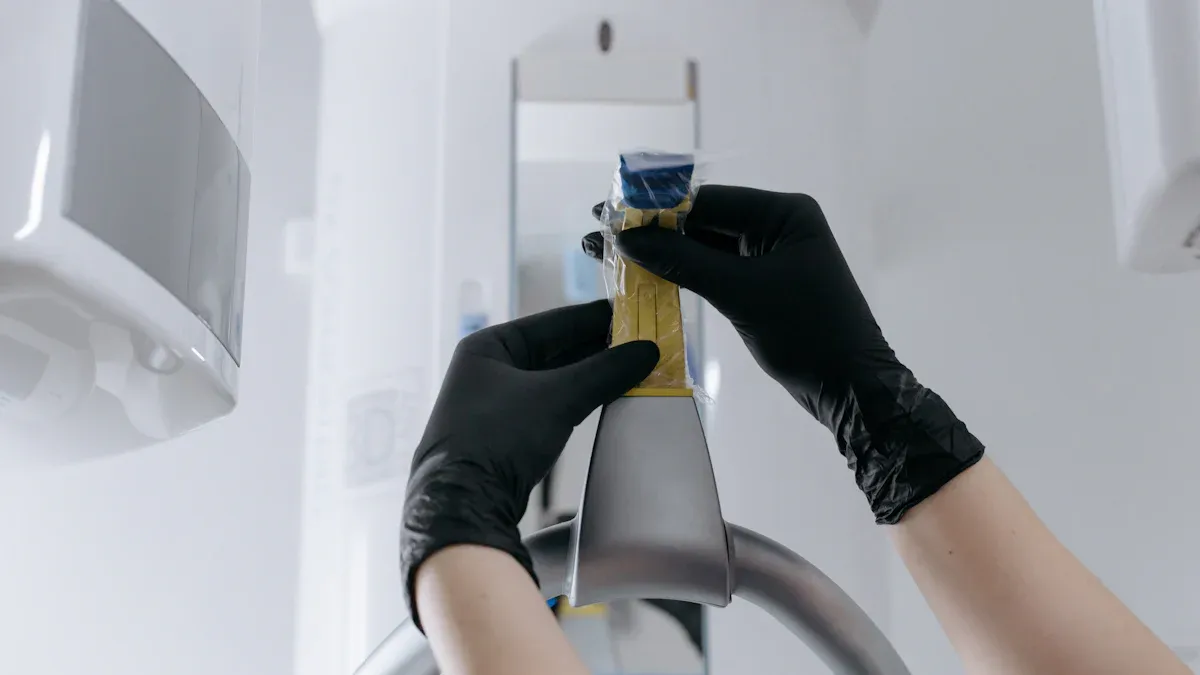
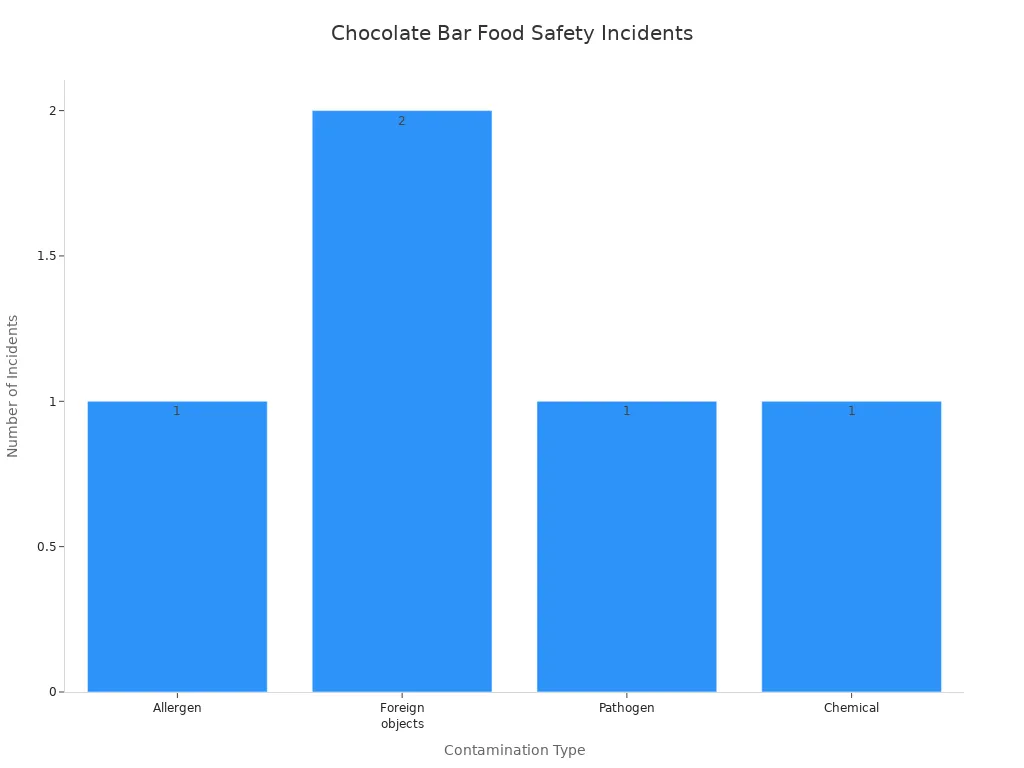
Food safety concerns in chocolate bars continue to make headlines worldwide. Recent incidents include metal fragments, stones, plastic, and even allergens found in popular brands. Manufacturers rely on chocolate bars x ray equipment to protect consumers. The x-ray machines act as advanced food safety equipment, scanning each bar for hidden impurities that could cause harm. The chart below shows how often different types of contamination occur in chocolate products.
Many companies choose x-ray inspection because it can identify a wide range of contaminants, including foreign objects that other methods might miss.
Key Takeaways
X-ray equipment enhances food safety by detecting hidden contaminants in chocolate bars, such as metal, glass, and rubber.
The inspection process uses advanced technology, including AI and high-resolution imaging, to ensure thorough and efficient checks.
Integrating x-ray systems with production lines allows for real-time detection and automatic removal of defective products, maintaining quality.
Combining x-ray inspection with metal detectors and visual checks creates a robust safety net, reducing the risk of contaminated products.
Using x-ray technology not only improves safety but also ensures consistent product quality, building trust with consumers.
Chocolate bars x ray equipment and detection process
How x-ray equipment works
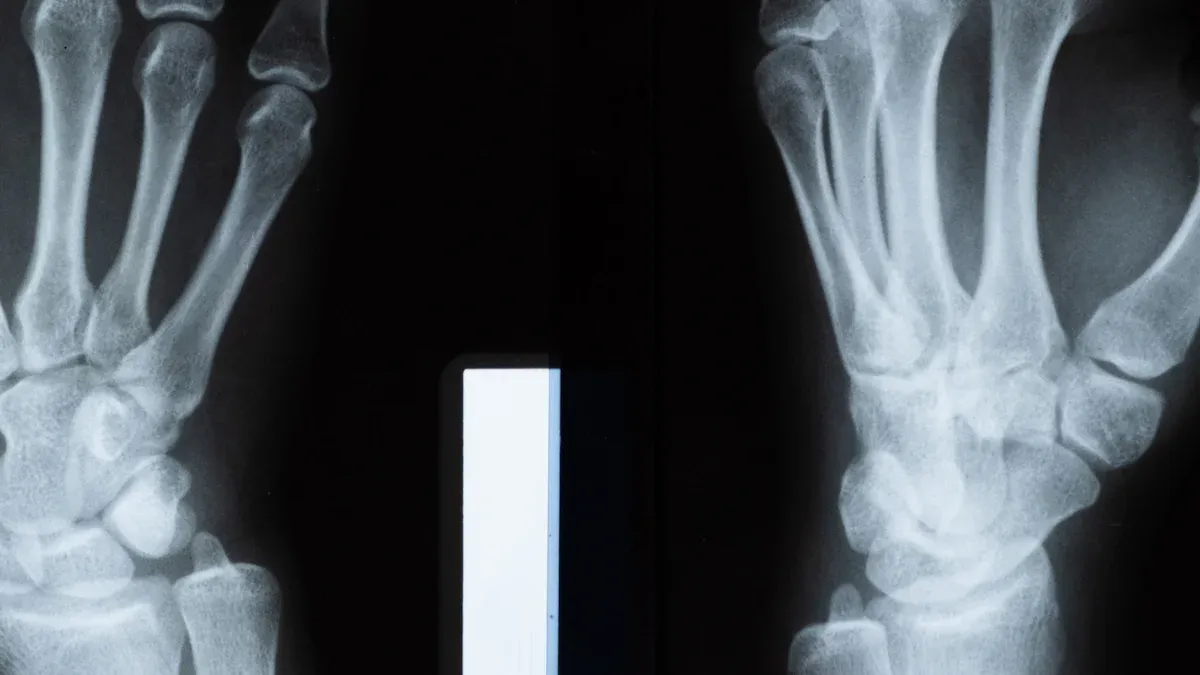
Chocolate bars x ray equipment plays a vital role in modern chocolate production. Manufacturers install these systems directly onto production lines to ensure every chocolate bar passes through a thorough inspection. The equipment uses x-ray technology to scan each bar for hidden impurities. The x-ray inspection system sends a controlled beam through the chocolate bar. Detectors on the other side capture the image, revealing any foreign objects inside the product.
The main components of chocolate bars x ray equipment include:
High-resolution x-ray generators that produce detailed images of each chocolate bar.
Advanced image analysis software, such as SimulTask™ PRO, which improves detection of contaminants.
Fast processors that allow the x-ray inspection systems to operate at high speeds, keeping up with busy production lines.
Sophisticated algorithms that analyze the highest greyscale images for even the smallest impurities.
These features allow the x-ray inspection system to identify a wide range of contaminants, including metal, glass, and stone. The equipment also adapts to different chocolate bar sizes and shapes, making it suitable for various products.
Inspection steps in chocolate bar production
Chocolate bar production lines use a combination of conveyor belts and sorting systems to prepare products for inspection. The process begins when chocolate bars move along a conveyor belt toward the x-ray inspection system. Before reaching the x-ray equipment, the system may sort or align the bars to ensure accurate testing.
The integration of conveyor belts with chocolate bars x ray equipment brings several advantages. The table below highlights key features of this integration:
Feature | Description |
|---|---|
Integrates advanced imaging technology for precise contaminant detection. | |
AI-based analysis | Utilizes artificial intelligence to enhance the accuracy of inspections. |
Integrated rejection mechanisms | Designed to minimize operational interruptions by automatically removing defective products. |
Compatibility | Systems are built to work seamlessly with existing processing lines, including conveyor belts. |
Applications | Suitable for various sectors, including chocolate bar manufacturing, ensuring product safety. |
During inspection, the x-ray inspection systems scan each chocolate bar as it passes through. The system uses AI-based analysis to evaluate the images in real time. If the equipment detects any impurities, an integrated rejection mechanism removes the affected bar from the line. This process ensures only safe, high-quality chocolate bars reach consumers.
Chocolate bars x ray equipment supports continuous testing without slowing down production. The combination of high-speed imaging, advanced software, and automated rejection keeps the inspection process efficient and reliable. Manufacturers rely on these systems to maintain strict food safety standards and protect their brand reputation.
Types of contaminants detected

Chocolate bar manufacturers face many challenges in keeping products safe. X-ray equipment helps them find a wide range of contaminants that could harm consumers. These systems use advanced foreign body detection to spot physical contaminants that might go unnoticed by other methods. The following sections explain the main types of contaminants that x-ray inspection can identify in chocolate bars.
Metal fragments
Metal fragments can enter chocolate bars during processing or packaging. X-ray equipment provides reliable foreign body detection for these physical contaminants. The Meki System X-ray inspector can detect metallic contaminants as small as 0.6 mm in chocolate bars. This high level of sensitivity helps manufacturers remove even tiny pieces of metal before products reach store shelves.
Detects stainless steel, ferrous, and non-ferrous metals.
Finds fragments as small as 0.6 mm.
Works with both wrapped and unwrapped chocolate bars.
Glass and stones
Glass and stones are dangerous contaminants that can cause serious injuries. X-ray inspection systems can detect a wide range of physical contaminants, including glass and stone, in chocolate bars. These systems identify dense materials regardless of their type, which allows them to spot impurities that traditional metal detectors might miss. X-ray technology can also penetrate packaging and reveal hidden contaminants, ensuring that products are thoroughly inspected before reaching consumers.
Rubber and calcified bones
Rubber and calcified bones sometimes enter chocolate bars through raw materials or equipment parts. X-ray inspection technology effectively detects these contaminants by measuring density differences. The system can identify contaminants as small as 0.2 to 0.3 millimeters. It also finds dense plastics and rubber components, making foreign body detection more comprehensive.
Detects rubber, calcified bones, and dense plastics.
Measures density differences for accurate identification.
Spots contaminants as small as 0.2 to 0.3 mm.
Other foreign materials
X-ray equipment can also find other foreign materials, such as plastic, wood, or hard shell fragments. Advanced systems, including those using industrial CT technology, improve foreign body detection by creating detailed images of chocolate bars. These systems help manufacturers identify a broad range of physical contaminants, even those that are difficult to see with the naked eye.
Note: Industrial CT technology offers even greater accuracy for foreign body detection, making it possible to spot contaminants that standard x-ray systems might miss.
X-ray vs. other detection methods
Metal detectors vs. x-ray systems
Manufacturers often use metal detectors to find metallic contaminants in chocolate bars. Metal detectors work well for identifying ferrous and non-ferrous metals. However, they cannot detect non-metallic impurities such as glass, stones, or dense plastics. X-ray systems offer a broader detection range. They identify both metallic and non-metallic contaminants by analyzing density differences within the product. This capability allows manufacturers to catch a wider variety of foreign objects. Metal detectors provide fast and reliable results for metal fragments, but x-ray equipment increases overall food safety by covering more types of contaminants.
Visual inspection limitations
Many chocolate producers still rely on visual inspection for quality control. Operators examine chocolate bars for visible defects or foreign objects. This method faces several challenges. Human error and fatigue can reduce accuracy and consistency. High-speed production lines make it difficult for workers to spot every defect. Subjectivity also affects results, as different operators may judge quality differently. Most importantly, visual inspection cannot detect hidden defects inside the chocolate bar. The table below summarizes these limitations:
Limitation | Explanation |
|---|---|
Human Error and Fatigue | Operator fatigue or distraction can lead to missed defects, reducing accuracy and consistency. |
Speed vs. Accuracy | High-speed production may lead to errors in visual inspection, as it struggles to keep pace. |
Subjectivity | Aesthetic assessments can vary between operators, leading to inconsistencies in quality control. |
Limited Detection of Hidden Defects | Surface-level inspection cannot identify internal issues like microbial contamination or chemical imbalances. |
Combined detection for safety
Chocolate manufacturers often combine different detection methods to improve safety. They use metal detectors for quick screening of metallic fragments. X-ray systems provide comprehensive inspection for a wide range of contaminants. Visual inspection adds another layer of quality control for surface defects. By integrating these methods, manufacturers create a robust safety net. This approach reduces the risk of contaminated products reaching consumers. The combination of advanced technology and human oversight helps maintain high standards in chocolate bar production.
Tip: Using multiple detection systems together increases the reliability of contaminant detection and protects brand reputation.
Integrity checks and technology in chocolate bars
Product shape and mass verification
Chocolate bar manufacturers use x-ray systems to check more than just contaminants. These systems verify the shape and mass of each chocolate bar. The equipment measures the density and size of every product as it passes through the inspection area. If a bar does not match the expected shape or mass, the system flags it for removal. This process helps companies maintain consistent quality and ensures that every chocolate bar meets strict standards.
Integrity Check | Purpose | Benefit |
|---|---|---|
Shape Verification | Confirms correct form | Prevents misshapen products |
Mass Verification | Checks for proper weight | Ensures uniform portions |
Detecting missing or broken items
X-ray inspection systems also detect missing or broken items inside chocolate bars. Sometimes, pieces of nuts, caramel, or other fillings do not get added during production. The system scans each bar and compares the internal structure to a reference image. If the equipment finds gaps or broken sections, it removes the defective bar from the line. This step protects consumers from receiving incomplete or unsatisfactory products.
Note: Consistent product quality builds trust with customers and reduces complaints.
Advanced imaging and software
Modern x-ray systems use advanced imaging and software to improve reliability. Technologies like dual x-ray MDX can distinguish materials based on their atomic number, making it easier to spot differences in density and composition. Photon-counting X-ray Technology (PXT™) provides higher resolution images, allowing for better detection of foreign objects and defects. These tools help manufacturers find problems quickly and accurately. The software analyzes images in real time and makes decisions without slowing down production. Companies rely on these innovations to deliver safe and high-quality chocolate bars.
X-ray inspection systems give chocolate bar manufacturers a powerful tool for contaminant detection and quality control. These systems spot hidden dangers like bone, rubber, glass, and high-density plastics, which metal detectors cannot find.
X-ray inspection systems offer an important layer of protection that goes much further, recognizing bone, rubber, glass and high-density plastics that are impossible to detect with metal detection alone. They also identify voids, such as missing fillings, making them valuable not only for contamination detection but for ensuring product consistency and quality.
Source | Key Points |
|---|---|
Mekitec | X-ray inspection systems enhance product quality and detect contaminants in chocolate, improving consumer safety. |
EaglePI | Inline x-ray technologies can identify smaller contaminants, thus ensuring safer chocolate products. |
KPMA | X-ray technology is essential for detecting harmful foreign materials, which is crucial for preventing recalls in the chocolate industry. |
Recent advancements in food safety technology, such as AI and IoT, will help the industry address food safety issues and improve traceability. These innovations promise a safer future for chocolate lovers everywhere.
FAQ
How safe is x-ray inspection for chocolate bars?
X-ray inspection does not harm chocolate bars. The equipment uses low-energy x-rays that do not change the taste, texture, or safety of the product. Manufacturers follow strict safety guidelines.
Can x-ray equipment detect all types of contaminants?
X-ray equipment detects most dense contaminants, such as metal, glass, stone, and some plastics. Very low-density materials, like hair or paper, may go undetected.
Does x-ray inspection slow down chocolate production?
Modern x-ray systems work at high speeds. They scan each chocolate bar quickly and do not cause delays on the production line.
Why do manufacturers use both x-ray and metal detectors?
Manufacturers use both systems to improve safety. Metal detectors find metallic fragments. X-ray systems detect a wider range of contaminants, including non-metallic objects. Using both methods increases the chance of finding impurities.