How X-Ray Equipment Finds Contaminants in Chocolate Bars

You want to know that every chocolate bar you eat is safe. Chocolate bar x ray equipment helps you by detecting unwanted materials inside each bar. This technology checks for things that you cannot see, like small pieces of metal or glass. X-ray inspection does not change the taste or texture of your chocolate. When you choose chocolate, you trust that it meets high standards.
Quality control services are essential for chocolate businesses, whether they produce or manufacture products for others. This validation is crucial to maintaining consumer trust and proves the product's quality.
Manufacturers use these systems to keep your food safe and to protect your trust.
Key Takeaways
X-ray equipment detects hidden contaminants in chocolate bars, such as metal, glass, and plastics, ensuring food safety.
The technology works quickly and efficiently, allowing manufacturers to maintain high production speeds without compromising quality.
Using X-ray inspection reduces the risk of costly recalls by identifying problems early in the production process.
X-ray systems help meet strict food safety standards, enhancing product quality and building consumer trust.
Combining X-ray inspection with other safety measures provides the best protection against contaminants.
How Chocolate Bar X Ray Equipment Works
Density Contrast Imaging
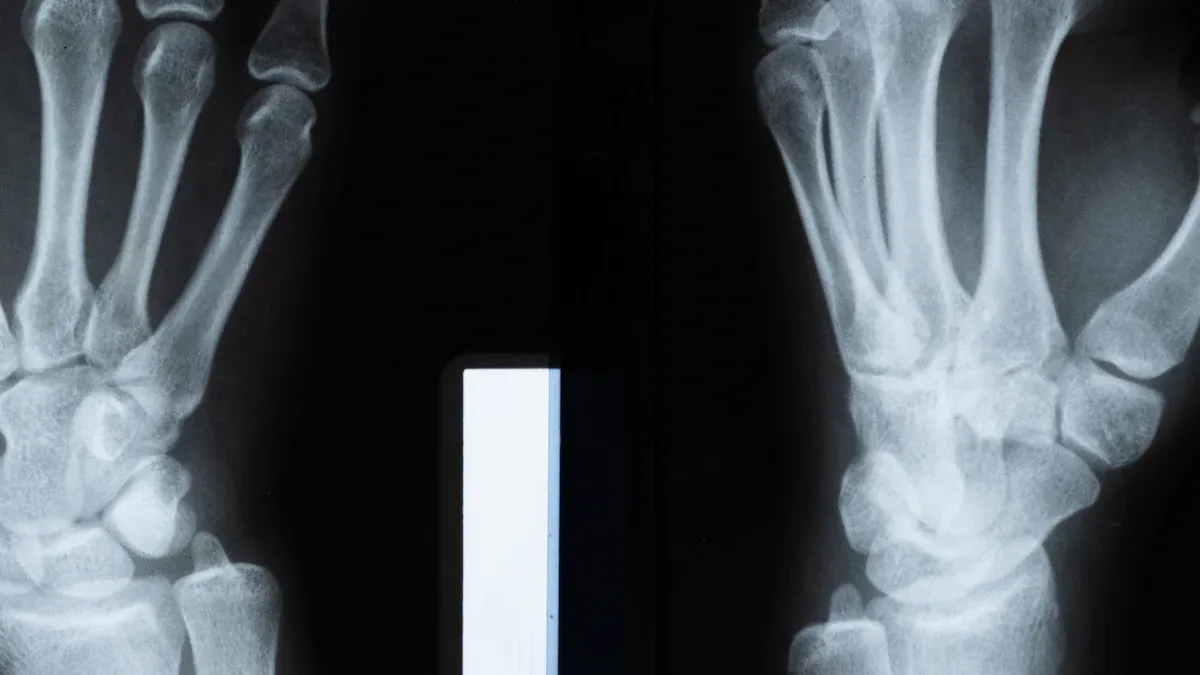
You might wonder how chocolate bar x ray equipment can see inside a chocolate bar. The answer is density contrast imaging. This process uses X-rays to look at how different parts of the chocolate absorb energy. For example, caramel absorbs more X-ray energy than chocolate, so it looks brighter in the image. Salt crystals stand out even more because they are inorganic and absorb much more energy. These bright spots help you spot things that do not belong in your chocolate bar. This technology lets you see differences between ingredients like milk powder, sugar, cocoa powder, and even salt particles.
Detecting Contaminants in Chocolate Bars
When you use chocolate bar x ray equipment, you can find many types of contaminants. The system can spot:
Metal pieces
Glass fragments
Stones
Salt particles
Sugar clumps
Milk powder lumps
Cocoa powder clusters
The equipment scans each bar as it moves along the production line. Advanced software checks the images for anything unusual. If the system finds a contaminant, it marks the bar for removal. You do not need to stop the line or change the setup for new products. The equipment works quickly and stores images and production data for review. You can even scan through metalized film or foil packaging without missing hidden dangers.
Tip: X-ray systems are as safe to use as metal detectors and give you more information about what is inside your chocolate bars.
What Happens After Detection
Once chocolate bar x ray equipment finds a contaminant, the process does not stop there. The system removes the affected bar from the line using a special valve or ejector. This keeps the rest of the chocolate safe. After removal, you can use tools like X-ray fluorescence analyzers to check what the contaminant is made of. You match the material to parts of your production line to find out where it came from. Then, you investigate and fix the problem to prevent it from happening again. This step-by-step process helps you keep your chocolate bars safe and your customers happy.
Types of Contaminants Detected

Metal, Glass, and Stone
You want your chocolate bars to be free from hard and dangerous objects. Chocolate bar x ray equipment helps you find metal fragments, glass pieces, and stones that may end up in your food. These materials show up clearly because they are much denser than chocolate. You can see the most common contaminants in the table below:
Contaminant Type | Examples |
|---|---|
Physical Contaminants | Metal fragments, glass, dense plastic, stones |
Chemical Contaminants | Cleaning agent residues, lubricants, allergens |
Biological Contaminants | Bacteria (E. coli, Salmonella), mold, viruses |
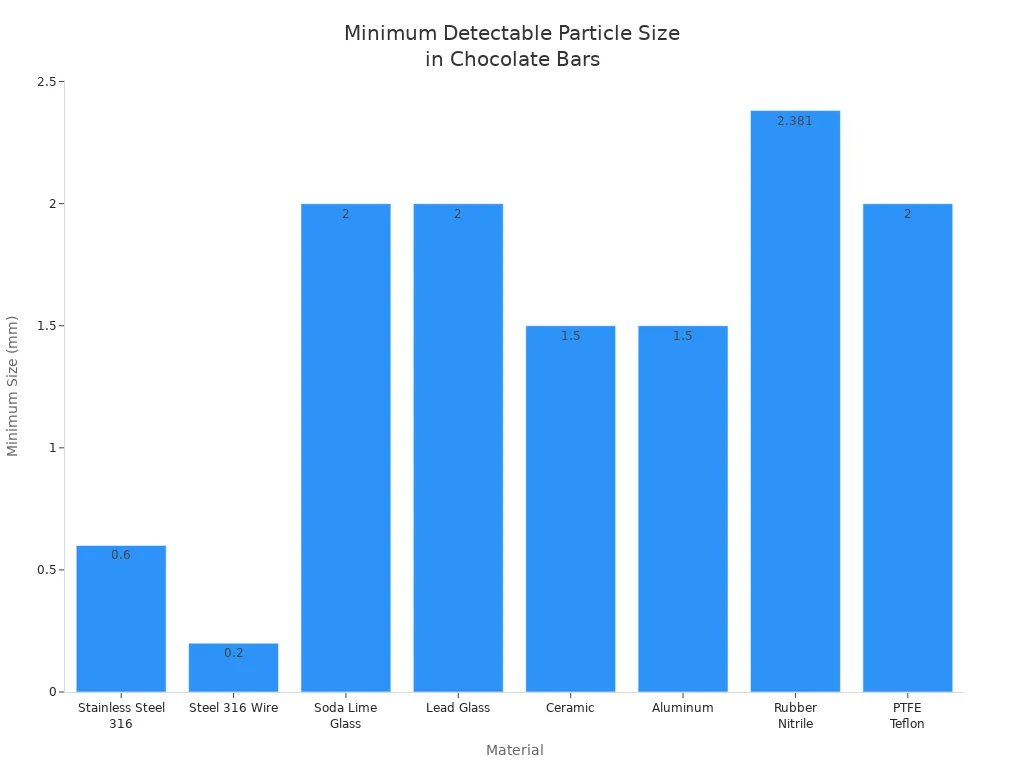
You can also check the smallest size of these materials that the system can detect. The chart below shows the minimum size for each type:
Non-Metallic and Dense Materials
You may not realize that some non-metallic objects can also get into chocolate bars. X-ray systems can find dense plastics, bone fragments, and even some types of rubber. These materials absorb more X-rays than chocolate, so they stand out in the image. You can trust the system to work even if your chocolate is wrapped in metalized film. However, you should know that soft plastics, paper, and wood are harder to spot. The system works best with dense or calcified materials.
Note: X-ray systems help you find more than just metal. They can detect bone, dense plastic, and other hard objects that metal detectors might miss.
Detection Limitations
You need to understand that no system is perfect. X-ray equipment may not find every contaminant. Low-density or flexible materials, such as hair, string, or soft bones, are difficult to detect. Very small pieces of glass or metal can also escape detection. You should use other quality checks along with X-ray inspection to keep your chocolate bars safe.
Hard-to-detect items include:
Hair
Paper or cardboard
Low-density plastics
String
Wood
Soft bones or cartilage
Tip: Combine X-ray inspection with other safety steps for the best protection.
Quality and Packaging Inspection
Monitoring Fill Levels and Mass
You want every chocolate bar to have the right amount of filling. X-ray equipment helps you set exact fill level standards. If a bar does not meet these standards, the system rejects it. The technology gives real-time feedback to filling machines. This means you can adjust the process right away to keep every bar consistent. X-ray systems also measure the mass of each compartment in a chocolate box. You can make sure every section meets the required weight.
X-ray inspection systems can detect underfilled or overfilled chocolate bars.
You can use this technology for many types of food products and packaging.
The system can spot missing products or underfills.
X-ray equipment captures greyscale images. Darker areas mean more product in the x-ray beam.
Software turns these images into 3D models. This helps you find bars that are the wrong size, even if their weight or position changes.
Tip: X-ray inspection helps you avoid giving customers too little or too much chocolate. This keeps your brand reliable.
Checking Packaging Integrity
You need to make sure every chocolate bar reaches the customer in perfect condition. X-ray equipment checks for broken or deformed bars, missing pieces, and packaging problems. The system works at high speed, so you do not slow down production. You can see how different x-ray machines help you in the table below:
Feature | Eagle™ Pack 240 PRO | Eagle™ Pack 430 PRO |
|---|---|---|
Foreign Body Detection | Yes | Yes |
Weight Measurement | Yes | Yes |
Broken/Deformed Bar Check | Yes | Yes |
High Line Speed Capability | Yes | |
Food Contaminant Detection | Yes | |
Mass Measurement | Yes | |
Missing/Broken Product Check | Yes | |
Real-Time Analysis | Yes |
Note: X-ray systems help you catch problems before the chocolate leaves the factory.
Inspecting Bulk Ingredients
You want to use only safe and high-quality ingredients in your chocolate bars. X-ray inspection checks bulk ingredients before production starts. The system looks for foreign objects like metal, bone, glass, and dense plastics. It also checks that each batch meets weight and filling standards.
Application | Description |
|---|---|
Ensure product conformity | Check the filling in a chocolate bar is correct. |
Verify product completeness | Make sure a box of chocolates has every item included. |
Measure confectionery mass | Ensure the product meets weight requirements. |
Identify foreign objects | Detect metal, bone, glass, certain plastics, and other items. |
X-ray inspection detects broken chocolate bars or missing items.
You can ensure even distribution of fillings.
The system removes faulty goods with foreign bodies.
Tip: Inspecting ingredients early helps you prevent problems before they reach the customer.
X-Ray vs. Traditional Methods
Visual Inspection and Metal Detectors
You may think that looking at chocolate bars or using metal detectors is enough to keep them safe. Visual inspection means workers check each bar by eye. This method can miss small or hidden contaminants. Metal detectors focus on finding pieces of metal. They work well for steel or iron, but they cannot find glass, stone, or plastic.
Here is a table that shows how x-ray systems and metal detectors compare when finding non-metallic contaminants:
Technology | Capabilities in Detecting Non-Metallic Contaminants | Additional Notes |
|---|---|---|
X-Ray Systems | Detects glass, stone, some plastics, and calcified bone pieces | Advanced screening for packaging issues and defects |
Metal Detectors | Primarily focuses on metallic contaminants | Limited in detecting non-metallic contaminants |
You can see that x-ray systems find more types of contaminants. Metal detectors miss many non-metal objects. The effectiveness of each system can change based on the chocolate bar and its packaging.
Tip: X-ray systems can even check for problems inside the packaging, not just in the chocolate.
Advantages of X-Ray Equipment
You get better safety and quality when you use x-ray equipment. X-ray systems can detect a wider range of contaminants, including glass, stone, and some plastics. Traditional methods, like metal detectors, may overlook these dangers. X-ray technology also finds smaller foreign objects, which means you have fewer false rejects and better product quality.
X-ray inspection helps you meet food safety standards.
You can improve your quality control program with advanced x-ray equipment.
X-ray systems increase productivity because they work fast and do not slow down the line.
When you use x-ray equipment, you protect your customers and your brand. You can trust that your chocolate bars are safe and meet high standards every time.
Benefits of Chocolate Bar X Ray Equipment
Food Safety and Quality
You want to know that your chocolate bars are safe and high quality. Chocolate bar x ray equipment helps you achieve this goal. The technology checks for hidden contaminants that you cannot see. It finds metal, glass, and other foreign objects before they reach you. This process protects you from harm and keeps your food safe. When you use x-ray inspection, you also improve the quality of every chocolate bar. The system checks for missing pieces, broken bars, and packaging problems. You can trust that each product meets high standards.
X-ray inspection technology builds consumer trust by showing your commitment to safety and quality. You show your customers that you care about their health and satisfaction.
Reducing Recalls and Costs
You want to avoid costly recalls and wasted products. X-ray inspection helps you do this by catching problems early. The system removes contaminated bars before they leave the factory. This step prevents recalls that can damage your brand and cost you money. You also reduce waste because you only remove products that have real issues. Here are some ways x-ray inspection saves you money:
Accurate detection of foreign objects lowers the chance of product rejection.
Less waste means higher yield in your production.
Protecting your brand reputation keeps your customers loyal.
Tip: Preventing recalls not only saves money but also protects your business from legal risks.
Meeting Food Standards
You must follow strict food safety rules. X-ray inspection helps you meet these standards with confidence. The system supports your quality control program and proves your commitment to safety. You can show that you manage risks and follow the law. Many retailers and food safety groups require these checks. The table below shows the long-term benefits for manufacturers:
Benefit | Description |
|---|---|
Enhanced Product Quality | Ensures high food quality through various checks. |
Risk Management | Demonstrates due diligence in managing food safety risks. |
Regulatory Compliance | Helps meet retailer codes of practice and food safety standards. |
Customer Trust | Increases customer confidence and satisfaction. |
Cost Efficiency | Reduces waste and minimizes costs. |
Increased Operational Efficiency | Streamlines production and reduces errors. |
You can rely on chocolate bar x ray equipment to help you deliver safe, high-quality products and build lasting trust with your customers.
You can trust chocolate bar x ray equipment to keep your food safe and high quality. This technology finds more types of contaminants than traditional methods. You benefit from fewer recalls and stronger brand trust. Manufacturers and consumers both gain from these advantages:
X-ray systems detect glass, rubber, and plastics that other methods miss.
They check for broken or missing items and help meet food safety rules.
The technology supports traceability and protects your reputation.
Appreciate the advanced tools that make your chocolate bars safer every day.
FAQ
How safe is x-ray inspection for chocolate bars?
You do not need to worry about safety. X-ray inspection uses very low energy. It does not change the taste, texture, or quality of your chocolate. The process meets strict food safety standards.
Can x-ray equipment see through foil or metalized packaging?
Yes, you can use x-ray systems with foil-wrapped chocolate bars. The technology can see through most types of packaging. You still get accurate results and strong contaminant detection.
What happens to chocolate bars that fail x-ray inspection?
The system removes any bar with a detected contaminant. You do not receive these bars. Manufacturers often investigate the cause and improve their process to prevent future issues.
Does x-ray equipment slow down chocolate production?
No, you can keep your production line moving fast. X-ray systems work at high speeds. You do not need to stop or slow the line for inspection.
What types of contaminants are hardest to detect?
You may find that low-density items like hair, paper, or string are hardest to spot. X-ray equipment works best with dense materials such as metal, glass, or stone.