The Shocking Truth About China Tablet Weighing Machine Costs
The initial low price of a China tablet weighing machine often masks significant long-term expenses. Many buyers discover this "shocking truth" later.
The total cost of ownership for a tablet checkweigher can approach, or even exceed, that of a European machine over its lifespan. This happens when factoring in validation, maintenance, and potential downtime.
The right tablet weighing machine choice is not about the cheapest price tag. It depends on a company's specific production scale, regulatory environment, and tolerance for risk.
Key Takeaways
- A cheap China tablet weighing machine often costs more later. Hidden costs like repairs and missing documents add up.
- Always look at the total cost, not just the price tag. This includes maintenance, support, and how long the machine will last.
- European machines cost more at first but offer better quality. They have stronger parts, more accurate results, and reliable software.
- Good paperwork is very important for safety rules. European machines come with all the needed documents, but Chinese machines often do not.
- Support after you buy the machine is key. European companies offer quick help, but Chinese companies may have slow support due to distance and language.
Price Breakdown: Initial Investment vs. Total Cost

The initial capital expenditure is often the first, and sometimes only, number a purchasing department considers. This narrow focus can lead to significant financial miscalculations over the equipment's lifecycle. A comprehensive cost analysis reveals a more complex picture.
Upfront Cost: A Side-by-Side Look
The sticker price difference between European and Chinese machines is substantial. It is the primary reason buyers first look toward Asian markets. A mid-range pharmaceutical tablet weighing machine from a Chinese manufacturer typically costs between $3,000 and $8,000. These machines often promise pharmaceutical-grade materials and reasonable accuracy.
In contrast, a comparable machine from a reputable European manufacturer can easily command a price two to five times higher. The table below illustrates this initial investment gap.
| Feature/Machine Type | Typical Chinese Manufacturer Price | Typical European Manufacturer Price |
|---|---|---|
| Mid-Range Checkweigher | $3,000 - $8,000 | $15,000 - $40,000+ |
| High-Speed Sorter | $10,000 - $25,000 | $50,000 - $100,000+ |
This stark difference makes the Chinese option appear incredibly attractive on a balance sheet. However, this initial saving is only the first chapter of the financial story.
The Hidden Costs of a China Tablet Weighing Machine
The attractive upfront price often conceals a range of secondary expenses. These "hidden costs" emerge during installation, validation, and operation. They can quickly erode any initial savings.
Note: Many companies discover that the cost of bringing a non-compliant machine up to cGMP standards can equal or exceed the initial purchase price.
Common hidden costs include:
- Re-engineering and Fabrication: Parts may not fit existing production lines, requiring custom fabrication.
- Documentation Deficiencies: Missing or poorly translated manuals and validation documents require significant time and resources to recreate.
- Software Validation: Proprietary software may lack the necessary audit trails or 21 CFR Part 11 compliance, demanding expensive third-party solutions.
- Increased Training Time: Non-intuitive interfaces and poor documentation extend the operator learning curve, leading to lost productivity.
These factors transform a seemingly simple purchase into a complex and costly integration project.
Calculating Your Total Cost of Ownership
A smart investment decision looks beyond the purchase price. It involves calculating the Total Cost of Ownership (TCO). TCO provides a true financial forecast for the equipment over its entire service life. A thorough TCO calculation for a tablet weighing machine must include several critical variables.
Companies should assess these factors to build a realistic budget:
- Purchase Price: The initial acquisition cost of the machine.
- Maintenance & Servicing: This includes the cost and accessibility of spare parts, the frequency of part replacement, and the time required for routine maintenance.
- Support and Backup: The cost associated with technical support availability. Does the manufacturer offer 24/7 assistance or a self-help portal?
- Operational Costs: The power consumption and overall energy efficiency of the machine during production runs.
- Productivity: The machine's processing speed and accuracy. Higher productivity and fewer rejects directly reduce operational costs.
- Service Life: The expected operational lifespan of the equipment before it needs major overhauls or replacement.
- Expected and Unexpected Maintenance: Budgeting for both scheduled servicing and unforeseen breakdowns.
- Cost of Retiring the Product: Expenses related to decommissioning and disposing of the old machine.
Analyzing these points reveals that a lower-priced China Tablet Weighing Machine may have a much higher TCO due to frequent maintenance, downtime, and support challenges.
Quality and Performance: What Your Money Buys
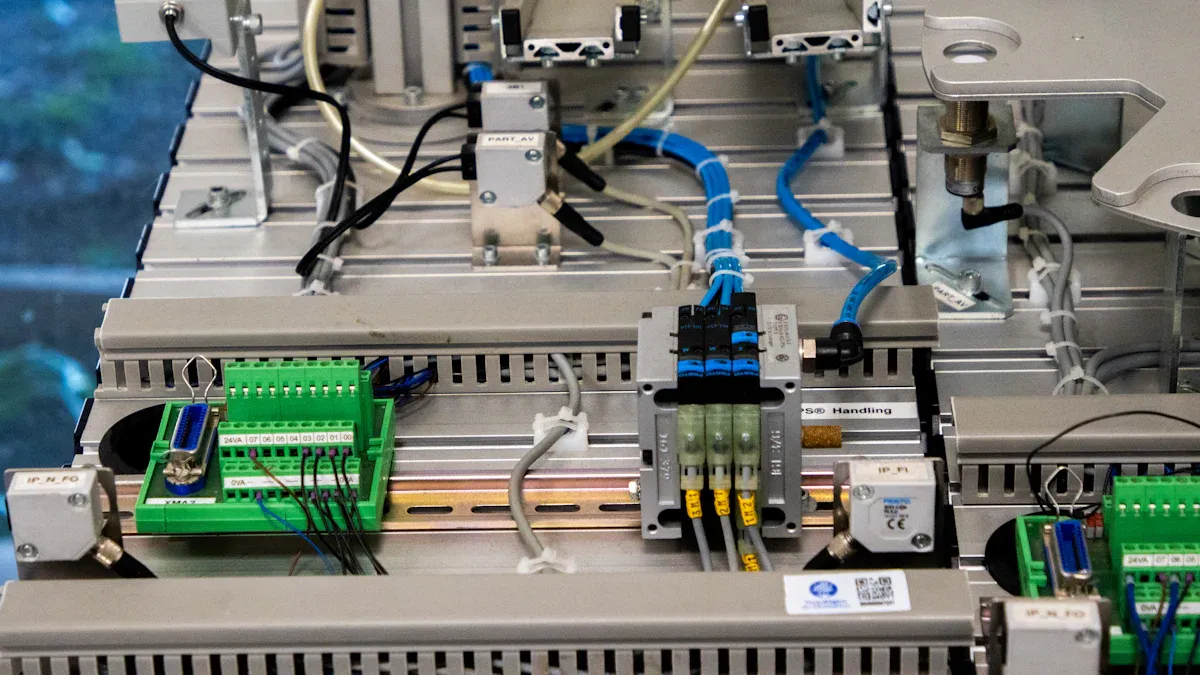
The price difference between European and Chinese machines directly reflects disparities in engineering, materials, and performance reliability. A buyer's investment determines the equipment's capability and long-term operational stability.
Material, Build, and Construction
European manufacturers typically use high-grade 316L stainless steel for all contact parts. They also feature superior welding, polishing, and crevice-free designs. This meticulous construction minimizes contamination risks and simplifies cleaning, which is essential for cGMP compliance. In contrast, some Chinese machines may use 304 stainless steel or have rougher finishes. These seemingly small details can lead to significant validation failures in strictly regulated pharmaceutical environments.
Accuracy, Speed, and Real-World Reliability
Manufacturers of Chinese machines often advertise impressive accuracy specifications. These claims promise high precision for a fraction of the cost.
| Model Type | Highest Accuracy (mg) | Typical Accuracy (mg) |
|---|---|---|
| High-End Chinese | 0.5 | 2 |
However, the real test is maintaining this accuracy at high speeds. Modern tablet presses can produce over 2,600 tablets per minute. A European checkweigher is engineered to handle this throughput consistently for years. A China Tablet Weighing Machine might perform well initially but can struggle to maintain both speed and accuracy during continuous, high-volume production, creating bottlenecks and affecting batch consistency.
Software and Electronics Integrity
The software and electronic components are the heart of a modern checkweigher. European systems come with robust, validated software that is often 21 CFR Part 11 compliant out of the box. This includes secure audit trails, user-level permissions, and comprehensive documentation.
Critical Point: Software that lacks proper validation and security features can put an entire product batch at risk of non-compliance, leading to costly recalls.
Chinese machines may use proprietary software with limited English documentation, non-intuitive interfaces, and unverified compliance claims. The cost and effort to validate or replace such a system can quickly eliminate any initial price advantage.
Regulatory Compliance and Documentation Gaps
Navigating the regulatory landscape is one of the most critical—and costly—aspects of purchasing pharmaceutical equipment. The gap between European and many Chinese offerings in this area is often the source of the largest hidden costs. A machine without proper documentation is not just an inconvenience; it is a significant compliance liability.
The European Documentation Standard
European manufacturers operate in a highly regulated environment. They provide a comprehensive validation package as a standard part of the sale. This documentation is meticulously prepared to support the buyer's qualification process and satisfy auditors. A typical European documentation turnover package includes a detailed Design Specification (DS).
This DS is broken down further to provide complete transparency into the machine's construction and logic:
- Functional Design Specification (FDS)
- Hardware Design Specification (HDS)
- Software Design Specification (SDS)
This level of detail gives your quality assurance team everything it needs for a smooth and efficient validation process.
Common Compliance Hurdles with Chinese Imports
Many Chinese machines arrive with a CE mark. However, this mark is a manufacturer's self-declaration that the product meets EU requirements. It does not automatically guarantee that the complete technical file exists to back it up. Importers often face significant hurdles.
Common issues include:
- Missing or incomplete Declaration of Conformity.
- Inadequate risk assessments.
- Lack of an appointed Authorized Representative within the EU to act as a point of contact for authorities.
The machine may be subject to the Non-Automatic Weighing Instruments Directive and the Machinery Regulation. Both require extensive technical documentation and potential Notified Body involvement. A buyer who imports a machine without this backing documentation inherits the full responsibility for proving its compliance.
The Cost of Incomplete Validation (IQ/OQ/PQ)
Incomplete documentation creates a nightmare for the Installation, Operational, and Performance Qualification (IQ/OQ/PQ) stages. Without the manufacturer's FDS or HDS, your team must reverse-engineer the specifications, a time-consuming and expensive task. This can delay production for weeks or months.
Warning: A failed regulatory audit due to poor equipment validation can have devastating financial consequences. ⚠️
Regulators can issue warning letters, force production shutdowns, or mandate product recalls, costing millions. Financial penalties for compliance failures can be severe, sometimes calculated as a percentage of global revenue. The cost of remediating these documentation gaps and dealing with potential regulatory action often dwarfs any initial savings on the machine itself.
After-Sales Support: The Ultimate Deal-Breaker
A machine's value is zero when it is not running. After-sales support is the insurance policy that protects a company's investment and production schedule. The difference in support structures between European and Chinese manufacturers is often the single most important factor in the long-term financial success of the equipment. A low initial price means very little when a production line sits idle for days waiting for a simple part or a technical answer.
European Support: The Local Benchmark
European manufacturers build their reputations on reliability and comprehensive support. They view after-sales service not as a cost center, but as a core part of their product offering. This commitment is formalized in a Service Level Agreement (SLA), a contract that guarantees specific levels of service, response times, and parts availability. This document provides buyers with predictability and peace of mind.
A typical SLA from a European supplier often includes a wide array of guarantees. These services ensure maximum uptime and operational efficiency.
- Support Services: Companies gain access to telephone and remote technical support, often with 24/7 emergency options and dedicated support teams.
- Hardware Maintenance: The agreement covers spare parts management, discounts on parts, and guaranteed access to a module reserve program.
- On-site Support: Manufacturers commit to minimum response times for sending a technician to a facility for corrective assistance or preventative maintenance.
- Lifecycle Management: The supplier provides an upgrade roadmap, change control management, and planning that aligns with industry guidelines like ISPE GAMP 5.
- Training and Consulting: The purchase includes access to professional product training for operators and maintenance staff.
This structure provides a local or regional network of trained technicians. A company can get an expert on-site within hours, not days, to diagnose and fix problems.
Chinese Support: The Remote Reality
Support from many Chinese manufacturers operates on a completely different model. It is almost exclusively remote and often lacks the contractual guarantees of a formal SLA. Communication typically happens through email or messaging apps like WeChat. While some reputable businesses provide excellent remote assistance, the model itself presents inherent challenges.
Language Barriers: This is one of the most common issues people face when pursuing product development in China. Reputable businesses will have bilingual employees you can communicate with. This will make language gaps a nonissue.
Even with bilingual staff, significant hurdles remain. The 12-hour time zone difference means a question asked in the morning in North America might not get a response until the next business day. Shipping spare parts from China can take days or even weeks, especially if they get delayed in customs. There is no local technician to dispatch for hands-on troubleshooting, leaving a company's internal team to perform complex repairs with remote guidance. This reality places a heavy burden on the buyer's in-house technical expertise.
Calculating the Financial Impact of Downtime
Downtime is one of the most expensive hidden costs. Every hour a machine is offline translates directly to lost revenue and wasted labor costs. Companies can calculate this impact to understand the true value of responsive support. A simple calculation reveals the staggering cost of an idle production line.
Cost of Downtime = (Lost Production Units per Hour × Profit per Unit) + (Labor Costs per Hour)
Let's compare a realistic scenario. A machine goes down due to a faulty sensor. ⏳
| Scenario | Support Model | Response & Fix Time | Estimated Downtime | Financial Impact |
|---|---|---|---|---|
| European Machine | Local SLA | 4-hour on-site response | 4-8 hours | Minimal production loss. |
| China Machine | Remote Support | 24-hour email response + 3-day part shipment | 48-72+ hours | Significant loss of revenue and productivity. 💰 |
In this example, the European machine is back online within a single shift. The Chinese machine could be down for three full days or more. The lost profit from that extended downtime can easily exceed the initial cost savings of the machine. A buyer must ask: is a lower upfront price worth the risk of a multi-day production shutdown? For most regulated manufacturing environments, the answer is a clear no.
The initial sticker price is not the full story. Buyers must consider the total cost of ownership and suitability. For large-scale, cGMP-compliant pharmaceutical manufacturing, European machines remain the safer, more reliable long-term investment. A high-end China Tablet Weighing Machine can offer excellent value for nutraceuticals or less-regulated markets. This option works best for companies with strong in-house technical teams.
Final Advice: Always demand detailed documentation, client references, and a clear service level agreement (SLA) before any purchase. This protects your investment.
FAQ
Is a Chinese machine ever a good choice?
Yes, a high-end Chinese machine can offer excellent value. It works best for nutraceuticals or operations in less-regulated markets. Companies choosing this option need strong in-house technical teams to manage support and potential integration challenges. This choice balances cost with manageable risk.
What is the most important document to request?
Buyers should always demand a clear Service Level Agreement (SLA). This contract guarantees support response times and parts availability. A comprehensive validation package (IQ/OQ/PQ) is also critical. These documents protect a company's investment and ensure regulatory readiness.
Can a company make a Chinese machine cGMP compliant?
A company can bring a Chinese machine up to cGMP standards. However, this process is often expensive and time-consuming. The costs for re-engineering, software validation, and creating documentation can easily exceed the initial savings on the machine's purchase price.
Why is a CE mark not a guarantee of quality?
A CE mark is a manufacturer's self-declaration. It states the product meets EU safety requirements. It does not guarantee the existence of a complete technical file to prove compliance. Authorities can still challenge the machine's conformity, leaving the importer responsible.
See Also
Discovering Top Chinese Suppliers for X-Ray Inspection Machine Procurement
Essential Capsule Checkweighers for Buyers to Evaluate in the Year 2025
Understanding Tablet Sampling Machines: A Comprehensive Guide for Lab Selection
Three Indispensable Industrial Checkweighers for Every Modern Food Processing Plant
Crucial Pressure Plate Insights That Can Significantly Reduce Your Costs