Cost Quality and Lead Time A Comparison of China Capsule Sorters and Imports
Companies often face a critical choice when selecting a new pharmaceutical capsule sorting machine. A China Capsule Sorter typically offers significant cost savings and faster delivery. Imported alternatives, however, are known for superior build quality and long-term reliability. The right capsule sorter depends entirely on a company's specific operational needs.
The best choice balances your budget, production timeline, and quality tolerance. Each factor plays a vital role in making a well-informed procurement decision.
Key Takeaways
- China capsule sorters cost less money and arrive faster. They help companies with small budgets.
- Imported capsule sorters often have better quality and last longer. They are good for companies needing high precision.
- Always look at the total cost of a machine. This includes shipping, taxes, and maintenance, not just the price tag.
- Check if the machine meets important quality rules. Many Chinese makers now follow global standards like cGMP.
- Use a decision matrix to choose the best machine. This tool helps compare cost, quality, and delivery time for your needs.
Section 1: A Detailed Breakdown of Cost
Cost is often the primary driver in equipment procurement. A detailed financial analysis reveals more than just the initial price tag. Companies must evaluate the upfront investment, long-term operational expenses, and potential hidden fees to understand the true cost of a capsule sorter.
The Cost Advantage of a China Capsule Sorter
Manufacturers in China provide a distinct and compelling price advantage. The initial capital outlay for a China Capsule Sorter is significantly lower than for its European or North American counterparts. This difference allows companies with limited budgets to access essential automation technology. The lower manufacturing costs, including labor and raw materials, directly translate into a more affordable final product.
For context, examining the price of related accessory equipment from China offers a clear financial picture. The costs can vary based on capacity, features, and supplier.
| Product Type | Price Range (USD) |
|---|---|
| Capsule Polishing Machine | $2,100 - $4,650 |
| Capsule Filling Machine Accessory Equipment | $3,100 - $6,350 |
This data shows that essential pharmaceutical equipment is available at a fraction of the cost of many Western imports. The price distribution for these machines highlights a consistent and accessible entry point for buyers.
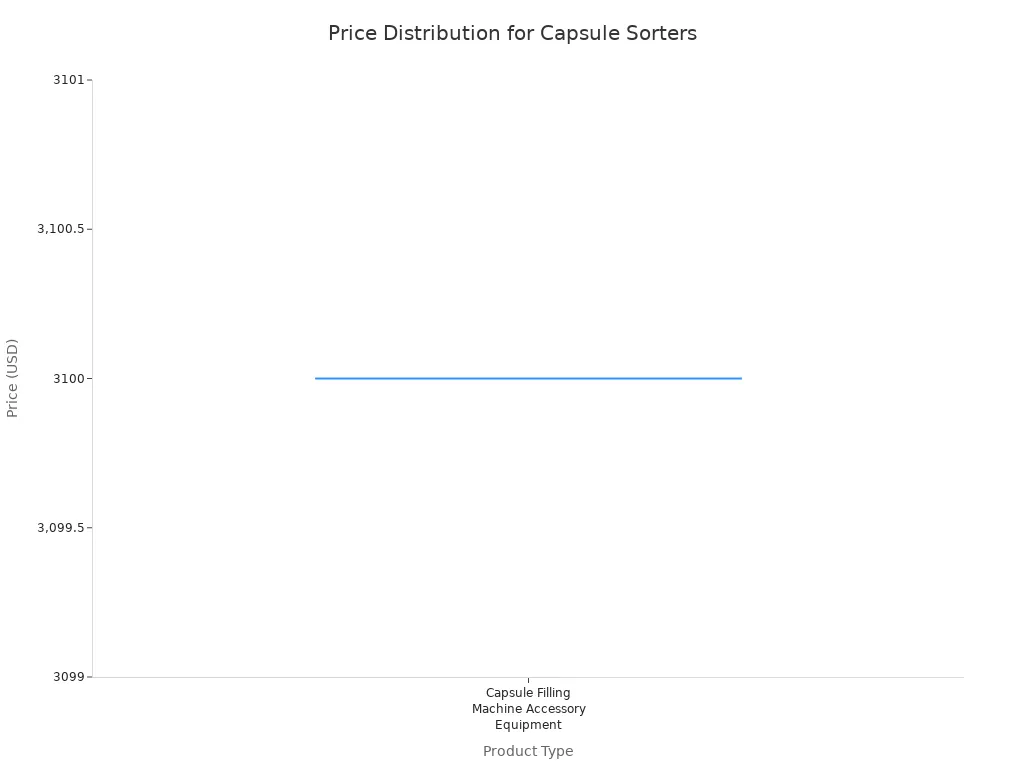
Note: These prices represent accessory equipment and provide a general benchmark. A dedicated China Capsule Sorter will have its own price range, but it follows a similar trend of being highly cost-effective.
Total Cost of Ownership
A smart investment looks beyond the initial purchase. Total Cost of Ownership (TCO) provides a more holistic financial view. It encompasses all expenses incurred during the machine's entire lifecycle.
Companies calculate TCO by adding the following costs to the initial price:
- Installation and Commissioning: Fees for setup and initial testing.
- Operator Training: Costs associated with training staff to use the equipment correctly.
- Maintenance and Spare Parts: The long-term expense of routine servicing and replacement parts.
- Energy Consumption: The operational cost of running the machine daily.
- Potential Downtime: Production losses incurred during repairs or malfunctions.
An imported sorter may have a higher initial price but could offer a lower TCO through superior durability and less frequent maintenance. Conversely, a Chinese machine may require more attention over its lifespan, potentially increasing long-term costs.
Hidden Costs of Procurement
Procuring equipment internationally introduces several expenses that are easy to overlook. These hidden costs can impact the final budget significantly. Buyers should account for these factors when evaluating any overseas purchase.
Key hidden costs include:
- Shipping and Freight: International logistics, insurance, and handling fees can be substantial.
- Import Duties and Taxes: Tariffs and value-added taxes (VAT) vary by country and can add a significant percentage to the base price.
- Currency Conversion: Fluctuations in exchange rates and bank transfer fees can alter the final cost.
- Factory Acceptance Testing (FAT): Sending a team to the manufacturer's site for pre-shipment inspection involves travel, accommodation, and labor costs.
- Customs Brokerage: Fees paid to agents who handle the import documentation and clearance process.
Failing to budget for these items can turn an attractive low price into an unexpected financial burden. A thorough procurement plan anticipates these expenses from the start.
Section 2: Evaluating Quality and Performance

While cost is a major factor, the quality and performance of a capsule sorter directly impact production efficiency and product safety. A machine's construction, accuracy, and technological sophistication determine its true value. Companies must look beyond the price and assess how the equipment will perform in a real-world manufacturing environment.
Material and Build Quality
The longevity and reliability of a capsule sorter begin with its construction. Imported machines from Europe and North America often use higher-grade materials, such as 316L stainless steel, for all contact parts. This material offers superior corrosion resistance, which is critical in pharmaceutical settings. The fit and finish of these machines are typically more refined due to advanced manufacturing techniques and stringent quality control.
Chinese sorters commonly use 304 stainless steel, which is a cost-effective and suitable alternative for many applications. While durable, it may not offer the same level of resistance as 316L steel over the long term. However, the build quality of Chinese equipment has improved dramatically. Many manufacturers now invest in modern CNC machining and finishing processes, closing the gap with their Western counterparts. The key is to verify the specific materials and manufacturing standards of the supplier.
Sorting Accuracy and Efficiency
A sorter's primary job is to identify and remove defective capsules. Its value is measured by its accuracy and speed. Sorting accuracy refers to the machine's ability to correctly identify and eject capsules with defects like cracks, dents, or improper filling. Efficiency is the rate at which it processes capsules, usually measured in capsules per hour.
Imported sorters often feature more advanced vision systems and sensors, leading to higher accuracy rates, especially for subtle defects. Chinese sorters provide excellent performance for common defects and offer impressive throughput for their price point.
| Feature | Typical Imported Sorter | Typical China Capsule Sorter |
|---|---|---|
| Sorting Accuracy | 99.5% - 99.9% | 98% - 99.5% |
| Efficiency (Throughput) | 50,000 - 200,000+ capsules/hr | 40,000 - 150,000 capsules/hr |
| Primary Technology | High-resolution cameras, laser sensors | Standard cameras, mechanical guides |
Pro Tip: Request a live or video demonstration with your specific capsules. This allows you to test the machine's accuracy and efficiency with your product before making a purchase.
Technology, Software, and Compliance
Modern capsule sorters rely on sophisticated technology and software for operation and data management. Imported machines often lead with proprietary software that offers intuitive user interfaces, detailed batch reporting, and seamless integration with factory-wide control systems.
Chinese manufacturers are quickly advancing in this area. Many now offer user-friendly touchscreen interfaces and robust software. More importantly, leading Chinese suppliers recognize the need for global compliance. They design their equipment to meet stringent international standards, which is essential for companies exporting to regulated markets like the US and Europe.
For example, top-tier Chinese pharmaceutical equipment manufacturers demonstrate adherence to critical standards:
- Jinlu Packing produces equipment that meets FDA material certification, EMA quality regulations, and cGMP requirements. Their systems also support FDA 21 CFR Part 11 for data traceability.
- Rich Packing confirms its automatic capsule filling machines are fully compliant with the U.S. FDA's 21 CFR Part 11, EU cGMP, and CE marking (Machinery Directive 2006/42/EC).
This commitment to compliance shows that buyers can find Chinese equipment that meets the necessary regulatory and quality assurance demands for modern pharmaceutical production.
Section 3: The Impact of Lead Time and Supply Chain
Time is a critical resource in pharmaceutical manufacturing. A machine's delivery schedule and the reliability of its supply chain directly influence production timelines and profitability. Companies must weigh the speed of acquisition against the long-term availability of support and spare parts.
Manufacturing and Delivery Times
Chinese manufacturers hold a significant advantage in production speed. Their streamlined processes and localized supply chains enable them to build and ship equipment much faster than Western competitors. A typical China Capsule Sorter can often be ready for shipment within a few weeks.
Imported sorters usually involve longer lead times. These machines are often built to order and must navigate complex international logistics. Shipping, customs clearance, and final delivery can add several weeks or even months to the total procurement timeline.
Key Consideration: Always add a buffer for international shipping and potential customs delays to your project timeline. A short manufacturing time does not guarantee immediate delivery.
After-Sales Support and Parts
Effective after-sales support is crucial for minimizing downtime. The warranty and service terms offered by a manufacturer provide insight into their commitment to customer success. Chinese suppliers typically offer comprehensive support packages, though the terms can vary.
Many leading Chinese manufacturers provide a standard one-year warranty, with some extending it to two years.
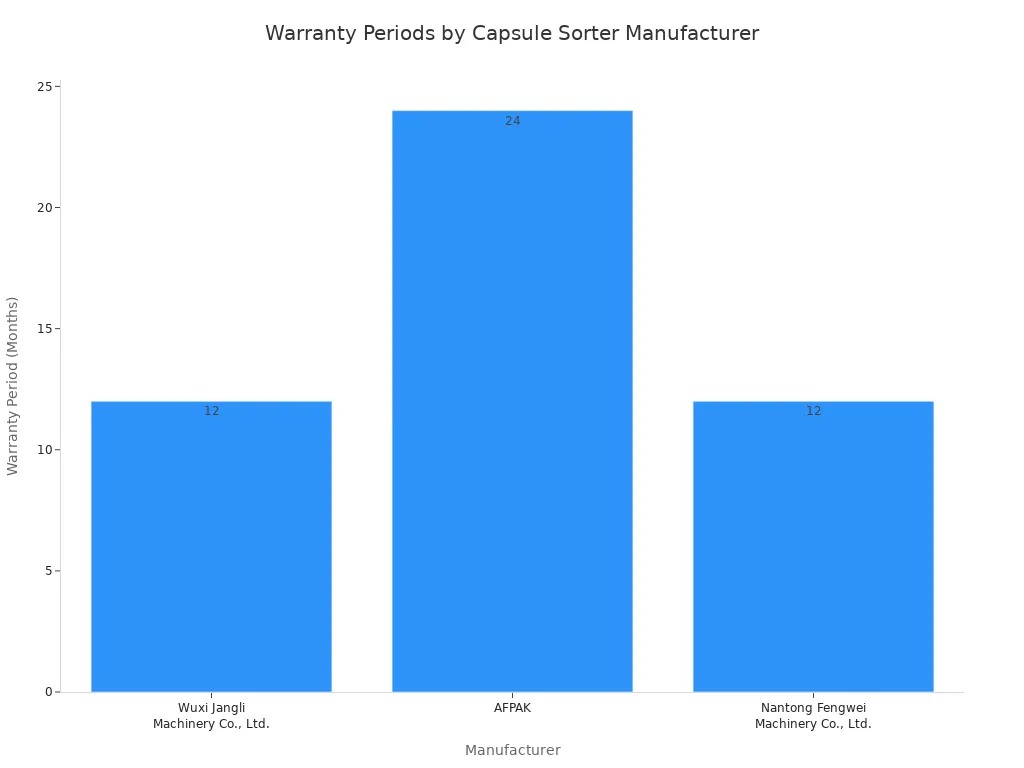
A closer look at their service offerings reveals a focus on responsive technical assistance and training.
| Manufacturer | Warranty Period | Specific Terms/Exclusions | Additional Services |
|---|---|---|---|
| Wuxi Jangli Machinery Co., Ltd. | 12 months from equipment receipt | Excludes human error | Technical support, 2/8/24-hour service response, paid services post-warranty |
| AFPAK | 2 years (global) | N/A | Response time < 4 hours |
| Nantong Fengwei Machinery Co., Ltd. | 1 year (machine), 1 year (core components) | N/A | Field installation, commissioning, training, maintenance, online/video technical support |
| Jinlu Packing | Not specified | Emphasizes comprehensive service guarantees | Overseas on-site commissioning |
Local vs. International Support Models
Support structures differ significantly between imported and Chinese equipment.
- Imported Sorters: These machines are often sold through local or regional distributors. This model provides buyers with accessible, on-the-ground technicians for installation, training, and maintenance. The convenience of local support is a major benefit.
- Chinese Sorters: Support is frequently managed directly from the factory. This involves remote troubleshooting via video calls and online assistance. For major issues, a technician may travel from China. This model can be cost-effective but may involve delays due to time zone differences and travel logistics.
Section 4: Making an Informed Decision
Choosing the right capsule sorter requires a clear evaluation of a company's unique priorities. The final decision balances financial constraints, quality standards, and production timelines. A structured approach helps clarify which machine best aligns with operational goals.
When to Choose a Chinese Sorter
A China Capsule Sorter is often the ideal choice for startups, contract manufacturers, or companies with tight budgets. These machines provide several key advantages for businesses that need to scale quickly and efficiently. They are particularly suitable when speed and cost-effectiveness are the primary drivers.
- Cost-Effectiveness: Competitive pricing makes advanced sorting technology accessible to companies with limited capital.
- Automation Focus: The high demand in China’s pharmaceutical market drives innovation in high-speed automation, reducing labor costs.
- Technological Advancement: Manufacturers integrate modern vision systems and AI, leading to high accuracy and operational efficiency.
- International Compliance: A focus on export markets means many suppliers build equipment that meets global quality and regulatory standards.
When to Choose an Imported Sorter
Companies should choose an imported sorter when long-term reliability and the highest possible precision are non-negotiable. These machines are the preferred option for large pharmaceutical firms or those producing high-value products where even a minor defect is unacceptable. The investment is justified by superior build quality, brand reputation, and the convenience of a robust local support network for service and parts.
Creating a Decision Matrix
A decision matrix is a powerful tool for making an objective choice. It removes guesswork by assigning numerical values to important criteria. This process quantifies qualitative factors, allowing for a direct, data-driven comparison between different sorters.
A company can create a matrix using a structured approach:
- Establish a consistent scoring scale (e.g., 1-5 or 1-10) to turn qualitative opinions like "good" or "poor" into numbers.
- Define the key criteria for the decision, such as cost, build quality, delivery time, and supplier reputation.
- Assign a weight to each criterion based on its importance to the operation.
- Score each potential machine against every criterion using the established scale.
- Multiply each score by its weight to get a final weighted score for each option, revealing the most logical choice.
A China Capsule Sorter is an excellent choice for companies with tight budgets and urgent production timelines. Conversely, imported sorters better serve operations that demand maximum long-term reliability and precision.
Ultimately, companies should use a decision matrix. This tool helps weigh cost, quality, and lead time against specific operational needs to make a truly informed choice.
FAQ
Can Chinese sorters meet international standards like cGMP?
Yes. Many leading Chinese manufacturers design their equipment to meet global standards, including cGMP, CE, and FDA regulations. Companies should always request and verify the specific compliance certifications from their chosen supplier to ensure the machine meets all necessary regulatory requirements for their market.
How do companies get spare parts for a China Capsule Sorter?
Manufacturers typically ship spare parts directly from the factory.
Buyers should clarify the ordering process and estimated shipping times for critical components. This planning helps minimize potential production downtime while waiting for a replacement part to arrive from overseas.
Is it possible to test a sorter before purchase?
Absolutely. Reputable suppliers encourage pre-purchase testing. A company can send its specific capsules to the manufacturer for a live or recorded video demonstration. This test validates the machine's sorting accuracy and efficiency with the actual product, ensuring it meets performance expectations.
See Also
Capsule Sorters: Essential Technology for Flawless Product Quality Assurance
Top Capsule Checkweighers for Buyers to Evaluate in the Coming Year
Boosting Pharma Efficiency: Modern Capsule Decapsulation Machine Innovations
Comparing Leading Ampoule Filling Production Line Manufacturers Today
Plate Pack Benefits and Comprehensive Cost Analysis for Next Year