The Role of Dual Energy X Ray Systems in Modern Chicken Processing
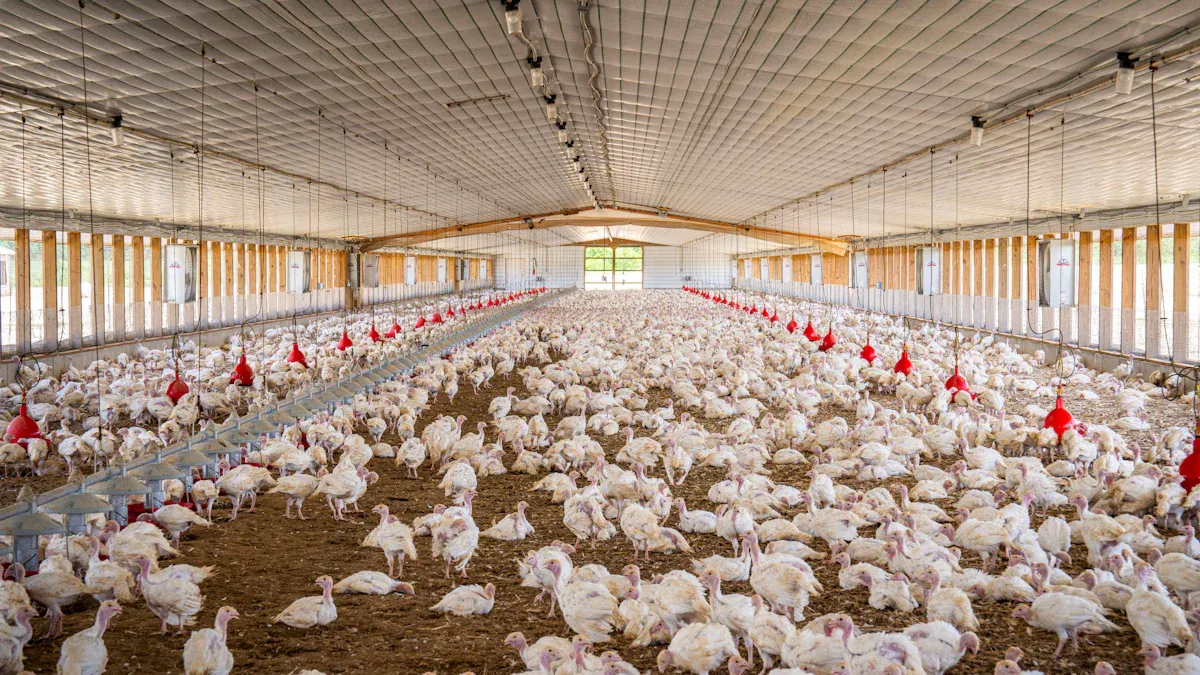
Dual energy x-ray systems have transformed chicken processing by boosting food safety and product quality. These advanced x-ray solutions deliver non-destructive inspection, identifying bone fragments as small as 0.6 mm and detecting contaminants like rubber or plastic. Processors rely on non-destructive methods to maintain product integrity and meet strict food safety standards. Recent innovations, including AI-powered image analysis and real-time x-ray inspection, enhance detection accuracy and data transfer. The table below highlights how x-ray technology outperforms traditional inspection, making chicken x ray equipment essential for modern facilities.
Feature | Dual Energy X-Ray System Benefits |
|---|---|
Non-destructive inspection | Maintains product integrity, ensures food safety |
Superior contaminant detection | Identifies bone, plastic, rubber, and more |
Reduced labor and rework | Accurate inspections lower costs |
Real-time monitoring | Supports immediate quality control decisions |
Impact of X-Ray Detection in Poultry Processing
Food Safety Improvements
X-ray detection has become a cornerstone in poultry processing plants. Processors use advanced x-ray inspection to identify foreign materials that threaten food safety. These systems detect contaminants such as bone fragments, metal pieces, and even low-density materials like plastic or rubber. The ability to find these hazards ensures safer products for consumers.
New data from APHA shows a positive trend in salmonella control across chicken and turkey, highlighting the effectiveness of modern x-ray detection systems.
Processors rely on non-destructive inspection to maintain food safety without damaging the product. This approach allows for continuous monitoring and immediate rejection of contaminated items. The table below summarizes common contaminants detected by dual energy x-ray systems:
Contaminant Type | Description |
|---|---|
Bone Fragments | Small pieces of bone that may be present in meat |
Metal Pieces | Foreign metal objects that can contaminate poultry |
Quality Assurance
Quality assurance teams depend on x-ray detection to uphold high standards in poultry production. Non-destructive inspection methods allow for the detection of the "Faulty Five" contaminants: glass, metal, mineral stone, calcified bone, and plastic-rubber compounds. By identifying these threats, processors reduce the risk of costly recalls and protect their brand reputation.
Evidence Description | Impact on Product Recalls |
|---|---|
Detection of the 'Faulty Five' contaminants | Reduces the risk of recalls by identifying harmful foreign materials that compromise food safety. |
Advanced x-ray systems used throughout production | Enhances food safety measures, leading to fewer recalls. |
Photon-counting technology detects calcified bone at high line speeds | Increases efficiency in identifying contaminants, further minimizing recall risks. |
Non-destructive x-ray inspection also supports product integrity checks, ensuring that each item meets strict quality requirements before reaching the market.
Efficiency Gains
The integration of x-ray detection technology brings significant efficiency gains to poultry processing lines. Automated contaminant detection allows for quicker rejection of unsafe products, which streamlines the entire process. Processors report a substantial reduction in manual inspection time, enabling leaner production lines and allowing staff to focus on more valuable tasks.
Automated x-ray detection leads to faster rejection of contaminated products.
Non-destructive inspection reduces the need for manual checks.
Staff can dedicate more time to quality control and process optimization.
Dual energy x-ray technology also improves throughput by detecting low-density contaminants that traditional systems often miss. This ensures product integrity while maintaining the speed of the processing line, preventing slowdowns and supporting consistent output.
Dual Energy X-Ray Technology Explained
Principles of Dual Energy X-Ray
Dual energy x-ray systems have become essential in poultry processing. These systems use two distinct x-ray energies to differentiate materials based on their atomic number. This principle allows processors to separate bone, meat, and foreign materials with high accuracy. The technology relies on real-time scanning, which enables immediate inspection of chicken products as they move along the production line. Accurate fat measurement also becomes possible, supporting quality control in poultry products.
Principle | Description |
|---|---|
Dual Energy X-ray Technology | Utilizes two specific x-ray energies to differentiate materials based on atomic number. |
Real-time Scanning | Enables immediate inspection of meat, crucial for poultry processing efficiency. |
Accurate Fat Measurement | Provides precise measurements of fat content, essential for quality control in poultry products. |
Dual energy x-ray technology operates by sending two x-ray beams of different energy levels through the product. The system measures how each material absorbs the x-rays, which depends on its density and atomic structure. This process enhances detection sensitivity, making it possible to identify even small contaminants such as thin bone fragments or low-density plastics. Processors can trust this method for reliable crack detection methods and comprehensive quality assurance.
Non-Destructive Inspection Methods
Non-destructive testing stands at the heart of modern poultry inspection. These methods allow processors to examine products without causing any damage, ensuring that every chicken item maintains its integrity. Non-destructive testing technology uses advanced x-ray imaging technology to scan for internal defects, foreign objects, and inconsistencies in real time. This approach supports continuous monitoring and immediate rejection of contaminated items.
Raymantech’s dual energy x-ray inspection system for residual bone sets a new standard in non-destructive testing. The system features an IP69K rating, which means it withstands rigorous washdown procedures required in meat processing environments. This hygienic design ensures that the equipment remains clean and safe for food production. The system’s flexible configuration adapts to different conveyor speeds and inspection widths, making it suitable for various poultry processing lines.
Non-destructive inspection methods provide several advantages:
Maintain product quality by avoiding physical damage.
Enable rapid identification of contaminants.
Support efficient production by reducing manual checks.
Processors use non-destructive testing to detect a wide range of contaminants, including bone, metal, plastic, and rubber. The technology also supports product integrity checks, such as verifying seal quality, fill levels, and weight estimation. These capabilities help processors meet strict food safety standards and deliver consistent quality to consumers.
AI and Image Processing Advances
AI-powered image processing has revolutionized x-ray inspection in poultry processing. Modern systems, such as those from Raymantech, use ultra-high-definition imaging and advanced algorithms to deliver precise results. The AI analyzes each image in real time, reducing noise and improving the detection of complex morphologies. This technology enables the system to distinguish between bone, meat, and foreign materials, even when density overlap or thickness interference occurs.
Feature | Description |
|---|---|
AI-powered image processing provides detailed images that enhance the detection of contaminants. | |
Real-time analysis | The technology allows for immediate processing and evaluation of images, improving response times. |
Contaminant detection | Capable of identifying even the smallest contaminants, ensuring higher food safety standards. |
Advanced algorithms | Utilizes sophisticated algorithms to interpret data and deliver exceptional image quality. |
Adaptability | The system can quickly learn and adjust to detect specific contaminants in various production conditions. |
Raymantech’s dual-energy AI technology improves material separation by differentiating materials based on atomic number. UHD imaging eliminates blind spots, while AI image analysis reduces artifact noise and enhances detection accuracy. The system achieves a minimum detectable size of 0.5–1 mm, with detection sensitivity above 95% and a false positive rate below 5%. These metrics demonstrate the effectiveness of AI and image processing in modern x-ray imaging technology.
Processors benefit from real-time data transfer and remote support, which minimize downtime and maximize efficiency. The integration of AI with non-destructive testing technology ensures that poultry products meet the highest standards of safety and quality. As a result, x-ray imaging technology continues to set new benchmarks in the industry, supporting both food safety and operational excellence.
Applications of Chicken X Ray Equipment
Bone and Contaminant Detection
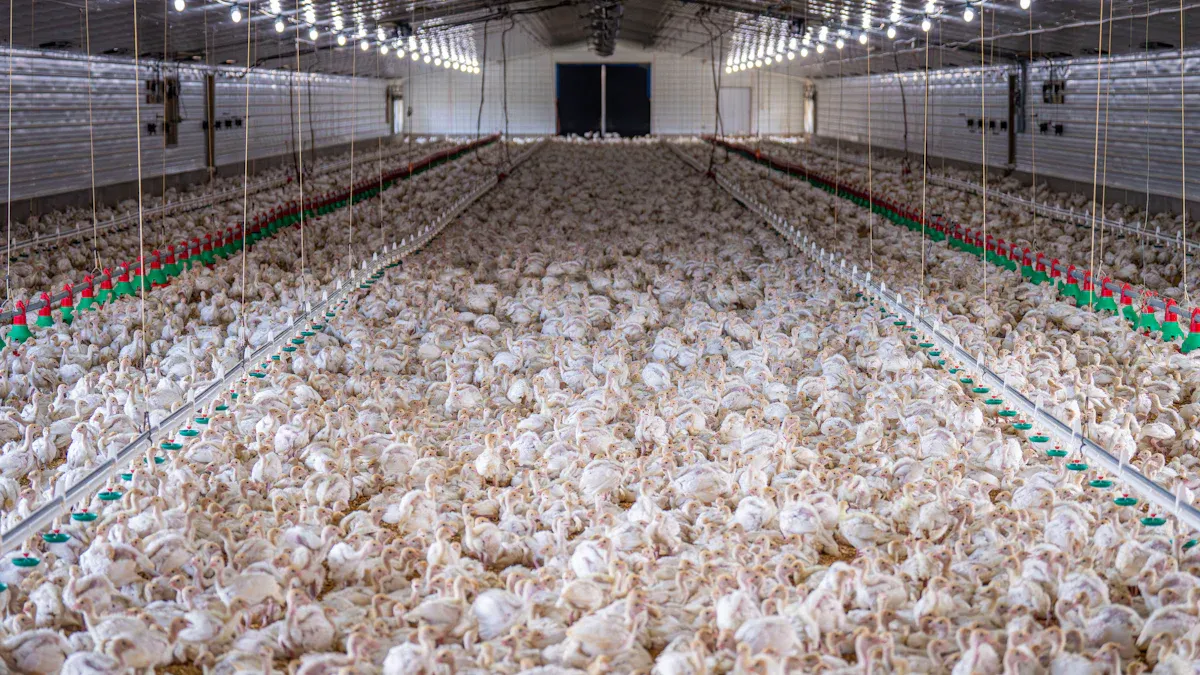
Chicken x ray equipment plays a vital role in the detection of defects and contaminants in poultry processing. Processors use advanced x-ray technology to identify bone fragments, metal shards, and other foreign materials that threaten food safety. The Raymantech Dual Energy X-Ray Inspection System for Residual Bone stands out for its ability to detect even low-density contaminants such as plastic and rubber. This system uses dual energy x-ray to separate materials based on their atomic number, which enhances the detection of defects that traditional methods often miss.
Operators rely on non-destructive inspection to maintain the integrity of each poultry product. The x-ray system scans every item on the line, ensuring that contaminants do not reach consumers. The detection of defects such as thin bone fragments or small pieces of plastic supports strict quality control standards. By using chicken x ray equipment, processors can quickly remove contaminated products, reducing the risk of recalls and protecting public health.
Processors trust x-ray inspection for its high sensitivity and reliability in detecting contaminants that are invisible to the naked eye.
Product Integrity Checks
Beyond the detection of contaminants, chicken x ray equipment supports comprehensive product integrity checks. These systems perform non-destructive inspections that verify the quality and consistency of poultry products. The Raymantech system, for example, checks for proper sealing, fill levels, and weight estimation, ensuring that each package meets quality control requirements.
Non-destructive x-ray inspection systems provide a wide range of quality assurance functions:
Detect contaminants such as metal, glass, and calcified bone.
Measure product mass to confirm correct portion sizes.
Assess package integrity to prevent leaks or spoilage.
Verify fill levels for consistent product presentation.
Enhance traceability and reporting, which supports due diligence during recalls.
The detection of defects extends to identifying inconsistencies in product shape or density. Processors use these insights to optimize production and maintain high standards. Non-destructive inspection ensures that only safe, high-quality poultry products reach the market.
Flexible Configuration for Poultry Lines
Chicken x ray equipment must adapt to the diverse needs of modern poultry processing lines. Raymantech offers models such as the RXD-MS-2410C and RXD-MS-4010C, which accommodate different inspection widths and heights. These systems operate at conveyor speeds ranging from 10 to 40 meters per minute, allowing seamless integration into various production environments.
Manufacturers design x-ray systems with flexibility in mind. The following table highlights several configuration options available in the industry:
Equipment Type | Description |
|---|---|
Foodmate's Flexible Cut-Up Line | Features an inline Leg Inspection System with X-Ray detection for broken legs. |
OPTiX Switch Thigh and Drum Deboner | Enables seamless switching between deboning thighs and drumsticks at the touch of a button. |
Marelec's MXV-Slim | An X-Ray inspection system that detects contaminants in unpacked, low-profile protein products. |
Key Technology's Vibratory Conveyor | Aligns and feeds product into the X-Ray inspection system, enhancing operational efficiency. |
Raymantech’s dual energy x-ray inspection systems feature robust, hygienic designs with IP69K ratings, making them suitable for rigorous washdown procedures. Non-destructive inspection technology ensures that equipment remains clean and safe for food production. The flexible configuration of chicken x ray equipment allows processors to maintain high throughput while achieving precise detection of defects and contaminants.
Processors benefit from the adaptability of x-ray systems, which support a wide range of poultry products and line speeds. This flexibility, combined with advanced detection of contaminants and comprehensive product checks, positions chicken x ray equipment as an essential tool for modern poultry processing.
Comparing X-Ray to Traditional Poultry Inspection
Accuracy and Reliability
X-ray technology has changed the way poultry processors approach inspection. Traditional inspection methods often rely on visual checks and manual palpation. These methods can miss small bone fragments or low-density contaminants. X-ray systems use non-destructive scanning to look inside each poultry product. This approach increases the accuracy of inspection and reduces the risk of missing hazards. Processors trust x-ray inspection to find bone, metal, and even plastic that the human eye cannot see. Non-destructive x-ray inspection also provides consistent results, which helps maintain high standards in poultry processing. The reliability of x-ray systems supports quality assurance and reduces the chance of recalls.
Speed and Throughput
Poultry processing plants need to move products quickly without sacrificing safety. X-ray inspection systems offer a major advantage in speed and throughput. These systems scan each poultry item in real time, using non-destructive methods to check for contaminants. The automated reject system removes defective products without slowing the line. The table below shows how x-ray inspection improves efficiency in poultry processing:
Feature | Description |
|---|---|
Advanced Detection | Offers enhanced bone and metal detection capabilities. |
Automated Reject System | Includes a system that automatically rejects defective products, improving efficiency. |
Processing Speed | Operates dual lanes at 120 pieces per minute each, significantly increasing throughput. |
Compact Design | Designed to be assembled and disassembled without tools in under 3 minutes, saving time. |
Non-destructive x-ray inspection allows poultry processors to maintain high line speeds. Staff can focus on other tasks while the system handles inspection. This leads to greater productivity and less downtime.
Food Safety Compliance
Meeting food safety standards is critical in poultry processing. X-ray inspection systems help processors comply with strict regulations. Non-destructive x-ray inspection improves the detection of bone fragments and other contaminants. This reduces the risk of consumer injury and supports brand protection. Processors use x-ray inspection to avoid recalls and legal issues. The following points highlight how x-ray systems support food safety compliance in poultry plants:
X-ray inspection improves the detection of bone fragments in poultry processing.
Effective identification of low-density contaminants like bone helps prevent consumer injuries.
Reduces risks of product recalls and legal actions for manufacturers.
Non-destructive x-ray inspection gives poultry processors confidence in their food safety programs. The technology ensures that only safe, high-quality products reach the market.
Challenges and Limitations of X-Ray Systems
Technical Constraints
X-ray systems have become essential in poultry processing, but they face technical constraints. The technology relies on precise calibration for accurate inspection. Variations in product size or density can affect non-destructive testing results. Some x-ray systems may struggle with overlapping products on the conveyor, which can lead to missed contaminants. High-speed lines require advanced x-ray equipment to keep up with throughput demands. Non-destructive inspection depends on image clarity, so any interference can reduce detection accuracy. X-ray tubes and detectors need regular monitoring to maintain optimal performance. Processors must ensure that non-destructive testing remains consistent across all shifts. Environmental factors, such as humidity or temperature, can also impact x-ray system reliability. Non-destructive inspection works best when all technical elements function together.
Cost and Implementation
Investing in x-ray technology for poultry processing involves significant costs. Processors must consider the price of the x-ray equipment, installation, and integration with existing lines. Non-destructive testing systems require specialized infrastructure, including shielding and safety measures. Implementation may disrupt production during setup and calibration. Ongoing costs include energy consumption and replacement parts for x-ray tubes. Processors must budget for regular non-destructive inspection upgrades to keep pace with industry standards. Training staff to operate x-ray systems adds to the initial investment. Non-destructive testing delivers long-term savings by reducing recalls, but the upfront expense can be a barrier for smaller poultry plants. Careful planning ensures that x-ray inspection delivers value over time.
Training and Maintenance
Proper training and maintenance are vital for optimal x-ray system operation in poultry processing. Staff must understand non-destructive testing procedures and inspection protocols. Regular maintenance checks help keep x-ray equipment running smoothly. Teams should perform calibration, cleaning, and troubleshooting on a set schedule. These steps prevent minor issues from becoming major problems. Maintenance routines include cleaning the cooling fan and filter to avoid overheating. Technicians should clean the x-ray tube regularly to prevent breakdowns. Conveyor belts need attention to prevent false rejections during non-destructive inspection. Scheduled maintenance ensures that x-ray testing remains reliable and accurate. Well-trained staff can quickly address any inspection challenges, supporting food safety and quality in poultry production.
Key maintenance practices for x-ray systems:
Clean cooling fans and filters periodically.
Calibrate and clean x-ray tubes on a regular basis.
Inspect conveyor belts to ensure accurate non-destructive testing.
Schedule routine troubleshooting to catch issues early.
Regular training and maintenance keep x-ray inspection systems effective, supporting the highest standards in poultry processing.
Future Trends in Poultry X-Ray Detection
Advancements in Non-Destructive Testing
The future of poultry processing relies on continuous improvements in non-destructive testing. Companies now develop x-ray systems that deliver higher sensitivity and faster results. These x-ray machines use advanced non-destructive testing to scan every poultry product for contaminants. New x-ray detectors can identify even smaller foreign objects, which increases food safety. Processors use non-destructive testing to check for bone, plastic, and other materials without damaging the product. The industry expects x-ray technology to become even more precise. Non-destructive testing will soon allow for real-time adjustments on the line. This means processors can respond quickly to any issues. The demand for reliable x-ray systems drives innovation in non-destructive testing. Poultry plants benefit from these advancements by reducing recalls and improving consumer trust.
Integration with Automation
Automation shapes the next generation of x-ray inspection in poultry processing. Processors now combine x-ray systems with automated conveyors and sorting equipment. This integration allows for seamless non-destructive testing at high speeds. The following points highlight how automation and x-ray technology work together:
Dual-energy x-ray technology improves detection of contaminants by differentiating materials based on absorption properties.
This technology is essential for identifying non-metallic contaminants in food, enhancing food safety.
Photon-counting x-ray systems, like the Maximizer RMI, detect smaller foreign materials and reduce false reject rates.
Automated x-ray inspection optimizes product output while ensuring high levels of inline, non-destructive testing.
Processors use automated x-ray systems to maintain consistent quality. Non-destructive testing with automation reduces labor costs and increases throughput. The future will see more poultry plants adopting fully automated x-ray inspection lines.
Regulatory Developments
Regulatory changes continue to influence the adoption of x-ray systems in poultry processing. Governments and food safety agencies set strict standards for non-destructive testing. The table below shows how regulations drive the growth of x-ray inspection in the industry:
Regulatory Factor | Impact on Poultry X-Ray Adoption |
|---|---|
Increased food safety concerns | Drives demand for advanced x-ray systems |
Stringent food safety regulations | Encourages investment in non-destructive testing |
Processors must comply with these regulations to sell poultry products in many markets. Non-destructive x-ray testing helps companies meet these requirements. As regulations evolve, x-ray technology will play an even greater role in poultry safety.
The future of poultry processing depends on advanced x-ray systems, non-destructive testing, and automation to meet rising safety standards.
Dual energy x-ray systems drive progress in poultry processing. These solutions help processors achieve higher food safety standards and improve product quality. Non-destructive inspection and real-time x-ray monitoring support efficient operations. Processors rely on x-ray technology to detect contaminants and maintain compliance. Ongoing challenges in x-ray system implementation remain, but innovation continues. The industry expects x-ray advancements to shape the future of food safety.
Processors should monitor new x-ray developments for continued success.
FAQ
What contaminants can dual energy x-ray systems detect in chicken processing?
Dual energy x-ray systems identify bone fragments, metal, glass, plastic, and rubber. These systems also detect low-density contaminants that traditional inspection methods often miss.
How does Raymantech’s system support food safety compliance?
Raymantech’s system meets strict hygiene standards with its IP69K rating. The system provides real-time monitoring and accurate contaminant detection, helping processors comply with food safety regulations.
Can x-ray inspection systems adapt to different production lines?
Yes, processors can choose from various models and conveyor speeds. Raymantech’s flexible configuration fits different inspection widths and heights, making integration easy for most poultry lines.
What maintenance does a dual energy x-ray system require?
Regular cleaning of cooling fans and filters
Scheduled calibration of x-ray tubes
Inspection of conveyor belts
Routine troubleshooting
Proper maintenance ensures reliable performance and accurate inspections.