Choosing the Best Collagen for Your Needs Chicken Type II Compared to Bovine and Marine
Collagen supplements differ in effectiveness and application. Clinical research identifies chicken collagen type II as optimal for joint support, while marine collagen enhances skin hydration and elasticity. Bovine collagen remains the most popular choice for overall wellness.
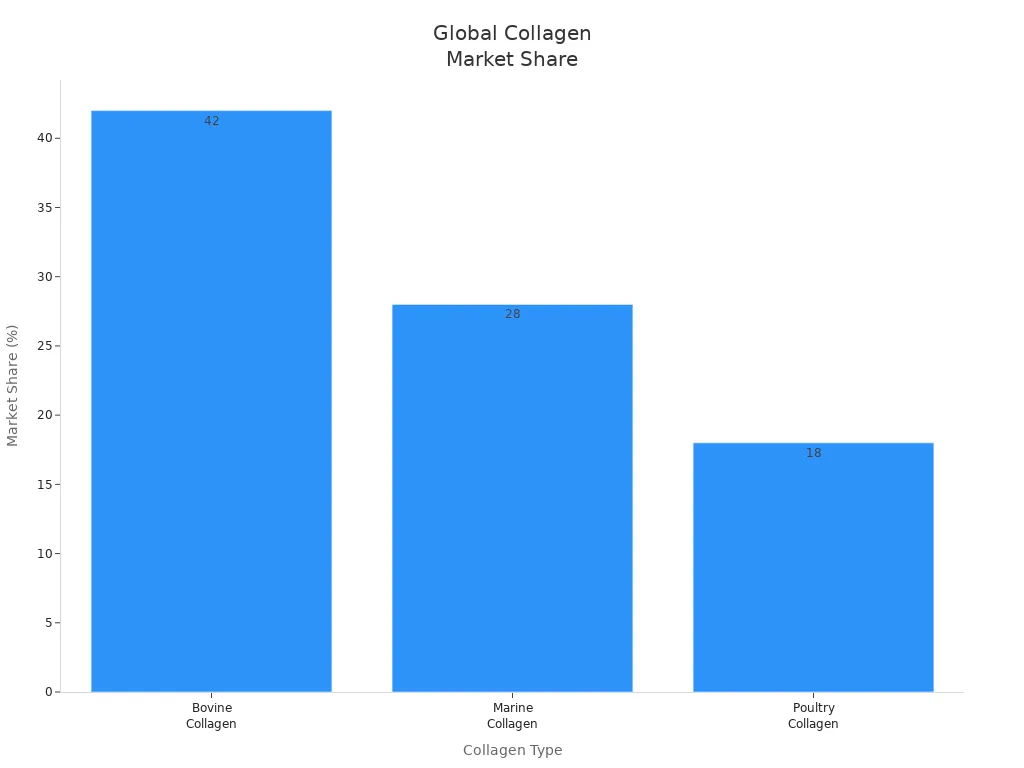
| Type of Collagen | Market Share (%) | Key Applications |
|---|---|---|
| Bovine Collagen | 42% | Dietary supplements, food processing, pharmaceuticals |
| Marine Collagen | 28% | Cosmetics, beauty supplements, premium nutrition |
| Poultry Collagen | 18% | Orthopedic supplements, medical nutrition |
Why Collagen Source Matters
What Is Collagen?
Collagen forms the backbone of connective tissues in the human body. This protein consists of three polypeptide chains twisted into a right-handed triple helix, which gives it remarkable tensile strength. The structure measures about 300 nanometers in length and 1.5 nanometers in diameter. Collagen stabilizes tissues through hydrogen bonds and aggregates into larger fibrils.
| Feature | Description |
|---|---|
| Length | Approximately 300 nm |
| Diameter | Approximately 1.5 nm |
| Composition | Three polypeptide strands (alpha peptides) |
| Helical Structure | Left-handed helix, twisted into a right-handed triple helix |
| Stabilization | Hydrogen bonds, forms collagen fibrils |
Collagen supports skin, bones, cartilage, and tendons. The triple helix structure allows it to resist stretching and tearing. In supplements, type I collagen dominates the market, especially for skin and bone health. Type II collagen, sourced mainly from chicken, has gained popularity for joint support.
How Collagen Types Differ by Source
The source of collagen determines its amino acid profile, extraction method, and health benefits. Chicken collagen comes from by-products like feathers and feet, offering thermal stability and a unique amino acid composition. Bovine collagen, extracted from skin, bones, and tendons, remains popular but faces scrutiny due to disease concerns. Marine collagen uses salt-solubilization, chemical, or enzymatic extraction, which impacts its purity and solubility.
- Chicken collagen is thermally stable and increasingly favored for joint health.
- Bovine collagen provides a broad amino acid spectrum but raises safety questions.
- Marine collagen offers high solubility and is preferred in beauty supplements.
| Health Benefits of Collagen Peptides | Source of Collagen | Dosage (g) | Duration (months) |
|---|---|---|---|
| Improvement in skin elasticity | Various | 2.5 - 15 | 3 - 18 |
| Recovery of lost cartilage tissue | Various | 2.5 - 15 | 3 - 18 |
| Reduced activity-related joint pain | Various | 2.5 - 15 | 3 - 18 |
| Strengthened tendons and ligaments | Various | 2.5 - 15 | 3 - 18 |
| Increased lean body mass | Various | 2.5 - 15 | 3 - 18 |
| Increased bone mineral density | Various | 2.5 - 15 | 3 - 18 |
Note: The extraction process and source influence the purity, efficacy, and safety of collagen supplements. Consumers should consider these factors when selecting a product.
Chicken Collagen Type II
Benefits for Joint Health
Chicken collagen type ii has gained recognition for its role in supporting joint health. This form of collagen contains a unique amino acid profile that helps maintain cartilage integrity and reduce inflammation in the joints. Researchers have conducted several clinical trials to evaluate its effectiveness in individuals with joint discomfort and autoimmune conditions.
- A multicenter, double-blind, randomized, controlled phase III clinical trial involved 503 patients with rheumatoid arthritis. Over 24 weeks, participants who received chicken collagen type ii showed measurable improvements in joint function and reductions in pain.
- Another double-blind, randomized, placebo-controlled trial focused on adults experiencing wrist discomfort. This study marked the first to assess the effects of hydrolyzed chicken collagen type ii on this specific joint, reporting positive outcomes in pain reduction and mobility.
Chicken collagen type ii may also help manage osteoarthritis by reducing joint pain and stiffness. Some studies have reported relief from joint swelling and tenderness after three months of supplementation, especially in individuals with severe rheumatoid arthritis. However, results can vary, and some trials found that standard medications like methotrexate produced greater overall improvement compared to collagen alone.
Note: Chicken collagen type ii works best as part of a comprehensive joint health strategy, which may include physical therapy and other medical treatments.
Effectiveness and Bioavailability
Bioavailability refers to how efficiently the body absorbs and utilizes a nutrient. Chicken collagen type ii stands out due to its smaller peptide size, which allows for easier absorption compared to some other collagen sources. This high bioavailability means that more active compounds reach the joints, where they can support cartilage repair and reduce inflammation.
- Chicken collagen: Smaller peptide size, rich in type II collagen, supports joint health through efficient absorption.
- Bovine collagen: Hydrolyzed for better absorption, contains types I and III collagen, and supports a broader range of tissues, including skin and hair.
Clinical studies suggest that chicken collagen type ii delivers targeted benefits for joint tissues. Its unique composition makes it especially suitable for individuals seeking relief from joint discomfort or those aiming to maintain healthy cartilage as they age.
Safety and Drawbacks
Most people tolerate chicken collagen type ii well, but some safety concerns exist. Individuals with allergies to animal-derived products may experience adverse reactions, such as hives or difficulty breathing. Mild skin reactions, including rashes or acne, have also been reported. In rare cases, increased calcium levels can occur, potentially leading to hypercalcemia, which affects heart rhythm and overall health. Hydroxyproline, a component of collagen, may contribute to kidney stone formation in susceptible individuals. Collagen supplements can interact with medications that influence calcium levels or kidney function.
- Allergic reactions: Hives, difficulty breathing
- Skin reactions: Mild rashes, acne
- Increased calcium: Risk of hypercalcemia
- Kidney stones: Possible in sensitive individuals
- Drug interactions: Especially with medications affecting calcium or kidney health
| Population | Reason |
|---|---|
| Pregnant or breastfeeding women | Insufficient reliable information on safety during pregnancy or breastfeeding. |
| Individuals with collagen allergies | Risk of allergic reactions to collagen type II. |
Tip: Individuals considering chicken collagen type ii should consult a healthcare provider, especially if they have underlying health conditions or take medications that affect calcium or kidney function.
Bovine Collagen
Benefits for Skin and Wellness
Bovine collagen remains a popular choice for individuals seeking improvements in skin health and overall wellness. Studies show that hydrolyzed collagen from bovine sources can enhance skin hydration and elasticity. Researchers have found that oral supplementation stimulates hyaluronic acid production in dermal fibroblast cells, which supports moisture retention and skin flexibility.
- Systematic reviews and meta-analyses confirm significant improvements in skin hydration and elasticity with regular bovine collagen intake.
- Bovine collagen also strengthens the gut lining, supporting digestive function and potentially benefiting those with gastrointestinal concerns.
- The amino acid glycine, abundant in bovine collagen, aids muscle repair and growth, making it valuable for athletes and active individuals.
Effectiveness and Uses
Manufacturers offer bovine collagen in several forms, including gelatin and hydrolyzed collagen. Gelatin, a cooked form, appears in desserts and culinary applications. Hydrolyzed collagen, broken into smaller proteins, dissolves easily in hot or cold liquids and comes in powders, tablets, and capsules.
Bovine collagen primarily contains type I and type III collagen, which contribute to the structural integrity and elasticity of skin, tendons, and blood vessels.
| Source | Absorption Rate Comparison |
|---|---|
| Marine Collagen | Absorbed 1.5 times more efficiently than Bovine Collagen |
| Bovine Collagen | Good bioavailability but less efficient absorption |
Although bovine collagen offers good bioavailability, marine collagen absorbs more efficiently due to smaller peptide sizes.
Safety and Drawbacks
Most people tolerate bovine collagen well, but some may experience mild stomach upset, such as heartburn, bloating, or diarrhea. Allergic reactions can occur, presenting as rashes, itching, or swelling. In rare cases, long-term use may increase the risk of kidney stones, hypercalcemia, or liver complications.
Bovine collagen products carry a small risk of disease transmission, including bovine spongiform encephalopathy (BSE) and foot-and-mouth disease (FMD). Animal-derived collagen can also trigger immune responses in sensitive individuals.
| Source | Evidence |
|---|---|
| Bovine Collagen | Risks of transmitting diseases such as BSE and FMD. |
| Safety of Bovine and Porcine Derived Implants | Bovine products can trigger immune responses (allergenicity). |
Tip: Individuals with allergies to animal proteins or a history of kidney stones should consult a healthcare provider before using bovine collagen supplements.
Marine Collagen
Benefits for Skin and Bioavailability
Marine collagen stands out for its remarkable effects on skin health. Clinical studies show that fish-derived collagen can significantly reduce wrinkle depth and number, while increasing skin elasticity and density in women aged 20 to 60 years. After 12 weeks of supplementation, participants experienced firmer, more hydrated skin and a visible reduction in signs of aging. Marine collagen also offers high bioavailability due to its low molecular weight, which allows the body to absorb it efficiently.
| Study | Participants | Findings |
|---|---|---|
| Evans et al. | 45–60-year-old women | 35% reduction in wrinkles, 14% improvement in hydration, 22% improvement in radiance, 25% improvement in firmness after 3 months |
| Lee et al. (2022) | Women aged 20 to 60 | Significant reduction in wrinkle depth and number, increased elasticity and density after 12 weeks |
| 2018 randomized trial | Older adults | 7.23-fold increase in hydration after 6 weeks, reduced wrinkle formation after 12 weeks |
Effectiveness and Uses
Marine collagen contains unique peptides, such as tripeptide glycine-X-Y and dipeptides proline-hydroxyproline, which contribute to its bioactivity and effectiveness. These compounds support skin structure, promote wound healing, and enhance fibroblast activity. Marine collagen also benefits gut health, joint comfort, and the strength of hair and nails.
- Skin health: Improves elasticity and hydration
- Gut health: Supports gut lining repair
- Joint pain relief: Eases discomfort and supports cartilage
- Wound healing: Accelerates recovery and reduces scarring
- Hair and nail strength: Enhances appearance and resilience
Safety and Drawbacks
Marine collagen is generally safe, but certain risks exist. Individuals with fish or shellfish allergies may experience reactions ranging from mild itching to severe anaphylaxis. Marine sources can accumulate heavy metals like mercury and lead, which pose health risks if not properly purified. Some users report digestive discomfort, such as bloating or diarrhea. Marine collagen may also interact with blood thinners, so medical consultation is recommended for those on such medications.
Tip: People with seafood allergies or those taking blood thinners should consult a healthcare provider before starting marine collagen supplements.
Collagen Comparison Summary

Matching Collagen to Your Goals
Selecting the right collagen supplement depends on individual health priorities. People seeking joint support often choose chicken collagen type ii because it targets cartilage and reduces inflammation. Those who want to improve skin hydration and elasticity may prefer marine collagen. Bovine collagen appeals to individuals looking for overall wellness, as it supports skin, joints, and digestive health.
- Bovine collagen remains the most common in supplements. Its structure closely resembles human collagen, making it effective for general use.
- Marine collagen contains mostly type I collagen. It offers high bioavailability and benefits for skin and hair.
- Chicken collagen type ii provides similar advantages as bovine collagen but may cause side effects in sensitive individuals.
Tip: Consider dietary preferences and allergies when choosing a collagen source. Marine collagen suits pescatarians, while bovine collagen works for omnivores.
Quick Reference Guide
The following tables summarize key differences among collagen sources:
| Feature | Bovine Collagen | Marine Collagen |
|---|---|---|
| Source | Cows (hides, bones) | Fish (skin, scales) |
| Types of Collagen | Type I, Type III | Primarily Type I |
| Bioavailability | Moderate | Higher |
| Benefits | Joint, skin, wellness | Skin, hair vitality |
| Cost | More affordable | Higher priced |
| Dietary Fit | Omnivores | Pescatarians |
| Type of Collagen | Cost Comparison | Availability |
|---|---|---|
| Bovine Collagen | More affordable | Widely available |
| Marine Collagen | More expensive | Less common |
Note: Chicken collagen type ii is less common in stores but offers targeted joint support.
Choosing the Right Collagen Supplement
Factors to Consider
Selecting the right collagen supplement requires a systematic approach. Individuals should begin by assessing their primary health goals. For example, those seeking improved skin elasticity may benefit from marine collagen, while those prioritizing joint support might consider chicken or bovine collagen. Ingredient quality and product certifications play a crucial role. Reputable brands provide transparency about sourcing and undergo third-party testing. Healthcare professionals recommend reviewing scientific research and consulting with a provider before starting any supplement.
| Key Point | Explanation |
|---|---|
| Assess health needs | Evaluate skin, joints, and nutrition to match the supplement to specific goals. |
| Investigate ingredients and certifications | Choose products with clear sourcing and verified certifications. |
| Compare trusted brands | Examine sourcing, testing, and consumer feedback for reliability. |
| Verify safety and effectiveness | Consult research and healthcare professionals. |
| Monitor progress | Keep a health journal to track changes and adjust usage. |
A comparison of collagen types can also guide decision-making:
| Collagen Type | Benefits | Considerations |
|---|---|---|
| Marine | High bioavailability, skin benefits | Avoid with shellfish allergy |
| Bovine | Joint support, cost-effective | Safer for shellfish allergies |
Tips for Safe Use
Individuals should introduce collagen supplements gradually and observe for any adverse reactions. Reading ingredient labels helps avoid allergens or unwanted additives. Regular monitoring of health changes ensures the supplement meets expectations. Consulting a healthcare provider remains essential, especially for those with allergies, chronic conditions, or who take medications.
Tip: Consistency in supplement use and open communication with a healthcare professional can maximize benefits and minimize risks.
- Chicken collagen type II supports joint health.
- Marine collagen improves skin hydration and elasticity.
- Bovine collagen benefits overall wellness.
Individuals should select collagen based on personal health goals. They need to consult a healthcare professional before starting any supplement.
FAQ
What is the main difference between chicken, bovine, and marine collagen?
Chicken collagen type II supports joints. Bovine collagen benefits overall wellness. Marine collagen improves skin hydration and elasticity. Each source offers unique amino acid profiles and absorption rates.
Can people with food allergies take collagen supplements safely?
Individuals with allergies to chicken, beef, or fish should avoid collagen from those sources. They should consult a healthcare provider before starting any supplement.
How long does it take to see results from collagen supplements?
Most people notice benefits within 8 to 12 weeks. Results depend on the supplement type, dosage, and individual health status.
See Also
Comparing Bovine Gelatin Powder With Fish And Pork Options
The Health Benefits Of Bovine Gelatin Powder Explained
Understanding The Composition And Production Of Bovine Gelatin
10 Creative Methods To Incorporate Bovine Gelatin In Cooking