Which Documents Should a Chemical Supplier Provide Before the First Shipment?
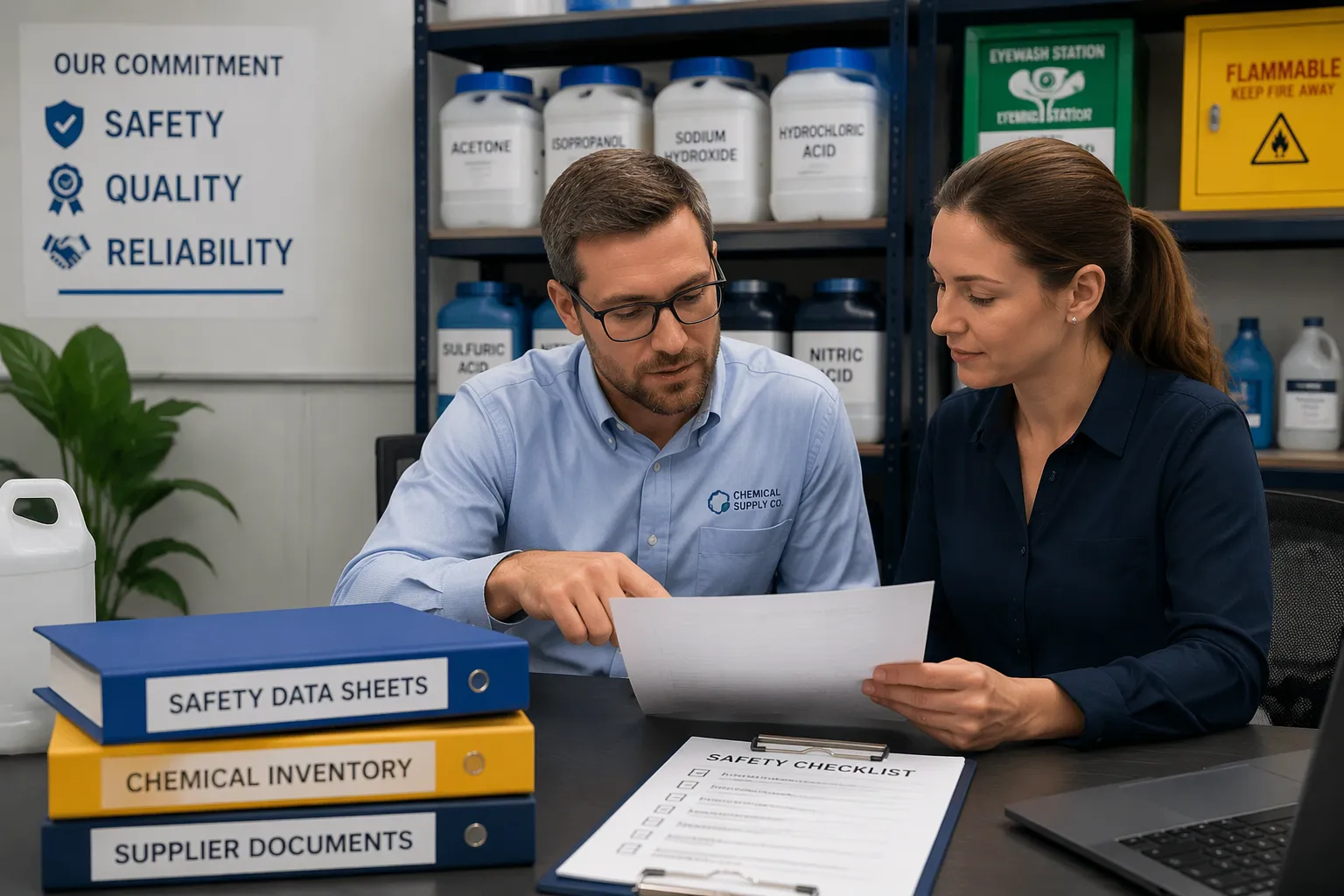
A chemical supplier must provide a Safety Data Sheet (SDS), a Certificate of Analysis (CoA), and shipping papers before the first shipment. The complete set includes:
- SDS
- CoA
- Technical Data Sheet (TDS)
- Product specification sheet
- Bill of Lading
- Packing list
- Dangerous Goods Declaration (if applicable)
- Certificate of Origin (if applicable)
- Regulatory certifications
Missing documents are a red flag. Pause the shipment until the supplier resolves the gap.
Key Takeaways
- Always get a Safety Data Sheet (SDS) before the first shipment to understand hazards and handle the chemical safely.
- Request a Certificate of Analysis (CoA) for each lot to confirm the chemical meets quality specifications.
- Check that shipping papers like the Bill of Lading and packing list match your order to avoid delivery problems.
Legally Required Documents
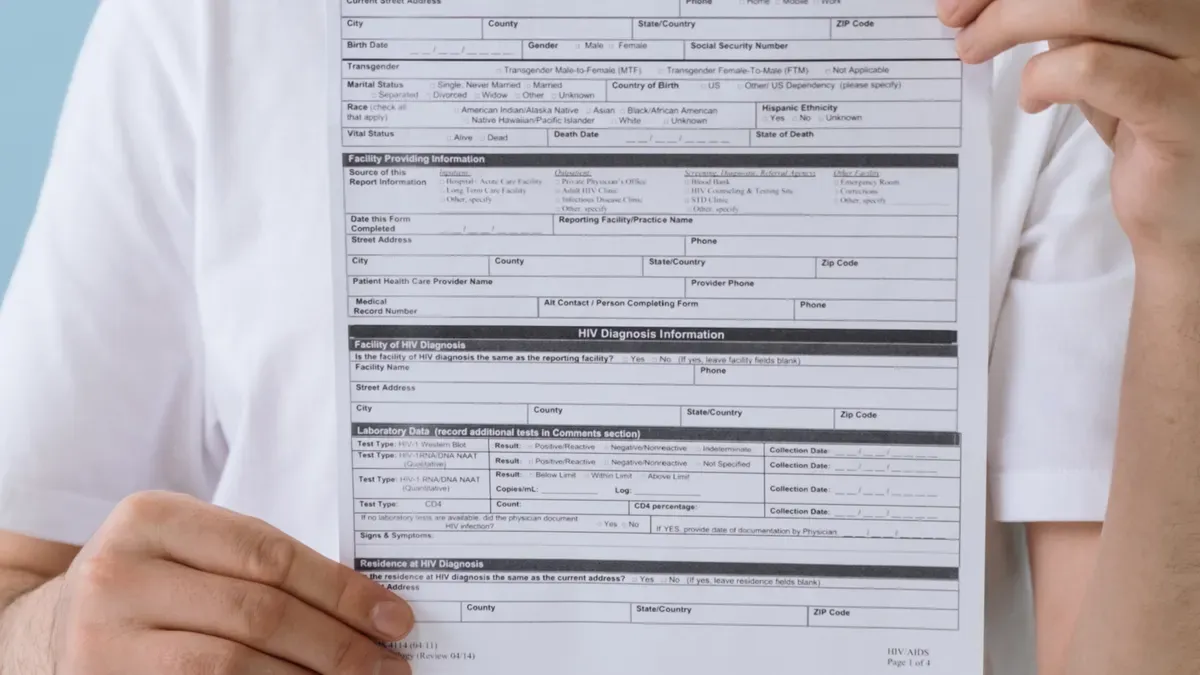
Federal law treats chemical documentation as part of the product itself. A supplier cannot hand over a drum of hazardous material without the paperwork that explains its hazards, its classification, and its transport rules. Three legal frameworks drive this requirement in the United States: the OSHA Hazard Communication Standard, the DOT hazardous materials regulations, and the TSCA import certification rules. Each one carries its own documents and its own penalties.
Safety Data Sheet (SDS) Requirements
The Safety Data Sheet is the foundation document of any chemical transaction. OSHA's Hazard Communication Standard, 29 CFR 1910.1200, requires chemical manufacturers and importers to obtain or develop an SDS for every hazardous chemical they produce or import. Distributors must pass that information downstream to employers. The rule applies before or at the time of the first shipment, so the receiving facility can build its hazard program before the material arrives.
The SDS must follow a fixed 16-section format in English. Sections 1 through 11 and Section 16 carry mandatory content, while Sections 12 through 15 (ecological, disposal, transport, and regulatory information) are optional under the federal rule. Section 1 must list the product identifier, the recommended use, the supplier's U.S. address and phone number, and an emergency phone number. Section 2 must show the hazard classification, signal word, hazard statements, pictograms, and precautionary statements. Section 3 must identify ingredients by chemical name, CAS number, and concentration or concentration range.
A complete SDS also supports the employer's own compliance duties. OSHA requires every employer to keep a written hazard communication program, maintain a chemical inventory, label containers in the GHS format, and train workers on reading and using SDSs. The supplier's SDS feeds all four of those obligations. A missing or incomplete sheet breaks the chain at the first link.
Verifying SDS Compliance
A buyer should check more than the presence of a document. The sheet must be current, correctly classified, and written for the right jurisdiction. Common failures include outdated hazard classifications, missing supplier contact details, and Section 15 that reflects only the home market. A U.S. sheet prepared under HazCom 2024 (aligned with GHS Revision 7) will not satisfy EU CLP requirements, and an EU sheet will need adaptation for markets such as Korea, Japan, or Australia. Each market deserves its own compliance checklist.
Update obligations matter as well. OSHA requires manufacturers, importers, and distributors to revise an SDS and send the updated version to downstream users within three months of learning new information that changes the hazard classification. Under the EU REACH Regulation, Article 31(9), the supplier must update the sheet without delay when new hazard or risk information appears, and must send the revised version free of charge to everyone supplied in the previous 12 months. The EU sheet must also appear in the official language of each country where the product is sold.
The cost of a gap is real. OSHA can issue two citations for a single missing SDS: one for not having it and one for failing to obtain it. The agency can cite each missing sheet at a worksite separately. Recent penalty figures show the scale:
| Violation scenario | Penalty amount |
|---|---|
| Missing or non-compliant SDSs (mid-size employers) | $3,000–$8,000 per item |
| Willful violation (2025 cap) | $165,514 per violation, minimum $11,524 |
| Serious and other-than-serious violations | Up to $16,550 per violation |
| Failure to abate | $16,550 per day beyond the deadline |
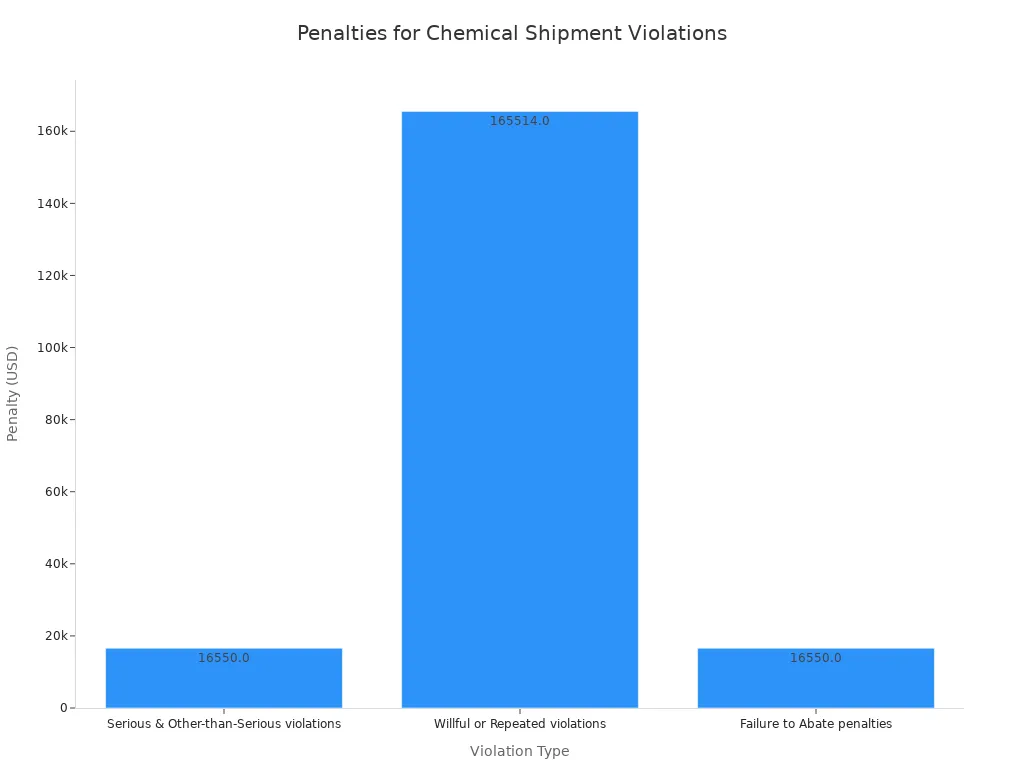
OSHA's most recent compliance-year analysis recorded 7,320 HazCom citations and $745,810 in proposed penalties, which shows how often documentation gaps surface in inspections.
DOT Shipping Papers and Dangerous Goods Declarations
Hazardous materials moving by road or rail in the United States fall under Title 49 of the Code of Federal Regulations (49 CFR), enforced by the U.S. Department of Transportation. The shipping paper, often a Bill of Lading or a Dangerous Goods Declaration, must identify the material by proper shipping name, hazard class, UN number, packing group, and quantity. The document must travel with the shipment and stay within reach of the driver.
The signature on a Dangerous Goods Declaration carries legal weight. The signatory must hold a valid HAZMAT certificate from an IATA, IMO, or DOT-approved training program, and must write the signing date in an internationally recognized format such as DD/MM/YYYY. By signing, the shipper accepts full legal responsibility for the shipment's compliance. Some states add their own rules on top of the federal ones. California, for example, requires a Hazardous Materials Transportation License for shipments that need placarding or exceed 500 pounds.
DOT penalties for serious offenses can reach $179,933. Carriers that fail inspections can lose eligibility to transport hazardous goods. One chemical company shipped undeclared hazardous materials on an aircraft and received a $325,000 fine. These numbers explain why a buyer should treat a missing or unsigned shipping paper as a stop-work signal, not a clerical delay.
Regulatory Certifications and Labels
Import and transport rules add a third layer of paperwork. Under Section 13 of the Toxic Substances Control Act (TSCA), the importer or an authorized agent must sign and file a certification with U.S. Customs and Border Protection. The statement confirms that the chemicals comply with TSCA or that they fall outside its scope.
| Certification type | Statement | Who certifies |
|---|---|---|
| Positive certification | All chemical substances in the shipment comply with all applicable TSCA rules and orders | Importer or authorized agent |
| Negative certification | All chemicals in the shipment are not subject to TSCA | Importer or authorized agent |
The certification must include the certifier's name, email address, and telephone number. Electronic filings go through the Automated Commercial Environment (ACE). Paper versions must reach the port director before release of the shipment. A negative certification applies to items such as pesticides, foods, drugs, cosmetics, and firearms when the shipment does not clearly identify them.
Container labels complete the legal set. OSHA requires each container of hazardous chemicals leaving the workplace to carry a GHS-format label with a product identifier, signal word, hazard pictograms, hazard statements, and precautionary statements. The label must not conflict with DOT transport rules. Bulk shipments may transmit the label with the shipping papers or the Bill of Lading, or by electronic means when the receiving entity agrees. Small containers follow reduced rules: containers of 100 ml or less need a product identifier, pictogram, signal word, supplier name and phone number, and a note that full label information sits on the outer package. Containers of 3 ml or less need only the product identifier when a label would interfere with normal use.
CoA and Quality Verification
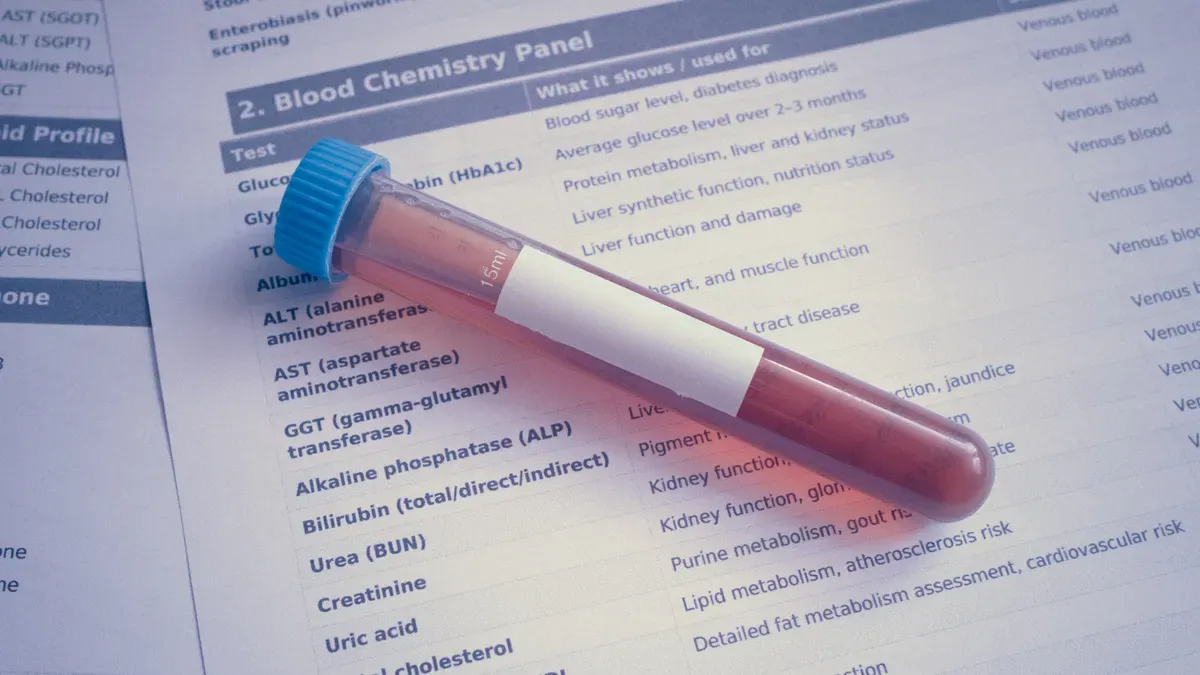
A Safety Data Sheet tells a buyer how to handle a chemical safely. It does not tell the buyer what is actually inside the drum. That job falls to the Certificate of Analysis and the supporting quality documents. These papers prove that the material in the shipment matches the material the buyer ordered. They also give the receiving lab a baseline for incoming inspection.
What a Complete CoA Includes
A Certificate of Analysis reports the measured test results for one specific lot. The document ties directly to a batch number, so the buyer can trace every result back to the drum in hand. A complete CoA carries several distinct elements, and each one serves a purpose in the quality chain.
- Product identification: the product name, lot number, batch number, and other identifiers that ensure full traceability.
- Sampling information: how the representative sample was collected, along with the date and time of collection.
- Laboratory information: the name and contact details of the manufacturer or laboratory that issued the CoA, which establishes accountability for the reported results.
- Test methods: the analytical techniques used, such as chromatography, spectroscopy, or microbial analysis, which show how reliable the results are.
- Specifications and test results: the core section, which presents test data next to predefined product specifications such as pH, purity, moisture content, or microbial limits.
- Client details: the name, contact information, and address of the client who requested the analysis.
- Approval and signature: the signature or approval of an authorized quality assurance professional, which verifies the accuracy and authenticity of the CoA.
A buyer should read the results against the specification limits, not just check that the document exists. A purity result of 99.2% means little without the stated limit beside it. The same logic applies to moisture, assay, and trace metals. The CoA turns those numbers into a pass or fail decision for the receiving facility.
CoA vs. TDS and Product Specification Sheets
Buyers often confuse three documents that look similar at first glance. Each one answers a different question, and each one plays a different role in the purchase decision.
| Document | Description |
|---|---|
| Certificate of Analysis | A document issued by Quality Assurance that confirms a regulated product meets its product specification. It commonly contains the actual results from testing performed as part of quality control on an individual batch. |
| Technical Data Sheet | A spec sheet for a product that summarizes its technical characteristics. A manufacturer looking for specific characteristics in a product may also require it. |
A Technical Data Sheet lists typical values and application advice. It helps during development and product selection, but it is not a promise about any single batch. A CoA reports the measured results for one specific batch, checked against the specification. One document describes what the product usually does. The other documents what this shipment actually contains.
A fourth document, the Certificate of Conformance, adds another layer of confusion. The table below separates it from the CoA.
| Attribute | Certificate of Analysis (CoA) | Certificate of Conformance (CoC) |
|---|---|---|
| What it provides | Measured test results | A statement of conformity |
| Contains numeric values | Yes | No |
| Tied to a specific lot | Yes — lot or batch number required | Usually tied to a purchase order or shipment |
| Lists the specification limits | Yes, alongside the result | Referenced, not reproduced |
| Supports trending across lots | Yes | No |
| Typical issuer | Manufacturer's or distributor's QC laboratory | Supplier's quality or commercial representative |
| Typical use | Incoming raw material release for chemicals | Components, containers, articles, regulatory attestations |
| Accepted as raw-material test data | Yes, under defined conditions | No |
The distinction matters in practice. A CoA lets the buyer see how close results sat to the limits and whether a trend is developing across lots. A CoC only records an assertion. The two documents also differ in form. A Certificate of Conformance typically comes unsigned and often references only lot numbers, not purchase order numbers. A Certificate of Analysis carries a signature from the testing agency and usually ties to both the lot numbers and the purchase order. One is data. The other is an assertion.
Quality and Certification Documents
Beyond the CoA, a supplier may hold a set of quality system certifications that support the test results. ISO 9001 covers general quality management. ISO 17025 applies to testing and calibration laboratories and confirms that the lab can produce valid results. ISO 14001 covers environmental management. GMP certification matters for pharmaceutical, food, and personal care applications. A buyer should request the certificates that fit the intended use, not the full stack.
The supplier's quality documentation package should also include a retention sample policy, a change control notification process, and a deviation reporting procedure. These items tell the buyer how the supplier handles a batch that falls out of specification. A supplier with a clear deviation process will flag a problem before shipment. A supplier without one may ship first and explain later.
Traceability closes the loop. The lot number on the CoA must match the lot number on the drum, the packing list, and the Bill of Lading. A mismatch at any point breaks the audit trail. The buyer then cannot prove which batch entered the facility, which undermines every downstream record. A quick cross-check of lot numbers across all four documents takes minutes and prevents weeks of investigation later.
Shipping Papers and Handling Documentation Gaps
Bill of Lading and Packing List
The Bill of Lading serves as the contract of carriage. It records the quantity shipped, the consignee, and the terms of delivery. The packing list breaks the shipment into individual packages and shows the contents of each one. A buyer should match both documents against the purchase order before signing for delivery. A short count or a wrong consignee name signals a problem that needs resolution on the spot.
Additional Logistics and Trade Documents
International shipments carry a longer paper trail. Common transportation documents include:
- Commercial invoice and packing list
- Bill of lading for sea shipments or applicable transport documents for other modes
- Safety Data Sheet with relevant chemical safety information
- Dangerous goods declaration where applicable
- Certificate of Analysis when the buyer requires it
- Customs declarations and country-specific permits
- Emergency response information and transport instructions
Customs compliance depends on precise documentation, from correct Harmonized System (HS) codes to transport declarations and safety certifications. Missing or incorrect paperwork can trigger delays, fines, or cargo seizure. Regulatory requirements differ by country and often change, so the buyer should confirm the rules for each destination market.
Steps When Documents Are Missing
A missing document calls for a pause, not a guess. The buyer should notify the supplier in writing, name the specific gap, and hold the shipment until the supplier delivers the corrected file. The buyer then verifies the revision date, the lot number match, and the signature before release.
How a Supplier Supports Documentation
A reliable supplier treats documentation as part of the order. The table below shows what each core document establishes and when the buyer should hold it.
| Document | What it establishes | Who requires it | When you should have it |
|---|---|---|---|
| Safety Data Sheet (SDS) | Hazards, handling, exposure controls, first aid, disposal | OSHA Hazard Communication Standard, 29 CFR 1910.1200 | At or before first shipment, and again whenever it is revised |
| Certificate of Analysis (CoA) | Measured test results for the specific lot received | Your quality system; mandatory in regulated industries | With the shipment, tied to the lot number on the container |
| Technical or product data sheet | Typical properties, applications, storage guidance | Engineering and process teams | During specification, before you order |
| Shipping papers | Proper shipping name, UN number, hazard class, packing group, quantity | DOT hazardous materials regulations, 49 CFR Part 172 | Accompanying the vehicle at delivery |
| Bill of Lading | Contract of carriage, quantity shipped, consignee | Carrier and receiving | At delivery, matched against the purchase order |
Strong suppliers also run a compliance management process. They collect, validate, and maintain accurate chemical composition data across their supply chain. Many now start with documents they already hold, such as the SDS, and use automation to extract the information needed for compliance questionnaires. This approach reduces repetitive data entry while suppliers still review and approve every response. Under REACH, suppliers must communicate substance-of-concern information to customers when a Candidate List substance is present in an article above 0.1% by weight, according to ECHA.
A buyer should apply key checks to every SDS received:
- Format: 16 sections in the correct order, as required by REACH Annex II (amended) or an equivalent GHS standard
- Language: The official language of the country where the product is placed on the market
- Classification: Hazard classification aligned with the current CLP regulation or applicable GHS revision
- Revision date: An issue or revision date, with a new version triggered by any change to classification, composition, or exposure limits
- Supplier identification: Full legal name, address, and emergency contact
Four documents anchor every first shipment: the SDS, the CoA, the Bill of Lading, and the packing list. Regulatory certifications and shipping papers join them when rules apply. Verifying this set before the first shipment prevents compliance violations, safety incidents, and supply chain delays. Buyers should confirm the complete checklist with their supplier before ordering and request copies for their records.
FAQ
Does a supplier need to send an SDS before the first shipment?
Yes. OSHA requires the SDS at or before the first shipment. The receiving facility needs it to build hazard programs and train workers before the material arrives.
Can one CoA cover several lots in the same shipment?
No. A CoA reports results for one specific lot. A buyer should request a separate CoA for each lot number in the delivery.
What should a buyer do when the SDS arrives after the drums?
The buyer should quarantine the material and request the SDS in writing. Workers should not handle the chemical until the sheet arrives and passes review.
See Also
Essential Safety Measures When Storing Nitric Acid Properly
Key Steps for Successfully Obtaining PED 2014/68/EU Certification
Choosing Proper Materials for Pressure Vessels per ASME BPVC Section VIII
Understanding Aminoguanidine Bicarbonate Supplier Pricing Trends for This Year