X-Ray Inspection Of Cheese And Dairy Products
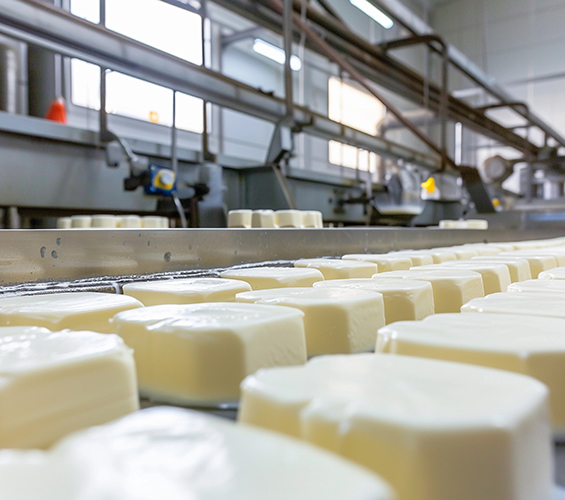
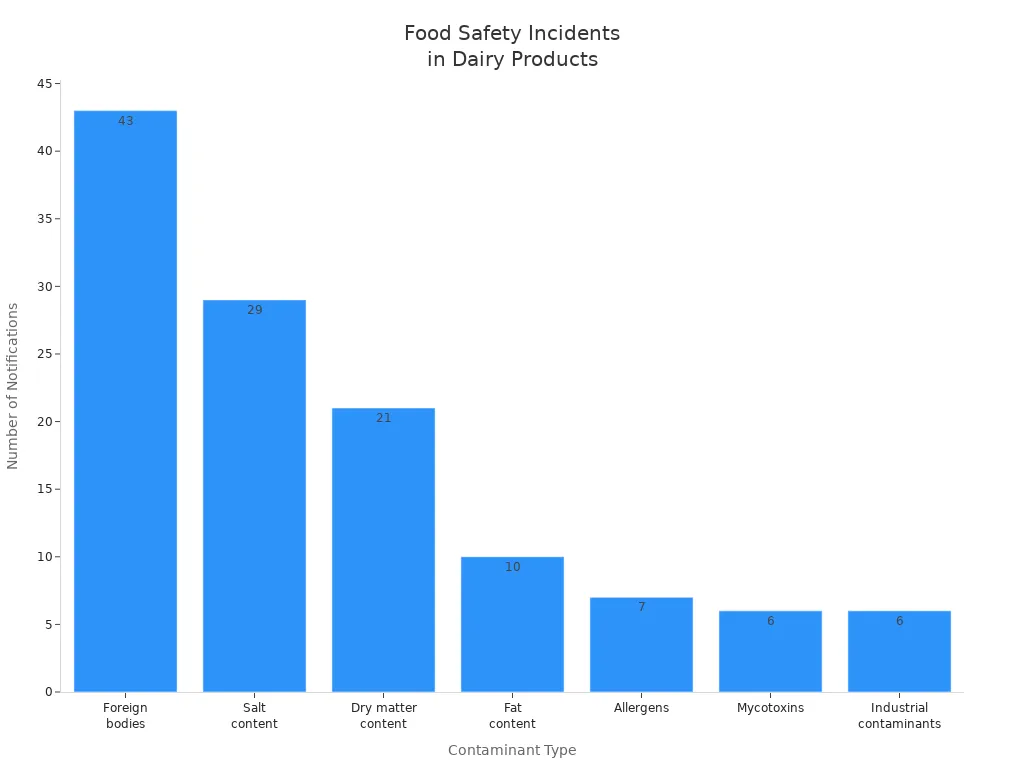
Food safety remains a top priority for the cheese and dairy industry. Recent data shows foreign bodies caused 43 safety alerts in these products, with Listeria monocytogenes and Salmonella also raising concerns.
Contaminant Type | Number of Notifications | Notes |
|---|---|---|
Salt content | 29 | Highest notifications for cheese products regarding salt content exceeding label claims. |
Dry matter content | 21 | |
Fat content | 10 | |
Listeria monocytogenes | Highest notifications | Predominantly in cheese products from France; ~5% classified as food poisonings. |
Salmonella | Various dairy products | Appears in cheese, milk powder, infant formula, etc. |
Foreign bodies | 43 | Highest number of alerts across different hazard groups. |
Allergens | 7 | |
Mycotoxins | 6 | |
Industrial contaminants | 6 | |
Adulteration cases | Various notifications | Includes cases of cow's milk adulterated with water, chemicals, and other harmful substances. |
The dairy industry now relies on advanced solutions like the cheese x-ray machine and x-ray inspection system. These technologies detect hidden contaminants that traditional methods miss and help meet strict consumer expectations for quality.
Key Takeaways
X-ray inspection technology detects hidden contaminants in cheese and dairy products, ensuring safety and quality.
Using advanced x-ray machines helps manufacturers comply with food safety standards, reducing the risk of recalls and legal issues.
Investing in x-ray inspection builds consumer trust and enhances brand reputation by demonstrating a commitment to product safety.
Why Choose RaymanTech Cheese X-Ray Machine
Protecting Cheese And Dairy Quality
Cheese and dairy products must be safe and free from harmful substances. The cheese x-ray machine plays a key role in this process. It uses advanced technology to find even the smallest contaminants that can hide inside cheese or dairy packages. These machines do not just look for metal. They can also detect glass, stone, rubber, plastic, and bone fragments. This wide range of detection helps keep products safe for everyone.
Here is a table showing common contaminants that a cheese x-ray machine can find in cheese and dairy products:
Contaminant Type | Description |
|---|---|
Metal | Fragments from machinery |
Glass | Shards from broken containers |
Stone | Natural debris |
Rubber | Pieces from equipment |
Plastic | Fragments from packaging |
Bone | Fragments from animal products |
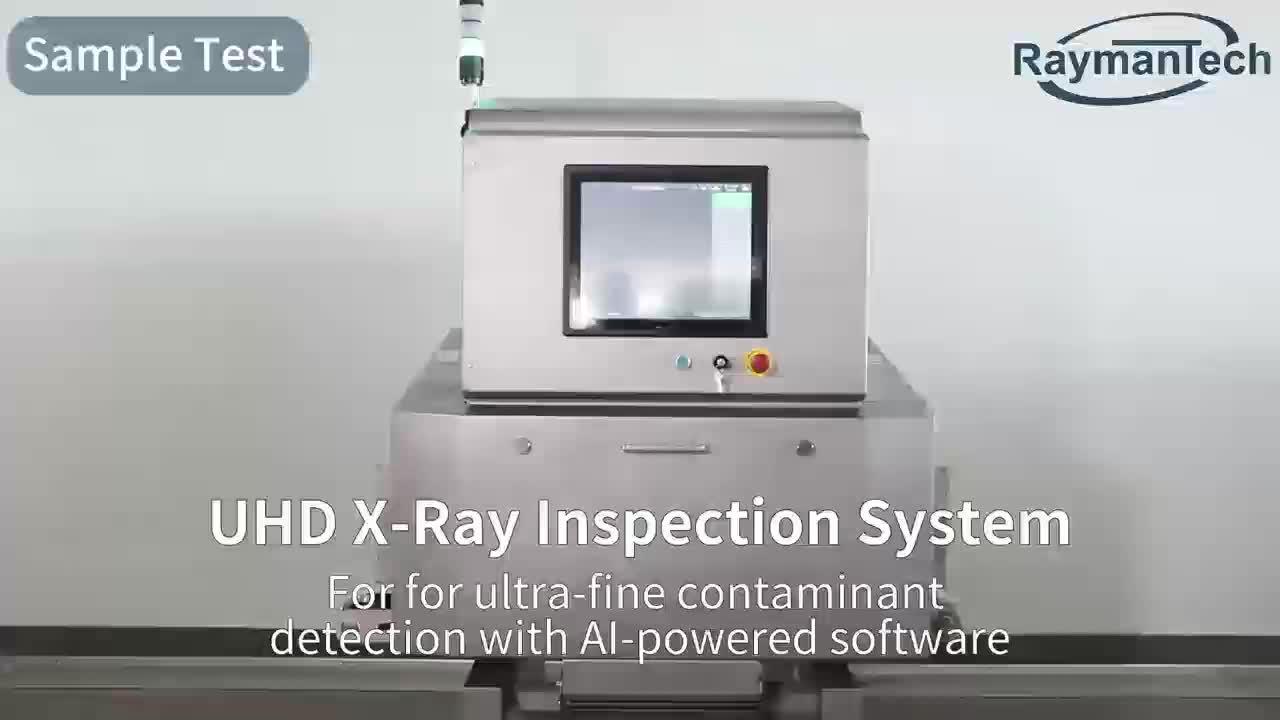
RaymanTech’s UHD X-Ray Inspection System uses AI-powered UHD detectors. These detectors can spot ultra-fine contaminants as small as 0.1mm. The system also offers virtual weighing and counting functions. These features help manufacturers check product weight and count without extra steps. The hygienic design, with IP67 and optional IP69K ratings, allows for easy cleaning and keeps the inspection area safe and sanitary.
Compared to traditional inspection methods, the cheese x-ray machine from RaymanTech provides much higher accuracy. It uses high-definition imaging and deep-learning technology. This means it can find tiny pieces of metal and other materials that older machines might miss. It can also check if the package is sealed correctly and if the product is consistent. This level of detail helps prevent unsafe products from reaching customers.
Meeting Food Safety Standards
Food safety standards are strict in the cheese and dairy industry. Regulations such as FDA, HACCP, and ISO certifications require companies to keep their products free from contaminants. The cheese x-ray machine helps manufacturers meet these rules by detecting small and hard-to-find substances. It also provides detailed reports and audit-ready data, which are important during inspections.
Here is a table that explains how x-ray inspection systems help with food safety standards:
Evidence Type | Description |
|---|---|
Food Safety Standards | Regulations such as FDA, HACCP, and ISO certifications are crucial for cheese and dairy production. |
Role of X-Ray Systems | X-ray inspection systems help meet these standards by detecting contaminants and ensuring compliance. |
Compliance Assurance | They provide audit-ready data and detailed reporting capabilities to demonstrate compliance during inspections. |
The cheese x-ray machine also helps companies avoid recalls and legal problems. It finds contaminants that traditional methods may miss. This reduces the risk of unsafe products reaching the market. Real-time inspections catch problems before products leave the facility. This proactive approach builds consumer trust and protects the brand’s reputation.
Manufacturers who use the cheese x-ray machine show their commitment to safety and quality. Customers notice when companies invest in advanced inspection technology. This builds long-term trust and helps the brand stand out in a crowded market.
How X-Ray Food Inspection Works In Dairy Processing
Principles Of X-Ray Food Inspection Machines
X-ray food inspection works by sending x-rays through cheese and dairy products. The technology detects differences in density. When x-rays pass through a product, they lose energy in denser areas. This helps the system spot foreign materials that do not belong. X-ray food inspection machines use advanced detectors, such as AI-powered UHD sensors, to create clear images for product inspection. These machines adjust the x-ray power to match the product, so they do not over-penetrate or miss small contaminants. This principle allows for accurate and reliable food inspection.
Types Of Contaminants Detected
X-ray food inspection machines can find many types of contaminants in cheese and dairy products. They detect not only metal contamination but also glass, ceramics, hard plastics, and other dense materials. This is a major advantage over traditional food inspection equipment like metal detectors or visual checks. The table below shows common contaminants found during product inspection:
Contaminant Type | Description |
|---|---|
Metal | Ferrous, non-ferrous, stainless steel, aluminum, copper, tin |
Glass | Shards from containers or equipment |
Ceramics | Hard ceramic fragments |
Hard Plastics | Dense plastic pieces |
Other Materials | Stone, bone, rubber, air pockets, packaging |
X-ray food inspection systems can scan large blocks of cheese, trays of yogurt, or bags of milk powder without damaging the product.
Integration Into Food Inspection Lines
Modern x-ray food inspection equipment fits easily into dairy production lines. These systems adapt to different cheese and dairy forms, such as liquids, solids, grated, or sliced products. They also handle various packaging types, including vacuum packs and cartons. Key steps for integration include choosing the right machine for the product, setting up sensors, and planning for rejection of contaminated items. X-ray food inspection systems support data transfer and remote troubleshooting, making them efficient for product inspection and quality control. They help companies meet standards like HACCP and FDA, ensuring safe and reliable food inspection.
Benefits And Safety Of X-Ray Food Inspection
Comprehensive Food Inspection And Cost Savings
X-ray inspection brings many benefits to cheese and dairy processing. It improves operational efficiency by reducing the time spent on manual inspection. Automated systems allow staff to focus on quality control and other important tasks. X-ray inspection also increases accuracy in detecting contaminants, which helps meet safety guidelines and quality assurance standards. Advanced image processing allows for quick decisions, such as removing defective products from the line. This reduces waste and downtime.
Here is a table showing how x-ray inspection supports cost savings:
Benefit | Description |
|---|---|
Ensures product quality | Maintains high standards, reducing losses from defects. |
Prevents giveaways | Accurate fill level checks stop overfilling and save costs. |
Detects contaminants | Avoids costly recall and legal issues by ensuring safety and compliance. |
Optimizes equipment | Real-time data helps keep product weight and quality uniform. |
Cost-effective technology | Lower costs make x-ray inspection available for many dairy operations. |
Consumer Safety And Product Integrity
X-ray inspection systems play a key role in protecting consumer safety. They use advanced detection to find metals, plastics, and glass that could harm people. Real-time inspection removes contaminated products before they reach consumers, which helps prevent recall events. By following haccp protocol and other regulations, x-ray inspection builds trust and protects brand reputation. These systems also check the seal integrity of packaging, which is important for quality control and safety.
Is X-Ray Food Inspection Safe For Cheese?
X-ray inspection is safe for both cheese and consumers. The process does not damage the product or change its taste, texture, or nutritional value. Equipment with IP67 and IP69K hygiene ratings can handle full washdowns and high-pressure cleaning, which keeps the inspection area sanitary. This level of hygiene is important for dairy processing and helps maintain safety and quality. X-ray inspection supports quality control, reduces recall risk, and ensures that only safe products reach the market.
Cheese x-ray machines and advanced inspection systems offer strong protection for dairy products.
They help manufacturers meet safety rules by finding hidden contaminants early.
These systems reduce recalls and build consumer trust.
Adopting innovative inspection prepares dairy producers for future food safety challenges.
FAQ
How does x-ray inspection improve cheese safety?
X-ray inspection finds hidden contaminants in cheese. X-ray machines detect metal, glass, and plastic. X-ray technology helps keep cheese safe for everyone.
Can x-ray machines inspect all dairy products?
Yes. X-ray systems work with cheese, yogurt, milk powder, and butter. X-ray inspection adapts to different shapes and packaging. X-ray machines scan both solids and liquids.
Does x-ray inspection change the taste or quality of cheese?
No. X-ray inspection does not affect taste, texture, or nutrition. X-ray machines only scan for contaminants. X-ray technology keeps cheese safe without changing its quality.
Tip: X-ray inspection also checks package seals. X-ray systems help prevent leaks and spoilage.
X-ray inspection supports food safety rules.
X-ray machines help companies avoid recalls.
X-ray technology builds trust with customers.
X-ray Feature | Benefit |
|---|---|
X-ray detection | Finds small contaminants |
X-ray adaptability | Works with many dairy products |
X-ray hygiene design | Easy to clean and maintain |
X-ray inspection is a smart choice for cheese and dairy safety. X-ray machines offer fast, reliable results. X-ray systems help producers meet high standards.