Find the Perfect Commercial Ice and Water Dispenser for Your Business
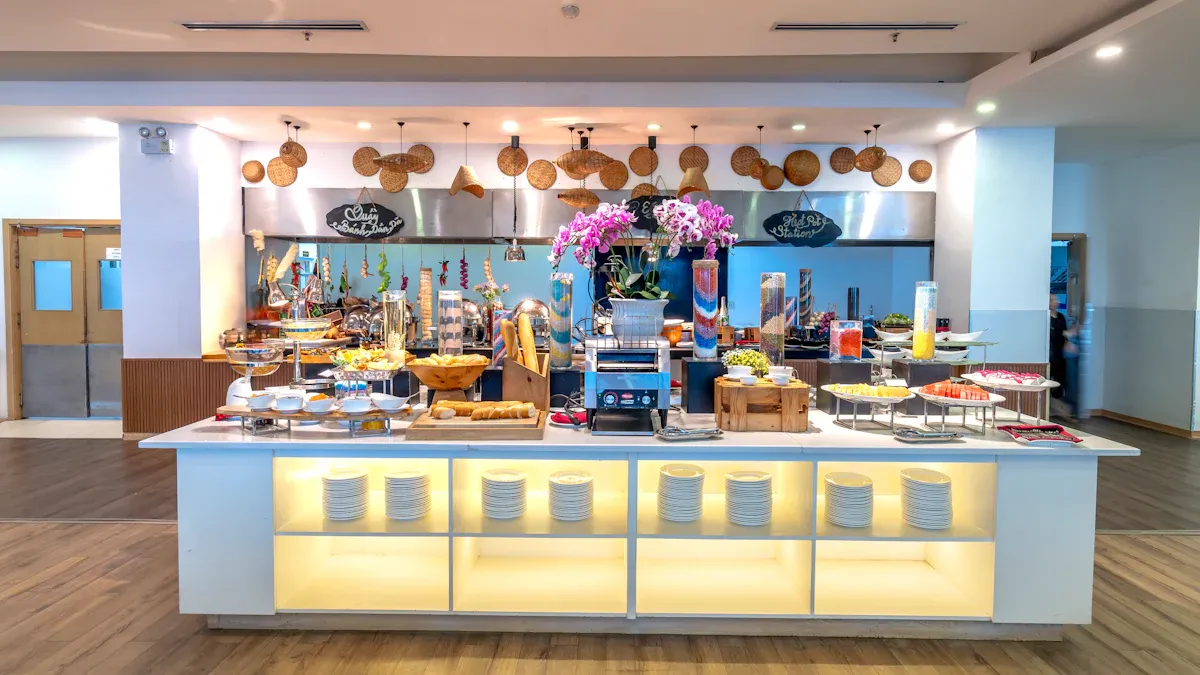
An excellent ice water dispenser commercial is a key asset for any business. You need to find the right machine to meet your specific needs. This choice ensures your customers stay happy and your operations run smoothly. The market for these machines is growing, showing their importance.
| Metric | Value |
|---|---|
| Market Size (2024) | USD 1.94 Billion |
| Projected Market Size (2031) | USD 3.21 Billion |
| CAGR (2025-2031) | 7.45% |
Key Takeaways
- Calculate your daily ice needs. Consider your business type and peak hours. Add a 20% buffer for unexpected demand.
- Choose the right ice type. Cube ice is versatile. Nugget ice is soft. Flake ice is good for displays.
- Select a dispenser type that fits your space. Countertop units are compact. Undercounter units save floor space. Modular units are for high volume.
Step 1: How Much Ice Do You Really Need?
Choosing the right ice machine starts with one question: how much ice will you use each day? Guessing can lead to shortages during busy times or wasted energy from an oversized unit. You need a reliable estimate to find the perfect fit for your business.
Calculating Daily Ice Production
Your business type is the best guide for estimating ice needs. A hospital has very different demands than a cocktail bar. You can use industry standards to find your baseline. For example, a full-service restaurant typically uses about 1.5 pounds of ice per customer. Healthcare facilities, however, may need up to 10 pounds per patient bed daily.
This chart shows the average daily ice usage across different operations.
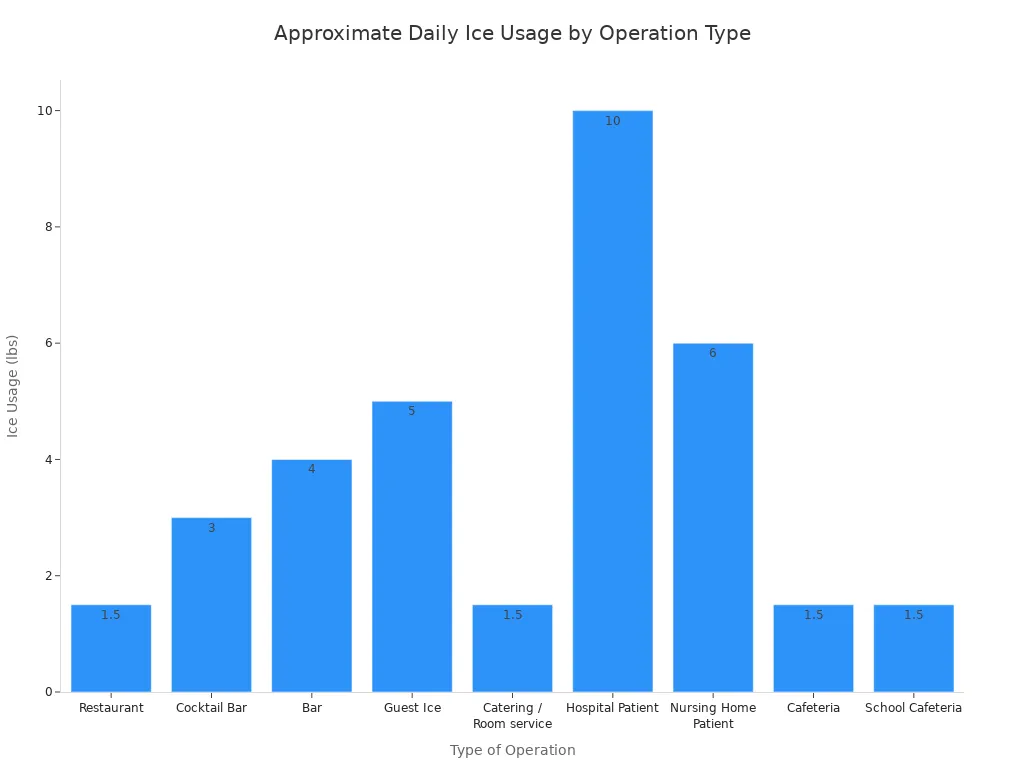
Use the table below for a more detailed estimate based on your specific services.
| Business Type | Approximate Ice Usage Per Day |
|---|---|
| Restaurant | 1.5 lbs. per person served |
| Cocktail Bar | 3 lbs. per seat |
| Hotel Guest Ice | 5 lbs. per room |
| Hospital Patient | 10 lbs. per bed |
| Nursing Home Patient | 6 lbs. per bed |
Factoring in Peak Hours and Growth
Your daily estimate is a great starting point, but you must also plan for busy periods. Seasonal changes heavily influence ice demand. Warmer months naturally increase customer desire for cold drinks, raising your ice consumption. You should also consider your business's future growth.
💡 Pro Tip: Always add a 20% buffer to your final calculation. This extra capacity covers unexpected rushes, machine downtime, and future business growth without leaving you short on ice.
Planning for these peaks ensures your dispenser can keep up when it matters most.
Step 2: What Type of Ice is Best for Your Customers?
The type of ice you choose affects everything from drink quality to customer safety. Each ice form has unique characteristics. You should select the one that best fits your business's applications and your customers' preferences.
Cube Ice (Full & Half)
Cube ice is the most common and versatile option. It melts slowly because it has a high ice-to-water ratio. This quality makes it perfect for cooling drinks without diluting them too quickly. You will find cube ice in many commercial settings.
- Full-service restaurants and bars use it for soft drinks and cocktails.
- Convenience stores and hotels rely on it for self-service beverage stations.
- Catering companies use it for high-volume events.
Half-cube ice is smaller, so it packs more tightly into a glass and is great for blended drinks like smoothies.
Nugget Ice
Nugget ice is soft, small, and chewable. Customers love its light, airy texture. This ice type is very popular in healthcare settings. Its soft form is safer for patients and ideal for therapeutic cold compresses. However, nugget ice melts faster than cube ice, which can quickly water down beverages.
Did You Know? Nugget ice, also known as "Sonic ice," became famous in 1981. Its chewable quality made it a favorite for both consumers and businesses.
Flake Ice
Flake ice consists of small, soft pieces of ice that are easy to mold. This makes it the top choice for food presentation. Supermarkets and seafood markets use flake ice to create attractive displays for fresh fish, produce, and salad bars. The ice packs tightly around items, keeping them consistently chilled without causing damage. Its large surface area provides excellent cooling, which helps preserve food freshness and extend shelf life.
Step 3: Which Ice Water Dispenser Commercial Type Fits Your Space?
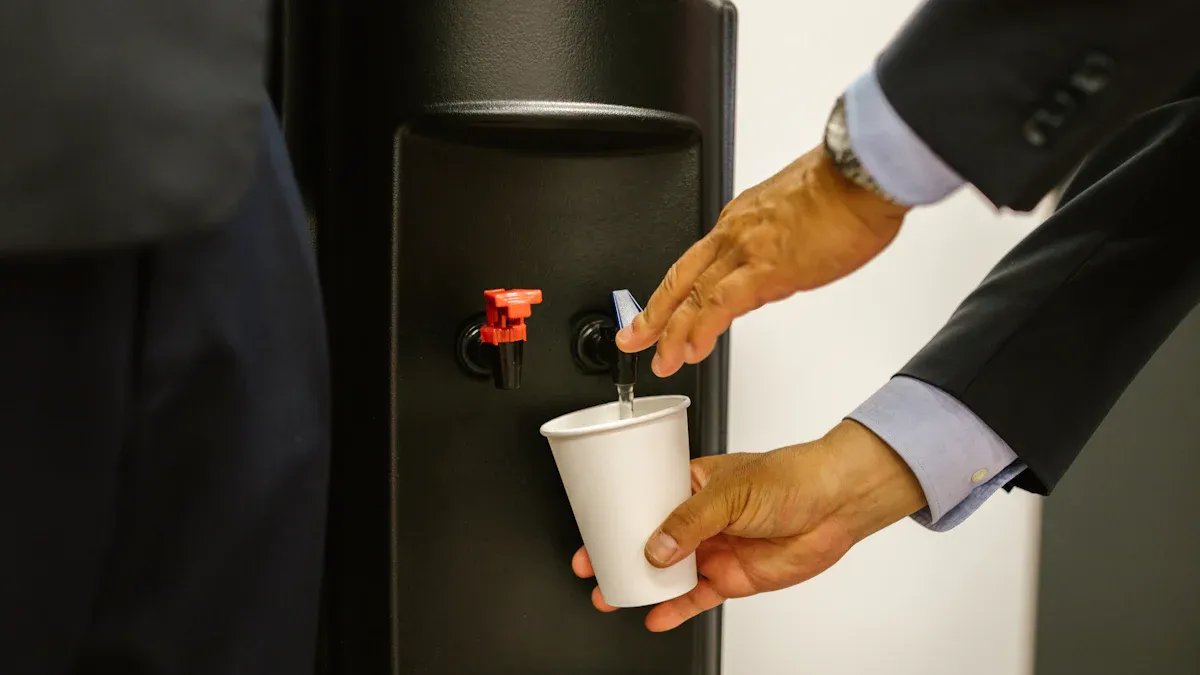
Your business's layout and workflow will determine the best type of ice machine. You need to choose a model that fits your available space and makes sense for your daily operations. The right unit integrates seamlessly, while the wrong one can cause constant disruptions.
Countertop Dispensers
Countertop dispensers are compact, all-in-one units that sit directly on a counter. This makes them a great choice for areas with limited space. You will often find this type of ice water dispenser commercial in:
- Office breakrooms
- Small healthcare facilities
- Ghost kitchens with low budgets
These machines can produce anywhere from 45 to over 500 pounds of ice daily, though their built-in storage is much smaller. For example, a unit might produce 125 pounds of ice per day but only hold 15 pounds at a time.
| Feature | Example Value |
|---|---|
| Width | 14.62" (37.1 cm) |
| Daily Production | 125 lbs (56.7 kg) |
| Storage Capacity | 15 lbs (6.8 kg) |
Undercounter Machines
Undercounter machines are self-contained units designed to fit neatly under a standard counter. They save valuable floor space and improve workflow by giving staff immediate access to ice. This makes them ideal for small bars and cafes. However, their production is usually limited to under 300 pounds per day.
Installation Alert! ⚠️ Proper installation is critical for undercounter units. You must ensure there is enough space for ventilation to prevent overheating. You also need a dedicated water line and a floor drain for meltwater.
Modular Units
Modular units are the best solution for high-volume businesses. These systems consist of a separate ice machine head that sits on top of a storage bin. This design allows you to mix and match components to meet your exact needs. You can choose a head with high production and pair it with a large bin for storage. This flexibility makes a modular ice water dispenser commercial perfect for:
- Large restaurants and hotels
- Hospitals
- Supermarkets
You can customize your setup to handle thousands of pounds of ice, ensuring you never run out during peak demand.
Step 4: Key Features and Technical Considerations
Beyond size and ice type, you need to look at the technical details of your machine. These features affect your daily costs, hygiene standards, and long-term performance. Making the right choices here will save you money and keep your customers safe.
Air-Cooled vs. Water-Cooled Condensers
Your ice machine's condenser removes heat to create ice. You can choose between air-cooled and water-cooled models. Air-cooled units use fans, while water-cooled units use water. Air-cooled machines are generally cheaper to operate because they use much less water.
| Feature | Air-Cooled Machines | Water-Cooled Machines |
|---|---|---|
| Water Use | Very low | Very high |
| Operating Cost | Lower in most areas | Higher due to water bills |
| Installation | Needs clear space for airflow | Needs separate water lines |
You must consider your kitchen's temperature for an air-cooled unit. These machines work best in rooms under 80°F (26°C). Their efficiency drops in hotter environments.
Push-Button vs. Touchless Dispensing
Hygiene is a top priority in any business. Touchless dispensers offer a major advantage by reducing the spread of germs. Customers and staff can get ice and water without touching any surfaces.
Experts agree that touchless technology improves hygiene. Eliminating contact with faucets, handles, and dispensers creates a cleaner environment. These systems make restrooms and beverage stations safer and more efficient for everyone.
Studies also show that people use touch-free dispensers more often, which promotes better hygiene habits.
Water Filtration and Ice Quality
The quality of your water directly impacts your ice. Poor water quality leads to cloudy, bad-tasting ice and can damage your machine with mineral buildup. A good filtration system is essential for any ice water dispenser commercial. Filters improve your ice by removing unwanted particles.
- Sediment filters catch dirt and rust.
- Carbon filters remove chlorine for better taste and smell.
- Scale inhibitors prevent mineral buildup from hard water.
Look for systems with an NSF certification. This mark means the filter is tested to reduce contaminants like microplastics.
Understanding ENERGY STAR Ratings
An ENERGY STAR certified ice machine helps you save money and protect the environment. These models are designed to be more efficient. They must meet strict government standards for energy and water use. Choosing an ENERGY STAR model can save your business around $170 annually on utility bills. This rating ensures you get a high-performing machine with lower operating costs.
Step 5: Planning for Budget and Long-Term Maintenance
You must look beyond the initial price tag to find the right machine. A smart budget considers both the purchase price and the long-term costs of running the unit. Proper maintenance is also key to protecting your investment.
Upfront Costs vs. Operating Expenses
The total cost of ownership includes more than just the machine's price. You need to account for ongoing operating expenses. These costs include daily water and energy use. You should also budget for regular cleaning and potential repairs. A cheaper machine might use more energy, costing you more money over time.
The Pros and Cons of Buying vs. Renting
You can either buy your ice machine outright or rent it. Buying gives you full ownership but comes with a high initial cost. Renting offers a lower upfront payment and often includes valuable services. Rental agreements typically cover the machine, storage bin, deep cleaning, and all maintenance and repairs.
This table breaks down the key differences.
| Aspect | Buying | Renting |
|---|---|---|
| Initial Cost | High upfront payment | Low initial payment |
| Maintenance | Your responsibility | Usually included |
| Long-term Cost | Cheaper over many years | More costly over time |
| Repairs | You pay for all service | Included in the agreement |
| Tax Impact | Capital expense (depreciates) | Operational expense (deductible) |
Essential Maintenance Checklist
Regular maintenance keeps your ice machine running efficiently and ensures your ice is safe. You can perform many simple tasks yourself to prevent costly breakdowns.
Keep It Clean! 🧼 A consistent cleaning schedule is the best way to extend your machine's life and guarantee high-quality ice for your customers.
Follow this simple checklist:
- Daily: Wipe down the exterior and check for any leaks. Sanitize the ice scoop and store it outside the bin.
- Weekly: Clean the air filters to ensure good airflow. Sanitize the inside of the ice bin with a food-safe cleaner.
- Monthly: Deep clean internal parts and descale the water system. You should also check and replace the water filter if needed.
You can now choose the perfect machine with confidence. Your decision rests on three simple steps. You must calculate your ice needs, select the right machine type, and plan your budget. This process ensures you invest in an ice water dispenser commercial that supports your business for years to come. ✅
FAQ
How often should I professionally clean my ice machine?
You should schedule professional deep cleaning and descaling at least twice a year. This service prevents harmful buildup and keeps your ice safe and clean for customers.
Can I install a commercial ice machine myself?
You should hire a professional for installation. Plumbers and electricians ensure your machine meets all local codes. Proper setup also prevents future damage and performance issues.
What is the average lifespan of a commercial ice machine?
A well-maintained commercial ice machine can last 7 to 10 years. You maximize its lifespan with regular cleaning and prompt repairs, protecting your investment. ✅