Finding the Perfect Dumpling Packing Machine A Complete Guide
Choosing the right dumpling packing machine requires a careful evaluation of several factors. Businesses must first assess their production volume, dumpling characteristics, and desired packaging style. This strategic investment aligns with the significant growth in the automated food packaging sector.
| Metric | Value |
|---|---|
| Global Food Packaging Machines Market Size (2024) | USD 22.1 billion |
| Projected Market Size (2034) | USD 44.1 billion |
| CAGR (2025-2034) | Over 7.3% |
Key factors include matching machine capacity and automation level to specific business needs. Machine compatibility with the product, whether fresh or frozen, ensures an efficient and profitable operation.
Start by Assessing Your Production Needs
Selecting the ideal dumpling packing machine begins with a thorough internal audit. A business must first understand its unique operational demands before exploring equipment options. This foundational analysis ensures the final investment aligns perfectly with production goals and product characteristics.
Calculate Your Required Capacity
First, a business needs to quantify its production volume. Calculate the number of dumplings produced per hour, per shift, and per day. This figure establishes a baseline for machine speed. A company should also project future growth. Choosing a machine that slightly exceeds current needs provides scalability. This prevents the need for a premature upgrade as demand increases. For example, a facility producing 5,000 dumplings per hour should look for equipment rated for at least 6,000-7,000 units per hour.
Define Your Dumpling Specifications
Next, document the physical properties of the dumplings. Consistency is critical for automated packaging. Many machines can handle various dumpling types, like pierogi and wontons, by simply changing molds. Key parameters to define include:
- Weight: Commercial gyoza, for instance, often weigh between 17 and 30 grams.
- Dimensions: Standard gyoza wrapper diameters range from 80mm to 100mm.
- Shape and Fragility: Note whether the product is delicate or robust.
- Dough Properties: The ideal wrapper thickness for many gyoza machines is 0.7-0.8mm.
Operators can typically adjust settings for dough thickness, filling quantity, and production speed on the machine itself.
Determine Your Packaging Style
Finally, decide on the final look of your product. The packaging style directly influences the type of machine needed. Common options include pillow bags for frozen bulk sales or pre-formed stand-up pouches for retail display. The chosen style impacts consumer appeal and brand identity.
Pro Tip: Consider your target market. Retail packaging requires strong visual branding and shelf presence, while food service packaging may prioritize durability and ease of use.
Types of Dumpling Packing Machine Systems
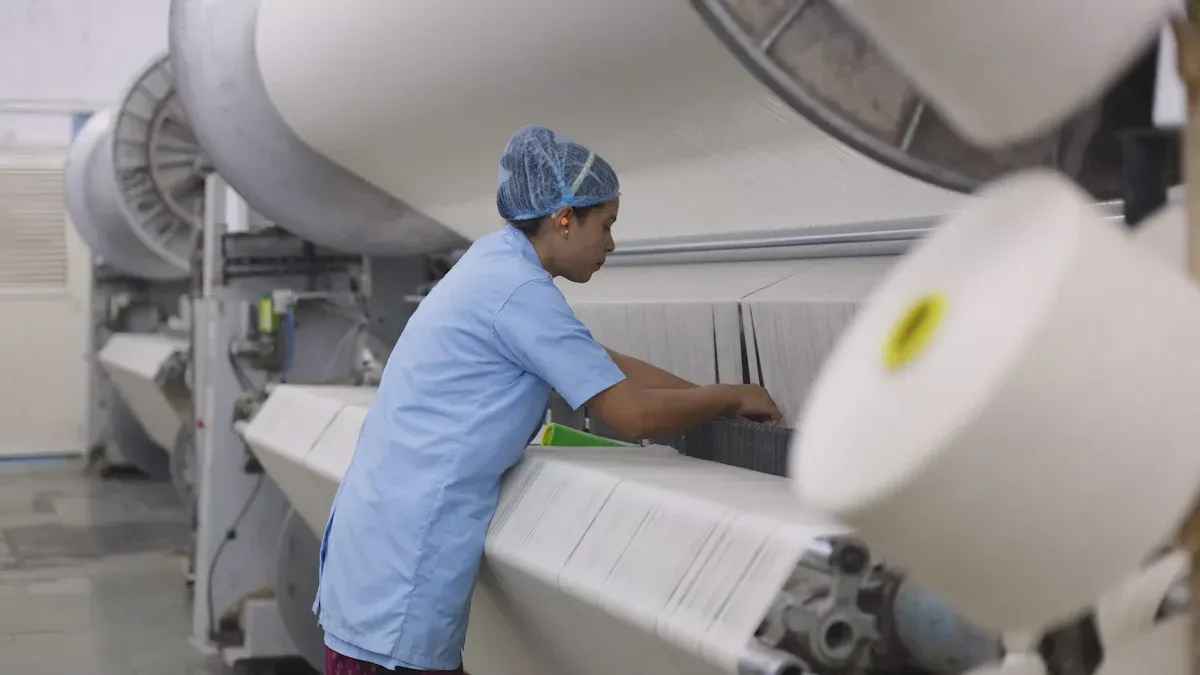
Once a business understands its production needs, the next step is to explore the available equipment. Dumpling packing systems range from simple, operator-assisted units to complex, fully automated lines. Each type offers distinct advantages in speed, cost, and operational complexity.
Semi-Automatic Machines
Semi-automatic machines serve as an entry point into automated packaging. These systems require human intervention at key stages, such as manually placing dumplings into the packaging or positioning the bag for sealing. They are an excellent choice for small to medium-sized businesses looking to increase efficiency beyond manual packing without committing to a fully automated line.
The production capacity of these machines varies to suit different operational scales.
- 1,800-3,000 dumplings/hour: This range is suitable for smaller operations like local restaurants or caterers with moderate demand.
- 3,000-6,000 dumplings/hour: This capacity is ideal for medium-sized businesses, including regional food processors.
- 6,000-12,000+ dumplings/hour: Higher-end semi-automatic models cater to larger producers transitioning toward greater automation.
Because they rely on operator input, these machines offer greater flexibility for handling various product types with simple manual adjustments.
Fully Automatic Machines
Fully automatic machines manage the entire packaging process without direct human intervention. An integrated system transports dumplings, weighs them, places them into packages, and seals the final product. These machines use advanced components like sensors, robotics, and intelligent software to ensure high speed and precision. They are designed for large-scale food manufacturers with high production volumes. The primary benefits for large operations include significantly reduced labor costs, improved hygiene standards, and a substantial increase in overall productivity.
The operational differences between semi-automatic and fully automatic systems are significant.
| Feature | Semi-Automatic Machines | Fully Automatic Machines |
|---|---|---|
| Human Intervention | Required for stages like product placement | Operates without human intervention |
| Production Volume | Ideal for small to medium-sized businesses | Designed for large, high-volume businesses |
| Speed | Limited by operator speed | High and consistent production speeds |
| Flexibility | Adapts with manual adjustments | Reprogrammable for quick changeovers |
| Material Usage | Potential for waste due to human error | Optimizes material usage with high precision |
| Maintenance | Simpler design, but manual parts may wear | Requires qualified technicians for complex systems |
Vertical Form Fill Seal (VFFS) Systems
A Vertical Form Fill Seal (VFFS) system represents a highly efficient, fully automatic solution for packaging frozen dumplings. This integrated dumpling packing machine creates bags from a flat roll of film, fills them with a precise weight of product, and seals them in a continuous vertical process. A complete system often includes a Z-shaped bucket elevator to gently transport dumplings and a multihead weigher to ensure accurate portioning before the product enters the VFFS machine.
VFFS systems offer numerous advantages for high-volume operations.
- High Speed and Efficiency: These machines can produce over 100 filled and sealed bags per minute, dramatically boosting throughput.
- Cost-Effectiveness: Automation reduces labor requirements, while precise film usage and accurate filling minimize material and product waste.
- Versatility: VFFS equipment handles a wide range of packaging materials and can be quickly changed over to produce various bag sizes and styles, from pillow bags to gusseted bags.
- Improved Product Quality: The system creates airtight seals that protect dumplings from moisture and contamination, extending shelf life and maintaining product integrity.
- Compact Footprint: The vertical design integrates multiple packaging steps into a small area, saving valuable factory floor space.
- Sanitary Design: Most VFFS machines feature stainless steel construction and washdown-compatible components, ensuring compliance with strict food safety standards.
Note: The efficiency of VFFS technology also contributes to sustainability goals by reducing energy consumption and material waste, making it an environmentally conscious choice for modern food producers.
Tray Sealing Machines
Tray sealing machines offer a premium packaging solution focused on product presentation and protection. This type of equipment places dumplings into pre-formed trays and then hermetically seals the top with a layer of film. The process creates a clean, tamper-evident package that showcases the product, making it ideal for retail environments where visual appeal is paramount. A tray sealer is an excellent dumpling packing machine for businesses aiming to position their product as a high-quality, convenient meal option.
The operation involves placing dumplings into a rigid tray, which is then conveyed into the sealing station. The machine applies a lidding film over the tray, using heat and pressure to create a secure, airtight seal. Advanced models can also perform vacuum sealing or introduce a Modified Atmosphere Packaging (MAP) gas mixture. This MAP process replaces oxygen with a blend of gases like nitrogen and carbon dioxide, which significantly extends the product's shelf life and preserves its color, texture, and freshness.
Tray sealers provide superior protection for delicate items. The rigid tray prevents dumplings from being crushed or damaged during transport and handling, a common issue with flexible bags. This makes them perfect for fresh, par-cooked, or gourmet dumpling varieties that require careful handling. The versatility of these machines allows them to package a wide array of food products beyond dumplings.
- Dumpling
- Tofu
- Meat and Fish
- Sausage and Poultry
- Vegetables and Fruit
- Sandwich
- Ready meals
Key Takeaway: Tray sealing machines excel at creating retail-ready packaging. They enhance shelf appeal, protect fragile products, and can extend shelf life, providing a strong return on investment for brands focused on quality and consumer presentation.
Key Features to Evaluate in a Machine
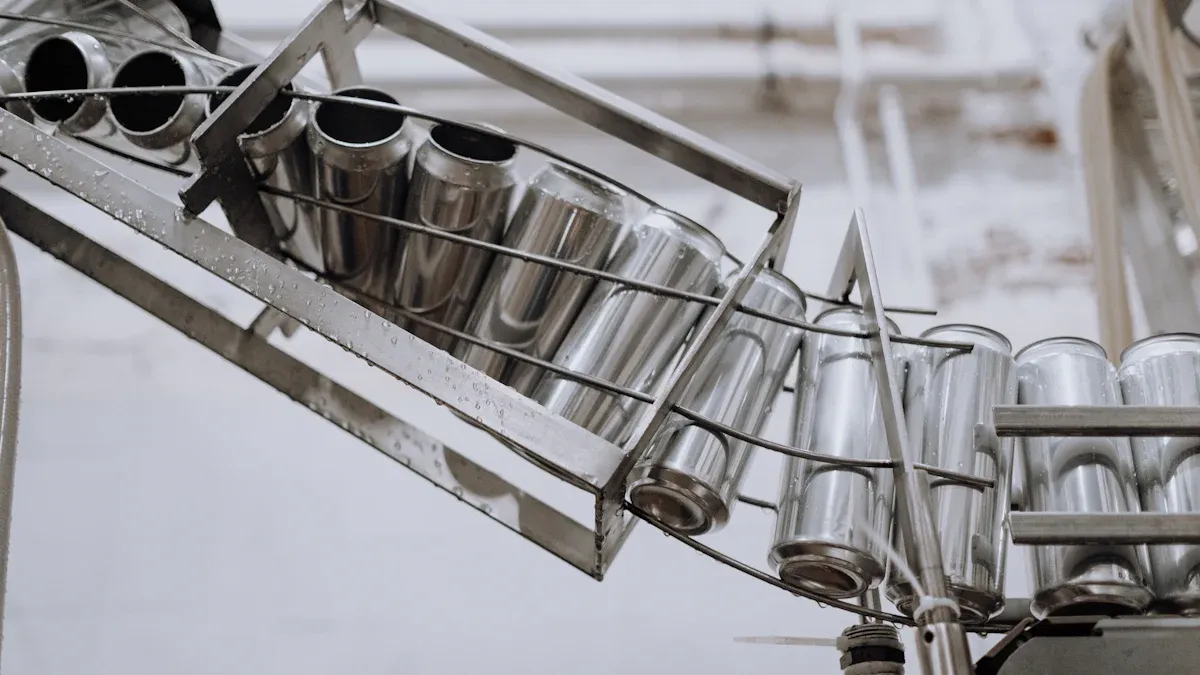
After defining production needs and exploring machine types, a business must scrutinize the specific features of potential equipment. The right combination of components determines a machine's efficiency, reliability, and long-term value. Key areas like weighing accuracy, material compatibility, and control systems directly impact daily operations and profitability.
Weighing System Accuracy
Precise weighing is one of the most critical functions of a packaging line. Every gram of product given away for free, known as "product giveaway," cuts directly into profit margins. An accurate weighing system minimizes this waste and ensures each package meets its stated weight without significant overfill. The two most common systems are linear weighers and multi-head weighers.
Multi-head weighers, or combination scales, offer far superior precision. They use an intelligent algorithm to calculate the ideal weight from multiple weighing heads, achieving exceptional accuracy. This advanced logic is especially valuable for high-speed lines or when packaging costly ingredients where even small giveaways impact profitability.
| Weigher Type | Accuracy Range |
|---|---|
| Linear Weigher | ±1 g to ±5 g |
| Multi-head Weigher | ±0.5 g to ±2 g (as low as ±0.03 g) |
The combination logic of a multi-head weigher minimizes the need for conservative target weights, a common practice with less accurate systems. This ensures consistent package weights, reduces product waste, and maximizes yield.
Material and Bag Type Compatibility
A versatile dumpling packing machine should accommodate a business's current and future packaging needs. A buyer must confirm that the equipment is compatible with their chosen film material and can produce the desired bag styles. Vertical Form Fill Seal (VFFS) systems are particularly flexible, capable of creating various bag formats from a single roll of film.
Common bag types produced by VFFS machines include:
- Pillow-style bags (back center seal)
- Gusseted bags
- Block bottom bags
- Four-side sealed bags
Many systems can also handle pre-made pouches, such as stand-up Doypacks or zipper bags, offering even greater flexibility for retail products. Buyers should always verify the machine's specifications for bag dimensions.
Example Specification: A standard VFFS model might offer the following capabilities, demonstrating the range of formats and sizes available.
Feature Specification Model ZL-300 Bag Size (Length) 80-400mm Bag Size (Width) 80-280mm Packing Formats Pillow bag, gusset bag, triangle bag, punching bag
Control System and User Interface
The brain of any modern packaging machine is its Programmable Logic Controller (PLC) and Human-Machine Interface (HMI). A high-quality control system ensures stable, repeatable performance, while an intuitive user interface simplifies operation and reduces the chance of error. Businesses should look for systems designed for ease of use.
Key features of a user-friendly control system include:
- Intuitive Touchscreen HMI: Allows operators to easily monitor processes and adjust settings.
- Multi-Language Support: Provides accessibility for a diverse workforce.
- Adjustable Parameters: Simplifies product changeovers and fine-tuning.
- Advanced PLC System: Ensures stable and precise machine operation.
Modern HMIs are designed to make operator training fast and straightforward. They use clear graphics and visual cues instead of complex codes, allowing operators to quickly identify and resolve issues. Well-designed interfaces place the most-used functions front and center, making navigation efficient. Some smart HMIs even host training videos directly on the screen or use QR codes to link to external tutorials, ensuring support is always available. This user-centric design significantly reduces the need for extensive technical expertise.
Hygiene and Cleaning Standards
Food safety is non-negotiable in the food processing industry. A dumpling packing machine must meet stringent hygiene standards to prevent contamination and ensure product integrity. Manufacturers design modern equipment with sanitation in mind, incorporating specific materials and features that simplify cleaning and minimize the risk of bacterial growth.
The construction of the machine is the first line of defense. High-quality equipment utilizes food-grade materials, most commonly 304 or 316 stainless steel, for all surfaces that contact the product. These materials are non-corrosive, non-absorbent, and resistant to cleaning chemicals. The design itself is equally important. Recent studies from NSF/3-A in 2024 indicate that equipment with smooth, crevice-free surfaces can reduce biofilm buildup by approximately 89% compared to textured counterparts. This means looking for machines with welded seams instead of bolted joints and rounded corners instead of sharp angles where food particles could get trapped.
Pro Tip: A machine that is easy to clean is a machine that gets cleaned properly. Features that reduce cleaning time also minimize production downtime, directly boosting operational efficiency.
Many machines are also built with "washdown" capabilities. This means the critical components, like motors and electronics, are housed in sealed, waterproof enclosures. This design allows operators to use high-pressure water jets for thorough and efficient cleaning without risking damage to the equipment. A business should verify the machine's Ingress Protection (IP) rating, such as IP65 or higher, which certifies its resistance to dust and water.
Reputable manufacturers often adhere to internationally recognized standards to demonstrate their commitment to food safety. Compliance with these standards provides buyers with confidence in the machine's hygienic design. Key certifications to look for include:
- ISO 22000: This standard from the International Organization for Standardization (ISO) outlines requirements for a food safety management system. Adherence helps manufacturers establish and maintain effective safety protocols, showing a commitment to the entire food safety chain.
- NSF/ANSI 3-A 14159-1: This standard specifically addresses the hygienic design and construction of food processing equipment. Compliance ensures that a packing machine meets rigorous sanitation criteria, making it suitable for food contact.
Finally, a business should evaluate the ease of disassembly for cleaning. The best machines allow for quick, tool-less removal of contact parts like hoppers, weigh buckets, and forming tubes. This accessibility empowers operators to perform daily sanitation tasks quickly and effectively, ensuring the entire product path remains pristine.
Integrating the Machine into Your Workspace
A new packing machine must fit seamlessly into a facility's existing layout and workflow. Proper integration planning prevents costly installation delays and operational bottlenecks. A business should evaluate its physical space, existing equipment, and utility infrastructure before finalizing a purchase.
Footprint and Physical Space
First, a business must measure its available floor space. Manufacturers provide detailed machine dimensions, but a buyer needs to account for more than just the equipment's footprint. It is essential to allocate sufficient clearance around the machine for several key activities:
- Operator Access: Workers need safe, unobstructed space to operate the control panel and monitor production.
- Maintenance Clearance: Technicians require room to access service panels and perform routine maintenance.
- Material Flow: Space is necessary for loading packaging materials like film rolls and for removing finished product containers.
Pro Tip: Create a to-scale floor plan that includes the new machine and surrounding equipment. This visual aid helps identify potential workflow issues before the machine arrives.
Compatibility with Existing Lines
The new packing machine must communicate effectively with upstream and downstream equipment, such as freezers or conveyors. Successful integration transforms separate machines into a single, intelligent system. Businesses should collaborate with suppliers to ensure both physical and software compatibility.
| Integration Point | Key Check | Why It Matters |
|---|---|---|
| Conveyor Height | The machine's infeed and outfeed must precisely match the conveyor's height. | Prevents products from tipping over or jamming during transfer. |
| Conveyor Speed | The new machine's speed needs to be synchronized with the conveyor's variable speed. | Avoids product collisions or large gaps in the production flow. |
| Control System | Integrate sensors like "line-full" into the control system. | Enables automatic start/stop functionality for a smooth, automated flow. |
Proper integration involves testing the new equipment under real production conditions. This step helps fine-tune settings and ensures the machine meets speed and quality goals. Thorough staff training on the new, integrated system is also critical for smooth operation.
Power and Utility Requirements
Finally, a buyer must confirm that the facility's utilities can support the new machine. Packing equipment has specific power and compressed air requirements that must be met. Checking these specifications beforehand prevents the need for expensive, last-minute electrical or plumbing work. A business should compare the machine's needs to its available infrastructure.
Example Machine Specifications:
| Requirement | Specification |
|---|---|
| Power Supply | 220V 50Hz, 1 PH |
| Compressed Air | 6kg/c㎡, 250L/min |
These requirements can vary, so it is crucial to verify the exact specifications with the manufacturer. Ensuring the correct voltage, phase, and air pressure is available is a fundamental step for a successful installation.
Budgeting and Calculating Your ROI
Investing in a dumpling packing machine requires a financial strategy that looks beyond the initial price tag. A business must analyze the long-term financial impact to make a truly profitable decision. This involves understanding the total cost of ownership and calculating the potential return on investment.
The Total Cost of Ownership
The purchase price of a machine is only the tip of the iceberg. The Total Cost of Ownership (TCO) provides a more complete financial picture. In fact, the initial acquisition cost often accounts for just 20-30% of the machine's total expense over a decade. The remaining 70-80% consists of ongoing operational costs.
A comprehensive budget should account for these significant long-term expenses:
- Energy and Utilities: The power and compressed air needed to run the equipment.
- Labor and Training: Wages for operators and the cost of initial training.
- Maintenance and Repairs: Expenses for preventive maintenance and unexpected fixes.
- Downtime: Lost revenue from production halts due to breakdowns.
- Consumables and Spare Parts: The cost of film, ink, and replacement components.
Considering these factors helps a business avoid unexpected costs that can erode profitability.
Calculating Your Return on Investment
Return on Investment (ROI) is a critical metric that measures the profitability of the machine. It helps a business determine how quickly the equipment will pay for itself through increased efficiency and reduced costs. The formula is a straightforward way to quantify the financial benefits.
ROI Formula: ROI (%) = [(Gain from Investment - Cost of Investment) / Cost of Investment] x 100
Here, the "Gain from Investment" includes savings from reduced labor, minimized product giveaway, and increased production output. The "Cost of Investment" is the TCO.
Balancing Quality and Budget
While a lower initial price is tempting, superior machinery often delivers a better long-term ROI. High-quality equipment with durable components and advanced controls leads to less unplanned downtime and fewer repair costs. Implementing a preventive maintenance program further extends equipment life and ensures peak performance. Investing in a reliable machine with accessible spare parts minimizes costly production shutdowns. Ultimately, a business should balance its immediate budget with the long-term value that a dependable, efficient machine provides.
The ideal dumpling packing machine is a strategic investment. It aligns with a company's production volume, product type, and long-term business goals. A successful selection process involves several key steps.
- Assess your specific production needs.
- Explore different machine types and systems.
- Evaluate critical features like weighing accuracy.
- Analyze the total cost of ownership.
Use this guide as a checklist. 📝 It empowers a business to ask manufacturers targeted questions, ensuring the final choice boosts both efficiency and profitability.
FAQ
What types of dumplings can these machines pack?
Most machines are versatile. They can pack various products like gyoza, wontons, and pierogi. A business must confirm the machine handles its specific dumpling size, shape, and fragility. Proper equipment selection ensures product integrity during the packaging process.
How much space does a dumpling packing machine require?
The required space varies by machine type and complexity. A business should consult the manufacturer's specifications for the exact footprint.
Planning Tip: Always allocate extra room around the machine. This provides necessary clearance for operators, maintenance access, and material flow. 🛠️
Can one machine handle both fresh and frozen dumplings?
Yes, many systems can package both fresh and frozen products. The key is gentle handling. The feeding and weighing systems must prevent fresh dumplings from sticking together or frozen ones from breaking, ensuring a high-quality final product.
What is the difference between a multi-head and a linear weigher?
Multi-head weighers offer superior accuracy and speed, making them ideal for high-volume production. Linear weighers are a more economical choice for smaller operations with less stringent weight requirements.
| Weigher Type | Best For | Key Feature |
|---|---|---|
| Multi-head | High-volume, high-value products | Exceptional precision and speed |
| Linear | Small to medium businesses | Simplicity and cost-effectiveness |
See Also
Essential Folder Gluer Innovations for 2025 Carton Production Lines
Leading Ampoule Filling Line Manufacturers: A Comprehensive Industry Comparison
Top Capsule Checkweighers: Smart Investments for Buyers in 2025
Indispensable Industrial Checkweighers: Essential for Every Modern Food Plant
Boosting Pharma Efficiency: Modern Capsule Decapsulation Machine Advancements